Every list of 80s trivia on the internet works the same way. Fifty questions, a movie still for each one, the answer hidden under a button. They’re fine. They are also, if you were there, weirdly easy, because a quiz you can check in four seconds isn’t really trivia. It’s a reading test.
Real 80s trivia was harder than that. Not because the questions were tougher, but because the answers were somewhere else. In a book you didn’t own. On a shelf at the library across town. In the head of an uncle who was right exactly often enough to be dangerous. A disputed fact could stay disputed for a week, and the whole decade ran on that delay. It’s how a board game sold twenty million copies, how a quiz show came back from the dead, and how one man planted a fake fact in a book and then sued over it.
So this is a post about 80s trivia: where it came from, why it took over the country for a few years, and who got to say who was right. There’s a round of questions near the end, with answers, and not one of them asks you to name a movie.
Why 80s trivia felt like a contact sport

Picture the setup. Two adults at a kitchen table, or a bar, or the front seat of a station wagon on hour six of a drive. One of them says something with total confidence. The other one says “no it isn’t.” And then there’s nowhere to go.
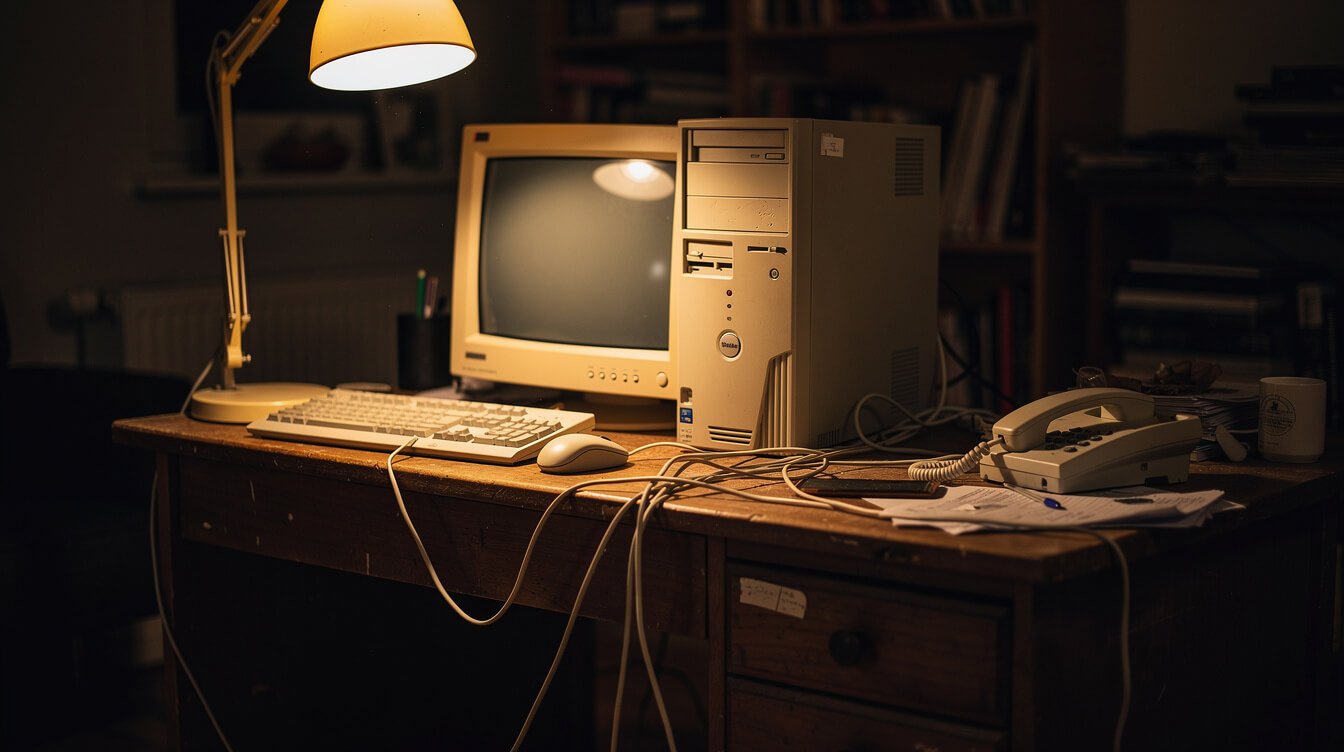
That’s the part people forget. In the 80s, a factual disagreement didn’t end. It got tabled. Somebody would say “I’ll look it up,” which meant a trip to the encyclopedia set in the den, assuming the right volume wasn’t the one that had been missing since 1979. If the encyclopedia didn’t have it, the argument went into a sort of holding pattern. It came back up at Thanksgiving. It came back up at the next Thanksgiving. Some families had a running dispute about the capital of Australia that outlived a marriage.
That delay is what made trivia worth something. A fact you could check instantly is just a fact. A fact that took a library card, a phone call, or a bet to confirm was currency. Knowing it meant you won something: a beer, a dollar, the last slice, or the right to say “told you” for the rest of the drive.
Kids picked this up fast. We learned early that the confident person usually won, whether or not they were right, and that the only defense was to know more stuff. Some of us became walking almanacs out of pure self-defense. You know the type. You might be the type. Every friend group had one kid who could tell you the population of Ohio and couldn’t tell you why anyone would want to know.
And when an argument finally did get settled, it got settled in public. Nobody looked something up quietly. The person who turned out to be right read it out loud, with the book open, pointing. That was the payoff. Everybody wanted to be the one holding the book.
Trivia was a nostalgia hobby before it was a game
Here’s a piece of trivia about trivia. The word, in the sense we use it now, is younger than most of our parents’ cars.
On February 5, 1965, a columnist for Columbia University’s student newspaper wrote up a parlor game his friends played: trading questions about the pop culture of their own childhoods. He called it “trivia.” The writer, Ed Goodgold, then teamed up with Dan Carlinsky to run organized trivia contests on campus, and in 1966 the two of them published a book called Trivia, which made the bestseller list.
Read that again, because it’s the funniest thing in this whole post. Trivia, as a hobby, was invented by college kids being nostalgic. Boomers, in other words, quizzing each other on the stuff they watched as children. That’s exactly what typing “80s trivia” into a search bar is today. Each generation gets the same hobby. Only the questions change.
Goodgold and Carlinsky even had a doctrine. In their second book they complained about people “indiscriminate enough to confuse the flower of trivia with the weed of minutiae.” Trivia, they said, is about “tugging at heartstrings.” Minutiae is just facts nobody cares about. Their example of minutiae was a question about which state ate the most of a certain gelatin dessert.
That distinction still holds, and it’s why most 80s trivia lists feel off. They’re full of minutiae. Which studio, which year, which director. What made 80s trivia land, when it landed, was the other thing: a question that made a whole table go “oh, come on” at once. We’d say a good trivia question doesn’t test what you know. It tests where you were.
The other ancestor is the record book. A brewery’s managing director in Britain kept getting into pub arguments he couldn’t settle, the most famous one about which game bird was fastest. So he commissioned a book of records, and the first edition came out in August 1955. Its whole reason to exist was to end bar bets. By the time we were kids, a copy lived in every school library, and arguments about fingernail length got settled at recess with it held open like a court document.
The box that ate 1984

Then two newspapermen in Montreal changed the whole thing.
On December 15, 1979, a photo editor and a sports editor sat down to play a word game. The story goes that pieces were missing, so they sketched their own game instead, reportedly in about forty-five minutes. The idea was simple: a round board, six categories, a die, and a box of question cards. Answer right and you kept rolling. Answer right on the right space and you earned a little colored wedge for your round playing piece. Fill it up, get to the middle, and win.
They spent 1980 writing questions. The game came out in Canada in 1981 and went on sale in the States in 1983. By 1986 it had sold twenty million copies and grossed about $600 million. If you were a kid in the mid-80s, you remember the box showing up. It didn’t appear in your house so much as in everyone’s house at once, usually at Christmas, usually as a gift from one adult to another.
And here’s the thing nobody says about it: the game was built for adults, and it showed. The questions assumed you’d been paying attention since about 1950. Kids could play, technically, the way you can technically enter a marathon. Most of us got put on a parent’s team, contributed one answer per game (usually about a cartoon), and were praised for it like we’d cured something.
Ask anyone who played it and they’ll tell you two things without being prompted. The first is the color of the category they were good at. The second is that brown was art and literature and nobody wanted brown. Whole family games stalled on brown. You could have five wedges and be stuck for forty minutes because nobody at the table had read the right novel. (Brown later became purple. It didn’t help.)
There was also a slow, funny problem built into every box: the cards were written in 1980. By the time the game hit American living rooms, every question about who currently held a record or an office was already a little bit out of date, and it got worse every year the box sat in the closet. A lot of 80s family arguments were actually arguments with a card. “The card says” became its own kind of authority, right up until someone’s dad announced that the card was wrong and he’d write a letter.
The next decade’s game nights went in a different direction. The party games that ran 90s apartments were mostly drawing and guessing, not knowing (we went through that shift in the post on 90s board games). The 80s were the decade that made knowing things the game.
The most famous fact in 80s trivia was a trap

This one is our favorite, and it’s true.
In 1974 a writer named Fred L. Worth published The Trivia Encyclopedia, a big alphabetical brick of exactly the stuff you’d expect. Worth was worried about people copying it. So he did what mapmakers had done for a century: he planted a fake entry. He gave a famous TV detective, the rumpled one in the raincoat who always had “just one more thing,” a first name. Philip. The show had never said his first name out loud. Worth made one up.
Then the wedge game came out, and one of its cards asked for the detective’s first name. The answer on the back was Philip.
In October 1984, Worth sued the game’s distributors for $300 million. He claimed more than a quarter of the questions in the original edition came from his books, down to the typos. The game’s makers didn’t really deny using his books. They argued something better: facts can’t be copyrighted. Anyone can know that a thing happened, no matter where they read it. The judge agreed. Worth appealed, and in September 1987 the Ninth Circuit agreed too. In March 1988 the Supreme Court declined to hear it.
So the planted fact did exactly what it was built to do. It proved the copying. And then it turned out the copying wasn’t illegal, because a fact is a fact, even a fake one, once it’s printed on enough cards. Meanwhile “Philip” went everywhere. It showed up in other trivia books, in quiz nights, and in at least one European carmaker’s ad campaign. For years it was simply the answer.
The real name, for the record, is on the detective’s police badge, visible in close-ups in two episodes. It says Frank. If you lost a bar bet in 1986 over this, you have a case. Not a legal one, obviously. We just covered that.
We love this story because it’s the whole decade in one move. A man invents a fact to catch a thief, the fact escapes, the court says the thief can keep it, and twenty million families learn it as true over pie-shaped pieces of plastic. Somewhere out there, a fifty-five-year-old is still sure about Philip.
The newsletter
Like a mixtape, but it shows up on its own
One email a week. The good posts, new designs, zero exclamation points. Unsubscribe whenever. We won't take it personally.
Who settled it: the referees of 80s trivia

If you couldn’t look something up, somebody had to rule on it. Every household and every group of friends had its referees, and they ranked roughly like this.
The encyclopedia
The supreme court. Usually bought on installments from a man who came to the door, and usually a few years out of date by the time anyone opened it. Its rulings were final unless the relevant volume was at someone’s school, which it always was. Your library had a newer set, which you found through the card catalog, a system we’ve mentioned before as a childhood with zero ability to search anything.
The library phone line
This is a real thing that a lot of people under forty have never heard of. Big public libraries had a telephone reference desk. You called, a librarian picked up, and you asked your question. The New York Public Library ran one from 1968, and its librarians kept the strangest questions on index cards. Years later someone found a box of them. One card, from 1983, asks: “What do you feed salamanders?” The librarian’s answer is on file: “Large salamanders prefer fish, crayfish, aquatic insects, frogs.” Somebody, somewhere, was having a very specific argument.
The quiz show
On September 10, 1984, the quiz show where you answer in the form of a question came back in daily syndication with a new host, and it became the nightly referee for millions of living rooms. The rules at home were looser than on TV. You could shout. You didn’t have to phrase it as a question. And whoever got the most right before the commercial break got to be insufferable through dinner.
The radio station
Be the ninth caller, answer one question, win concert tickets or a t-shirt you’d never wear. You never got through. You heard the busy signal for twenty minutes and then heard someone named Darlene from two towns over win it. But you knew the answer. That counted for something, at least privately.
The uncle
Lowest court, highest volume. He was right sixty percent of the time and certain a hundred percent of the time, and no ruling of his could be appealed until someone found the book. Kids, by the way, ran a completely separate system for game secrets and rumors, with its own chain of command, which we laid out in the post on 80s video games.
If you were the one in your house who always had the answer, and also the receipt, we made something for you. It’s in the shop, and it doesn’t explain itself either.
Settled. No appeal.
For whoever owned the encyclopedia and never let anyone forget it. Wear it to the next family argument. You’ll still be right.
A round of 80s trivia with no movie questions

Every other 80s trivia quiz is pop culture: name the band, name the movie, name the actor. Fine. Here’s a round about the decade itself, the prices and rules and numbers that ran our lives without asking. Score yourself honestly. No looking. That’s the whole point.
What did a first-class stamp cost on January 1, 1980, and what did it cost by the end of 1989?
Answer: 15 cents, then 25 cents. It went up four times: 18 cents in March 1981, 20 cents that November (twice in one year), 22 cents in 1985, and 25 cents in April 1988. Bonus point if you remember the stamps that had a letter printed on them instead of a price, because the new rate wasn’t set when they were printed.What was the federal minimum wage in January 1981, and what was it in December 1989?
Answer: $3.35 both times. It didn’t move from January 1981 until April 1990, which was a record freeze at the time. Your first job paid the same as your older sibling’s first job, and probably the same as your younger sibling’s.What was the highest legal speed on an American highway in 1985?
Answer: 55 miles an hour, everywhere, under a national limit dating to 1974. In 1987 Congress let states raise it to 65 on rural interstates. The national limit wasn’t fully repealed until December 1995. Your dad drove 62 the whole time and called it “basically 55.”What year did a federal law push every state to a drinking age of 21?
Answer: 1984. The law took effect July 17, 1984, and tied a slice of each state’s federal highway money to raising the age. If you turned 18 in the wrong state at the wrong time, you remember exactly when the line moved.The first handheld cell phone you could buy in the US: how much, how heavy, and how long could you talk?
Answer: $3,995 in 1984, about 2.5 pounds, and 30 minutes of talk time after a 10-hour charge. The first public call on the prototype, back in 1973, reportedly reached a wrong number. Some things never change.On February 28, 1983, the finale of a Korean War sitcom aired. How many Americans watched?
Answer: 105.97 million. It’s still the most-watched single episode of any series in US history. A 30-second ad cost $450,000, more than ads during that year’s big football game. Storms knocked out power across parts of California that night, which counts as the decade’s cruelest plot twist.Which seven-digit phone number from a 1981 single do people still call to ask for a girl by name?
Answer: 867-5309. The song peaked at number four in 1982 and started a prank-call fad that never quite ended. Anyone who actually had that number in your area code had a long decade.On May 25, 1986, millions of people tried to hold hands across the whole country. What did a spot in line cost, and did it work?
Answer: Participants were asked to donate $10 for a place in line. About 5 million people showed up, and the chain broke in a lot of places, especially in the Southwestern desert, where gaps were filled with ribbons and rope. It raised around $15 million. Points for honesty if your family drove to the line, stood in it for fifteen minutes, and left.In the wedge game, what color was art and literature?
Answer: Brown. You knew that. Everyone knows that. Nobody ever won it on the first try.On what date did a volcano in Washington State blow its top?
Answer: May 18, 1980, a Sunday morning. Kids across the Northwest remember the ash. Everyone else remembers the filmstrip about it in science class.When did the first space shuttle launch?
Answer: April 12, 1981. A lot of us watched shuttle launches on a TV wheeled into the classroom on a cart, which is its own memory and not always a good one.What night did the wall come down in Berlin?
Answer: November 9, 1989. The decade got one last piece of trivia in before it ended, and it was the big one.
Ten or more right means you were there and paying attention. Six to nine means you were there and paying attention to something else. Under six means you were nine. That’s not a criticism. Most of us were.
80s trivia: quick answers

What are good 80s trivia questions?
The ones that make the whole table groan at once. Prices, rules, and numbers everyone lived with (the stamp, the speed limit, the minimum wage) work better than “name the director,” because they test whether you were there instead of whether you’ve seen a list. Mix in a few classic pop culture questions if your crowd wants them, but lead with the ones nobody can study for.
How do you run an 80s trivia night for people who actually lived it?
Keep it short, and keep the answers arguable. Two rounds is plenty, and the best part is the fight over the answer key, not the score. We wrote up the rest of the evening in our guide to an 80s theme party, and our advice there still stands: one round of trivia, then let them argue until midnight.
Why was trivia such a big deal in the 80s?
Because looking something up took effort, so knowing it had value. Add a board game that sold twenty million copies by 1986, a quiz show back in daily syndication from 1984, and radio stations giving away prizes for one right answer, and trivia was everywhere. It was the closest thing the decade had to a search engine, and it was run by people.
What happened in 1985 that makes good trivia?
The stamp went to 22 cents in February. The minimum wage was still $3.35, and the speed limit was still 55. The hit-singles side of 1985 is covered by every other quiz on the internet, so we’ll leave it to them. The quieter facts make better questions because nobody memorized them on purpose.
What made the 1980s unique?
It was the last decade where most facts lived on paper and most arguments ended at a bookshelf, or didn’t end at all. That’s not a complaint. It’s just why 80s trivia feels different from the trivia of any decade since: the answers had to be found, so they meant something when you found them.

From the shop
Huey Lewis I Wanna New Drug Fan Art T-Shirt
Price range: $24.99 through $26.99
Shop this designFinal thoughts
Trivia started as a nostalgia hobby, boomed as a board game, and got its most famous fact from a man who made it up to catch a thief. That’s a pretty good run for a word that means “of little importance.”
The 80s version mattered because it was slow. A question could hang in the air for a week. Somebody had to drive to the library, or call it, or wait for the right card to come up, or just win the argument by being louder. It wasn’t efficient. But it made a fact into an event, and it gave every family a referee and every friend group a know-it-all.
Being good at trivia was never proof that you’d lived through something (we’ve argued that about the 90s, too). It was proof that you’d been in the room when the argument happened. And the arguments are what we remember. Not the answer to the salamander question. The person who called the library to ask it.
So next time someone at the table states something with total confidence, do it the old way. Don’t check your phone. Make them bet. And if the subject is a certain detective’s first name, take the bet.
Before you go
You made it to the end. Respect.
Get the best of these in one short weekly email, plus whatever we just printed. No spam. We were raised better than that. Mostly.