Type “80s kid t shirt” into a search bar and the first page tells you exactly who Google thinks is buying it: a parent. Sensory-friendly fabric, sizes 4 to 18, a FAQ that explains what to wear for 80s day at school. Somewhere in that scroll is an actual adult who typed those four words because they are one — not because they need to dress one for a Tuesday theme party — and not a single listing on the first page is talking to that person.
That’s the gap. Not a marketing gap, a comprehension gap. The internet has decided “80s kid” is a costume category, sized and seasonal, gone by September. It’s not. It’s a fact about you, filed under the same drawer as your blood type and your hometown, and it doesn’t come in youth sizing. This is the case for the shirt that actually knows the difference.
Every search result for “80s kid t shirt” thinks you’re eight
Go look yourself, we’ll wait. Page one is a big-box retailer selling “80s Vintage Rock T-Shirts for Kids,” a department store category called “80s Kids Clothing Retro Costumes & Tees,” and a marketplace listing whose actual ad copy is “fun retro tee for theme parties — pairs with jeans.” One page has an accordion FAQ that asks, with a straight face, “What does 80s kids style look like?” As if it’s a lookbook question. As if the answer isn’t “however my mom dressed me because there were three channels and no internet to argue with her.”
Here’s the tell: every one of those results is sized. 4 to 18. Youth medium. That’s not an accident of inventory — it’s the whole business model. Somebody typed “80s kid” into a keyword tool, saw a decent number attached to it, and built a costume rack around the words without asking who’s actually searching them. The literal phrase gets read literally: a kid, from the 80s, needing a shirt. Nobody stopped to consider the other reading — a person who was a kid in the 80s, and is now old enough to buy their own shirts, thank you.
The one outlier on the page is a general licensed-merch storefront — movies, bands, cartoons, the works — which at least talks to adults, but talks to them as fans of specific franchises, not as people with a specific childhood. Close, but it’s still selling you somebody else’s decade back to you with somebody else’s logo on it. That’s a different transaction than the one you actually want.
None of this is a conspiracy, just an algorithm doing exactly what it’s told. Search volume doesn’t come with a note explaining who’s typing the phrase or why, so a retailer’s keyword tool sees “80s kid t shirt” get a decent number of monthly searches and reasonably assumes it’s a seasonal costume query, because that’s the majority case for most decade-plus-clothing phrases. The minority case — the actual 80s kid, searching for themselves, in March, for no occasion at all — gets rounded down to statistical noise. Which is exactly why nobody’s built for it yet, and exactly why there’s still room to.
An 80s kid t-shirt isn’t a costume size — it’s a fact about you

Try the experiment. Say “I’m an 80s kid” out loud to two different people. Say it to someone born in 2003 and they’ll ask which movies you like. Say it to someone who actually qualifies and you’ll get a flicker of recognition before either of you says another word — a very specific look, somewhere between a wince and a nod, that means oh, you had the key too. That look is the entire product. It’s not purchasable off a rack sized for a fourth-grader.
An identity claim doesn’t need a costume, because it isn’t temporary. Nobody puts on being from Ohio for a party and takes it off at midnight. “80s kid” works the same way — it’s less a theme and more a serial number stamped somewhere you can’t see, and the shirt’s only job is to say it back to you in a way that doesn’t need a caption. Not the decade printed in a bubble font. Not a cartoon character with a wink. Just something specific and true enough that another 80s kid clocks it across a grocery store and gives you the nod.
Compare that to what an actual costume asks of you: pick a look, wear it convincingly for four hours, then take it off and go back to being whoever you were before. An identity shirt doesn’t want four hours. It wants to be true on a random Tuesday in a parking lot, with nobody watching and no theme to perform. That’s a much higher bar than “put the decade on a shirt,” and it’s exactly the bar every costume-aisle result skips, because a costume was never built to survive contact with an ordinary day.
It’s the same reason a band shirt works differently once you’ve actually seen the band and differently again once you were just born after the band broke up. Identity apparel earns its meaning from proximity to the real thing, not from proximity to the decade’s Wikipedia page. You can buy the print. You can’t buy the proximity. The best an 80s kid t-shirt can do is signal that the wearer already has it — quietly, permanently, no seasonal markdown required.
What the sizing chart never asks: what if you didn’t grow out of it

Every FAQ on that first page is built around an expiration date. “What should I wear for 80s day at school” assumes the 80s day ends at 3pm. “How do I dress my kid as an 80s kid” assumes it’s your kid’s costume, not your actual childhood. The unspoken premise, in every case, is that this is a phase somebody’s currently performing and will be finished performing shortly, like a science fair project due back Monday.
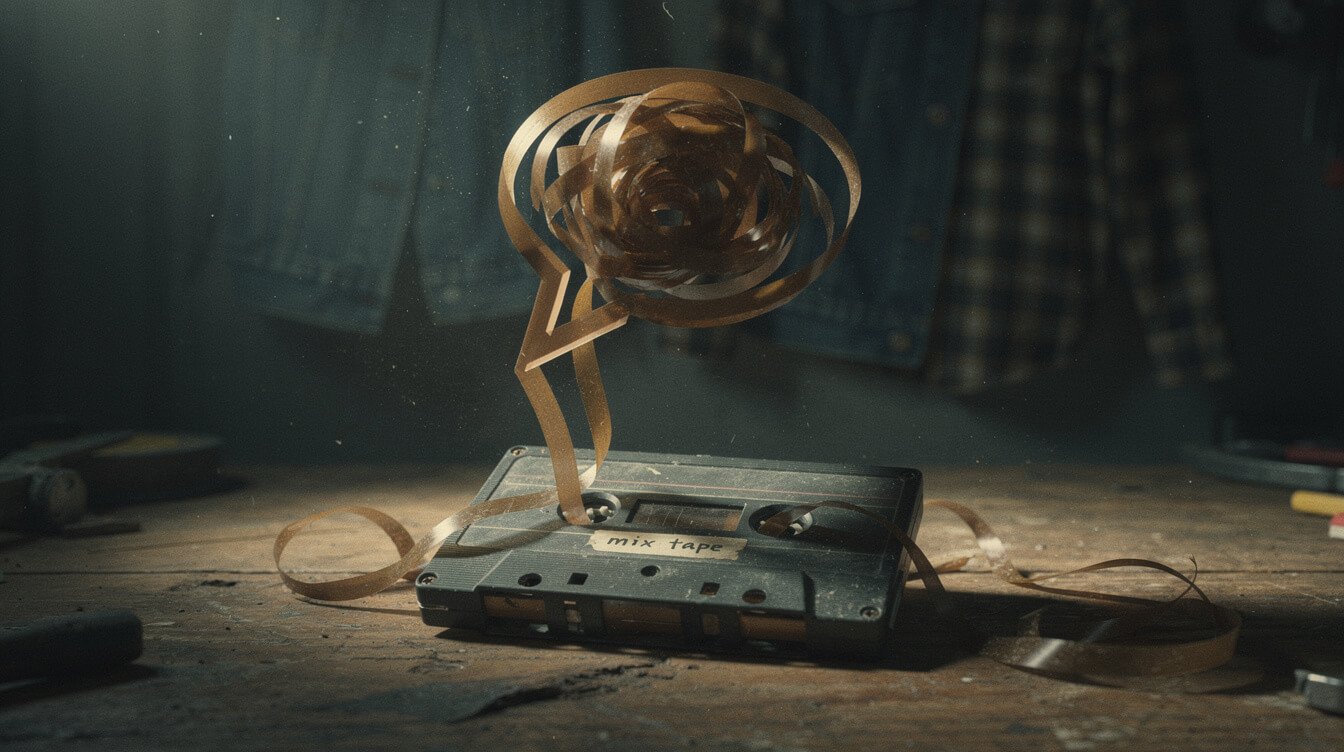
Nobody in that FAQ ever asks the actual question, which is: what if the person didn’t grow out of it? What if the reflexes are still there — the specific twitchy alertness of hearing a phone ring and knowing it’s for you because you’re the only one home, the muscle memory of coiling that landline cord around your finger for forty-five minutes while pretending you weren’t just sitting there waiting for it to ring? Those aren’t costume details. Nobody workshops that texture for a theme party, because nobody who’s renting the costume lived the rehearsal.
You can spot the difference in the small stuff that never makes it onto a costume-rack tag: knowing exactly how far the cord stretched before it went taut, negotiating with a sibling over who got the “good” chair near the phone, the specific dread of the busy signal when you needed to make one call before dinner. None of that is decade trivia. It’s procedural memory, the kind that doesn’t fade just because thirty-some years did.
That’s the actual audience for this phrase, and it’s an audience the sizing chart has no column for: not smaller, not younger, just further away from an era that apparently only gets discussed in the past tense on page one of Google.
The unglamorous details a Halloween costume always skips

A costume goes for the iconography — the neon, the shoulder pads, the one haircut everyone remembers. Fair enough, that’s what a costume is for: recognizable from across a room in six seconds. But it also means every costume skips the boring 90% of the decade that actually built the personality, because boring doesn’t photograph well and nobody’s renting it for a party.
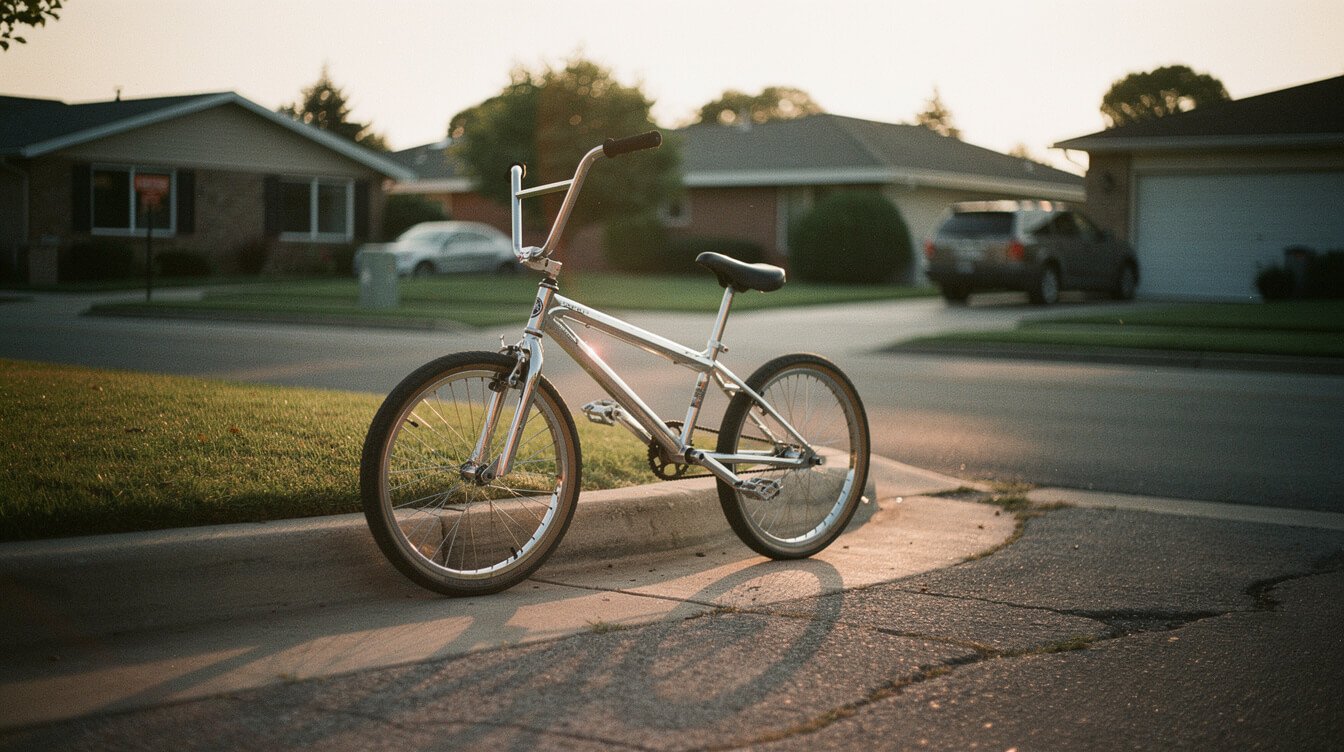
Nobody’s costume includes the specific dread of a bike with a flat tire three streets from home and no way to call anyone, because the only phone that could reach your house was bolted to a kitchen wall you weren’t standing next to. Nobody’s costume replicates the exact sound a screen door makes at the one house on the block where you were allowed to just walk in. Nobody rents the feeling of watching the streetlights come on and understanding, without being told twice, that this was the actual curfew — a municipal utility doing the job a text message does now.
Nobody’s costume, either, includes the low-grade competence that came out of all of it — knowing how to entertain yourself for six straight hours with nothing but a bike and a vague sense of the neighborhood’s geography, knowing which houses had a mom who’d feed you and which ones you just didn’t knock on, knowing how to solve a boredom problem without a single adult weighing in. That competence is the actual payoff of the decade, and it’s completely un-costumeable, because you can’t rent thirty accumulated afternoons of nobody checking on you.
There’s a reason costumes lean on the loud stuff instead: the loud stuff is legible in a photo, and a costume’s entire job is to be recognized fast, once, usually for a picture. The quiet stuff — the bike, the cord, the screen door, the streetlights — was never built to be recognized in a photo. It was built to be recognized in your own body, years later, when something as small as a porch light clicking on at dusk sends a little jolt through you that a stranger standing next to you wouldn’t feel at all. That reaction is the actual product. Everything else is packaging.
Why an 80s kid t-shirt has to earn it, not just name the decade
There’s a lazy version of this shirt and it just says “80s” in a bubble font with a couple of triangles, the graphic-design equivalent of a mood board nobody finished. It’s not wrong, it’s just doing the minimum — naming the decade the way a name tag names a person, technically accurate and completely uninteresting to anyone who already knows their own name.
The harder version doesn’t name the decade at all. It finds the one true, specific, unglamorous detail — the landline cord, the flat-tire bike, the screen door, the key on the shoestring — and trusts that the reader already has the rest of the memory filed and ready to go. You’re not explaining the 80s to someone. You’re handing a password to someone who already knows the system. If they need the decade spelled out next to the detail, the detail wasn’t specific enough, and no amount of retro color palette fixes that.
There’s a useful test here, and it’s blunt: could this exact design work as a shirt for a decade you weren’t there for? If the answer is yes — if it’s just neon triangles and a big “80s” — it hasn’t actually earned the decade, it’s just decorated it. The details that pass the test are the ones that would mean nothing to somebody who wasn’t there and everything to somebody who was. That asymmetry is the whole design brief.
This is also, not coincidentally, where the trademark trap lives. It’s tempting to reach for a specific movie, band, or show to do the identity work for you — instant recognition, zero design effort. Don’t. Naming someone else’s copyrighted property isn’t nostalgia, it’s borrowing somebody else’s brand equity without asking, and it’s the fastest way to turn a good shirt into a legal letter. The unglamorous, unbranded details do the same job — arguably a better one, because nobody else owns them, and nobody’s lawyer is reading your product description.
What actually reads as “I was there” vs. “I bought a costume”

The tell is always specificity plus restraint. “I was there” undersells the detail and lets you fill in the rest. “I bought a costume” oversells the decade and explains the joke before you’ve had a chance to get it. One trusts the reader. The other is worried the reader won’t show up, so it shouts the setup and steps on its own punchline.
You can run this test on anything, not just shirts. A movie that says “remember the 80s?” in dialogue is a costume. A movie that just shows a kid negotiating with a payphone and lets you place the decade yourself is the real thing. The rule scales down to a t-shirt exactly the same way: one detail, no narration, no decade printed anywhere near it.
It also explains why so many “I bought a costume” shirts still technically sell fine. A costume doesn’t need to be true to work — it needs to be recognizable for the length of a party. But recognizable and true are different jobs, and only one of them survives being worn on an ordinary Wednesday, three years after you bought it, when nobody’s grading the outfit and it either still means something or it doesn’t.
Looks like instead of just reading about the difference, you can look through the shop — no hard sell here, just designs built on the specific detail instead of the decade-wide one.
The detail, in shirt form
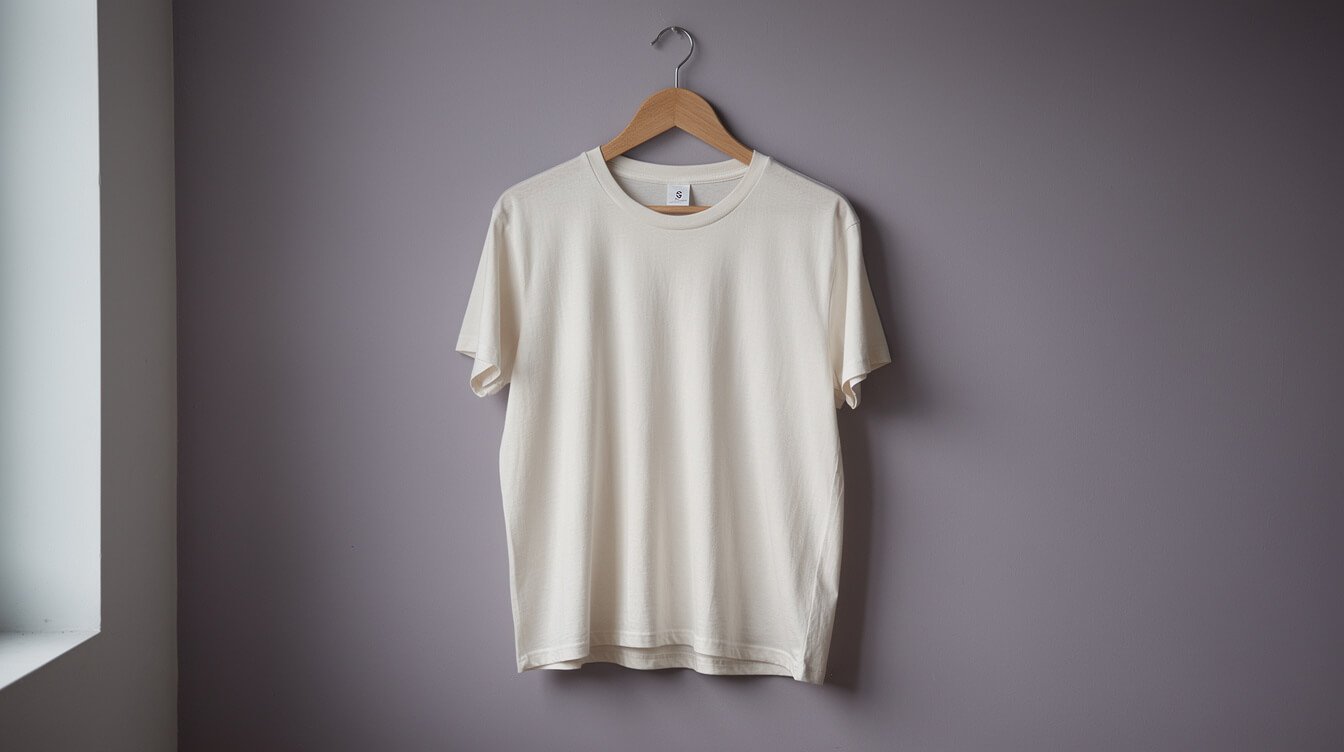
No costume triangles. No borrowed logos. Just the specific stuff, said once, for the people who’ll get it.
Quick answers

Isn’t this all just gatekeeping who “counts” as an 80s kid?
No — it’s the opposite of a velvet rope. Anyone who lived it already has the password; there’s no bouncer checking IDs at the door of your own childhood. The gatekeeping only happens when a costume tries to cut the line with a rental.
What’s the actual difference between this and a generic 80s nostalgia shirt?
A generic 80s shirt sells the decade in general — the colors, the vibe, the greatest-hits reel. An 80s kid shirt sells one specific, lived condition: being the actual demographic the decade happened to, not a fan of its highlight reel. It’s a narrower claim, which is exactly why it lands harder for the people it’s actually about.
Why does the shirt need restraint instead of just more 80s references?
Because over-explaining is the tell of someone who wasn’t sure the joke would land on its own. The whole IYKYK bet is that it doesn’t need backup. Stack five references on one shirt and you’ve built a mood board, not an identity.
Can a shirt be too subtle to work?
Sure — if the detail is so narrow it only means something to you personally, it stops being a shirt and starts being a diary entry. The sweet spot is specific enough to be true and common enough that a stranger who lived it recognizes it in under a second.
Final thoughts: wear the fact, not the theme party
“80s kid” was never a costume you put on for a night. It’s closer to a hometown — something that’s true about you whether or not you’re currently advertising it, and something no sizing chart is ever going to fit correctly because it was never a size to begin with. The search results will keep selling it to parents for one Tuesday a year. That’s fine. Let them have the theme party.
If you want the actual thing — the version built from the unglamorous, unbranded, entirely real details instead of a bubble-font decade — that’s a design problem worth solving properly, not a costume-rack afterthought. We’ve been chasing that exact distinction since the mall taught an entire generation how to raise itself in a parking lot, and it shows up again in why a costume isn’t the same thing as a memory. Same rule, different decade artifact — the shirt should sound like it remembers, not like it Googled.
Read another / subscribe
One good link, no throwback clip-art. Reply and tell us your era.