
Every 90s trivia quiz on the internet is written for the same person. They were nine in 1996, they had a lunchbox with a cartoon on it, and they’d like to be asked which movie a line came from. Good for them. We were there too, just taller. In 1996 a lot of us were paying rent, holding a pager, and trying to explain to a parent what a “website” was.
Here’s what the kids’ 90s trivia misses. The 90s had a plot, and it wasn’t the movies. It was the decade the arguments stopped lasting. At the start, a disputed fact could hang over a family for a week. By the end, you could settle it before your opponent finished the sentence, assuming nobody needed the phone line. The machines that did that showed up one at a time, and each one is a better trivia question than anything about a sitcom.
So this is 90s trivia for the people who were old enough to pay for it. Four rounds, twenty questions, answers right underneath. No movie lines. Keep score honestly. You know how.
Every 90s trivia quiz was written for the kids
Search for 90s trivia and the top results tell you who they think you are. One promises questions “for true 90s kids.” Others sort everything into movies, music, TV, and cartoons, with a celebrity in nearly every question. It’s a fine format. It’s also a format where every answer is the name of something somebody owns, and the whole test is whether you watched the same channel as the person who wrote it.
That’s not trivia so much as a viewing history. Real trivia used to be harder, because the answers lived somewhere else. In the 80s, a question about a fact meant a trip to the den for the right encyclopedia volume, or a phone call, or a ruling from whichever relative talked loudest. We went through that whole court system, from the encyclopedia down to the uncle, in the post on 80s trivia and who got to settle it. The 90s are what happened to that court.
The short version: it got replaced, piece by piece, and Gen X watched the whole renovation from the inside. We were the ones in college or at a first job when the web showed up. We bought the first disc encyclopedias, for kids who weren’t born yet or for ourselves. We got the area code changes, the pagers, the second phone line, and the Y2K memos at work. The kids remember the toys from the 90s. We remember the paperwork.
So the questions below are about the stuff that arrived. Some of it’s funny, some of it’s expensive, and one of it’s a coffee pot. A few answers come with a bonus point if you can say where you were when it happened. That’s the only part of this quiz you can’t look up, which seems fair.
Scoring is at the end of round four. No phones. We’d say “on the honor system,” but you’re Gen X, so we’ll just say “we’ll know.”
Round one: the encyclopedia goes on a disc

For most of the century, the encyclopedia was furniture. It came in a matching set, it took up a shelf, and it was usually a few years out of date by the time anyone opened it. Then a software company showed up with a disc. Five questions, and the only round of 90s trivia that comes with a payment plan.
In 1985, a software company asked the oldest and grandest English-language encyclopedia (the one that started in 1768) to put the whole set on a CD-ROM. What did the encyclopedia say?
Answer: No. Its management felt a disc didn’t fit a business built on printed sets. That’s one of the great “we’ll pass” moments of the century, right up there with turning down a band because guitar groups were on the way out.So where did the software company get its text instead?
Answer: From the supermarket encyclopedia. It tried for the two big names, didn’t get either, and licensed the text of the set a lot of our families actually owned, the one sold a volume at a time next to the checkout from 1953 on. You bought the A volume with the milk, and if you missed a week, your set had a hole in it forever. It’s why so many kids knew everything about aardvarks and nothing about Zanzibar. That supermarket text became the first edition of the disc encyclopedia. The print set’s last edition came out in 1997.The disc encyclopedia launched in 1993. What did it cost, and what did it cost shortly after?
Answer: $395 at launch. It soon dropped to $99 and was often thrown in free with a new computer. A whole encyclopedia went from a payment plan to a free extra in about a year.The first big multimedia encyclopedia on disc, with pictures and sound, came out in 1989. Who published it?
Answer: The same company that had said no in 1985. It published a children’s encyclopedia on disc under a different name. So it didn’t miss the idea. It just didn’t want the idea anywhere near its flagship set. A competitor had already put an encyclopedia on CD-ROM in the mid-80s, so this was not a secret.In 1990, the grand old set sold about 117,000 print sets. How many did it sell in 1994?
Answer: About 55,000, less than half. By 1996 its own CD-ROM version was down to about $200, and the company was sold that year for $135 million, a fraction of its book value. The printed set lasted until March 2012, when the company announced it was done printing. If your parents were still paying off a set in 1994, now you know why the salesman seemed nervous.
Bonus point if your house had the supermarket set and you can name the volume that went missing. Everybody’s family lost one. Nobody’s family ever found it.
Round two: the web shows up and nobody knows what it’s for

The web arrived in the 90s the way a new kid arrives in the middle of the school year: quietly, and then everywhere. Most of us met it at a college computer lab or a job, years before it got to the house. Five more questions of 90s trivia.
Roughly how many websites existed in 1993?
Answer: About 130. By 1994 there were 2,738. By 1996, about 257,000. By 2000, more than 17 million. In 1994 there were roughly 9,300 internet users for every website, which means the web was less a library than a waiting room. (Counts from Internet Live Stats.)On April 30, 1993, the European physics lab where the web was invented did something that made everything after it possible. What?
Answer: It made the web’s protocol and code available royalty-free. Nobody had to license it or ask permission. It’s the most generous thing a physics lab has ever done for people who mostly used it to look at pictures.A browser released in January 1993 by a university supercomputing center in Illinois did one new thing that made the web feel like a magazine instead of a manual. What was it?
Answer: It showed pictures inline, right in the text, instead of opening them in a separate window. The tag that made it work arrived in a March 1993 update. It wasn’t the first browser, but it was the first one a normal person would sit through, and normal people did.One of the first live cameras on the web was pointed at something important. What?
Answer: A coffee pot. Researchers in a Cambridge University computer lab set up a camera in 1991 so people elsewhere in the building could check whether the pot was empty before walking down the hall. It went on the web in 1993, and people around the world watched a coffee pot in England for eight years. The camera was switched off on August 22, 2001, and the pot itself sold at an online auction for £3,350. That’s the most Gen X origin story a technology has ever had: built to avoid a pointless trip.On August 11, 1994, a small company run out of a house in Nashua, New Hampshire, made what the New York Times treated as the first secure retail sale on the internet. What did it sell?
Answer: A CD. A man in Philadelphia bought an album by an English rock singer with a credit card over the web. Bonus point if you can name the first thing you ever bought online, and an extra point if you then waited by the door for it, because you didn’t believe it was real either.
Tiebreaker for this round: before the search box, how did you find a website? The honest answer is somebody told you the address, usually out loud, and you wrote it on your hand. The first web search engine that worked the way they do now went up on December 12, 1993, and the first one that searched the full text of pages came on April 20, 1994. Until then, you needed a friend, and the friend usually had the address slightly wrong. If any of this connected over a phone line in your house, the noise is its own post, and we wrote it in the one about dial-up.
Round three: the phone stops being on the wall
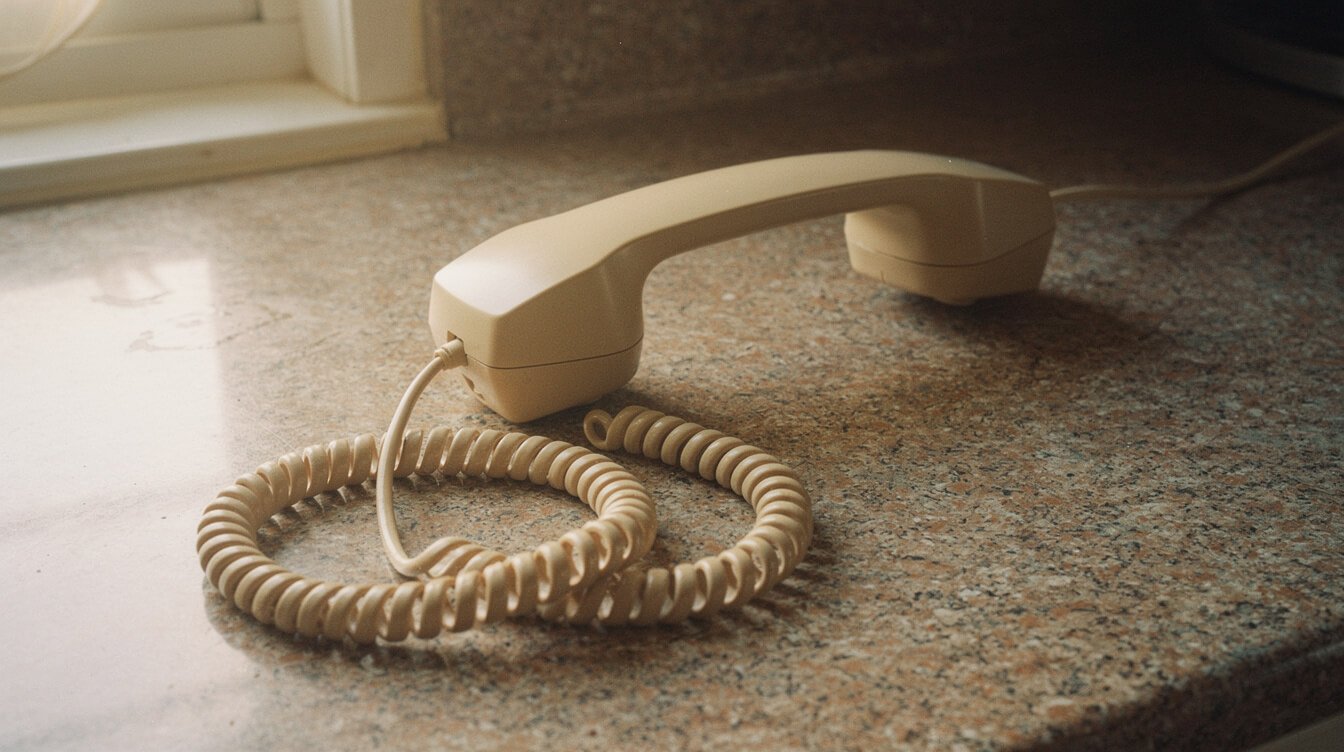
At the start of the decade, a phone number was a place. It lived on the kitchen wall, it had one area code, and it was busy if anyone was on it. By the end, the numbers were running out, because everybody suddenly needed several. Five questions.
The first text message was sent on December 3, 1992. What did it say?
Answer: “Merry Christmas.” An engineer typed it on a computer and sent it to a colleague’s phone, and the colleague, as far as history records, did not reply. The whole future of how people ignore each other started as a season’s greeting.Before 1995, every North American area code had something in common in the middle. What, and what changed on January 15, 1995?
Answer: The middle digit was always a 0 or a 1. That’s how the phone network told an area code from a regular number. On January 15, 1995, a new code for southern Alabama became the first one without it, one minute ahead of a new code in Washington State. The usual explanation was fax lines, pagers, second lines for the modem, and car phones. Between them, they’d eaten the supply. Bonus point if your area code changed in the 90s and your aunt kept dialing the old one until 2003.Some people in Southern California got three area codes in six years without moving. How?
Answer: A big chunk of the Los Angeles area was split out of 213 into a new code, 310, on November 2, 1991. Then on January 25, 1997, the southeast end of 310 (Long Beach to Whittier) was split off again into 562. The new code had first been planned as an overlay just for cell phones and pagers, which tells you who was using up the numbers. Your number stayed the same. Your stationery didn’t.Toll-free numbers had all started with 800 since 1966. When did they run out and add a second prefix?
Answer: March 1, 1996, when 888 numbers started. 877 followed in April 1998. If a 1-800 number used to spell something on a mattress commercial, it still did. The newcomers just got the leftovers.In 1992, a phone company quietly introduced a feature that put a whole category of childhood activity on notice. What was it, and what did you dial?
Answer: Call return, star sixty-nine. It called back whoever had just called you. Prank calls didn’t die overnight, but they suddenly had a natural predator. It got introduced, as the newspaper put it, “quietly,” which was the one thing the people it caught never were. We covered the other phone-company add-on that changed family life in the call waiting post, and what came before all of it in the pay phone one.
If you had a pager in this decade, you also had a phone you were looking for. Pagers didn’t make calls. They told you to go find a phone, and the phone was usually in a gas station parking lot. And if the call came while you were out, it went to the answering machine, along with three hang-ups from someone who wouldn’t leave a message.
The newsletter
Like a mixtape, but it shows up on its own
One email a week. The good posts, new designs, zero exclamation points. Unsubscribe whenever. We won't take it personally.
Round four: the grown-up 90s

The kids’ quizzes skip this round, because the kids weren’t paying for it. For a lot of Gen X, the 90s were the first decade with a lease, a 401(k) form nobody explained, and a boss who forwarded memos about the millennium. These are the adult facts. Five questions.
On February 5, 1993, about two weeks into a new administration, a law was signed that a lot of Gen X parents leaned on hard. What did it guarantee?
Answer: Up to 12 weeks of unpaid, job-protected leave for a new baby or a serious family medical problem, at covered employers. It’s the Family and Medical Leave Act. Unpaid, yes. But “they can’t fire you for it” was new, and plenty of us used it within a few years.On February 8, 1996, a law rewrote the rules for phones, cable, and broadcasting for the first time since 1934. What was it?
Answer: The Telecommunications Act of 1996. It passed the House 414 to 16 and the Senate 91 to 5, which tells you nobody had read it. It’s part of why your phone, cable, and internet bills started arriving from companies with new names and then, eventually, from the same company.When did the DVD go on sale in the US?
Answer: March 24, 1997. Japan got it the November before. If you’d just finished replacing your movie collection on tape, you were invited to start over. Most of us did, eventually, and then did it again.Where did the stock market’s best-known index close at the end of 1994, and where at the end of 1999?
Answer: 3,834 at the end of 1994. 11,497 at the end of 1999. It tripled in five years, which is how a generation that had grown up on recession news briefly got told it was going to be rich. You may remember a coworker who quit to day-trade. You may remember when he came back.The US spent an estimated how much preparing for the year 2000 computer bug?
Answer: Around $134 billion, according to one industry research firm, plus about $13 billion more fixing problems in 2000 and 2001. Worldwide estimates ran past $300 billion. Then midnight came and nothing happened, which is exactly what the money was for. Bonus point if you worked New Year’s Eve 1999 in a server room, sober, eating catered sandwiches and waiting for the lights to go out.
If you went 5 for 5 on this round, you were probably the one at the office who read the memos. We made something for exactly that person: the one who had the answer, and the receipt. It’s in the GenerationX shop, and it doesn’t explain itself.
Scoring your 90s trivia. Sixteen or more: you were there, and you were paying attention, probably because you were paying. Ten to fifteen: you were there and paying attention to something else. Under ten: you were in middle school, which is not a criticism. Somebody had to be.
Read the memo. Kept it.
For whoever settled it before the search box existed and still brings it up. Wear it to the next argument. You’ll still be right, just faster.
90s trivia: quick answers

What are good 90s trivia questions?
The ones nobody studied for. Movie and song questions are fine, but they reward whoever rewatched the most. Questions about what changed (the first text, the area code that broke the rule, the coffee pot) make a whole table argue, and the argument is the fun part. Mix both if your crowd wants pop culture. Lead with the ones that test whether you were there.
What are some funny facts about the 90s?
One of the first live cameras on the web was watching a coffee pot. The first text message was a Christmas card. The oldest encyclopedia in English turned down a CD-ROM deal, then published a different encyclopedia on CD-ROM four years later. Congress rewrote the phone laws 414 to 16. And one of the decade’s most expensive technology projects worked so well that everybody decided it had been a hoax.
What are good 90s trivia games?
The decade’s game nights moved away from knowing things and toward drawing, guessing, and shouting. A lot of 90s apartments ran on party games invented in the late 80s, and the first serious hobby games for adults arrived mid-decade. We went through the whole shelf in the post on 90s board games. For a trivia night with people who lived it, two short rounds and a long argument over the answer key beat any boxed game.
What was the most famous thing in the 90s?
Depends who you ask, which is the point of this whole post. Ask a kid from the decade and you’ll get a toy or a show. Ask someone who was working and you’ll probably get the web, in the “my office got email” sense, or the year 2000 bug. We’d argue for the web, mostly because it ended more arguments than everything else on the list combined.
What would 90s kids say?
Depends which 90s kids. The slang split by age: the college and first-job crowd talked one way, and the kids watching after-school TV talked another. Most lists only remember the younger room. We sorted out who said what in the post on 90s slang. And if your 90s involved staying up too late with a controller, that has its own post too.

From the shop
Huey Lewis I Wanna New Drug Fan Art T-Shirt
Price range: $24.99 through $26.99
Shop this designFinal thoughts: the last argument we lost fair and square
Here’s the strange thing about 90s trivia. The decade that made trivia unbeatable is the one we know best, and we don’t remember it as a decade of answers. We remember it as a decade of things showing up. A disc came with the computer, then a browser, then an area code, then a pager, a second line, and a memo about the millennium. Each one ended a small argument somewhere, and most of us didn’t notice until later.
We were the right age to see both sides of it. We spent our childhoods losing arguments for a week at a time, waiting for the library to open or for the right volume to come home from school. Then, sometime around our late twenties, we became the people who could just look it up. Nobody asked whether we wanted that. It came with the computer, like the encyclopedia.
So try this 90s trivia at a table, out loud, the old way. No phones until the end. Let somebody be confidently wrong about the coffee pot for at least ten minutes. That’s not nostalgia. It’s the last version of the game where losing still meant something.
And if you’re the one who always had the answer, you already knew that.
Before you go
You made it to the end. Respect.
Get the best of these in one short weekly email, plus whatever we just printed. No spam. We were raised better than that. Mostly.