School book fair nostalgia is one of the few memories our whole generation shares without having to compare notes. Say the words to anyone who sat in an American classroom between roughly 1975 and 1995 and watch their face do the thing — a small involuntary flicker, somewhere between a smile and a wince. We all went. We all remember it. And almost none of us remember the books.
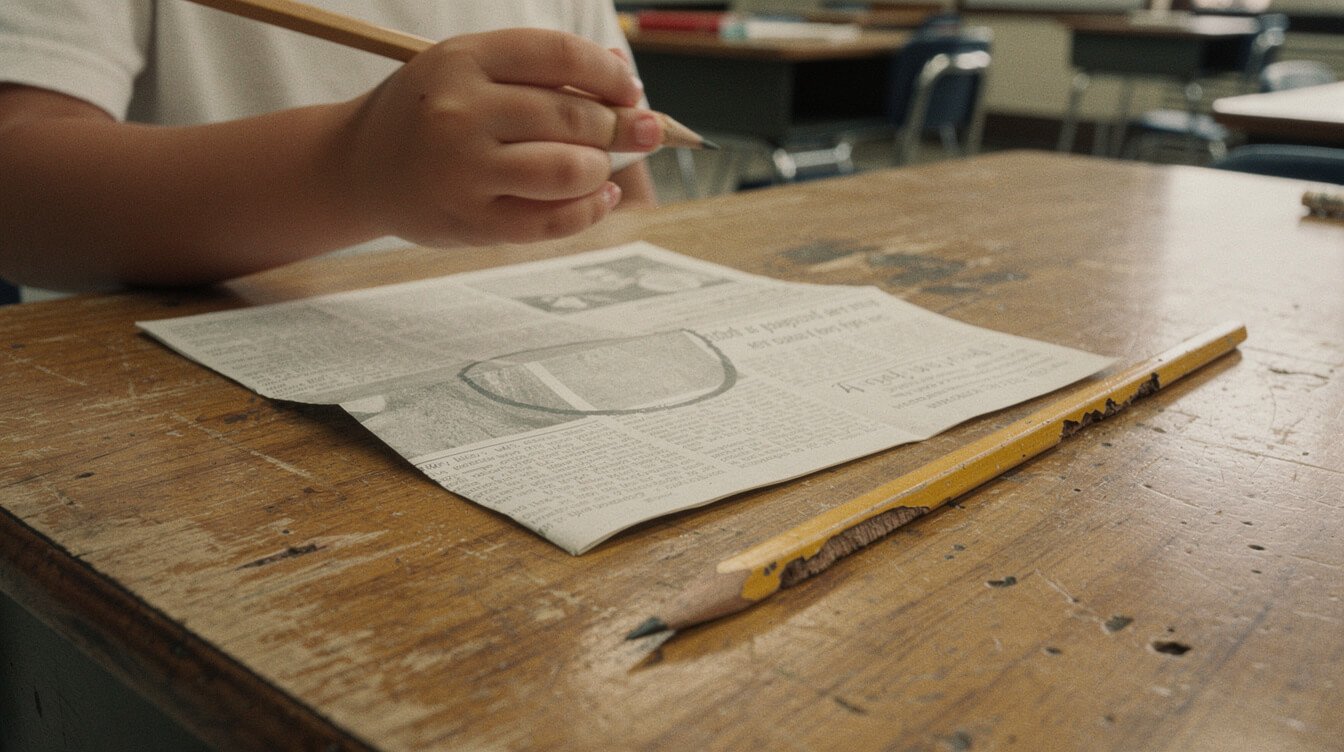
What we remember is a folded sheet of newsprint, thin enough to see your hand through, that landed on the desk two weeks early and quietly took over our lives.
That is the part nobody writes about. The internet is full of lists of the paperbacks we supposedly treasured, ranked and captioned and re-covered in high resolution. Fine. Nice covers. But the books were the end of the story, and by the time you got one, the good part was already over. The good part was the order form.
School book fair nostalgia starts with a piece of newsprint
The flyer arrived the way most important information arrived back then: handed down the row, one kid at a time, with no announcement and no context. A teacher would say something like “these are going home with you,” and that was the full briefing. You worked out the rest yourself. We were good at that.
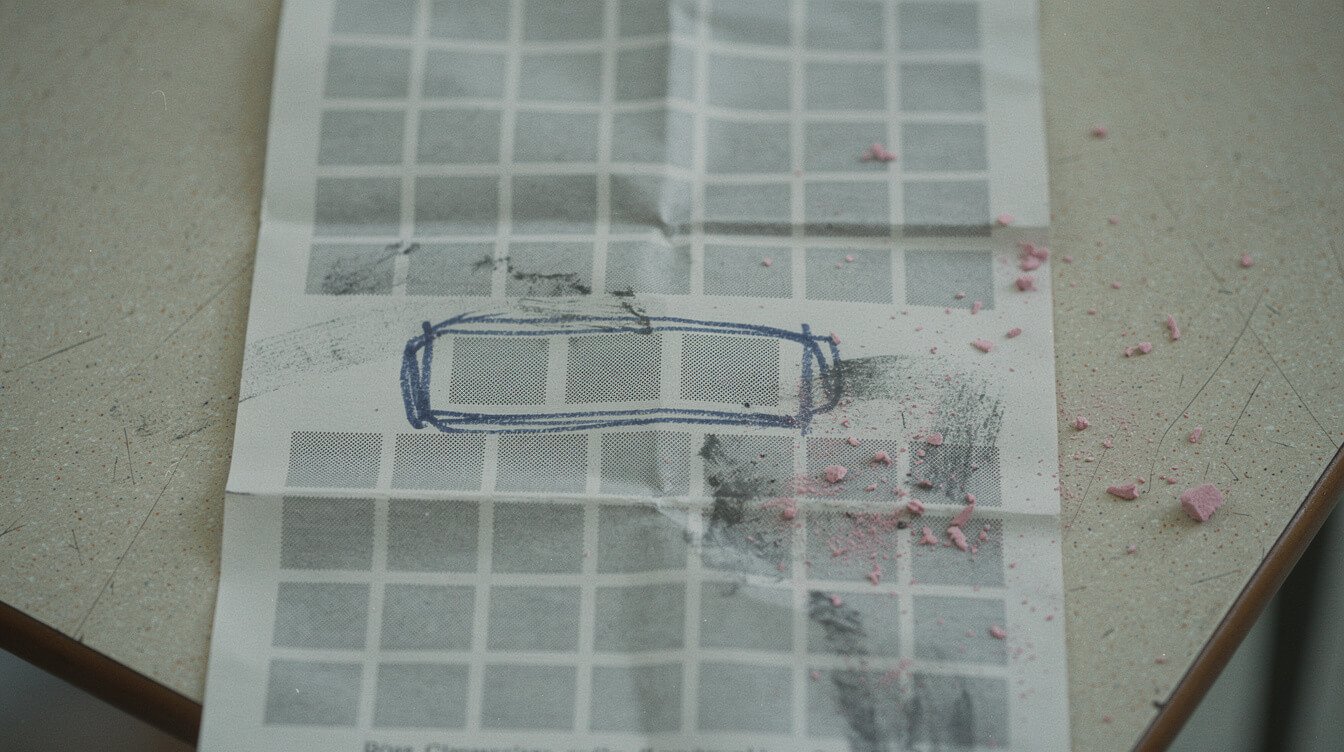
It was cheap paper. Genuinely, aggressively cheap — grey newsprint with grey ink, the kind that came off on your fingers and transferred faintly onto your palm by the end of the day. The pictures were postage-stamp sized and slightly out of register, so every cover looked like it was vibrating. There were maybe sixty items crammed onto a single fold-out sheet with no white space and no design logic whatsoever.
And it was, without exaggeration, the most exciting document any of us had ever been handed.
Understand the baseline here. This was a childhood with three and a half channels, a library with a card catalog, and precisely zero ability to look anything up on demand. Nothing was searchable. Nothing was recommended to you by an algorithm that had been studying your behavior since you were four. If you wanted to know what existed in the world, somebody had to physically hand you a list of it.
So a sheet of paper listing sixty things you could theoretically own was not a marketing circular. It was a map of the possible. You didn’t skim it. You studied it, the way you’d study a menu in a restaurant you’d never be taken to again.
The economics were part of the thrill. Everything on there cost between a dollar and about four-fifty, which put it in the strange and specific zone of things a nine-year-old could plausibly acquire. A bike was fantasy. A video game console was fantasy. But $2.95? That was a negotiation. That was achievable with the right combination of allowance, couch cushions, and timing your ask to when your mother was distracted.
The flyer, in other words, was the first thing that ever made us feel like participants in the economy rather than spectators of it.
The circling ritual was the actual event
Here is where it gets specific, and where anyone who was there is already nodding.
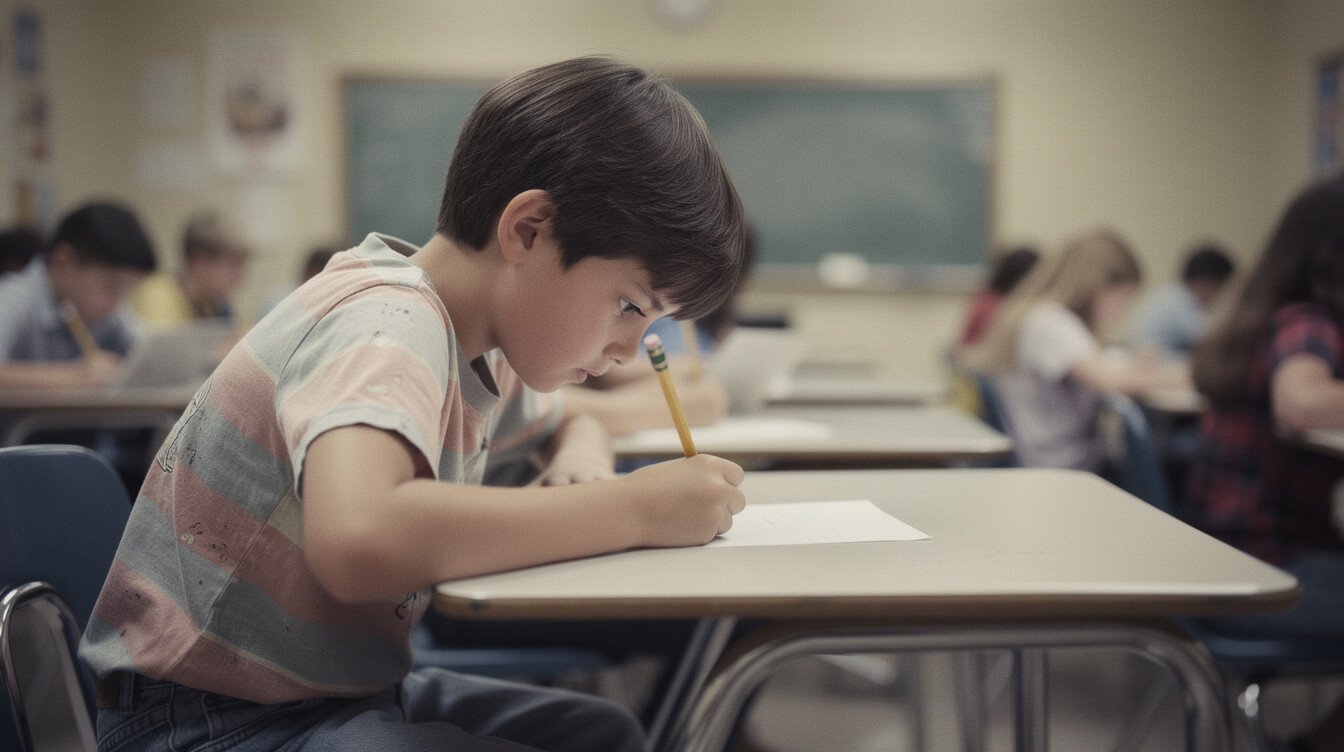
You did not circle things immediately. Circling immediately was for amateurs. The first pass was reconnaissance — a full read-through, top to bottom, both sides, no commitments. You were building a mental picture of the landscape before you committed ink to it.
Then came the shortlist, which is where the pencil came in, because pencil was reversible. Anyone who went straight to pen on the first pass was either extremely confident or about to learn something. By the third day you’d have eleven things circled, which was roughly nine more than you could afford, and you knew it, and you circled them anyway because at that stage it wasn’t a shopping list. It was a wish inventory.
We spent two weeks wanting eleven things so we could spend forty-five seconds buying two. Nobody thought this was strange. It was just how wanting worked.
The elimination rounds were brutal and entirely self-administered. No adult helped. No adult knew it was happening. You sat on your bedroom floor with a flyer that was now soft and furred at the folds from handling, and you made genuinely difficult trade-off decisions about resource allocation — which is a sentence that makes it sound much more dignified than a kid lying on carpet muttering “okay but if I don’t get this one, then—”
And the flyer traveled. It went to school in your folder, came home, went back. It got compared against other kids’ flyers at lunch, which is how you found out that Jason had already decided on something you hadn’t even noticed, which forced a full re-evaluation. It got quoted at your parents at strategic moments. By the end it was creased into eight rectangles, slightly translucent at the folds, and covered in a sedimentary record of your changing mind.
That object absorbed two weeks of a kid’s imagination. Two weeks. Modern children make purchasing decisions in the time it takes a page to load, and honestly, good for them — but they’re not getting the two weeks. The two weeks were the product. The book was the receipt.
They turned the gym into a store and nobody explained why
Then the day came, and the physical world did something it almost never did back then: it changed.
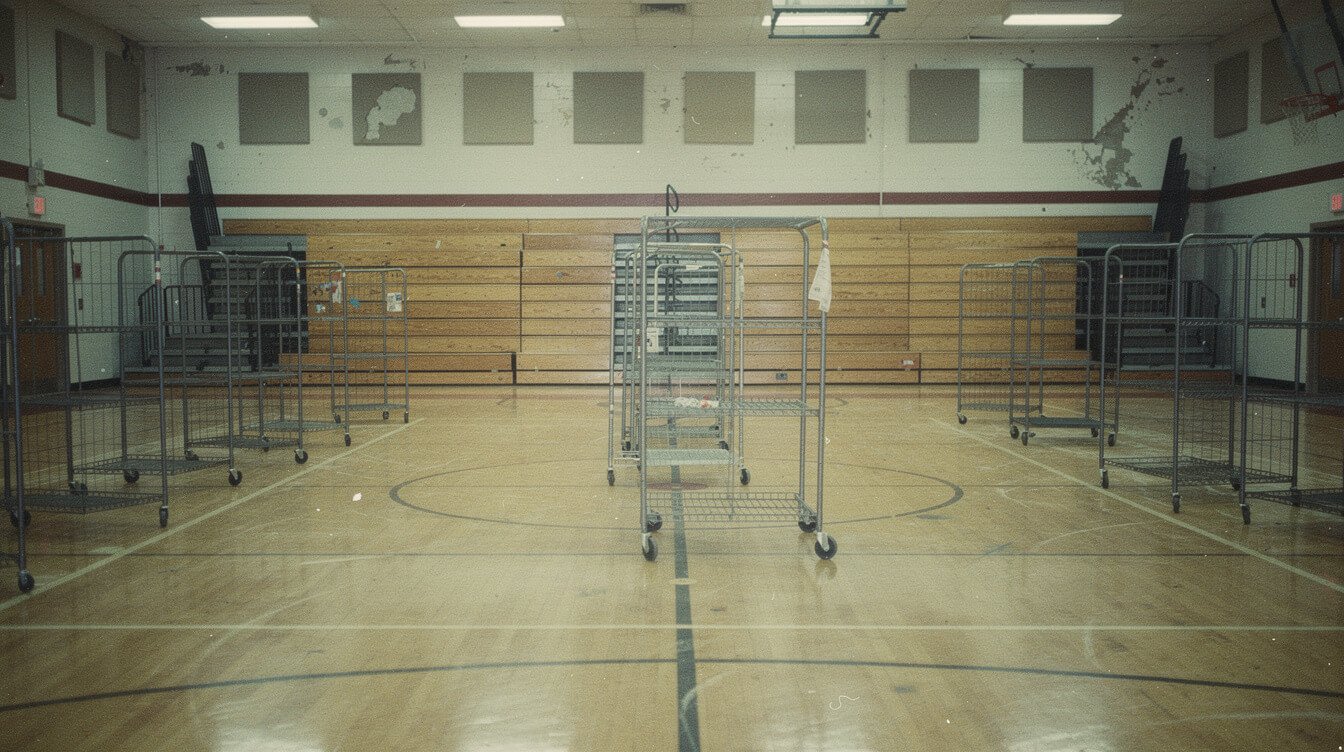
You walked into the gym — the gym, where you had been humiliated in a rope-climbing incident the previous spring — and it was a store. Folding metal racks on the basketball floor. Wire spinners. Tables where there had been nothing. The painted free-throw line running underneath a display like it had no idea what was happening to it.
Nobody explained this. There was no assembly, no build-up, no teacher walking you through the transformation of the multipurpose space into a retail environment. It was simply different on Tuesday, and you were expected to deal with that, which — again — we were good at.
The room smelled wrong in the best way. Gyms smelled like floor wax, rubber, and the accumulated regret of forty years of dodgeball. For one week a year, that got overlaid with the smell of new paper and fresh ink, which is a genuinely good smell and one of the few sensory memories from that era that hasn’t been ruined by being turned into a candle.
And the rules were different in there, which was the real headline. You were in the gym, during school hours, browsing. Wandering. Picking things up and putting them back down. No line, no assigned seat, no one telling you where to stand. For a generation that spent most of its indoor hours being told exactly where to be, twenty unsupervised minutes in a converted gymnasium registered as something close to freedom.
If that particular flavor of unsupervised drifting sounds familiar, it’s the same muscle we were building at the 80s mall, the last place nobody was watching us — and the same one we used later, standing in a rental aisle deciding on a Friday night. The book fair was just the first licensed version of it, held indoors, with a permission slip.
What we actually bought, and it was not literature
Let’s be honest with each other, because there’s no one else here. This is the part school book fair nostalgia always skips, probably out of embarrassment.
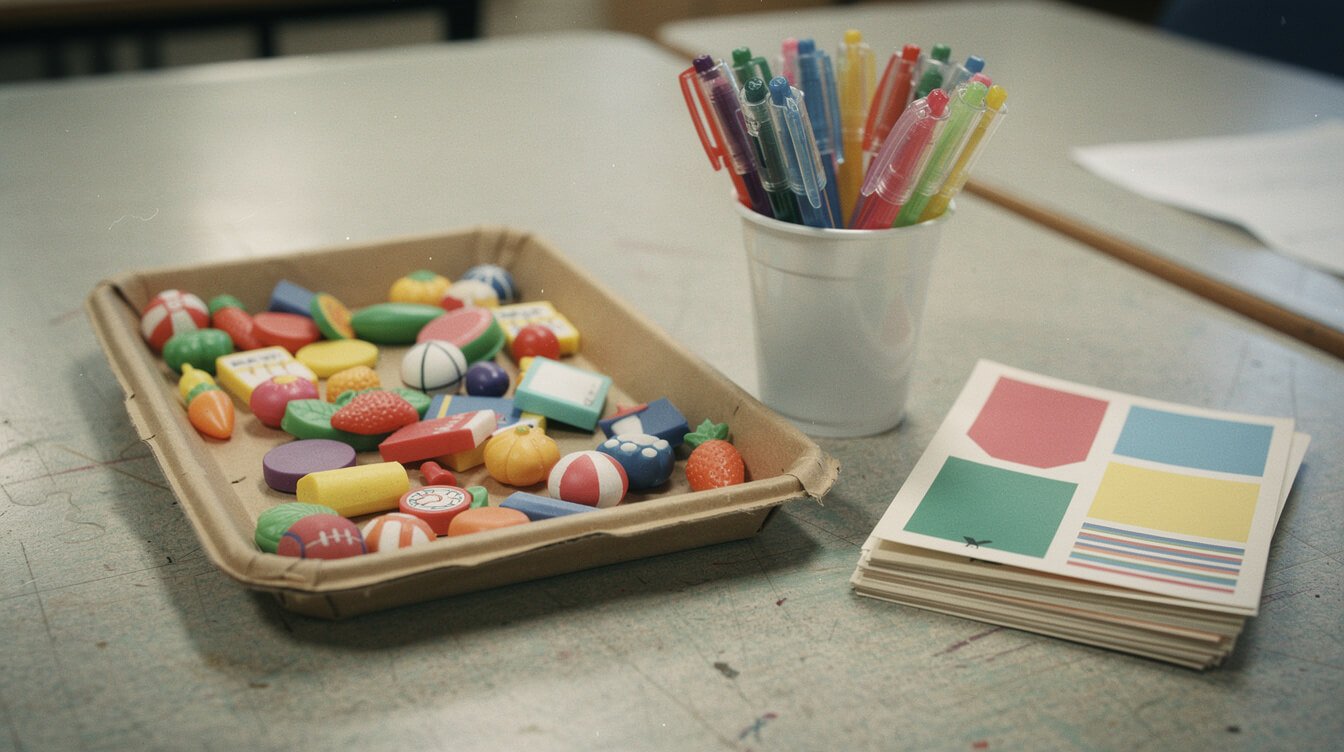
You went to a book fair and you bought a pen. Specifically, you bought the pen with six colors in one barrel, which you had already owned twice before and which had already taught you twice that all six clickers go down at once eventually and then it’s a paperweight. You bought it again. We all bought it again.
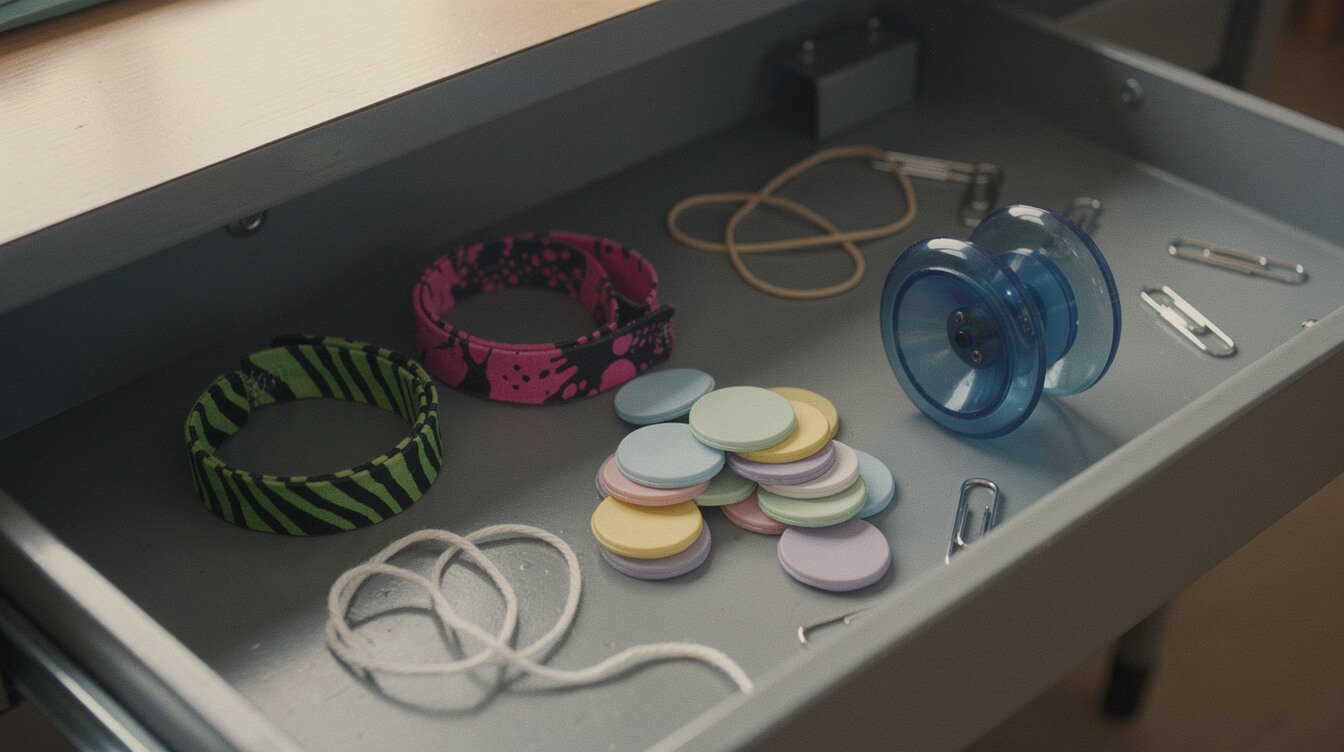
Or you bought an eraser shaped like something that wasn’t an eraser. A hamburger. A tiny cassette. A shoe. These erasers were structurally incapable of erasing anything — drag one across pencil and it would smear the graphite, tear the paper, and leave a waxy grey streak as a souvenir. Their function was not erasing. Their function was being owned, and sitting in the tray of your desk where other people could see them.
Then there were the posters, folded into eighths so that every single one had a permanent white cross through the middle of it. You knew this would happen. You bought it anyway. It went on your wall with the cross showing and stayed there for four years.
We also, occasionally, bought books. And some of them mattered enormously. But here’s the thing our generation understood instinctively and nobody ever said out loud: the book fair was not about reading. It was about acquisition — about walking out of that gym holding something that was unambiguously, legally, permanently yours, bought with your own money, chosen by you, with no adult involved in the selection.
That last part is the whole thing. That is the entire engine underneath the memory. Almost nothing else in a Gen X childhood was chosen by us. Our clothes were chosen. Our haircuts were regrettable and chosen. Dinner was not a discussion. But that eraser? That was a decision we made with our own judgment, and we defended it.
Which, four decades later, is more or less still the criteria. If you’re looking at the shirts we print, it’s the same test: did you pick it because it’s actually yours, or because someone told you it was a vibe? We only make the first kind.
The newsletter
Like a mixtape, but it shows up on its own
One email a week. The good posts, new designs, zero exclamation points. Unsubscribe whenever. We won't take it personally.
The five-dollar economy and our first real negotiation
The money conversation deserves its own section, because it’s where the book fair quietly did something that no class in that building managed.
The ask happened at the kitchen table, and you had prepared for it. You knew the number. You knew which items justified the number. You had, in most cases, already decided which item you’d sacrifice if the counteroffer came in low — because the counteroffer always came in low. Five dollars was the standard opening position from the parental side, and five dollars in a world of $2.95 items meant exactly one good thing plus something small, or two mediocre things, and the entire math of that was yours to solve.
Some kids got a blank check in the form of “just get what you want,” and we did not trust those kids. Some kids got nothing, and pretended not to care with a competence that in hindsight is genuinely sad. Most of us got the five, folded, with a light warning about not losing it, and we did not lose it, because losing it was unthinkable.
Then you carried that bill around all morning. In a pocket, checked roughly every eleven minutes. It was the single most valuable object you had ever been personally responsible for, and the responsibility was total — nobody was going to replace it, nobody was tracking it, and if it fell out on the playground the entire two-week project simply ended.
That is a real financial education. Constrained budget, competing priorities, sunk-cost temptation from your own circled list, live negotiation with a counterparty who held all the leverage, and full downside risk on the execution. Nine years old. No curriculum, no worksheet, nobody grading it.
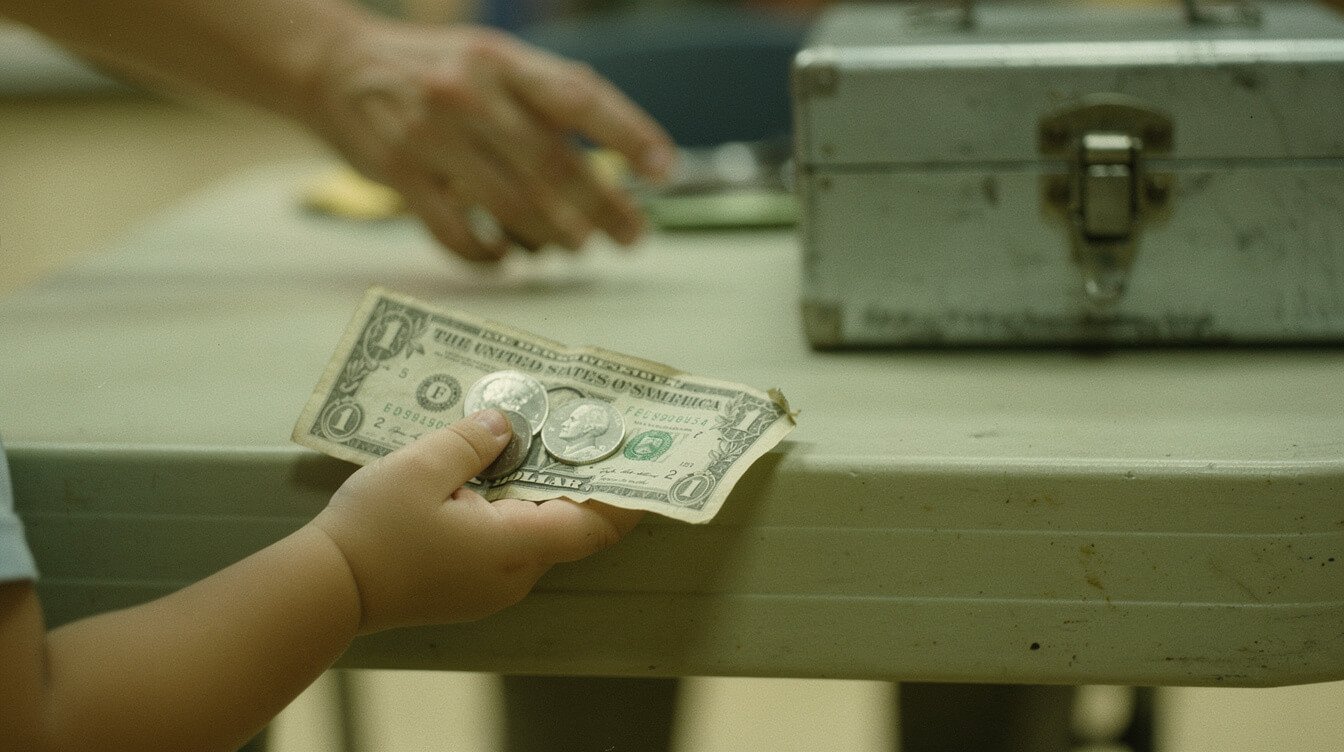
And then the transaction itself: a folding table, a grey metal cash box, a parent volunteer who didn’t ask you any questions. No approval needed. No receipt emailed anywhere. You handed over the money, took the thing, and it was done. Our whole relationship with buying things was formed right there — direct, unmonitored, and entirely on us if it went badly. It’s why we’re still suspicious of a checkout that wants an account first.
From the shop
Still picking things off a list
Same instinct, better paper stock. Our designs are for the people who circled eleven things and bought two — you already know which one you’d pick.
Why school book fair nostalgia outlasted the books themselves
So why does this one stick? Plenty of childhood happened. Most of it has gone soft and grey at the edges. But say “book fair” in a room of people in their fifties and the details come back with weird precision — the paper texture, the gym smell, the specific eraser.
Part of it is that it was scheduled scarcity, and we were natives of that. One week a year. When it was gone it was gone, and there was no reordering it, no “back in stock” email, no second window. That is the same structure as Saturday morning cartoons — be there or miss it permanently — and it is a structure that basically no longer exists. Scarcity makes memory. Infinite availability makes a blur.
Part of it is the anticipation ratio. Two weeks of wanting, twenty minutes of having. Every good memory from that decade has that shape, come to think of it: the walk down the rental aisle beat the movie, the tape you made beat the album, and the flyer beat the book. We were an anticipation generation. We had to be — there was nothing else to do with the waiting.
The autonomy nobody noticed they were giving us
But the real reason, I think, is that the book fair was one of the only places where an adult institution handed a kid actual discretion and then walked away.
Think about the design of it. The school selects the inventory. The school hands you the catalog. The school converts its own gym into the storefront. And then, at the decisive moment, the school says nothing at all about what you should choose. No recommendation, no approved list, no reading-level gate at the cash box. You could walk in with five dollars and walk out with a novelty eraser and a folded poster, and the institution’s response to this was to take your money and say thank you.
That’s remarkable, and it’s very of-the-era. It’s the same hands-off calculus that let us ride bikes to the next town over and run the household through a blinking answering machine at eleven years old. The adults set the boundaries of the system and then trusted us to operate inside it unsupervised. Sometimes that produced competence. Sometimes it produced a hamburger-shaped eraser. Either way it produced us.
The books were incidental. What we were actually being handed, one grey flyer at a time, was practice at wanting something, evaluating it, paying for it, and living with the result. Which — say what you want about our generation’s various issues — we got fairly good at.
From the shop
Madonna Let Your Body Move 80s Pop Art T-Shirt
Price range: $24.99 through $26.99
Shop this designFinal thoughts: the wanting was the whole product
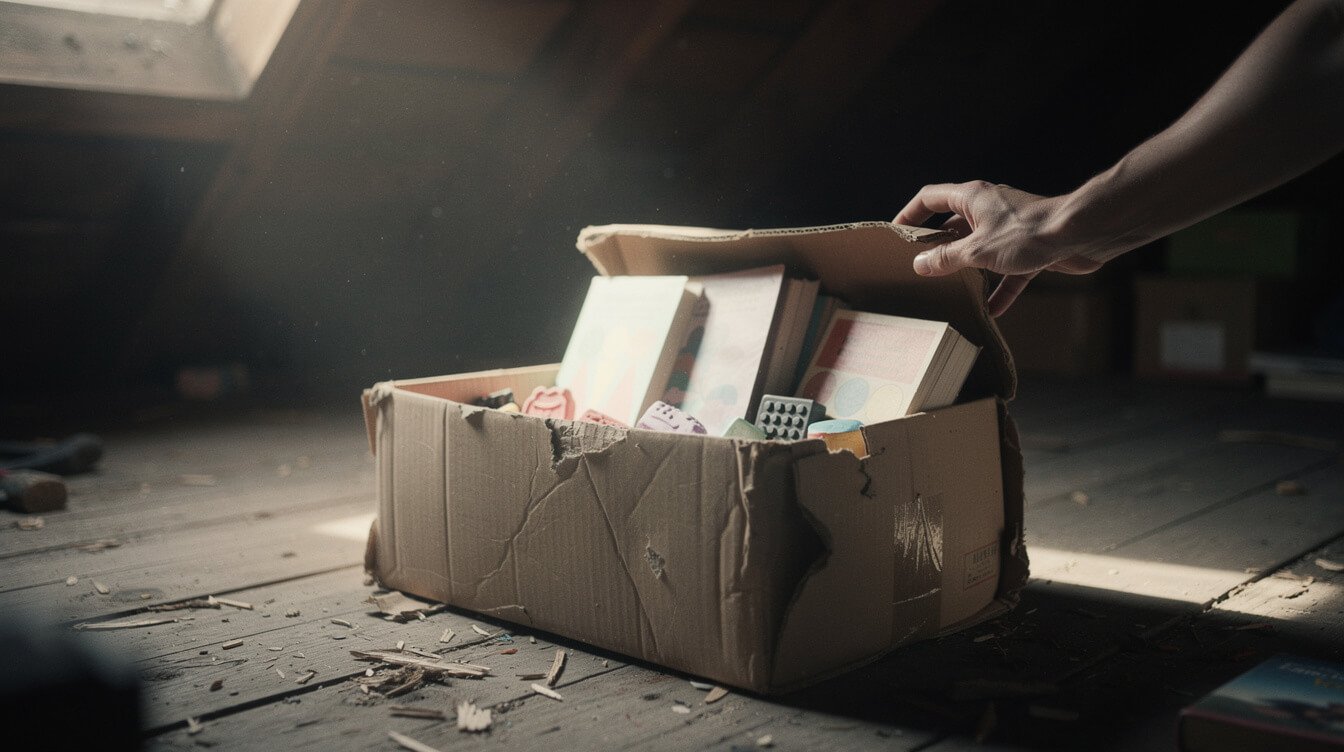
The flyers are gone. Ours went out with everything else, in a box, at some point, without ceremony. Nobody saved the order form, because nobody thought the order form was the thing. We thought the book was the thing.
It wasn’t. The book got read once and shelved. The two weeks of lying on the carpet with a soft grey sheet of newsprint, running the numbers, revising the list, defending your choices to a kid named Jason who had strong opinions — that’s the part that survived. Strip the covers and the titles off it and school book fair nostalgia is really just the memory of being allowed to decide something.
We were the last group to get that particular deal: a finite list, a real constraint, a deadline, and no one looking over our shoulder. Everything since has been infinite, instant, and monitored. It’s better in almost every measurable way. It’s just not the same, and we notice, and we’re not going to make a whole speech about it.
Anyway. If you spent a fortnight deciding between two things that cost $2.95 and then bought neither of them because you panicked at the table and grabbed a pen instead — we’ve written about that instinct before, and you’re in the right place. And if you don’t know what any of this is about, that’s fine too. It wasn’t for you.
Before you go
You made it to the end. Respect.
Get the best of these in one short weekly email, plus whatever we just printed. No spam. We were raised better than that. Mostly.