Type “90s throwback shirts” into a search bar and you’ll get the same thing on every result: a grid of licensed reprints, a “shop the decade” collection page, somebody’s affiliate roundup of where to buy a shirt that already existed. Nobody’s asking the actual question, which is why the word “throwback” got slapped on a shirt in the first place, and what happened to it once it became a category on a website instead of a thing you actually felt. This is about that word, what it used to mean, and why most of what’s sold under it now gets the whole assignment wrong.
Here’s the short version: a real 90s throwback shirt doesn’t need the label. The label is what you reach for when the design can’t do the work by itself.
What “throwback” started meaning once marketing got its hands on it
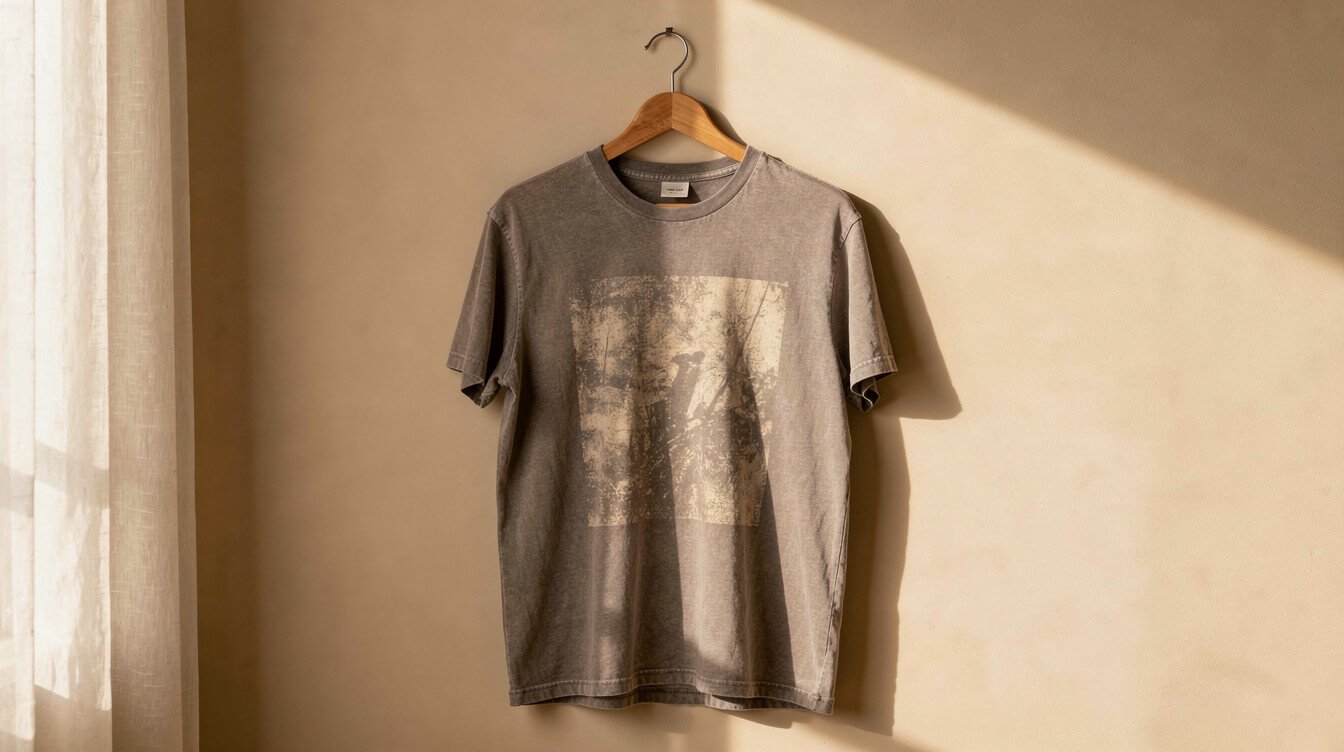
“Throwback” used to be a verb before it was a product category. You’d throw it back — a joke, a memory, a look — the way you’d toss something to a friend who’d catch it without needing it explained. Somewhere in the last decade, a marketing department turned the verb into a noun, then into a shelf tag, then into an entire aisle: Throwback Collection, printed in a font that’s trying very hard to look like it wasn’t designed on a laptop in 2024.
The problem isn’t that people are selling nostalgia. People have always sold nostalgia — that’s most of what a mall ever was. The problem is that the word got hollowed out from the inside. It stopped describing a feeling and started describing a manufacturing category, the same way “artisan” stopped meaning a person with a trade and started meaning a font on a bread bag. Once a word becomes a filter you can click on an e-commerce site, it’s done its real job and moved on to a second career as a sales tool.
You can watch this happen in real time if you look at who’s actually making these shirts. It’s rarely someone who was nine in 1994. It’s a print-on-demand catalog with a “decades” tag, run by a twenty-six-year-old with excellent Photoshop skills and no memory of any of it, because the memory was never the input. The keyword was. And keywords don’t know the difference between a real Tuesday afternoon in 1993 and a stock photo of one.
None of this means the decade wasn’t worth remembering. It means the word got there first and used up all the good will before the actual memory showed up to cash it in.
There’s a useful comparison in how other decades got treated before “throwback” ate the whole category. Nobody needed a shelf tag to remember a specific song, a specific smell, a specific shade of carpet in a specific rec room. Those things just got remembered, unprompted, the way real memories work — sideways, triggered by something unrelated, never on a schedule. The moment an entire decade gets filed under one searchable label, it stops being remembered and starts being retrieved, which is a completely different mental action even though it looks identical from the outside. Retrieval is fast and flat. Memory is slow and has texture. Most of what’s sold as a “90s throwback shirt” is optimized for the first one and has no idea the second one exists.
The shirt that remembers vs. the one that’s cosplaying
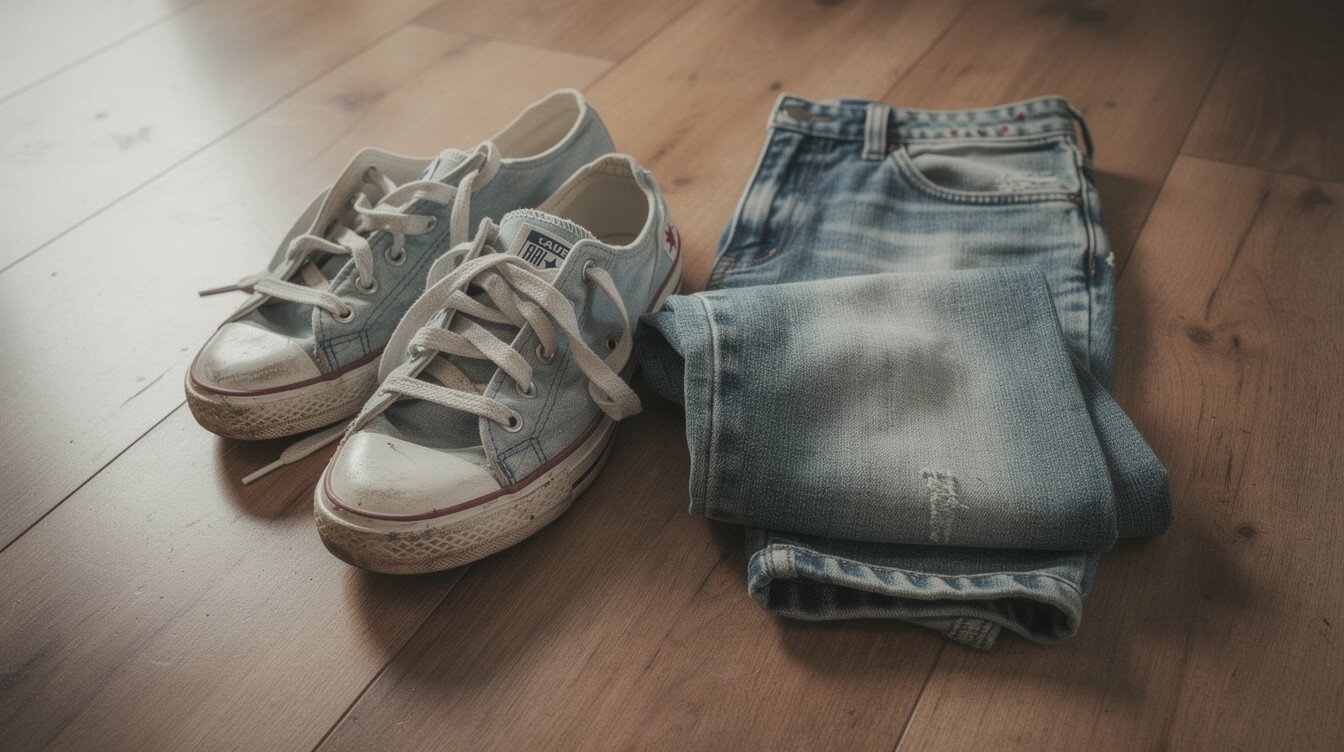
There’s a simple test for telling these apart, and it doesn’t involve a single design element — it involves a question. Does the shirt describe something you did, or something you watched? A shirt about the specific dread of a dial tone cutting off mid-download describes something you did, over and over, at an hour your parents didn’t know about. A shirt with a generic checkerboard pattern and the word “RADICAL” in a wavy font describes something a stranger assumes you watched, on a screen, from a safe distance, as a spectator to a decade instead of a resident of one.
Cosplay shirts are built from the outside in — they start with “what did the 90s look like” and work backward to a design. The real ones start with “what did the 90s feel like from the inside of an actual Tuesday” and only later figure out what that looks like on a shirt. The difference shows up in the specificity. A cosplay shirt says 90s. A real one says the exact ten seconds after your mom picked up the other phone line while you were mid-connection, and it says it without spelling out a single word of that sentence, because it doesn’t have to. If you were there, the shirt just has to gesture at it. If you weren’t, no amount of detail will make the gesture land, and that’s fine — it wasn’t for you.
That’s not gatekeeping so much as honesty about who a joke belongs to. A joke that works on everyone was never really a joke. It was a caption. If you want a real read on what actually landed with people who were there, our piece on 90s nostalgia shirts made for the people who were nine at the time goes deeper into that exact gap between the memory and the merch built to look like one.
There’s also a tell in how each version wants to be worn. A cosplay shirt wants to be photographed — it’s built for the angle, the flat lay, the caption underneath explaining what decade you’re “channeling” today. A real one just wants to be worn on an unremarkable Wednesday, doing laundry, running an errand, not performing anything for anybody. That’s not a coincidence. One of them was built as content. The other one was built as clothing, which used to be the entire point of a shirt before it became a small billboard for a decade you may or may not have been present for.
Who actually gets to decide what counts as a real 90s throwback shirt
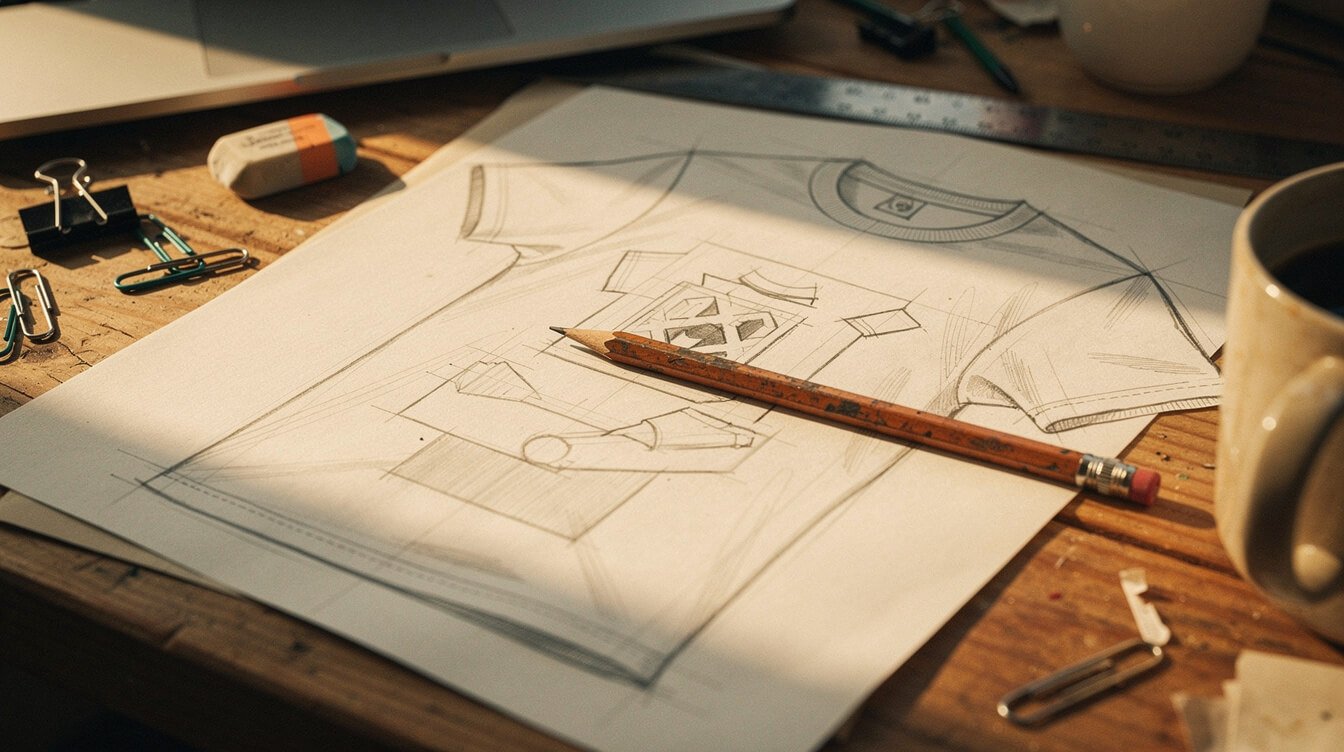
Not a trend forecaster. Not a licensing office. Not, respectfully, an algorithm that noticed “Y2K aesthetic” spiking in search volume and told a factory to start printing. The people who get to decide what a real 90s throwback shirt looks like are the ones who were doing something else entirely at the time — living an ordinary Tuesday, not curating one for later resale.
This is the part official licensing gets backwards on purpose, because it’s a business built on the opposite premise: that anyone with an internet connection and a decade in mind can be sold the same signal. That’s not a design failure, it’s the design goal — mass legibility, maximum shelf life, a shirt anyone can buy regardless of whether they have any right to it. There’s nothing evil about that. It’s just not what an actual throwback is supposed to do. A throwback that works on everyone equally isn’t throwing anything back to anyone in particular. It’s just advertising.
The actual authority on a 90s throwback shirt is distributed and completely unofficial: it’s every person who lived through that decade recognizing, independently and without coordination, whether a given detail is true or fabricated. Nobody elected this committee. It doesn’t meet. It just knows, instantly, the way you know within one syllable whether someone actually grew up where they say they did. That’s a harder bar to clear than “does this look 90s,” and it’s the only bar that was ever worth clearing.
You can see the same standard applied to a different decade in vintage 80s apparel: not a costume, not a relic — the specific mechanics change, but the test doesn’t.
This is also why crowdsourcing the decision almost never works, however well-intentioned the attempt. A focus group can tell you what people associate with the 90s in the abstract — bright colors, chunky sneakers, a general vibe of “before everyone had a phone” — but association isn’t the same instrument as memory, and it can’t be substituted for it no matter how large the sample size gets. Ask a thousand people what the 90s “felt like” and you’ll get a thousand answers that sound suspiciously similar to each other, all converging on the same handful of easy signifiers, because a survey optimizes for consensus and consensus is exactly what a real memory refuses to give you.
The one detail the mall-kiosk version always gets wrong
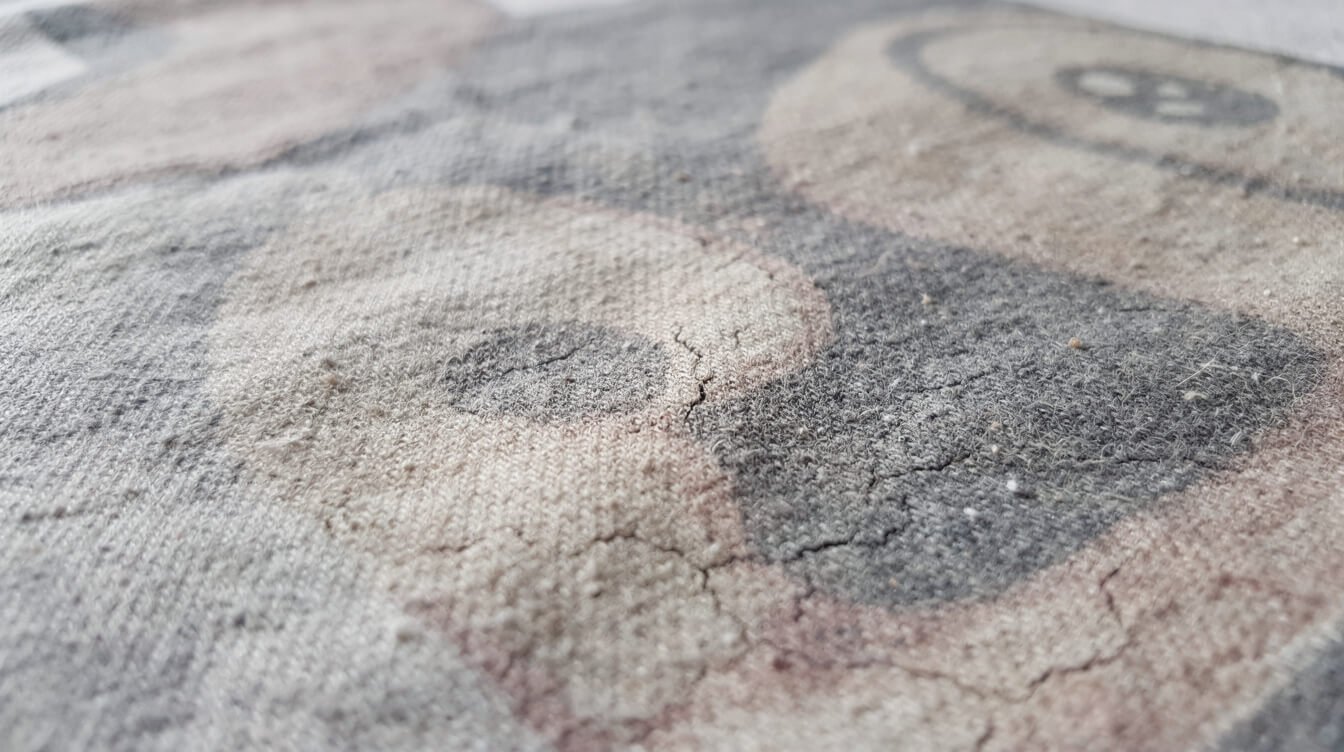
It’s never the big swing that gives away a fake. It’s the small thing nobody thought to fact-check, because the small thing felt too minor to matter to whoever was building the design in a hurry. The proportions of a font that existed for about eighteen months before everyone quietly agreed to stop using it. The exact shade of a color that’s since been “corrected” to look more appealing on a screen than it ever looked in a fluorescent-lit store. The confidence of a slogan that no actual kid would have worn unironically, printed with zero irony at all, because irony requires knowing what you’re being ironic about.
These details are small on purpose — that’s what makes them reliable. A big, obvious 90s signifier is easy to research and easy to fake. A specific font decision that only mattered for a year and a half is not something you stumble into by accident. You either know it because you were staring at it on a lunchbox in third grade, or you don’t know it at all, and no amount of Pinterest moodboarding closes that gap. It’s the merch equivalent of a forged signature that gets every big stroke right and completely fumbles the tiny hesitation mark nobody remembers to fake.
This is also why the good stuff tends to look, at first glance, almost too plain. It’s not chasing the loudest possible signal. It’s chasing the correct one, even when correct is quieter and harder to sell in a thumbnail. A cosplay shirt is optimized for the scroll. A real one is optimized for the one person who’ll clock it across a parking lot and give you the smallest possible nod, which was always worth more than a hundred strangers thinking it looked cool.
Ask anyone who’s worked retail during a “nostalgia” push and they’ll tell you the same thing off the record: the fastest way to kill a genuinely good vintage-inspired design is to run it past too many people before it ships. Committees sand off the specific edges because specific edges are, by definition, risky — they alienate someone, somewhere, who doesn’t get it. But alienating the wrong audience was never a bug in a design like this. It was the mechanism. A shirt built to offend nobody and confuse nobody ends up meaning nothing to everybody, evenly, which is its own quiet kind of failure.
The shirts that never needed the word “throwback” to prove anything
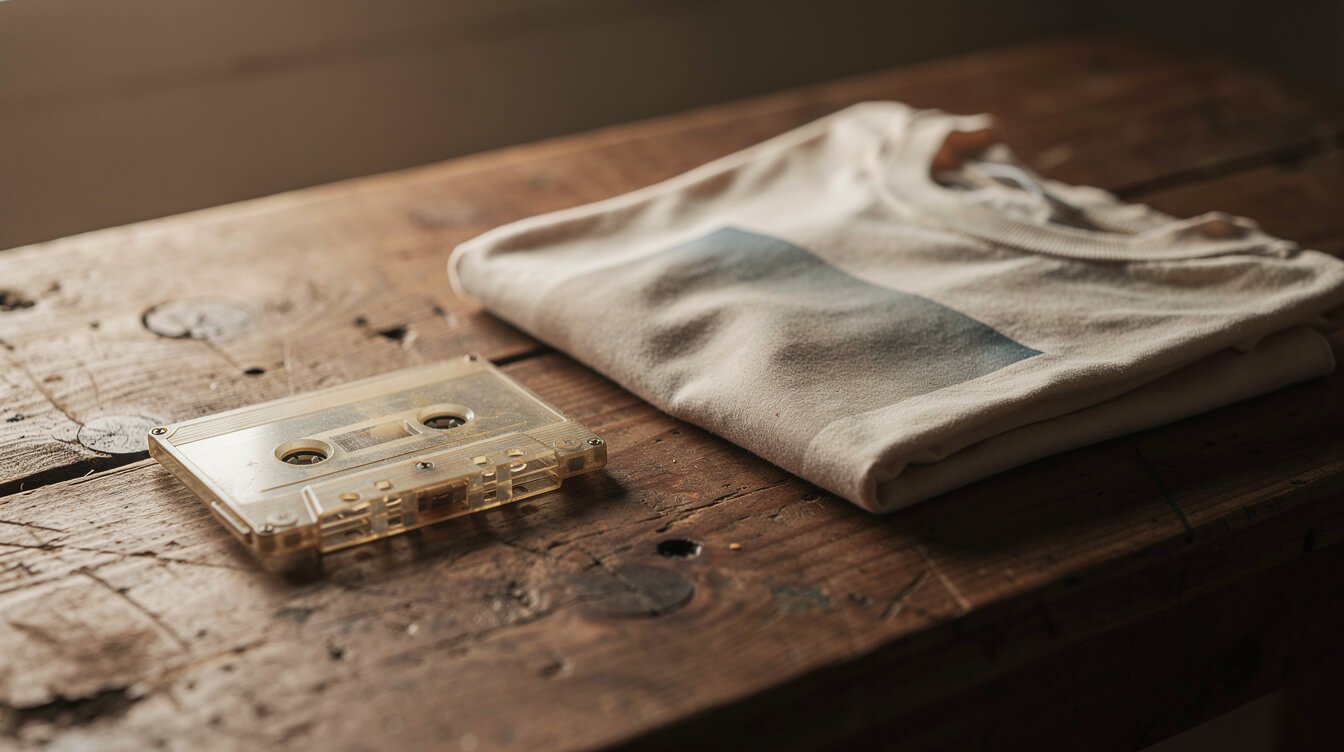
The best ones in our own closet don’t say the decade on them at all. They don’t need to. A shirt that’s actually doing its job announces the era the way an accent does — not by stating it, but by how it sounds the second you open your mouth. You don’t have to print “1994” on a shirt about the specific panic of a landline being tied up for an hour. The panic is the design. The year is implied.
That’s the whole bet behind how we build things: the reference should be precise enough that the right person gets it instantly and the wrong person just sees a decent shirt, no harm done, nothing explained, nothing lost either way. That’s not a marketing trick, it’s just respect for the audience — the same respect you’d extend to a friend by not explaining your own joke back to them after you’ve already told it. If it needs a caption, it wasn’t ready to print.
None of this is a knock on wanting to remember the decade out loud. It’s a case for remembering it accurately instead of generically — for choosing the detail that’s true over the detail that’s easy to license. The gap between those two things is the entire gap between a shirt you’d actually wear twice a week for a decade and one that ends up in a donation bag by spring, still smelling faintly of a “Limited Drop” email that oversold it.
It also explains why the good ones tend to age strangely well, in a way the loud ones never do. A shirt built on an accurate, specific memory doesn’t really date, because it was never chasing a trend cycle in the first place — it was just telling the truth about a decade, and the truth doesn’t go out of style on a seasonal schedule. A shirt built on the word “throwback” alone dates almost immediately, because the word itself is a trend, subject to the same expiration as every other marketing term that got run into the ground. Five years from now, “throwback” will sound as tired as “artisan” already does. The shirt that never used the word will still be fine.
Frequently asked questions about 90s throwback shirts

What makes a shirt an actual 90s throwback instead of a costume?
Specificity that couldn’t have been reverse-engineered from a mood board — a detail true enough that someone who lived it recognizes it instantly, and generic enough in presentation that it never has to explain itself to anyone else.
Are officially licensed 90s shirts worse than unlicensed ones?
Not automatically — a license just means legal clearance, not authenticity. Plenty of licensed merch is well made. The issue is when the license does all the storytelling and the design does none of it.
Why do some 90s throwback shirts feel cheap even when the fabric is good?
Because “cheap” in this context is rarely about materials. It’s about a detail that’s been smoothed over for mass appeal until it stopped being true to anyone specifically, which reads as hollow even on quality cotton.
Is it okay to like a 90s shirt even if you weren’t alive for the decade?
Sure — liking it isn’t the issue. Wearing it as a claim to a memory you don’t have is a different move entirely, and most people can tell the difference without being told.
What’s the easiest way to spot a fake “vintage” 90s shirt online?
Read the copy before you look at the shirt. If the listing has to explain what the design “represents,” the design didn’t do its job, and the shirt probably won’t either.
Why does the word “throwback” feel overused now?
Because it got promoted from a feeling to a filter — the same fate that eventually finds every good word a marketing team decides to build a category around. Overuse isn’t the decade’s fault. It’s the label’s.
Final thoughts
“Throwback” was a decent word before it got a shelf tag. It described something a friend did for another friend — tossing back a joke, a memory, a look, trusting the other person to catch it without a note attached. Somewhere along the way it became a category instead of a gesture, which is how you end up with a hundred nearly identical shirts that all say the same decade and mean almost nothing in particular.
The fix isn’t complicated, even if it’s harder to manufacture at scale: start with the true detail, not the marketable one, and trust the right person to catch it. Everyone else can still think it’s a nice shirt. That’s fine. It just wasn’t built for them, and it was never supposed to explain that out loud.
Reply and tell me your era
No hashtag salad, no fake urgency. Just the next one of these, straight to your inbox, whenever there’s a next one worth sending.