
Every few months, someone publishes a fresh rundown of gen x characteristics, and every time, it reads like it was assembled by someone who heard about us secondhand — from a market research deck, a Wikipedia stub, or a nephew. The traits are never wrong, exactly. Self-reliant. Skeptical. Allegedly “latchkey.” It’s just that none of these lists sound like anything you’d actually say about yourself. They sound like something said about you, in a conference room, by someone building a slide.
This isn’t going to be a list. If you wanted eight bullet points and a stock photo of a flip phone, the internet has plenty of those — we checked, on your behalf, so you don’t have to. This is the version written by someone who was actually there, which mostly means it’s going to take its time and land a few jokes without stopping to explain them.
Consider this the version you’d get if you asked a friend instead of a survey. No charts. No citations. Just the traits, delivered the way we’d actually deliver them to each other — flat, specific, and done in one pass.
Every “gen x characteristics” list reads like a pitch deck (or a term paper) — and why

Search the phrase and you get two kinds of results. The first is a marketing blog explaining our spending habits, our brand loyalty, and our “unique path to product discovery” — written for the person trying to sell us something, not for us. It’ll tell you we have “more disposable income than you’d think” in the same tone you’d use to describe a market opportunity, because that’s exactly what it’s describing. The second is an encyclopedia entry: birth years, a paragraph on the Berlin Wall, a citation. Both are accurate. Neither one sounds like a person.
That’s the tell. Nobody who actually grew up in this generation is going to describe themselves as having “high brand loyalty” or “varied social media habits.” We’d describe it the way we describe everything: flatly, with a joke buried in the delivery, and zero interest in explaining the joke afterward. The gap isn’t information. Plenty of these pieces have the facts right — dates, percentages, footnotes on the footnotes. The gap is voice. Nobody’s written this from inside the thing, because the people writing it were never trying to talk to us in the first place.
The other tell is what these lists leave out entirely. You will not find “can identify a fellow Gen Xer within four sentences of small talk” on a marketing blog, because it’s not a purchasing behavior, it’s a party trick. You will not find “treats sincerity as a currency to be spent carefully” on an encyclopedia page, because it’s not a historical fact, it’s a personality. The traits that actually hold up under scrutiny are the ones nobody thought to monetize.
So here’s the inside version. Not a survey result. Not a pitch deck. Just the traits, as we’d actually clock them in each other, at a reunion, in a group chat, or across a parking lot at eleven at night when someone says one specific sentence and you both just know.
The self-parenting trait: we raised ourselves, and it shows

Start here, because everything else on this list is downstream of it. A lot of us came home to an empty house on a regular basis, let ourselves in with a key on a shoelace around our neck, and figured out dinner, homework, and how to answer the phone without giving away that no adult was present. Nobody called it a parenting philosophy. It was just Tuesday.
If you had a sibling, the older one became a second, much less qualified parent by default. You negotiated screen time — such as it was, with three channels and a set of rabbit ears you had to physically stand next to — settled your own disputes, and developed a house-specific set of rules that no adult ever ratified but everyone somehow obeyed. That’s not a system anyone designed. It’s just what happens when the supervision gap gets filled by two kids and a healthy fear of getting caught.
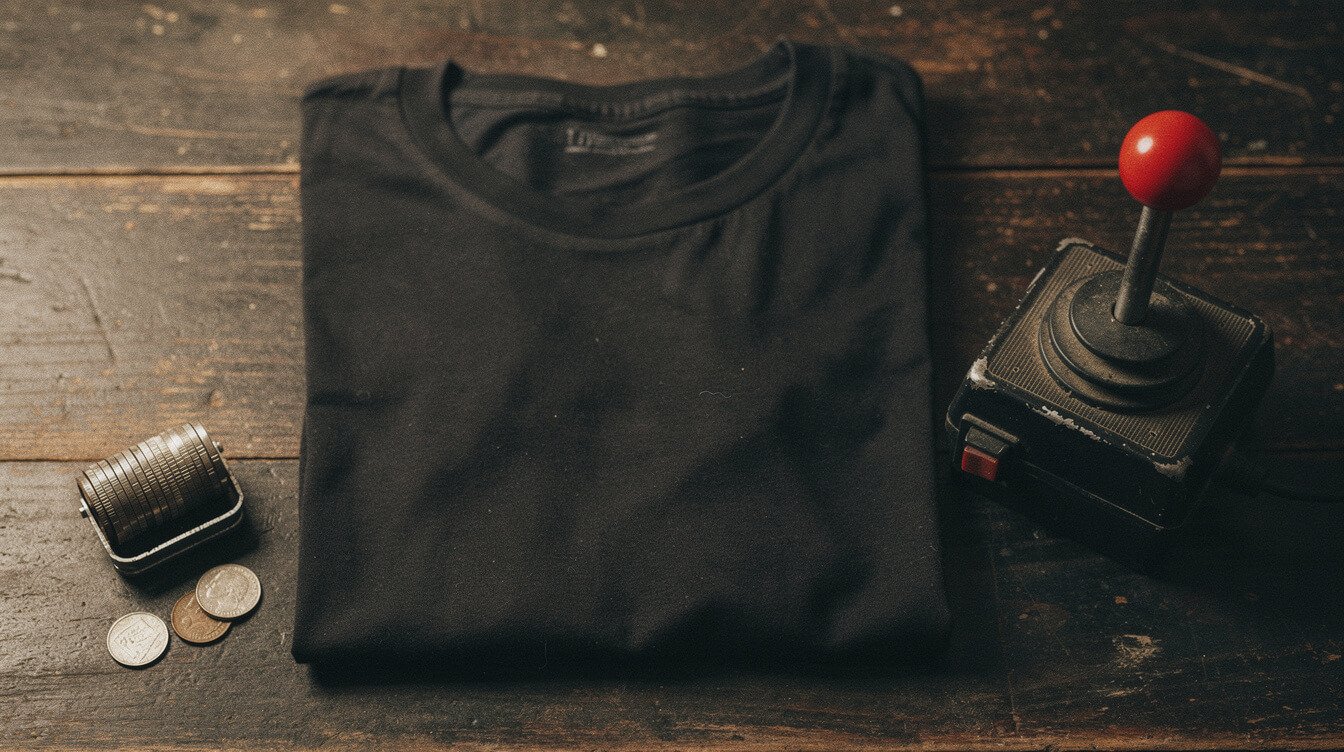
The result wasn’t trauma — despite what a certain kind of think piece wants it to be. The result was competence, delivered a little early and without much ceremony. You learn to make a decision and live with it. You learn that “figure it out” isn’t a punishment, it’s just what happens before dinner. If you want the shirt version of this exact feeling, we made one for the latchkey kids specifically, and it does not explain itself either.
What’s funny is how this trait shows up now, decades later, in completely unrelated situations — assembling furniture without the instructions, driving somewhere before GPS existed in your pocket, staying oddly calm when the wifi goes out while everyone younger in the house treats it like a small emergency. Self-parenting didn’t end at eighteen. It just changed targets.
It also explains a very specific kind of parenting anxiety a lot of us carry now, in the other direction. Some of us swung hard toward supervising every minute of our own kids’ afternoons, partly out of love and partly out of a nagging sense that unsupervised time is how you end up eating cereal for dinner three nights running. Others shrugged and figured a little unsupervised time never hurt anyone, mostly. Both reactions trace back to the same key on the same shoelace. We just processed it differently once we had someone else’s afternoon to answer for.
Sarcasm as a first language, deadpan as a resting state

We grew up marketed at constantly and directly — Saturday morning cartoons were twenty-two minutes of show wrapped around toy commercials, and everyone involved knew it, including us. You can’t spend a childhood being sold to that openly without developing an ear for it. By the time we hit adulthood, sincerity had to earn its way in. Everything else got the eyebrow.
That’s not cynicism, even though it gets mistaken for it constantly. It’s a filter. Dry delivery is just efficient — you say the true thing once, flat, and trust the room to catch it. No exclamation points required. If the joke needs a laugh track, it wasn’t a joke, it was a pitch. We’ve got a whole shirt built around exactly this instinct, for the record, and true to form, it doesn’t explain itself either.
You can see the filter running in real time at work meetings, where someone younger says something earnestly enthusiastic and a Gen Xer in the room says nothing at all — just a very small, very precise pause before responding, which somehow communicates an entire paragraph of opinion without a single word of it. That pause is doing a lot of work. It usually means the sarcasm detector fired and decided, generously, not to comment.
The deadpan isn’t coldness. It’s the thing underneath the eye-roll that actually cares, just refuses to perform caring for an audience. Ask any Gen Xer for a favor at two in the morning and watch how fast the sarcasm drops. That’s the whole trick — the wit is the door, not the room.
The analog-to-digital whiplash no chart captures

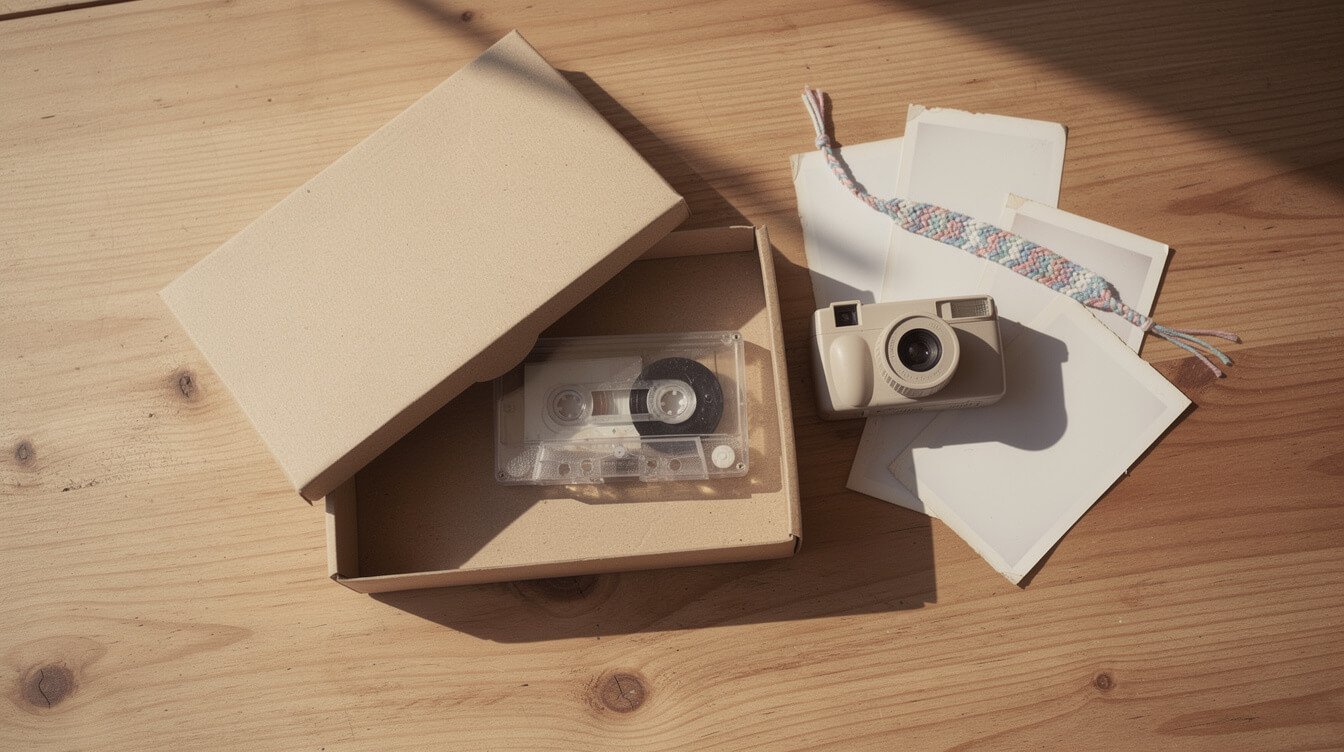
No demographic chart quite gets at the fact that we are the only generation that can both fix a jammed cassette with a pencil and set up a home router without calling anyone. We didn’t migrate to digital life gradually. We got yanked through a door partway through adulthood and had to make it look casual on the other side.
This is the generation that did homework from an actual encyclopedia, learned to program a VCR clock as a rite of passage, memorized phone numbers because there was no other place to keep them, and then spent a career becoming the default tech support for everyone older and younger in the family. Nobody trained us for either half. We just absorbed the first world completely enough that the second one felt like a language we could pick up fast, out of sheer stubbornness.
Ask a Gen Xer to describe a Saturday afternoon at the mall and then, in the same conversation, ask them to troubleshoot a smart TV or explain why the family group chat won’t stop notifying everyone at 2 a.m. Same person, same tone, no visible seam between the two eras. We didn’t switch operating systems. We just added one.
Nobody handed us a transition plan for any of it. We built a mixtape by hovering over two buttons and timing it by ear, then a decade later were expected to understand cloud storage without so much as a pamphlet. Both skills stayed. One of them just doesn’t come up as often at dinner parties anymore, though it will, the second someone under thirty asks what a mixtape actually was, and you will have to decide, on the spot, whether that question deserves a real answer or just a look.
What gets lost in the “digital immigrant” framing is that we didn’t cross that border reluctantly. We crossed it the way we crossed most things — quietly, competently, and without asking anyone for a manual.
“Figure it out” is a personality, not just a phrase

There was no trophy for showing up. There was, at best, a ride home if the timing worked out. That’s not a complaint — it’s just the operating system we were issued, and it came with a specific side effect: an almost allergic relationship to asking for help before you’ve genuinely tried everything else first.
You see this in the small things. Folding a paper map back along its original creases instead of admitting defeat. Driving somewhere on a half-remembered set of directions given by a friend of a friend, arriving mostly on time anyway. Assembling a bookshelf, throwing out the extra screws, and deciding they were never load-bearing anyway. It’s not that we don’t want help. It’s that “figure it out” got wired in early enough that it stopped being an instruction and became a reflex.
It shows up at work the same way it showed up at nine years old: given a vague problem and no instructions, the instinct isn’t to escalate, it’s to poke at it quietly until it stops being a problem. Ask for help too early and it feels like admitting the thing beat you. Better to lose an evening to it first.
It’s a genuinely mixed inheritance, if we’re being honest instead of just fond about it. The same instinct that gets the bookshelf built also keeps some of us from calling a doctor a full week later than we should have, on the theory that it’ll probably sort itself out. Competence and stubbornness share a lot of wiring. We got both in the same package, and nobody offered a way to order just the one.
That reflex is basically the whole brand, if we’re honest about it — we’d rather make the shirt you’d actually reach for on a Tuesday than the one built for a gift shop. No hand-holding, no explainer paragraph on the tag. You either clock the reference walking by, or you don’t, and either way we’re not going to chase you down to explain it. Have a look around the shop if that sounds like your speed.

Wear the trait. Skip the essay.
Every design in the shop runs on the same rule this post does — if it needs a footnote, we scrapped it. Have a look around.
The real gen x characteristics: low expectations, high follow-through

Here’s the paradox nobody’s marketing deck mentions: we were raised on modest expectations — nobody promised us the world, nobody told us we were special for showing up — and it produced a generation that quietly over-delivers anyway. Not loudly. Not with a highlight reel. Just consistently, and usually without mentioning it.
Ask a Gen Xer how a project went and you’ll get “it’s fine, it’s done” even when it involved three separate crises they solved alone at midnight. Bragging feels like a foreign language. Following through, quietly, is the actual native one. It’s not modesty as performance — it’s that competence was never supposed to be a spectacle. It was just supposed to work.
This is also why so many of us are bad at accepting a compliment and worse at asking for one. Low expectations going in meant relief, not celebration, when things went right. High follow-through coming out meant nobody ever had to check our work twice. Put those together and you get a whole generation that will fix your leaking faucet, mention it once in passing, and change the subject before you can properly thank them.
It also explains why so many of us are quietly suspicious of anyone who does announce the win beforehand. Confidence stated in advance reads, to this generation, like a promise that hasn’t been kept yet. Confidence demonstrated after the fact, with no fanfare, reads like the only kind that counts. We didn’t get participation trophies, so we never learned to trust the ones handed out before the work was finished.
Quick, deadpan answers to the obvious follow-ups
Is this a real personality type, or just marketing? Neither, really — it’s closer to a set of habits an entire generation picked up independently and then recognized in each other later. No committee approved it.
Do all Gen Xers actually have these traits? No. Plenty don’t. That’s fine. This isn’t a diagnosis, it’s a recognition test — if none of it lands, this piece just wasn’t written for you, and that’s allowed.
Why does every other list feel so off? Because most of them are written to sell Gen X to someone else, not to talk to Gen X directly. Different job, different voice, different result.
Wear it, don’t explain it
None of this needs a citation. You either read the last few sections and felt a specific, quiet yeah, that’s it — or you didn’t, and no amount of explaining is going to manufacture it after the fact. That’s kind of the whole point. The real gen x characteristics were never going to fit cleanly into a slide anyway; they show up in the pause before a joke lands, in a toolbox nobody organized but everyone can navigate, in a key on a shoelace that hasn’t existed in decades but still means something the second you picture it.
We built this brand on the same instinct: get the reference exactly right, and then get out of the way. No footnote, no explainer, no asterisk. If something in here landed, you already know where to find the shirt that says it better than we just did in a few hundred words.
And if none of it landed — genuinely, no hard feelings. Not every recognition test is supposed to work on everyone. That’s sort of the deal we’re offering: we’re not going to chase you down and explain the joke until it lands, because a joke that has to be explained was never really a joke to begin with. It was homework. We’d rather make the shirt.