Every couple of years, somebody publishes a list of gen x slang and calls it a time capsule. Thirty terms, a tidy definition, an example sentence, done. It’s not wrong, exactly — we did say “gag me with a spoon” and “talk to the hand,” and both still land in an argument if you’re willing to commit. But a word list is a transcript. It tells you what was said. It doesn’t tell you how, and how was the entire point.
This isn’t another glossary. If you want a dictionary with the slang translated for you, the internet has at least eleven of those already, and they all read the same: a number, a bolded word, a definition, a “usage” section that sounds like a foreign-language textbook. What they miss is the part that never made it into text — the exact temperature of the shrug, the half-second pause before “whatever,” the fact that half the vocabulary was a performance you ran at someone, not a sentence you handed them. So let’s skip the glossary and get into what the slang was actually for.
Gen x slang was never really about the words
Search gen x slang right now and you’ll get the same six or seven words in a different font on every result: bogus, cool beans, dude, yuppie, gag me with a spoon. All correct. All useless without the setting. “Bogus” said about a canceled show and “bogus” said about a friend’s excuse were not the same word, even though they were spelled identically, because the entire meaning lived in the flatness of the delivery, not the letters.
Here’s the tell that most of the roundups miss: notice how they write it. “Totally rad!!” “So gnarly!” Exclamation points doing overtime, like the word just won something. That’s exactly backwards. Nobody who actually used that vocabulary in 1988 said it with enthusiasm. The entire dialect was built to sound like the speaker couldn’t be bothered to finish the sentence with any real conviction. A generation that grew up largely unsupervised — see also: the actual characteristics that survey questions keep missing — did not develop a vocabulary of excitement. It developed a vocabulary of maintaining your composure while everyone around you overreacted.
Take “cool beans.” On paper it looks whimsical, almost cute, the kind of phrase a list writer assumes was said with a grin. In practice it was often the driest possible response to news you’d already half-expected — somewhere between “fine” and “sure, whatever you say” — deployed with the same face you’d use to acknowledge the weather. “Whatever” did the opposite job in the opposite direction: it wasn’t dismissive so much as it was a full stop, a way of ending a debate without conceding a single point in it. Neither word meant what the transcript implies. Both meant “I’ve clocked this and I’m moving on,” which is a sentence no glossary entry has room for.
Context did most of the actual translating, which is exactly what a list can’t reproduce. “Yuppie” aimed at a coworker in a new car was an insult with teeth. The same word aimed at your own sibling over a haircut was closer to a compliment wearing a disguise. A glossary can only give you one definition per entry, so it picks the safest, flattest reading and calls it done — which is how thirty years of context collapses into a single sentence that’s technically accurate and functionally wrong about half the time.
So when a modern list prints these words with three exclamation points stacked on the end, it isn’t preserving the slang. It’s performing a costume version of it — technically the right outfit, completely the wrong posture. And posture, as it turns out, was the whole design.
The delivery took longer to learn than the vocabulary
You could learn the words in an afternoon. Learning to deliver them took years, because half of them weren’t complete without a body attached. “Talk to the hand” needed the hand — palm out, arm locked, eyes already somewhere else, like the rest of the sentence had gotten boring to you personally. Say the phrase without the gesture and you’ve just said four words. Say it with the gesture and you’ve ended a conversation without raising your voice once.
Same with the pause before “whatever.” Not a beat, not two — long enough that the other person had time to hear their own argument fail in the silence, short enough that it didn’t look like you’d thought about it. That’s not a word. That’s timing, and timing doesn’t fit in a glossary entry no matter how many bullet points somebody adds to it.
“Psych” needed a straight face for the setup and a smirk for the reveal, in that exact order — reverse them and the joke just sounds mean. “Yeah, right” needed the flattest possible tone, the kind that could be mistaken for genuine agreement by anyone not paying close attention, which was the entire trick. Even “cowabunga,” a word that sounds purely goofy on paper, got used by actual surf and skate kids with something closer to a shrug than a shout, more punctuation than exclamation.
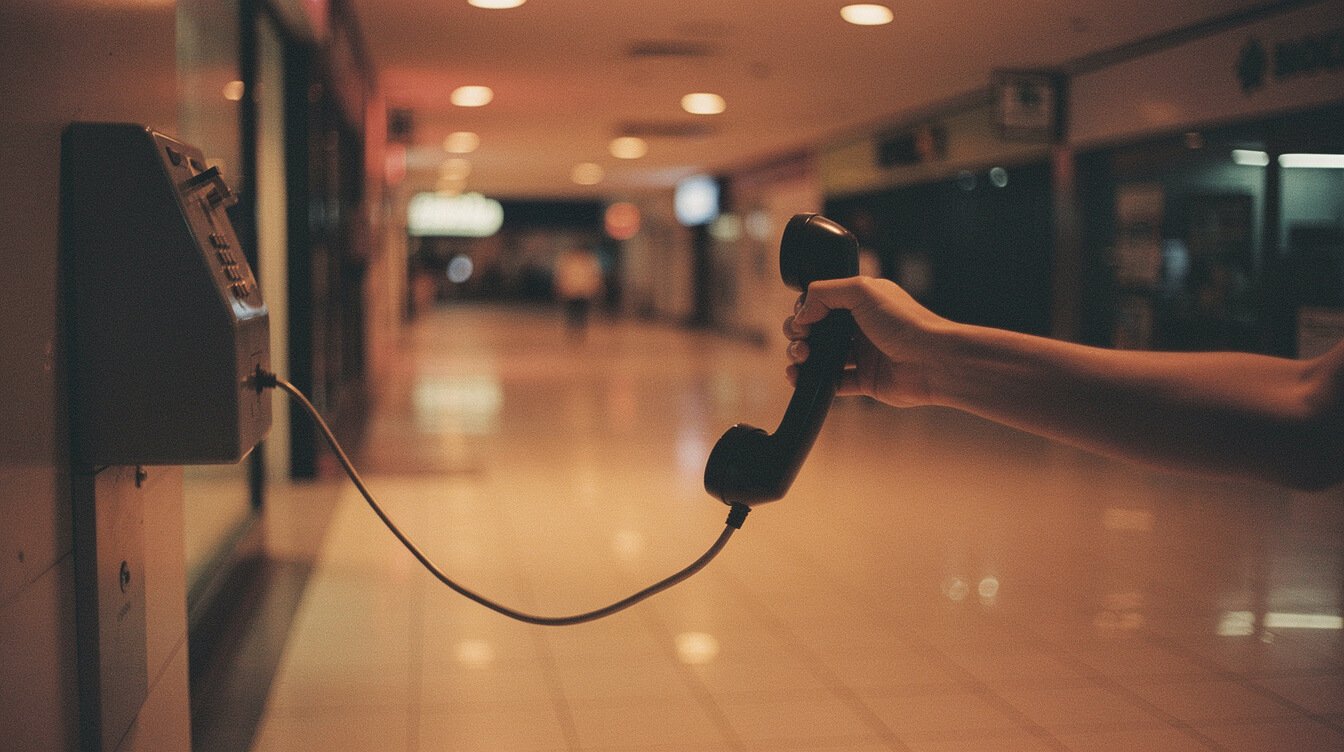
This is the part every “translated for you” list quietly skips, because timing can’t be quoted. You had to have stood in an actual mall corridor, holding an actual phone that was tethered to an actual wall, waiting for someone to finish talking so you could deliver your one line and disappear. The vocabulary assumed you had an audience and no urgency — which, if you grew up letting yourself into an empty house after school, was most afternoons.
Every phrase was built to sound like you didn’t care

There’s a reason the slang leaned so hard on detachment — “bogus,” “as if,” a flat “sure” that meant the opposite of agreement. Nobody was grading the delivery, so the delivery became the point. Gen x nostalgia isn’t a highlight reel for the same reason: we’re not the generation that remembers being cheered on, we’re the generation that remembers figuring it out solo and deciding not to make a thing of it. The slang was the sound of that decision, worn like the jacket that had already survived three schools and every pin on it was a small argument you’d won.
Which is why so much of the vocabulary sounds, on paper, mildly hostile — “gag me with a spoon,” “get bent,” “whatever” — but was mostly deployed with something closer to affection. You didn’t say “talk to the hand” to a stranger. You said it to a friend, because the whole bit only worked if both people were in on the joke and neither one needed it explained. That’s the mechanism, not the mood: sound unbothered, mean it selectively, never confirm which parts you meant.
It also explains why the slang traveled so well between total strangers who’d never met — a phrase built to sound unimpressed works anywhere, because it doesn’t require context to land. You could move to a new school in a new state and deploy “gag me” on day one, and it read exactly the same as it did back home. The vocabulary was portable precisely because it wasn’t attached to anyone’s specific feelings. That was the design, not a bug in it.
Compare that to how much modern slang depends on a shared reference everyone has to have seen in the same 24-hour window to land correctly. Gen X slang didn’t need the reference to be recent. “Bogus” worked the same whether the injustice in question happened five minutes ago or five years ago, because the word wasn’t reacting to an event — it was describing a permanent stance toward the world. That’s a sturdier kind of vocabulary than most people give it credit for, precisely because it wasn’t built to expire.
The regional remix nobody agrees on
Ask three people where gen x slang actually came from and you’ll get three different answers, and all three are partly right, which is rarer than it sounds. Surf and skate culture handed over the flatness — “gnarly,” “stoked,” “cowabunga,” words that described enthusiasm while sounding like the opposite of it. Hip-hop and radio culture handed over the rhythm and a good chunk of the vocabulary that’s still in circulation today, often stripped of credit along the way. And a specific strain of shopping-mall-adjacent speech, the one people still call “Valley” without knowing quite where the valley was, handed over the delivery pattern — the upward lilt, the “like” doing structural work in the middle of a sentence, the way a statement could sound like a question without technically being one.
None of these stayed in their lane, which is the actual story. A kid in a cul-de-sac a thousand miles from any ocean was saying “gnarly” about a bike ramp within a year of the word cresting on the coast, because cable television and touring bands moved language faster than anyone had planned for. Regional slang went national almost by accident, and it did it without anyone tracking the spread, which is a big part of why nobody can agree today on exactly where a given phrase started. There’s no server log for a hallway.
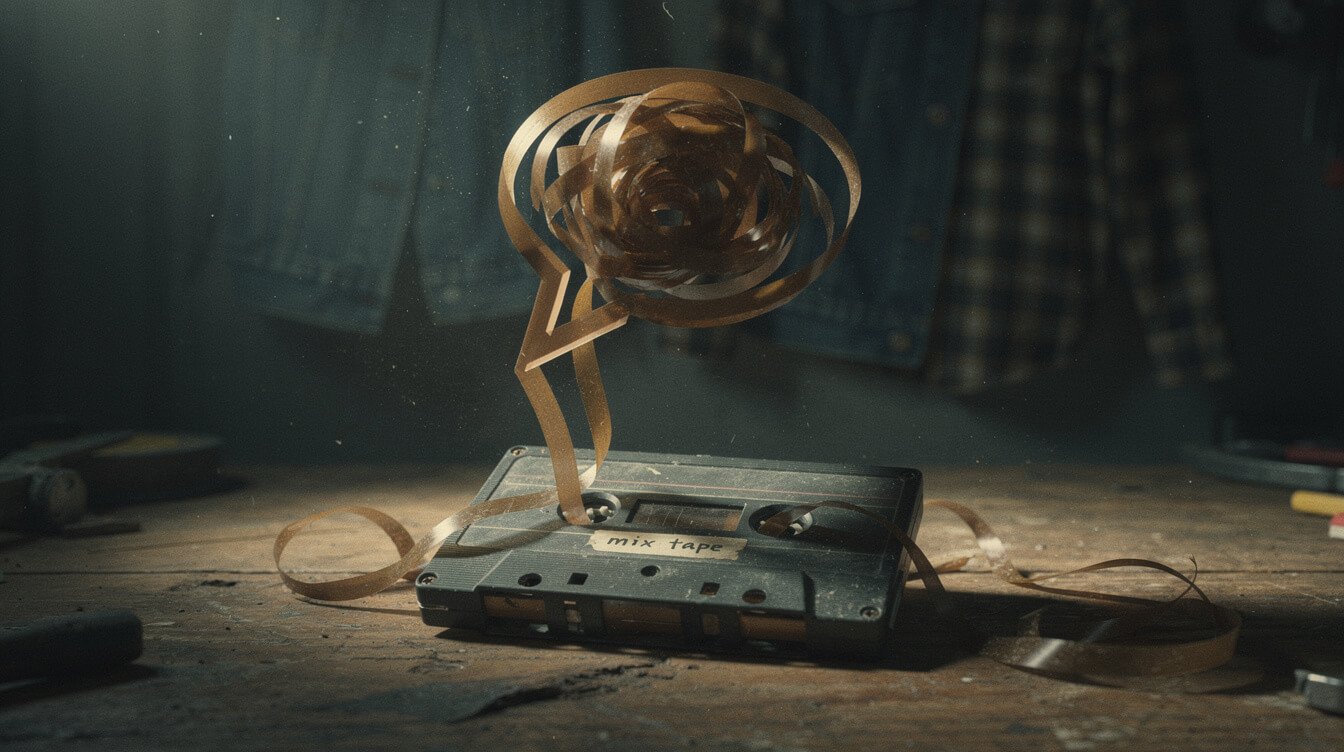
That’s also why the actual mechanics of a mixtape mattered more to how slang spread than people give it credit for — a tape from a cousin two states away came with whatever phrases that cousin’s friends were using, no subtitles included, and you either picked them up by context or you asked and immediately regretted asking.
The disagreements haven’t settled with time, either. Ask someone from one coast where “hella” belongs in this timeline and someone from the opposite coast will tell you a completely different story with equal confidence, and both of them will be describing a real memory. That’s the actual texture of how the vocabulary spread — messy, undocumented, argued about decades later by people who all lived through the same decade in different zip codes and picked up different pieces of it.
The gen x slang revival misses the point on purpose
Every couple of seasons, some corner of the internet rediscovers gen x slang and runs it back with a wink, usually attached to a wig, a fanny pack, and a soundtrack cue. It’s not malicious. It’s just backwards — treating a vocabulary of studied indifference like it’s supposed to be fun and loud, the exact posture the words were built to resist. An algorithm-fed nostalgia account performing “gnarly” with jazz hands has technically used the correct word and violated everything it stood for.
The honest version of the revival isn’t a performance at all — it’s the low-key version, said once, dry, and left alone. That’s closer to what a decent gen x shirt is actually trying to do: land the reference without a laugh track under it, and trust the person who gets it to get it without a caption underneath explaining the bit. The joke that needs a highlight reel around it was never the joke to begin with.
None of this means the words are dead. “Whatever” never left. “As if” got handed to the next generation almost intact and they use it correctly, which, credit where it’s due. What didn’t survive the handoff is the specific gravity of the delivery — the sense that the person saying it had somewhere better to be and was doing you a favor by responding at all. You can borrow the word. The posture’s not for sale, and every attempt to sell it back to us with enthusiasm attached is how you can spot the fake from across a comment section.
There’s also a simpler tell, if you want one: watch what happens when a brand tries to use this vocabulary in an ad. It shows up capitalized, exclamation-pointed, usually paired with a stock photo of someone laughing at nothing. That’s not a failure of research. It’s proof the delivery genuinely can’t be reverse-engineered from the word list — you either had to live through enough boredom to earn the flat affect honestly, or you’re going to keep getting caught overselling it.
Frequently asked questions about gen x slang
Where did most gen x slang actually come from?
A blend of sources with more overlap than people expect: surf and skate culture supplied the flatness (“gnarly,” “stoked,” deployed completely without the stoke), hip-hop and radio supplied rhythm and attitude, and music-video-era television culture supplied the visual cues everyone quoted without needing to name the source. Regional slang mixed in fast because cable and touring bands made local dialects national for the first time in a generation’s life.
Is gen x slang making a comeback?
Individual words keep resurfacing — “cool beans” shows up ironically every few years, “as if” never really left. But a genuine comeback would require reviving the delivery, not just the vocabulary, and that’s the part that doesn’t transplant well onto a phone screen with a laugh track attached. What comes back is the shape of the joke; the timing it was built on mostly stays where it started.
Why does gen x slang sound so unbothered compared to newer slang?
Because most of it was built by kids who let themselves into the house after school and didn’t have an adult around to perform enthusiasm for. Slang built without an audience of grown-ups tends to skip the part where it tries to impress anyone. It’s a dialect optimized for people who assumed nobody was listening that closely, which, for a few hours every weekday, was accurate.
What’s the real difference between gen x slang and the slang that came after it?
Speed of spread and the presence of receipts. Later generations’ slang mostly traveled through platforms that timestamp everything, so you can date a phrase to the week it started. Gen X slang moved through hallways, mixtapes, and whatever your cousin picked up at a concert, with no record of any of it. Nobody can prove exactly when “cool beans” started, and honestly, nobody who used it un-ironically would have cared to check.
Did gen x slang vary a lot by region, or was it mostly the same everywhere?
Both, depending on the word. The core detachment — the “whatever,” the flat “sure,” the shrug baked into half the vocabulary — showed up everywhere, because it wasn’t really regional to begin with. But specific words absolutely had a home coast: certain surf terms stayed closer to the coastlines that produced them, certain phrases spread fastest along tour routes and radio markets, and a kid in one part of the country could go a full year without hearing a phrase that was already worn out three time zones away.
Final thoughts
The word lists aren’t wrong. They’re just incomplete in the one way that actually matters — they hand you the script and skip the direction notes. Gen x slang was never a vocabulary you could borrow by reading it off a page; it was a whole operating manual for sounding like you had somewhere better to be, delivered by people who, for the record, mostly did not. Use the words if you want. Just know the shrug was doing most of the work, and no glossary has ever managed to print one of those.
One good email, no fake hype
New designs and the occasional true story from the desk. No hashtags, no confetti emoji, we promise.