Somewhere this fall, in a gym that smells exactly like the one you remember, a ten-year-old is being told to run a mile and that it counts. The Presidential Physical Fitness Test is back in American schools — reinstated by executive order in July 2025, formally relaunched by the Department of Health and Human Services on June 29, 2026, and administered starting this school year. The kids taking it have no idea what they’ve walked into.
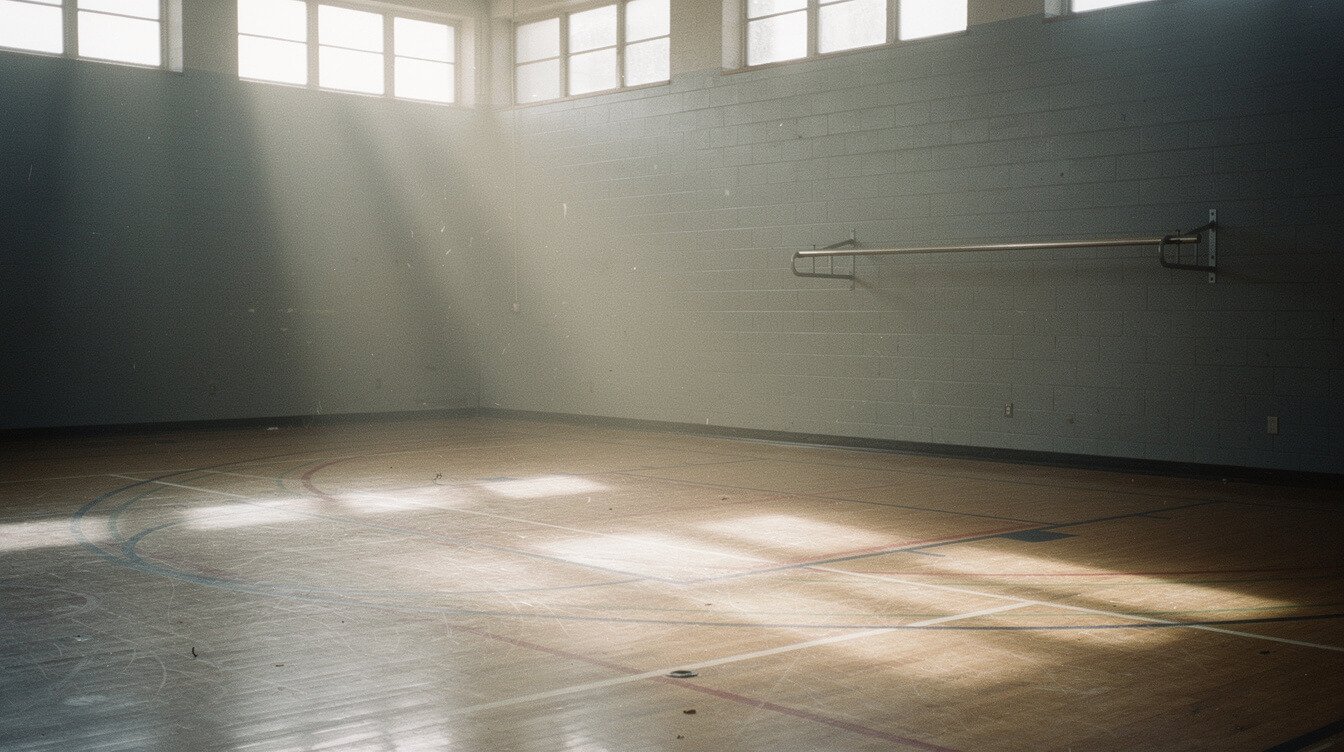
We do. We took it. Every spring, in shorts that fit nobody, on a floor that had been waxed for a basketball game we weren’t invited to, in front of everyone we knew.
So before the think pieces arrive, a few things about that test are worth getting straight — where it came from, what it actually measured, and why the version your kid is taking right now is not the version that happened to you. Some of this is funnier than you remember. Some of it is worse.
What the Presidential Physical Fitness Test actually was

It started with back pain. In the early 1950s, two doctors, Hans Kraus and Sonja Weber, built a six-exercise screen to find the minimum muscular fitness a body needed to not fall apart. It was a diagnostic tool. It was never meant to be a scoreboard.
Then they ran it on about 4,000 American kids aged six to sixteen, and 56.6 percent of them failed. Kraus took the same test to Italy, Switzerland, and Austria, ran roughly 3,000 European children through it, and watched 8.2 percent fail. That gap — 56.6 against 8.2 — hit the American press in 1955 like a diagnosis of national character. Sports Illustrated blamed “America’s plush standard of living,” and traced it to “a number of factors ranging from the playpen to the school bus to television.” The call was coming from inside the rec room.
Here is the part that didn’t make the papers, and that scholars have been pointing out ever since: the Kraus–Weber results showed no gap between wealthy and poor children, which rather undercuts the idea that soft living was the cause. What European kids had was practice. Their physical education classes were built on exactly the calisthenic movements the test used. They weren’t fitter. They had seen the questions before.
Nobody mentioned that in gym class.
Eisenhower convened a White House lunch, and in July 1956 created the President’s Council on Youth Fitness by executive order, with Vice President Richard Nixon as its chair. Sputnik went up in 1957. By 1958 the American Alliance for Health, Physical Education, and Recreation had published the first official youth fitness test, built out of a California testing program. Kennedy, before he was sworn in, published an article in Sports Illustrated called “The Soft American,” which argued that “softness on the part of the individual citizen can help to strip and destroy the vitality of a nation.”
Read that again with a clipboard in your hand. You were not being measured against your own body. You were being measured against a geopolitical mood.
Seven events, no opt-outs, and one of them was for throwing grenades
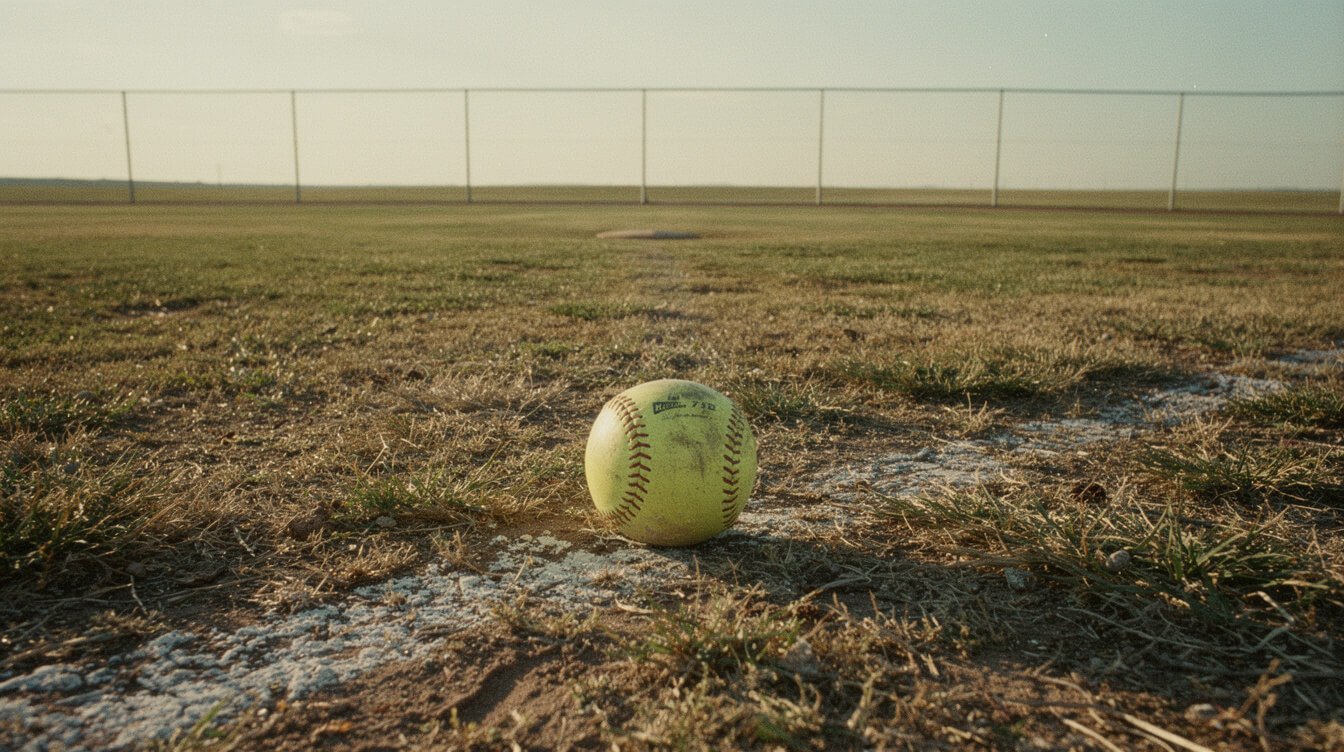
The original battery was six items, then seven. Pull-ups if you were a boy. Modified pull-ups if you were a girl, which in a lot of gyms meant hanging off the bar with your chin above it while a stopwatch decided how long you were going to be this person. Sit-ups. A shuttle run. A standing broad jump. A 50-yard dash. A softball throw for distance. Then they added the 600-yard walk-run, and briefly listed some swimming tests, which went nowhere because most American schools did not have a pool and were not about to get one.
The softball throw deserves its own paragraph. It was in there, at least in part, on the theory that it approximated the motion of throwing a grenade.
That is not a joke someone made up later. That was the reasoning. A nine-year-old heaving a softball across a field in April, being quietly assessed for her potential as light infantry. It was removed in 1976, not on the grounds that it was an unhinged thing to measure in a child, but on the grounds that throwing is a skill rather than a fitness item. The same round of edits bent the knees on the sit-up, because the straight-leg version was rough on the lower back, and added longer runs instead of drills borrowed from the Navy.
By the time the test was retired in 2012 it had slimmed down to a mile run, sit-ups against a 60-second clock, pull-ups or push-ups until failure — proctor’s choice, which is its own kind of lottery — a sitting flexibility test, and a shuttle run. Leaner. Still graded in public.
If you want the real tell about how we were raised, it isn’t the grenade thing. It’s that not one of us asked why. You were handed a number and you went and got it. The same instinct that let an eight-year-old run a house for four hours a day is the one that walked us up to that bar without a word.
The 85th percentile was the whole trick
In 1966, Lyndon Johnson established the Presidential Physical Fitness Award for students who met or exceeded the 85th percentile on all seven items.
Sit with the arithmetic for a second, because the arithmetic is the entire story.
A percentile is not a standard. It is a ranking. It does not ask whether you are strong; it asks how many other children you beat. Which means the award could never go to most kids — not because most kids failed at anything, but because “most” and “85th percentile” are mutually exclusive by definition. The bar moved with the room. You could get fitter every year and finish in the same place.
And it was all seven. One bad event and the whole thing was gone, which is how a kid who could run all day discovered she had the upper body of a houseplant, in front of a line of people waiting their turn at the bar.
This is the complaint that followed the award around for forty years: it reintroduced relative benchmarks into a class that was supposed to be about moving your body, and it did it loudly. Researchers who’ve interviewed adults about school physical education get a consistent vocabulary back — alienation, dread, feeling incompetent, feeling watched. Physical education teachers interviewed by The New York Times have said flatly that the test soured kids on physical activity. One study subject who went through school in the seventies and eighties put the quiet part plainly: the program, as she experienced it, was aimed at “trying to eradicate the fatness of kids.”
We’re not going to make that sadder than it is. Plenty of us loved the shuttle run and still think about our best time. But the design did what the design did, and it’s worth being accurate about it — our whole thing is remembering accurately, not fondly.
The patch is the only part anyone actually remembers
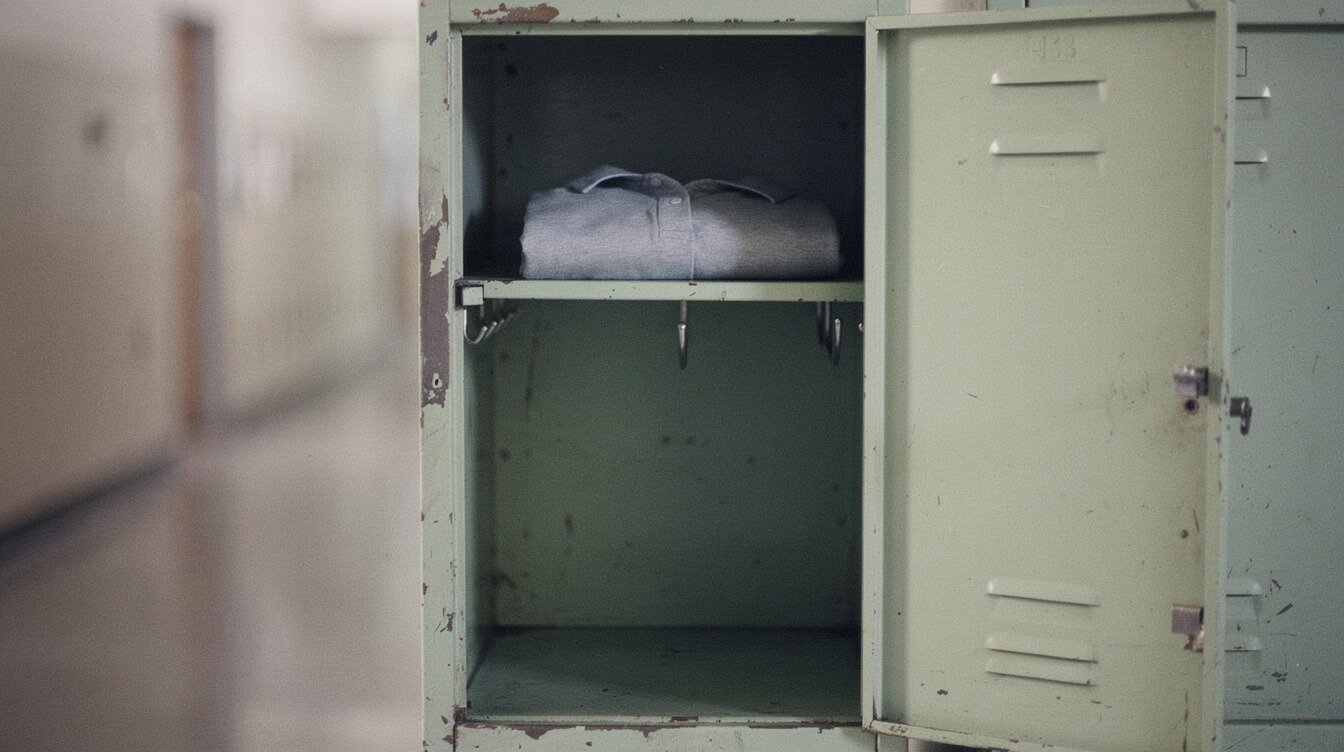
Ask anyone who was there what they got and nobody says a number. They say the patch.
That’s the part that survived, because it was an object, and objects outlive the feelings attached to them. It went on a jacket, or into a drawer, or onto a bulletin board, or — if your mother was the type — onto the exact sleeve where it would be seen. Some of us still know precisely where ours is. Some of us know precisely where ours isn’t, which turns out to be the same kind of knowing.
There’s a reason this generation’s memory runs on objects instead of narration. We were not a documented childhood. There was no footage, no group chat, no archive. There was a single photograph taken once a year with no preview and whatever you could hold in your hand. So the stuff did the remembering for us, and it still does, which is the entire premise of what we put on a shirt — the object says it, and nobody has to narrate.
The patch was also, let’s be honest, a status object in a system that had decided to rank nine-year-olds by percentile. Both things are true. It can be a warm memory and a slightly deranged piece of policy. Most of our childhood qualifies on both counts.
The newsletter
Like a mixtape, but it shows up on its own
One email a week. The good posts, new designs, zero exclamation points. Unsubscribe whenever. We won't take it personally.
Why the Presidential Physical Fitness Test went away, and what came back
It didn’t get cancelled in a dramatic moment. It drained away over about twenty years.
Through the nineties and two-thousands, the emphasis quietly moved from the exceptional kid to every kid — campaigns aimed at participation rather than performance, awards for being active rather than for finishing in the top fifteen percent of the room. On September 10, 2012, the President’s Council launched the Presidential Youth Fitness Program, which placed students in ranges instead of rankings, gave them individual assessments and goals, and deleted the top-tier award entirely. No percentile. No patch for beating your classmates. That was the end of the Presidential Fitness Test as anyone over forty experienced it.
Then, on July 31, 2025, an executive order brought it back. HHS kicked off the return on June 29, 2026 at a Boys & Girls Club in Atlantic City, launched a companion site at GetActive.gov/kids, and set schools to administer the test beginning this fall. The stated case is a health one: the department cites nearly one in five children being overweight or obese, and 77 percent of young Americans being ineligible for military service, with fitness among the leading reasons. States on both sides of the aisle have signed up.
Now here’s the part you actually want, because it’s where the generational punchline lives. The restored test is built in three categories, and in each one the kid picks the event:
- Core strength — curl-ups or a plank.
- Cardio — a one-mile run or the 20-meter beep test.
- Upper body — right-angle push-ups or pull-ups.
Hit one target in each category and the Presidential award is yours. There’s a National tier underneath it for solid work. And every student who completes the test gets a Certificate of Participation.
Take a boy of ten, aiming at the top tier. He needs 45 curl-ups in a minute or a 119-second plank. A 7:57 mile or 55 laps of the beep test. Twenty-two push-ups or six pull-ups. Not easy. Genuinely not easy. But look at what changed: three categories instead of seven mandatory events, a choice inside every one of them, a benchmark you can actually train toward instead of a ranking that moves when the kid next to you grows four inches, and a floor underneath the whole thing so nobody leaves with nothing.
In other words: if you couldn’t do a pull-up in 1984, you were done. If you can’t do a pull-up in 2026, you do push-ups.
We are legally required by our own personality to be annoyed about this. We are not going to be. It’s better. It was always supposed to be a measure of whether a kid can move, not a public verdict on who they are, and this version remembers the difference. The kids should have it easier. That’s sort of the whole job.
Still in the 84th percentile, still here
Designs for people who were there, on blanks you’d actually put on. No footnote comes with it, which is the point.
Presidential Physical Fitness Test questions, answered
What years did the Presidential Physical Fitness Test run?
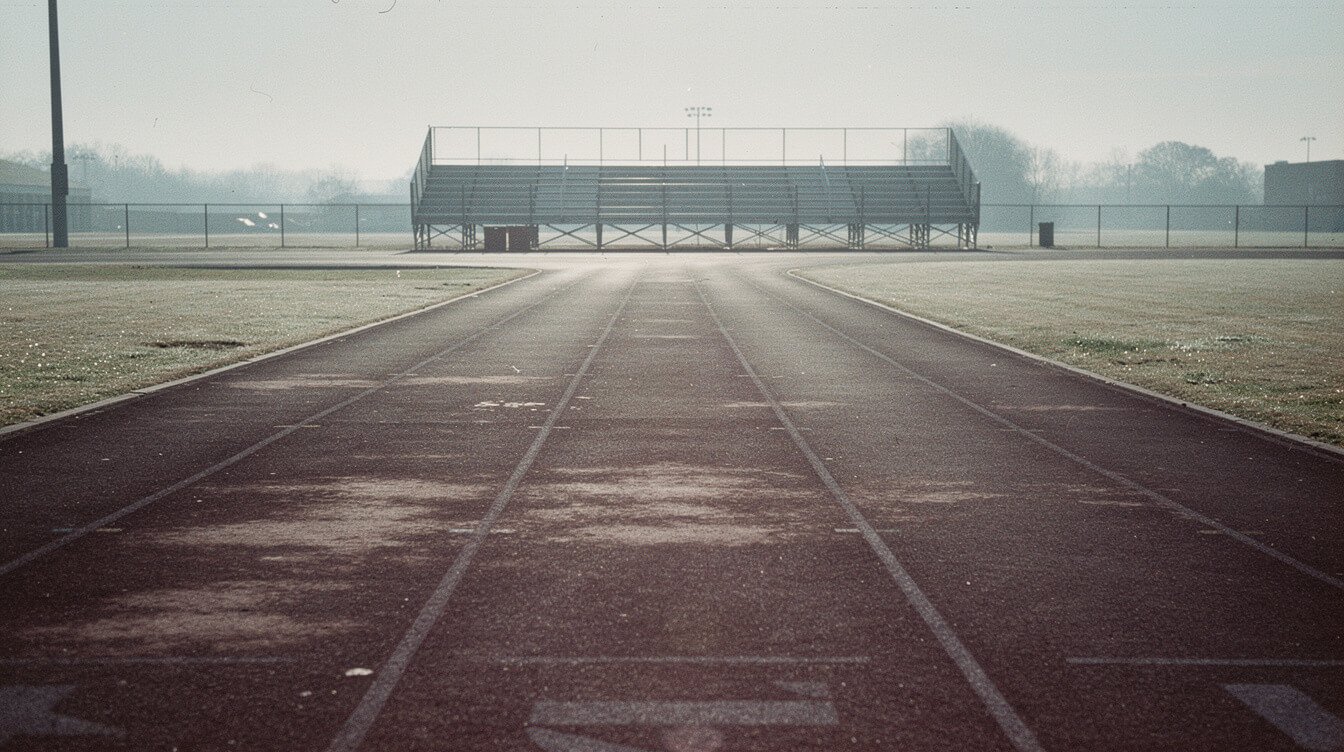
The first official youth fitness test was published in 1958. The Presidential Physical Fitness Award — the 85th-percentile one — arrived in 1966. The test ran in American schools until it was replaced by the Presidential Youth Fitness Program in 2012. If you were in a public school between roughly 1966 and 2012, it happened to you.
What were the events?
It changed over the decades. The early battery was pull-ups (modified pull-ups for girls), sit-ups, a shuttle run, a standing broad jump, a 50-yard dash, a softball throw, and a 600-yard walk-run. In 1976 the softball throw was dropped and the sit-up went bent-knee. By 2012 it was a mile run, timed sit-ups, pull-ups or push-ups to failure, a sitting flexibility test, and a shuttle run.
Was the rope climb part of it?
No. The rope was gym class. It lives in the same memory and deserves its own reckoning, but it was never one of the scored events. We’re going to be precise about this, because precision is the only thing that separates a real memory from a costume.
Why did they get rid of it?
Because ranking children against each other turned out to be a poor way to make them like moving. The policy shift through the nineties and two-thousands went from rewarding the top of the class to getting everybody participating, and the 2012 program formalized it by replacing percentile rankings with individual ranges and goals — and by removing the top award entirely.
Is the Presidential Physical Fitness Test back in 2026?
Yes. It was reinstated by executive order in July 2025, relaunched by HHS in June 2026, and schools began administering it this fall under updated, age-based standards.
Is the new one the same test?
No, and that’s the interesting part. Three categories — core, cardio, upper body — with a choice of two events in each, two award tiers, and a participation certificate for every kid who finishes. The targets are age-based benchmarks rather than a percentile ranking against the kid beside you.
Did anyone actually get the patch?
By construction, not many. That was the design.

From the shop
Duran Duran Girls on Film Vintage Art T-Shirt
Price range: $24.99 through $26.99
Shop this designWe turned out fine. Mostly.
There’s a version of this post that ends with how everything was harder then and we were better for it. That’s not this one. A test that ranked children by percentile in public, that started as a back-pain screen and got drafted into a Cold War mood, that at one point assessed grenade-throwing form in third graders — that was not a golden age. It was a weird thing that happened to all of us at the same time, which is a different and more durable kind of bond.
What we actually got out of it wasn’t fitness. It was the specific, unmistakable experience of being measured by a system that wasn’t interested in us, and finding it funny instead of fatal. That reflex has done more for us since than any mile time ever did. It’s also, if you want the honest lineage, exactly what we handed our kids — we just stopped pretending the measurement meant anything.
So this fall your kid comes home and says they did the plank for a minute fifty-nine and got a certificate. Don’t tell them about the softball throw. Don’t tell them about the 85th percentile. Just ask how it went, and let them have it.
Then go find your patch. We both know you know where it is.
Before you go
You made it to the end. Respect.
Get the best of these in one short weekly email, plus whatever we just printed. No spam. We were raised better than that. Mostly.