Type “funny gen x shirt” into a search bar and you get an avalanche. Thousands of listings, dozens of sellers, one scroll bar that never seems to end. And somewhere around result forty, a strange thing happens: you stop reading. Not because you’re tired. Because you’ve already seen this shirt. And this one. And, somehow, this one too — different seller, same joke, same font, same energy of someone trying very hard to seem like they’re not trying.
That’s the real story the search results tell. Not that funny doesn’t exist in this category — it does, here and there — but that the category has quietly agreed on exactly three ways to be funny, and everyone’s just taking turns.
The funny gen x shirt problem: two thousand results, three jokes
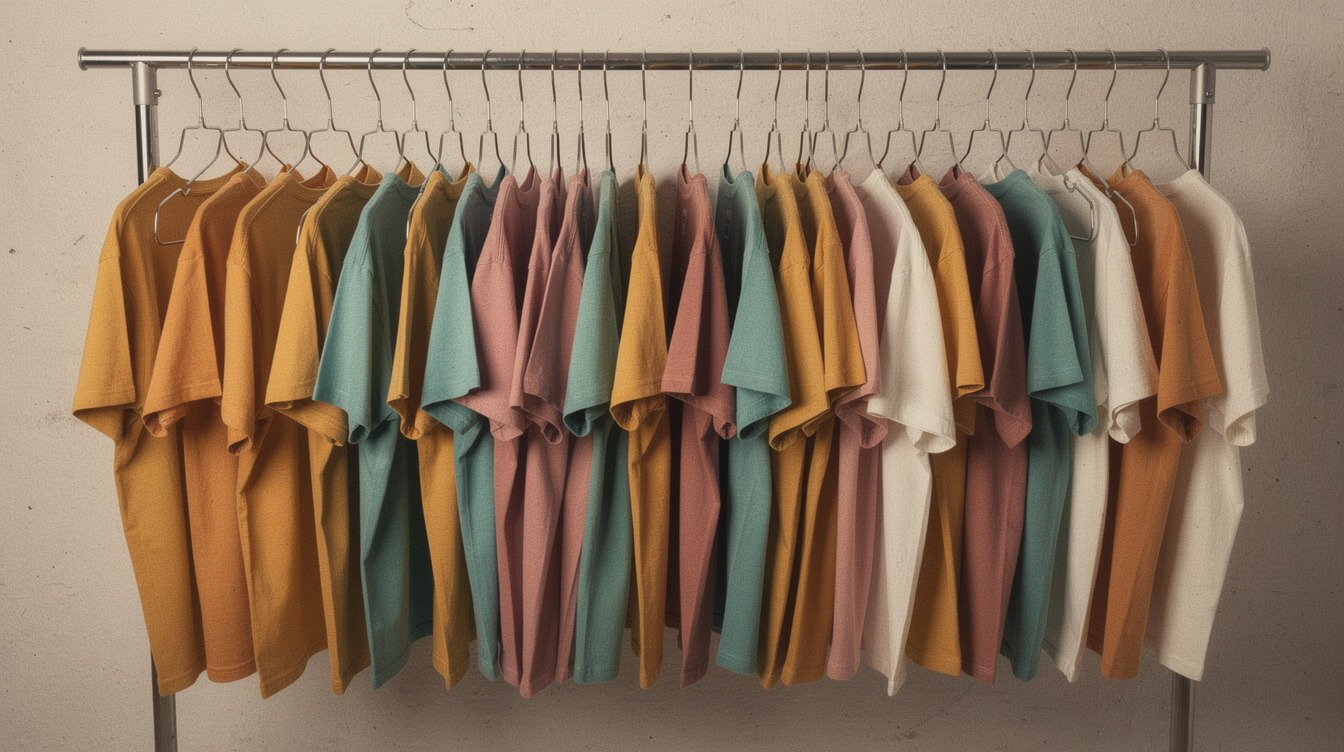
Here’s the part nobody selling you a shirt wants said out loud: volume is not variety. A marketplace can stock two thousand designs and still only be running three jokes, over and over, in different typefaces. That’s not a guess — it’s what happens when you actually read the listings in order instead of scrolling past them. The comedic vocabulary of this entire aisle turns out to be small enough to write down on an index card.
Move one: the birth-certificate shirt, which announces a date range like it’s a punchline. Move two: the shock-value shirt, which swaps a joke for a swear word and hopes you won’t notice the trade. Move three: the dropshipper phrase, the one clever line that got printed by four hundred different sellers under four hundred different store names until it stopped being anyone’s joke and started being wallpaper.
None of that is a moral failing. It’s just math. When a joke works, the internet copies it until it doesn’t work anymore. What’s missing from the results — completely, suspiciously missing — is the fourth move: a shirt that’s funny because it’s specific, not because it’s loud or dated or borrowed. We’ll get to why that’s the harder thing to make, and the only thing worth wearing.
Scroll far enough and a pattern inside the pattern shows up, too. The listings cluster in bursts — five nearly identical shirts from five different storefronts, all within a page of each other, like someone found a template that converted and everyone downstream just kept using it. That’s not a coincidence of taste. It’s what happens when “funny” gets treated as a formula to be solved once and then copy-pasted, instead of a specific thing that has to be re-earned every time.
The birth-certificate shirt: a date range is not a punchline
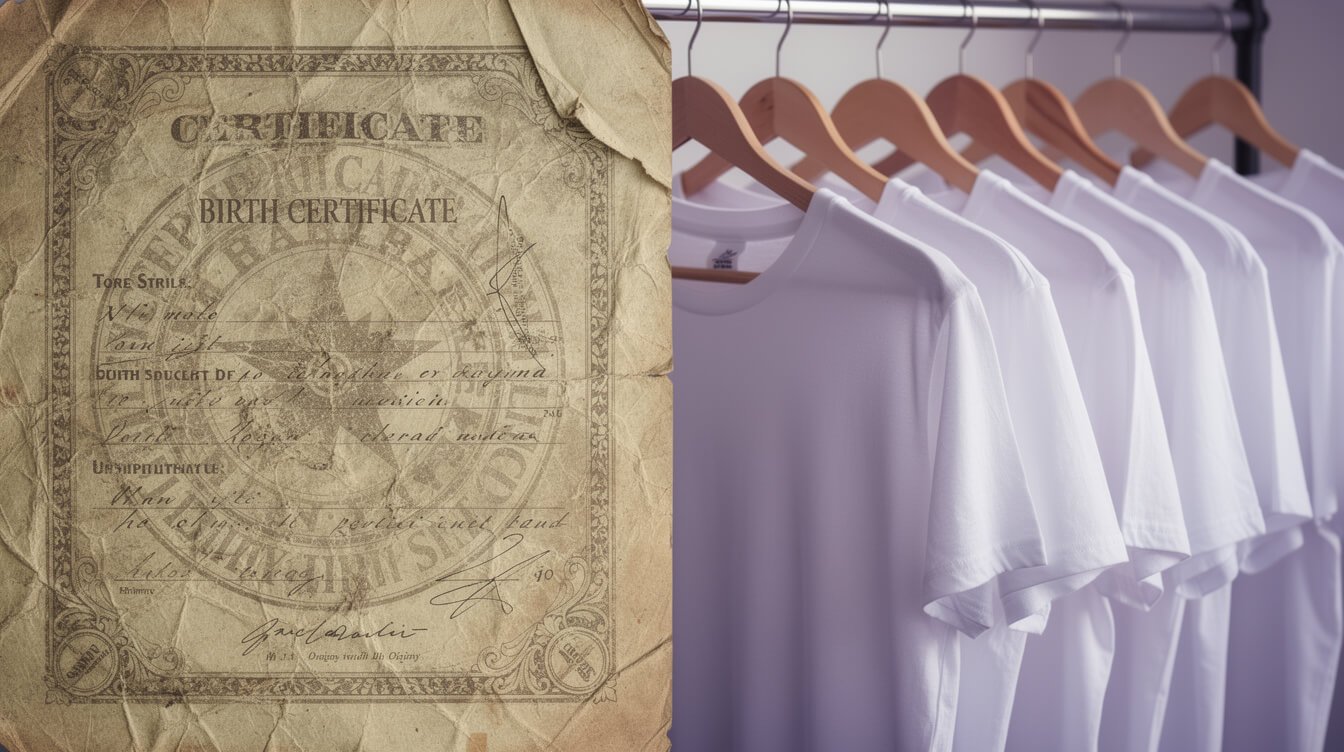
The most common move in the whole category is the birth-certificate shirt. You know the shape even if you’ve never bought one: a decade, sometimes two, printed large, followed by a claim to authenticity — vintage, original, the real one. It reads less like a joke than a notarized document. Here is my paperwork. I was, in fact, born.
The trouble is that a date range isn’t a punchline, it’s a filing cabinet. It tells a stranger your generation the way a name tag tells them your job. There’s no turn in it, no surprise, nothing that makes you exhale through your nose. It’s information delivered at joke volume, and the two things are not the same, no matter how large the font.
Worse, it does the opposite of what an inside joke is supposed to do. A real inside joke works because it filters — the people who get it feel something click, and the people who don’t just see plain fabric. A date range filters nobody. It’s the least private thing about you, printed across your chest, doing the one job a good bit should never do: explaining itself before anyone’s even asked.
Compare it to the thing it’s trying to imitate. Nobody ever bonded with a stranger over sharing a birth year. People bond over the specific, weirdly universal detail underneath it — the exact click of a dial-up handshake, the precise dread of a rewind that took too long, the particular hierarchy of who got picked first. Those things create recognition because they’re concrete. A date range creates recognition the way a form field does: accurately, and with zero feeling attached.
Volume isn’t wit: the profanity shortcut
The second move trades the date range for a swear word, and it reads, on first glance, like it’s got more teeth. It doesn’t. Profanity is a volume knob, not a joke. It can make a flat line feel like it has an edge, the same way turning up a bad guitar amp can make a wrong note feel intentional. But crank the same knob on every shirt in the store and the edge disappears — you’re just loud now, not sharp.
This is the shortcut that’s easiest to fall for, because it works in the moment. Somebody laughs at the first one they see. The tenth one they see, from a different seller, with a near-identical phrase, gets nothing — not because the joke changed, but because volume has diminishing returns and wit doesn’t. A real bit gets funnier the more precisely you aim it. A curse word gets less funny every time it’s the whole plan.
None of this is a case against a swear word landing well. It’s a case against it doing all the work by itself. The generation that grew up getting talked over by louder marketing than this knows the difference between someone raising their voice and someone actually having something to say.
There’s also a simple tell for spotting when profanity is a shortcut rather than a choice: swap the curse word out and see what’s left. If the sentence collapses into nothing — if there’s no observation underneath it, no specific claim, no shape — the profanity wasn’t seasoning, it was the entire recipe. A joke that can survive having its loudest word removed was never depending on volume in the first place.
Specific beats loud, every single time

So what’s the fourth move — the one missing from most of the results? Specificity. Not “the 80s,” but the particular unwritten rule you learned at the mall that nobody ever said out loud and everybody somehow knew. Not “I survived my childhood,” but the exact mechanism of survival — the shoestring key, the three numbers you dialed to check in, the specific dread of a busy signal when you needed the phone to work.
Specific is harder to write and harder to sell at scale, which is exactly why the marketplace grids skew so hard toward the other three moves. A date range works for every Gen-Xer identically. A precise, textured memory only works for the people who actually lived it — and that’s the point, not the flaw. The whole doctrine here is that a design should filter, not flatter. It should make one person go quiet for a second because it’s exactly right, not make a thousand people nod vaguely because it’s close enough.
This is also, not coincidentally, why the best version of this shirt never explains itself. It doesn’t caption the joke. It doesn’t add “you know how it is” underneath the line, just in case. It trusts you to already be standing inside the memory, because if you’re not, no amount of explaining will get you there — and if you are, you don’t need the footnote.
Think about the difference between “I grew up in the 80s” and “I know exactly how far the phone cord stretched before it went taut.” The first is a fact anyone could look up. The second is a memory you can only have by having lived it — and it’s funnier, specifically because it’s smaller. Comedy has always worked this way: the tighter the aperture, the sharper the recognition. Aim at a whole decade and you hit nothing in particular. Aim at one exact detail and you hit the people who were actually there, dead center.
The dropshipper tell: when the inside joke went outside

There’s a specific, almost forensic tell for spotting move three — the line that got away from whoever wrote it first. Search the exact phrase and it comes back from a dozen sellers, a dozen storefronts, a dozen slightly different fonts wrapped around the identical joke. Somewhere along the way, a genuinely good line escaped its original context, got copied wholesale, and turned into a template. It’s not funny anymore. It’s furniture.
This is the part that should sting a little, because it’s a preview of what happens to any inside joke the moment it stops being inside. The whole appeal of an in-group reference is that it belongs to the group. The instant it’s mass-produced by strangers who weren’t there and don’t particularly care, the joke doesn’t die from being wrong — it dies from being everywhere. Ubiquity is the actual enemy of a good bit, more than a bad punchline ever was.
That’s the quiet argument for a smaller, sharper design over a viral one: a joke that’s still yours is worth more than a joke that’s on four hundred shirts. Rarity isn’t a marketing gimmick here, it’s structural — the thing that keeps the joke funny is the thing that keeps it from spreading past the people who actually get it.
It’s worth saying, too, that this isn’t really about any one seller doing something wrong. Nobody sat down and decided to ruin a good line — a phrase just worked once, got noticed, and got copied the way anything that works on the internet gets copied, quickly and without much thought for what it cost the original joke. The lesson isn’t “don’t let your joke get popular.” It’s “notice the moment a joke stops belonging to anyone,” because that’s the exact moment it stops being funny and starts being print inventory.
What a truly funny gen x shirt costs you — and why it’s worth paying

Here’s the actual cost of doing this right, and it’s worth saying plainly instead of dressing it up: a specific, deadpan, non-obvious joke will never land with everybody. Some people will glance at it and see plain fabric. That’s not a bug in the design. It’s the tax you pay for making something that isn’t a date range or a swear word or last year’s viral phrase — it’s the price of a joke that actually belongs to somebody instead of everybody.
Deadpan costs you the easy laugh, too. A loud shirt gets an immediate reaction — a laugh, a “same,” a stranger nodding at a stoplight. A quiet, precise one gets a slower reaction: someone reads it twice, understands it fully on the second pass, and then gets that specific, private half-smile that never makes it to their face as an actual laugh. If you’re optimizing for volume of reaction, deadpan is a bad trade. If you’re optimizing for the right person recognizing themselves, it’s the only trade worth making.
That’s also, not by accident, the whole design philosophy behind the funny gen x shirt done properly — the kind where the joke doesn’t announce a decade or borrow someone else’s line, it just gets the specific detail exactly right and lets you find it or not. There’s an honesty in that trade that’s easy to undersell: a design that only some people get is a design that respects the people who do, instead of trying to flatter everyone equally and landing with no one specifically.
If you want to see what that actually looks like instead of just reading about it, you can look through the shop — no hard sell here, just designs built on the fourth move instead of the first three.
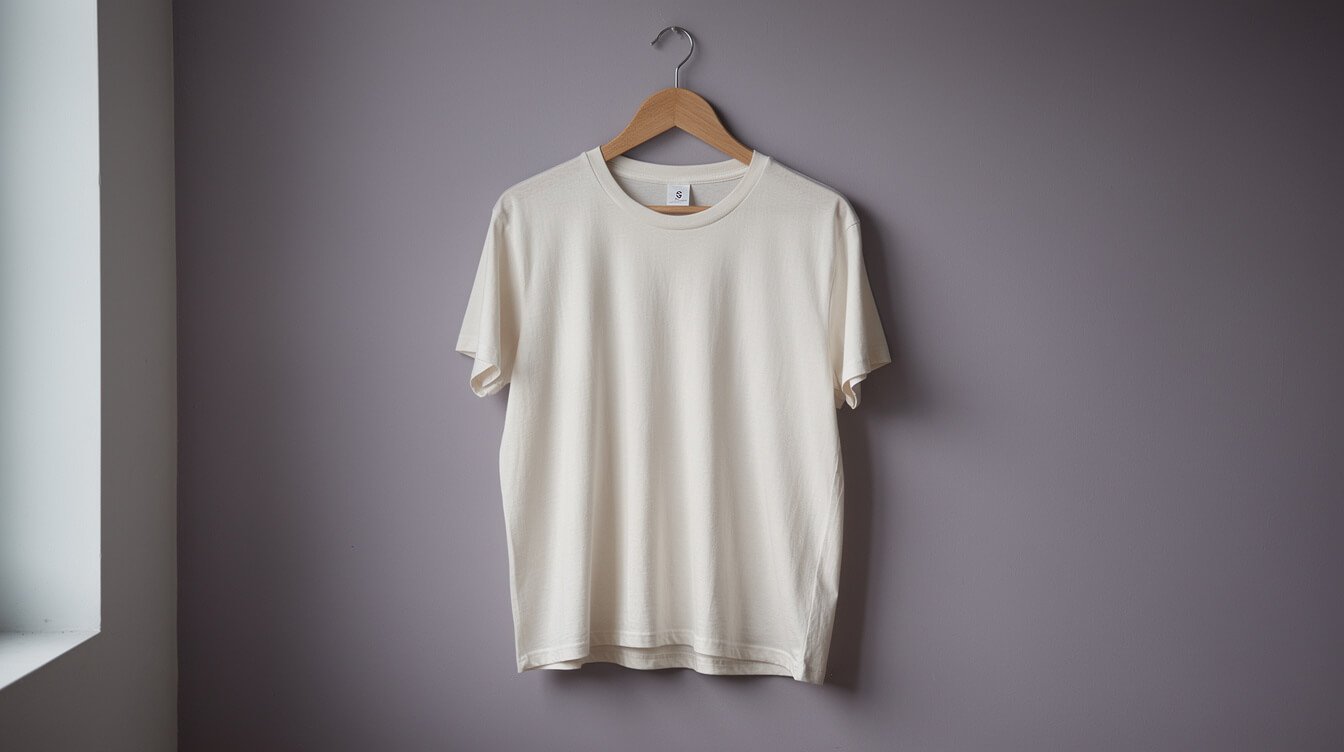
The fourth move, in shirt form
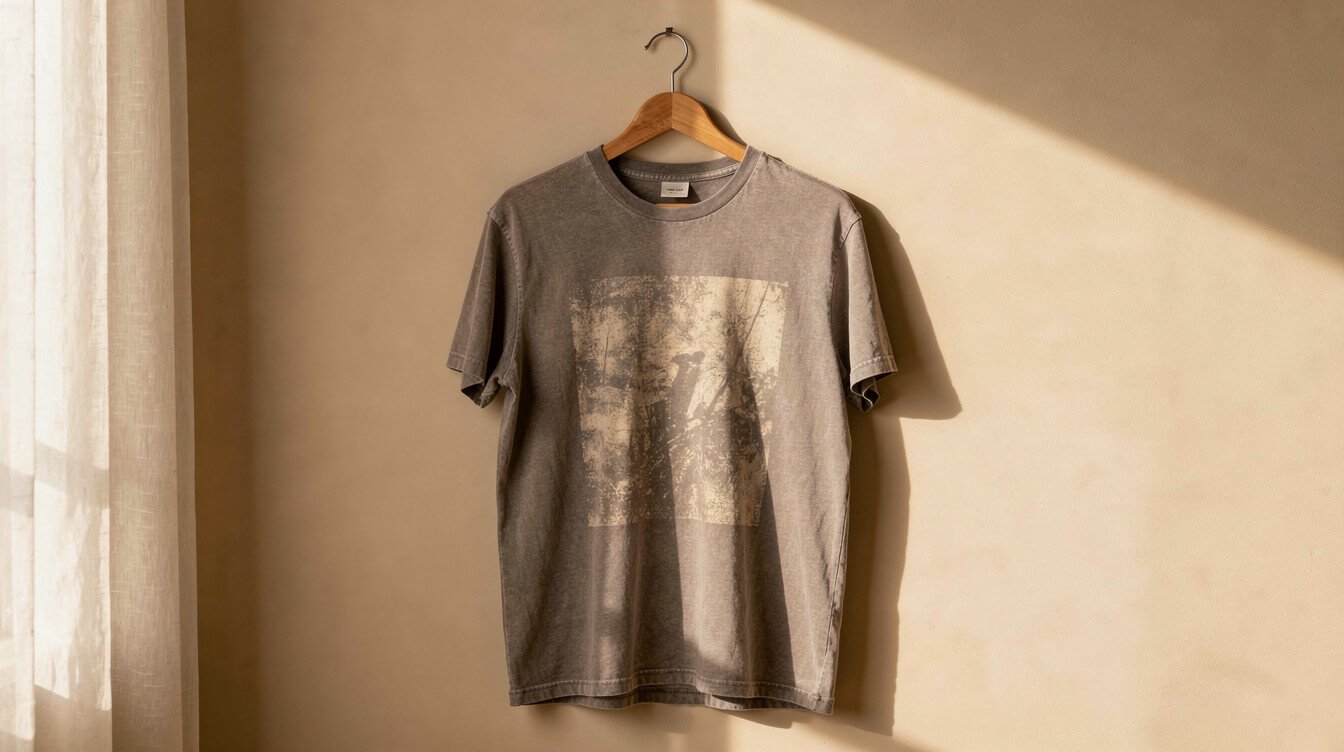
No date ranges. No borrowed lines. Just the specific stuff, said once, for the people who’ll get it.
The shirt shouldn’t have to introduce you

Go back to the birth-certificate shirt for a second, because it’s worth naming what it’s actually doing on a social level: it’s doing your introduction for you. Hi, I’m a specific decade. Nice to meet you. That’s a fine thing for a name tag at a reunion. It’s a strange thing to volunteer to strangers at the grocery store, and it’s an even stranger thing to pay twenty-eight dollars for.
The generation this whole category claims to be for didn’t grow up needing an introduction. We grew up being the ones who noticed things nobody pointed out — the rule about which lunch table, the exact ring pattern that meant it was for you, the unspoken hierarchy of who got the good bike. Recognizing something without being told is the entire skill set. A shirt that has to explain the joke, or announce the decade, or shout the punchline in bold letters is asking you to perform a skill you’ve had since you were nine, except backwards — it’s doing the noticing for you, out loud, so nobody else has to.
The better version does the opposite. It says the specific, true thing once, quietly, and trusts the right person to do what they’ve always done: notice it, get it, and keep walking. No footnote. No caption. No date range required.
That’s really the whole test for whether a design has earned its place in this category or is just another entry in the pile: would it still be funny if you took the decade off it entirely? Strip the “1979” or the “Gen X” label from the shirt and see if the joke survives on its own legs. If it does, you’ve found the fourth move. If it doesn’t — if the joke was the label the whole time — you’ve found the other two thousand results.
Quick answers
Why do most “funny Gen X” shirts feel the same?
Because most of them are running one of three moves — a birth year, a swear word, or a viral phrase copied across dozens of sellers. Three jokes, endlessly reprinted, isn’t the same as variety.
What actually makes a Gen-X shirt funny instead of just loud?
Specificity. A precise, textured detail — a sound, a rule, a routine — beats a shouted date range or a swapped-in curse word every time. The joke should filter the room, not summarize your birth certificate.
Is a quieter, deadpan design a riskier purchase?
In one sense, yes — not everyone will get it on sight, and that’s the point. It’s built for the person who does, not for maximum recognition from strangers at a stoplight.
Should the joke ever be explained on the shirt itself?
No. The moment a design adds a caption or a “you know how it is” underneath the line, it’s admitting the joke didn’t land on its own. The same unwritten-rules instinct that made a mixtape actually good — no liner notes, no explaining your choices — applies here. If it needs a footnote, it’s wrong.
Does that mean a good Gen-X shirt has to be subtle to the point of invisible?
No — subtle and specific aren’t the same thing as quiet-to-the-point-of-unreadable. A design can be bold, bright, front-and-center, and still be doing the fourth move, as long as what it’s saying is a precise detail instead of a decade or a dare. The test isn’t volume. It’s whether the joke needed a stranger to explain it to you, or whether you just knew.
Final thoughts
None of this is a case against the birth-certificate shirt or the shock-value shirt existing at all — plenty of people want the easy version, and there’s nothing wrong with easy. It’s just a case for knowing the difference before you buy one, because “funny gen x shirt” is a search term that returns two thousand results and roughly three ideas, and the fourth idea is the one actually worth twenty-eight dollars.
The good version doesn’t announce your decade. It doesn’t borrow last year’s viral line. It gets one true, specific thing exactly right, says it once, and lets you decide who’s standing close enough to get it.
Reply and tell me your era
One email, occasionally. No fake hype, no confetti — just the next thing worth reading.