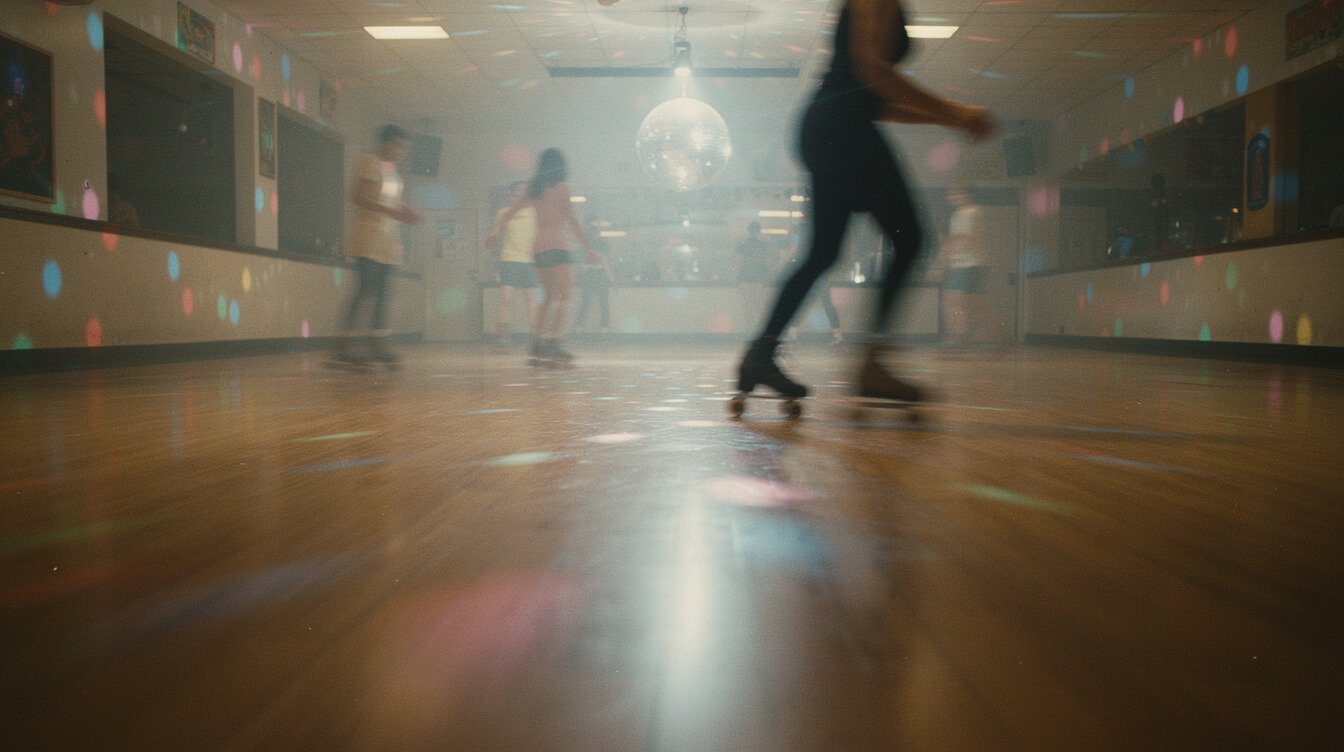
The roller rink didn’t advertise itself as a rite of passage. It was just where you went on Friday, because your parents needed three hours and the rink needed your $4.50. Nobody called it socialization. Nobody called it anything. You just knew: skates on, quarters in your sock, and if the DJ said “grab a partner,” you had about four seconds to solve a problem no one had prepared you for.
That’s the thing nobody explains about gen x roller rink nostalgia to people who weren’t there — it wasn’t really about the skating. Half of us couldn’t skate, not properly, not the way the kids doing backward crossovers in the center of the floor could. It was a supervised-unsupervised zone, a strobe-lit trial run for adulthood, and it taught an entire generation how to read a room a full decade before we had to do it for real, in an office, at a wedding, at a funeral. The rink was the mall’s louder, sweatier cousin, and it ran on the exact same fuel: nobody was watching, and somehow everybody was watching.
If you grew up anywhere near one, you know the specific tax it levied on a Friday night — the smell, the sound, the math of a five-dollar bill — without anyone needing to describe it further. If you didn’t, here’s the whole ledger, receipts included. It ran the same everywhere, whichever rink your town happened to have, whichever strip mall or standalone building it was tucked into — the details moved a little, the rules never did.
The admission ritual
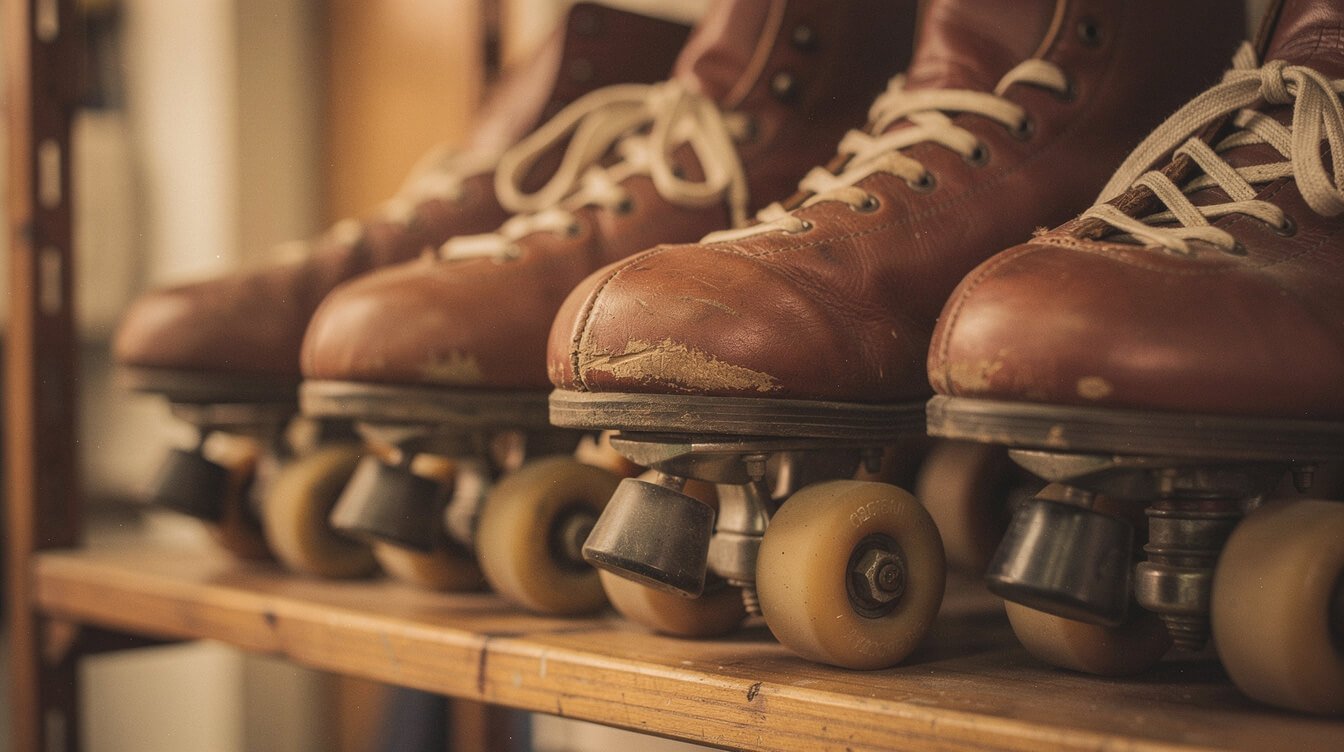
You paid at a window that looked like a movie ticket booth, except the person behind it had clearly worked a double, possibly a triple, and had opinions about the noise level she was too tired to voice. Admission got you the floor and nothing else. Skates were extra, and skate rental was its own tax bracket — quad skates in a size that was never quite yours, tongue flopping loose no matter how you laced it, one wheel that pulled left like it had somewhere better to be than under your foot.
The smell hit you before the skates did. Rental skates have a smell that doesn’t exist anywhere else in nature — foot, cracked leather, and forty years of industrial disinfectant losing a fair fight. You laced up on a carpeted bench that had absorbed a thousand birthday parties and never once been replaced, and you did not think twice about it, because that was simply the baseline the whole building operated on. Nobody was grossed out. Grossed out came later, with hindsight and a fully developed immune system.
Then you stood up. Standing up in rental skates for the first time on any given visit was its own small, public humiliation — ankles rolling inward, arms out like you were mid-knighting ceremony, one hand permanently glued to the wall. Nobody helped you. That wasn’t cruelty, it was just the culture of the place. You figured it out the way you figured out everything else that decade: alone, fast, and without being asked if you were okay, because nobody was going to ask.
The floor had a hierarchy, and nobody posted the rules
Once you were upright — or upright-adjacent — you learned the floor had a caste system, unspoken and absolute, more rigid than anything a teacher ever enforced. The center of the rink belonged to the kids who could actually skate: the ones doing crossovers backward, spinning during “regular skate” like it was nothing, making the rest of us look like we were being punished for a crime we didn’t commit. The outer rail belonged to everyone else — the wall-huggers, the true beginners, the kids doing the shuffle-glide that technically counted as skating if the DJ squinted.
Speed skate was its own event: floor cleared, lights dimmed further, and if you weren’t fast you got out of the way or you got run over. Nobody issued warnings. Nobody apologized either. Snowball skate meant the DJ picked one couple to start, and everyone else had to grab a brand-new partner every thirty seconds or so until the floor turned into a chaotic square dance nobody had agreed to join. Shoot the duck — dropping into a crouch on one leg, mid-skate, arms out for balance you didn’t have — was less a move than a dare, and you attempted it exactly once, on the hardest floor in the building, and your tailbone still remembers the exact date.
None of this was written down anywhere. There was no orientation packet, no rink counselor walking new kids through the customs. You learned the hierarchy the way you learned nearly everything that decade: by watching closely, by getting it wrong once in front of everyone who mattered, and by never, ever making that specific mistake twice. It’s the same method that taught you the mall’s food court seating politics and the school bus’s back-row seniority system — nobody sat you down and explained any of it, you just absorbed the rules by osmosis and paid for it once when you didn’t.
The couples skate was psychological warfare
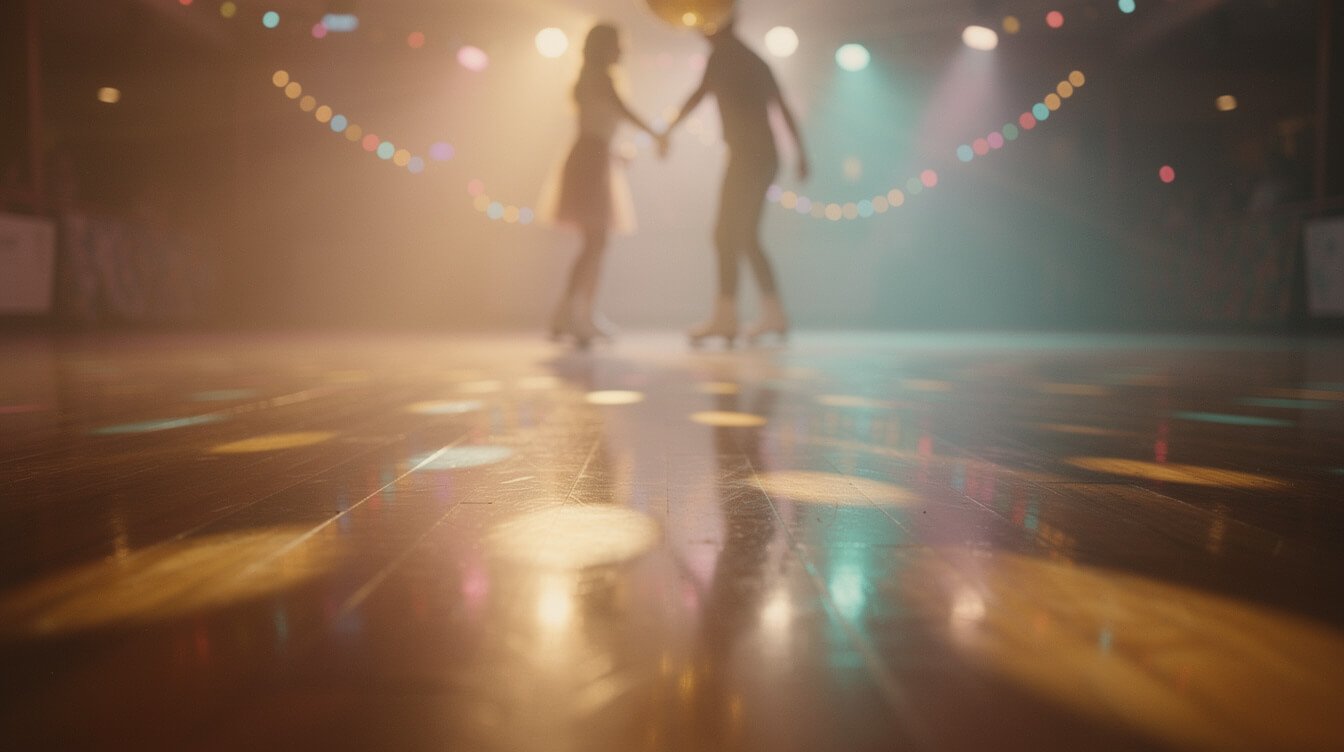
Then the overhead lights dropped, the disco ball started doing its one and only job, and the DJ said the four words that could end a childhood friendship in real time: “Couples skate, grab a partner.” You had maybe four seconds. Four seconds to scan the rail, calculate who might plausibly say yes, and weigh the humiliation of asking against the quieter, more survivable humiliation of standing alone at the snack bar pretending you’d just remembered you were thirsty.
Nobody explained the rules of couples skate because there were no rules — just stakes, and they were enormous for a Tuesday. You could ask and get turned down in front of the entire sixth grade, a rejection with witnesses. You could get asked and have to decide, on the spot, under a mirror ball, whether “yes” meant something bigger than two-and-a-half minutes of holding a sweaty hand. You could spend the whole song just skating in an oval, saying absolutely nothing, heart going like a paint mixer on high, and it would somehow become the single most significant event of your entire month.
This was the actual curriculum, quietly delivered under strobe lighting. Not the skating — the negotiation. The reading of a face for yes-or-no in under a second, live, no do-overs. The recovering, instantly and with a straight face, if the answer landed on no. Couples skate was a masterclass in social risk set to a slow song and terrible lighting, and every single one of us graduated whether we wanted to or not, whether we were ready or not — and nobody ever was, not really.
The snack bar ran on quarters and mystery
Between skate sessions, the entire economy of the building shifted to the snack bar, where a slice of pizza that had clearly been sitting under a heat lamp since sometime in the previous administration cost more than admission itself. Nachos arrived with a cheese sauce that was less “cheese” and more “orange, warm, and deeply committed to its own existence.” An ICEE in the wrong flavor combination — cherry and blue raspberry, mixed only because the machine had one working lever left — was still the best thing you drank all week, and you would defend that opinion under oath to this day.
The arcade machines lined the wall right next to the snack bar, eating quarters at the exact same rate the skate rental counter did, and there was always one kid who’d clearly brought his entire week’s allowance and was rationing it like a submarine captain rationing oxygen on a long dive. If you want the full accounting of what that economy actually looked like — the quarters, the math, the stretching of a single dollar across an entire Friday night — that’s the same currency the arcade ran on, just relocated ten feet over and with wheels bolted to it.
Nobody’s parents knew exactly how much money left the house on a rink night. Nobody’s parents asked, either. That was the unspoken deal on both ends — you got the cash and the trust, they got three quiet hours, and everybody understood the terms without a single word being exchanged about it.
The newsletter
Like a mixtape, but it shows up on its own
One email a week. The good posts, new designs, zero exclamation points. Unsubscribe whenever. We won't take it personally.
The DJ ran the building, not the manager
Here’s a fact that gets lost with distance: the actual authority in a roller rink wasn’t the manager in the back office or the teenager working the skate counter. It was the DJ in the booth, alone up there with a crate of records and a microphone, and absolute, unchecked control over the emotional temperature of the entire room. He decided when the lights dropped for couples skate. He decided when speed skate cleared the floor. He decided, with a single song choice, whether the next ten minutes felt like a party or a funeral.
The music itself had already changed once by the time most of us got there — rinks that used to run on organ music for an older, sleepier crowd had, a decade or so earlier, gone all-in on disco, swapped the mirror-ball-adjacent house lighting for the real thing, and traded a genteel older clientele for a floor full of teenagers and preteens who wanted the bass louder. By the time Gen X showed up in quad skates, that shift was just how it had always been — disco lights, a DJ with a booth full of vinyl, and a building that felt more like a low-stakes nightclub than a sports facility, which, in fairness, is exactly what it had quietly become.
You didn’t know any of that history standing at the rail in fifth grade. You just knew the DJ was god, the lights meant something was about to happen, and you’d better be ready to make a decision in the next four seconds.
The birthday party industrial complex
By age ten, you’d been to more birthday parties at the rink than at anyone’s actual house, because the rink solved a problem no living room on earth could solve: twenty-two overstimulated kids, unlimited energy, zero property damage to anything your parents personally owned. The invite list was its own quiet diplomatic incident — the whole-class invite versus the shorter, more devastating short list, which every kid in that class could read from across the room without a single word being spoken about it.
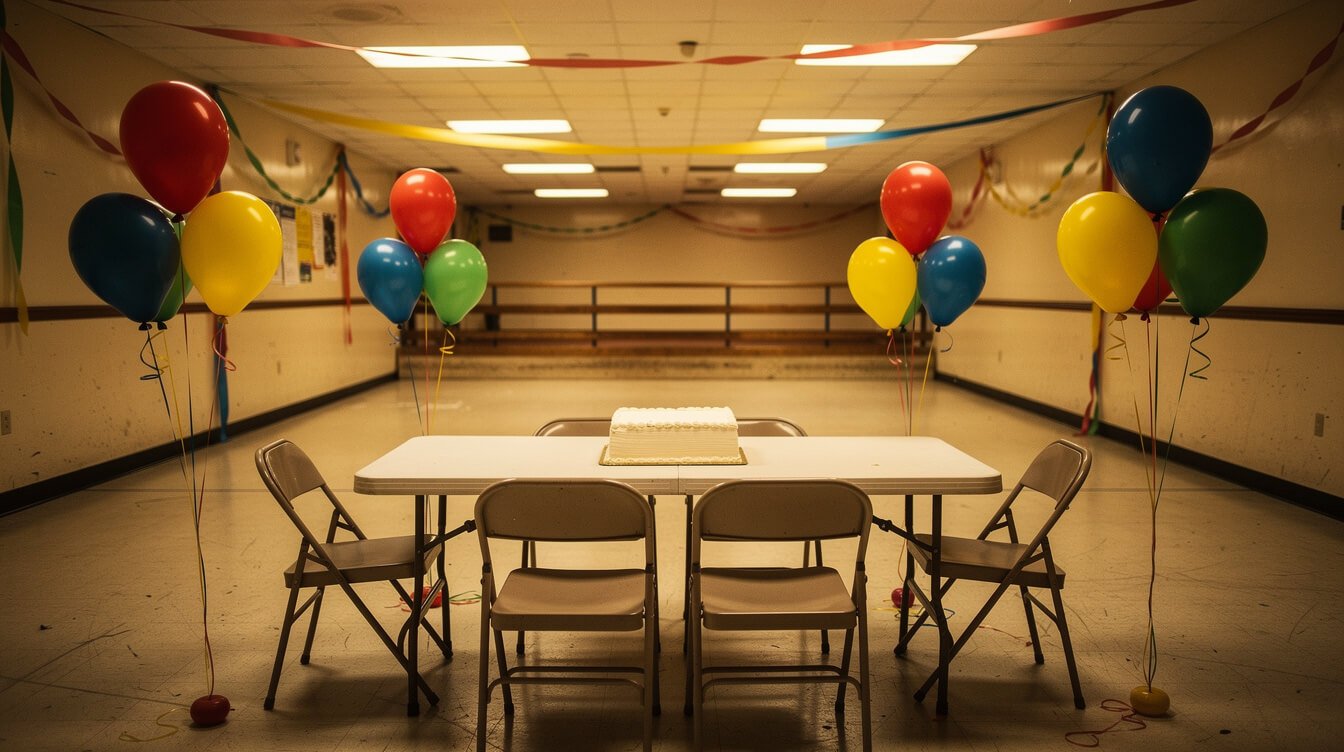
The party room was a windowless side space with folding tables, a sheet cake that spelled the birthday kid’s name slightly wrong, and a stack of presents that would get opened in front of the entire room whether the birthday kid wanted an audience or not. Somewhere in the middle of it, an adult would herd everyone back onto the floor for one forced, mandatory group skate set to “Happy Birthday,” and it was mortifying in the moment, and it is also, more than thirty years later, one of the only birthdays from that entire decade you can actually picture down to the detail.
The rink didn’t just host the party. It was quietly running free-range childcare for a hundred different families every single weekend, and every parent in town understood the assignment without a memo ever being sent.
Nobody drove you there and nobody picked you up on time
Here’s the part that actually explains why the roller rink sits so deep in the memory, deeper than the couples skate or the cheese sauce: it was one of the first places you got dropped off and simply left. Not babysat, not supervised in any real sense of the word — just deposited, for three full hours, in a building packed with strobe lights, a hundred kids you half-knew, and one DJ with total authority over the mood of the room.
That’s the same deal as being handed a house key and the run of an empty house after school — it’s the rink’s version of the trust nobody formally granted you, they just quietly stopped watching. You navigated the couples skate, the snack bar budget, the unwritten hierarchy of the floor, and the ride-home logistics almost entirely on your own judgment, because the adults were somewhere else entirely — in the parking lot, at the restaurant next door, or just running late, fifteen, twenty, forty-five minutes late, while you sat on the curb in your socks with your skates zipped into a bag, completely unbothered by any of it, because that’s simply what a Friday looked like.
Nobody framed it as independence when you were ten years old. It just felt like a long night that ran late. It was independence, though — hours of it, delivered weekly, and it built something a scheduled, chauffeured, fully supervised playdate never could have built in a hundred tries.
Frequently asked, mostly by people who weren’t there
Was roller skating actually fun, or was it the social scene?
Yes. Both. Ask a different question.
Why did the DJ have so much power?
Because he controlled the lights, the couples skate, and the entire difference between a good night and a bad one, armed with nothing but a microphone and a crate of records. That’s not a small amount of power to hand one guy in a booth, and yet nobody questioned it.
Did everyone actually own rental skates for one song?
No — some kids showed up with their own skates in a bag, their name written on the strap in permanent marker, and everyone else knew exactly what that said about their commitment level.
Was the cheese sauce really that orange?
It was a shade of orange that does not occur anywhere else in nature, and it was correct, and we drank it with a straw when the nachos ran out, and no, we are not proud of that, and yes, we’d do it again.
Do rinks like this still exist?
Some do, quieter now, fewer of them every year, still running on quarters and whatever’s left of the nostalgia. If you know, you know exactly which one you’d drive an hour out of your way to visit again, no questions asked.
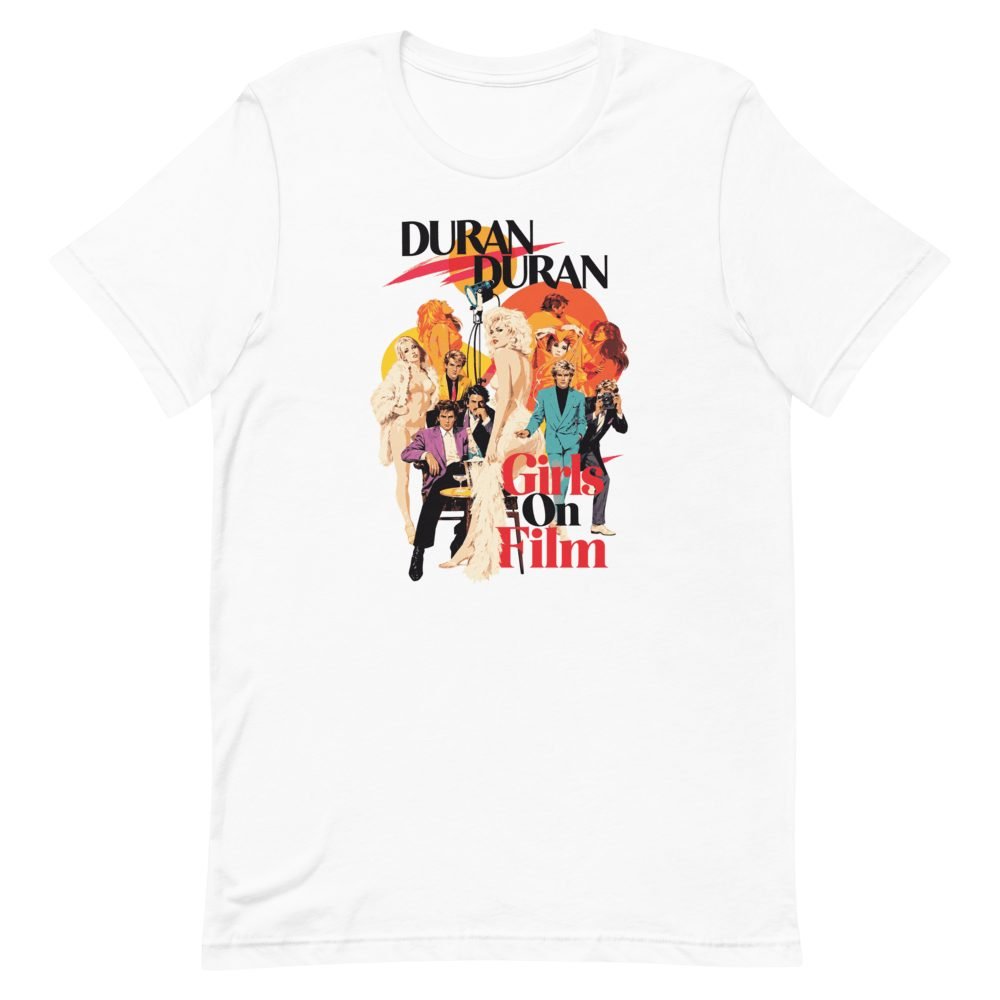
From the shop
Duran Duran Girls on Film Vintage Art T-Shirt
Price range: $24.99 through $26.99
Shop this designFinal thoughts
The roller rink wasn’t trying to build character. It was trying to survive a Friday night with a hundred kids, a DJ, and one first-aid kit behind the counter. But it built something anyway — a working knowledge of risk, rejection, budgeting on the fly, and reading a room, all of it taught without a single curriculum, under a disco ball, on a rented pair of skates that never once fit right.
You don’t need the building to still be standing to remember exactly what the floor felt like under bad wheels, or exactly how long four seconds is when someone might say no and the whole rink is watching. That’s not nostalgia as a highlight reel — that’s just what actually happened to us on a Friday, and it earned its spot in the permanent record a long time ago.
Nobody’s making you relive the rental skates. But if the roller rink still lives somewhere in your chest, the shop has a few designs that’ll know exactly why, no footnote required.
One good email a week
No hype, no confetti emoji. Just the new stuff and the occasional “remember when.”
Before you go
You made it to the end. Respect.
Get the best of these in one short weekly email, plus whatever we just printed. No spam. We were raised better than that. Mostly.