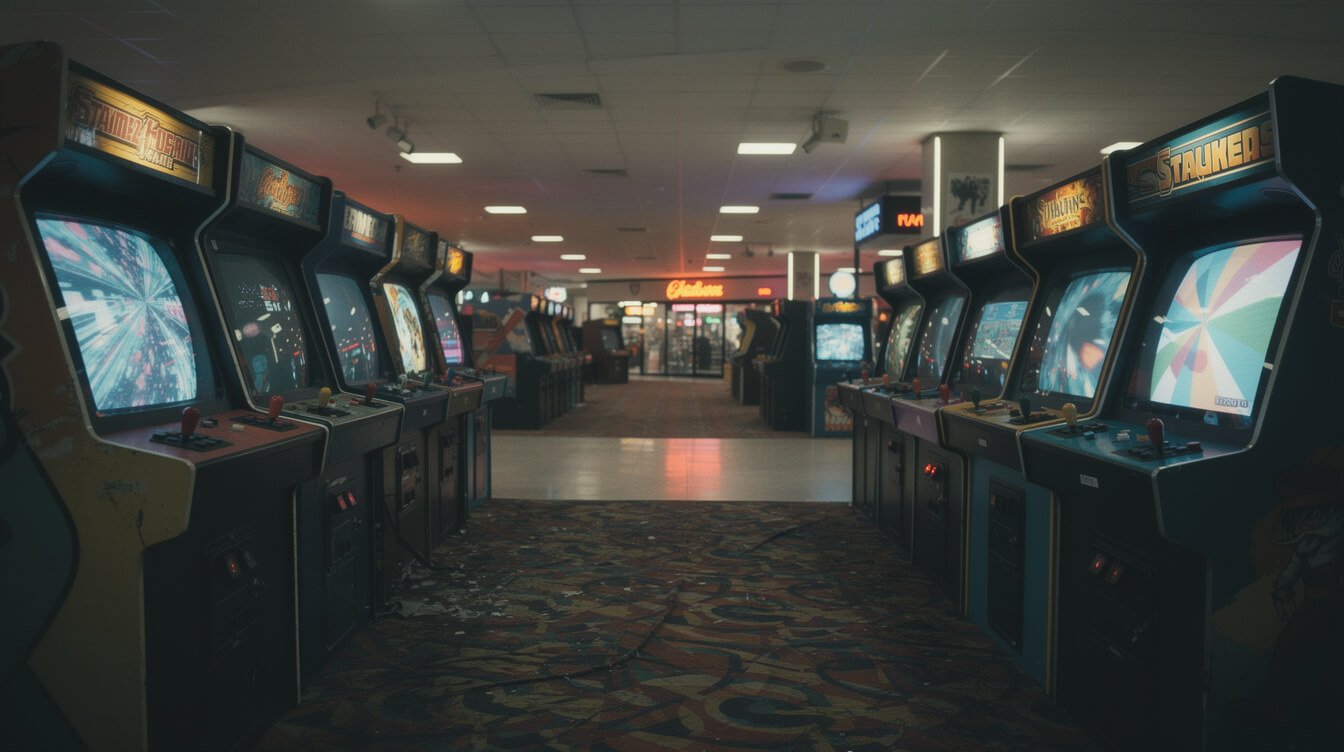
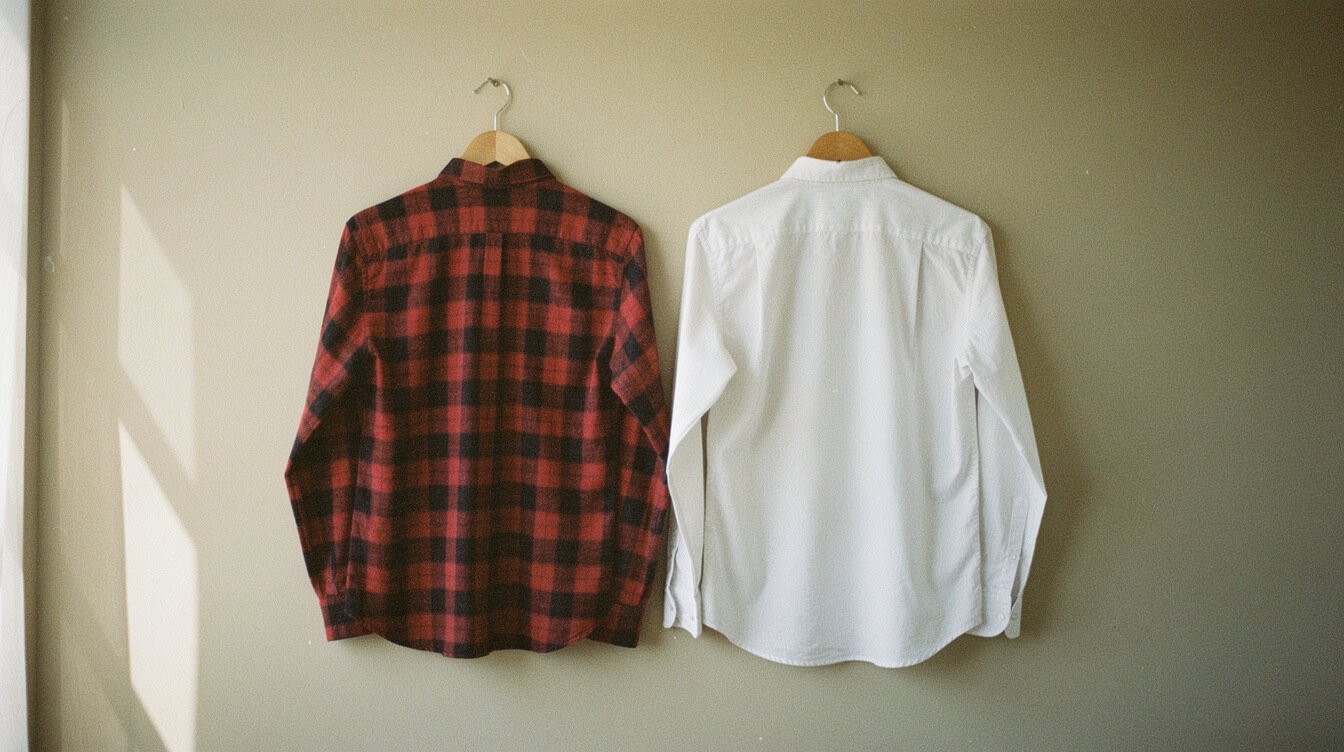
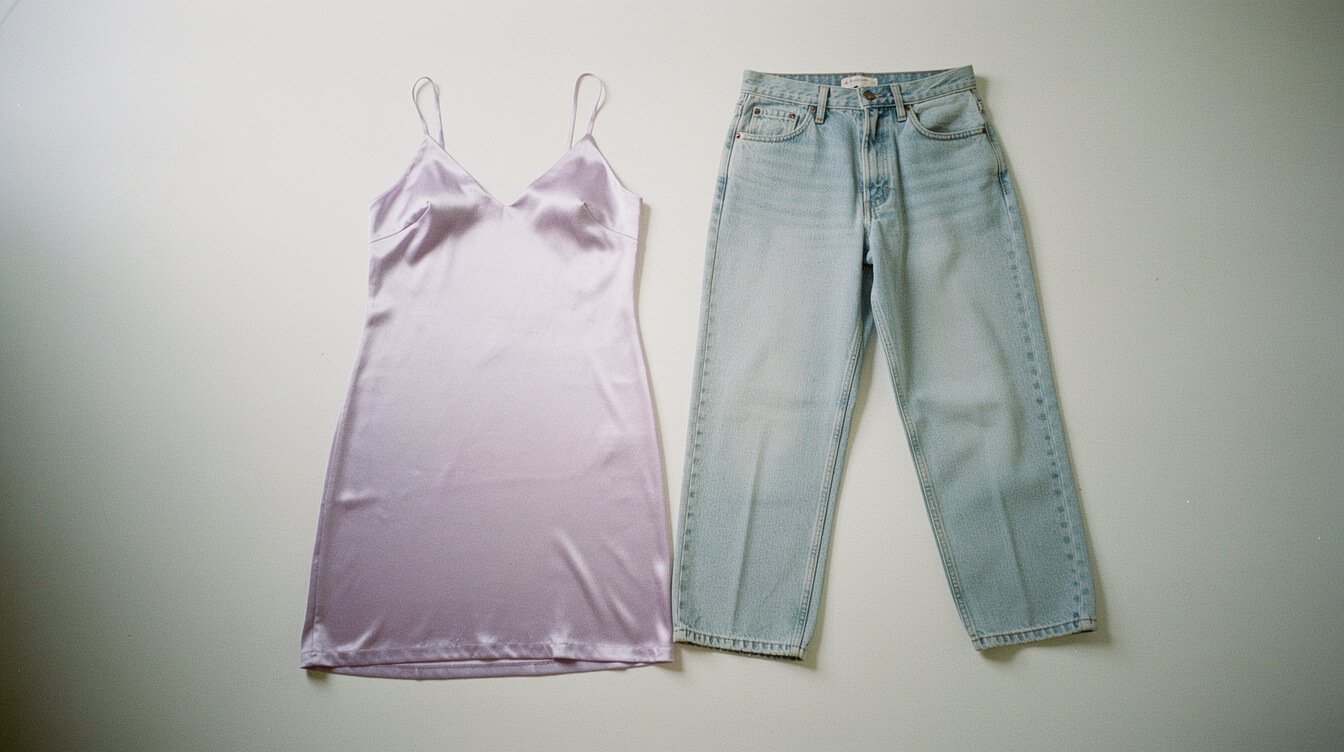
Search for 90s nostalgia fashion and the internet hands you a mood board. Slip dresses. Baggy jeans. Baby tees, bucket hats, platforms, a flannel tied around the waist like it’s a seatbelt. Every result is cheerful about it, and every one says the same word in the first paragraph: comeback. The decade is back, and you can shop it.
Fine. It’s a good-looking decade, and somebody should be enjoying it. But read enough of those guides and you’ll notice they all describe the same person: someone young, off the clock, on a weekend that never ends. Nobody in them has a job.
We did. If you were born between 1965 and 1980, you spent the 90s somewhere between fifteen and thirty-five, which is the age of first paychecks, first interviews, and first dress codes. (We did the full arithmetic in 90s nostalgia items; short version, a lot of us were paying for things.) So the 90s we actually dressed for had a Monday in it. It had a name tag, a polo you didn’t pick, khakis with pleats you didn’t ask for, and one suit that had to cover interviews, weddings, and funerals with no notice.
That’s the part of the decade the revival skipped. It’s also, quietly, the part that explains the rest.
90s nostalgia fashion, according to page one
Here’s what currently ranks when you search the phrase. A fashion magazine’s archive tag for the decade. A marketplace’s get-the-look guide promising outfits for going “from couch to coffee shop to concert.” A department store’s style guide, a sewing-pattern lookbook, a couple of nostalgia groups on social media, and a women’s magazine roundup of 23 trends making a comeback, written by a self-described “90s baby” turning thirty.
Nobody’s lying. Slip dresses happened. So did baggy jeans. But the whole page is describing the decade as a look, a set of shapes you can recombine on a Saturday. And the funniest entry is the department store guide, which leads its 90s revival with a section called “corporate chic”: clean tailoring, a crisp button-down, a sweater for the office, a necktie “worn slightly loose.” It sells the 90s office as an aesthetic.
We just called it Monday.
That’s not a complaint about the revival. Every decade gets remembered by whoever finds it photogenic, and the 90s are being remembered by people who were small at the time. We’ve written before about how 90s nostalgia became a product we’re not the customer for, so we won’t redo that here. This is narrower. It’s just about the clothes, and specifically about the half of the wardrobe that never shows up in a get-the-look guide because nobody ever wanted to get the look.
One comment in a nostalgia group sitting on that same first page put it as well as anyone has: “That wasn’t my 90s.” It was a reply to a photo of a trend. It could be a reply to the whole page.
The two closets
Most of us had two closets in the 90s, even if they were the same closet. One held the clothes we chose: thrifted, too big, worn until they gave up. The other held the clothes somebody else chose for us, through a uniform policy, a dress code, or a manager with opinions about collars. 90s nostalgia fashion only ever opens the first one. The second one is where most of our weekdays went.
Grunge was a weekend look. Monday had a dress code.
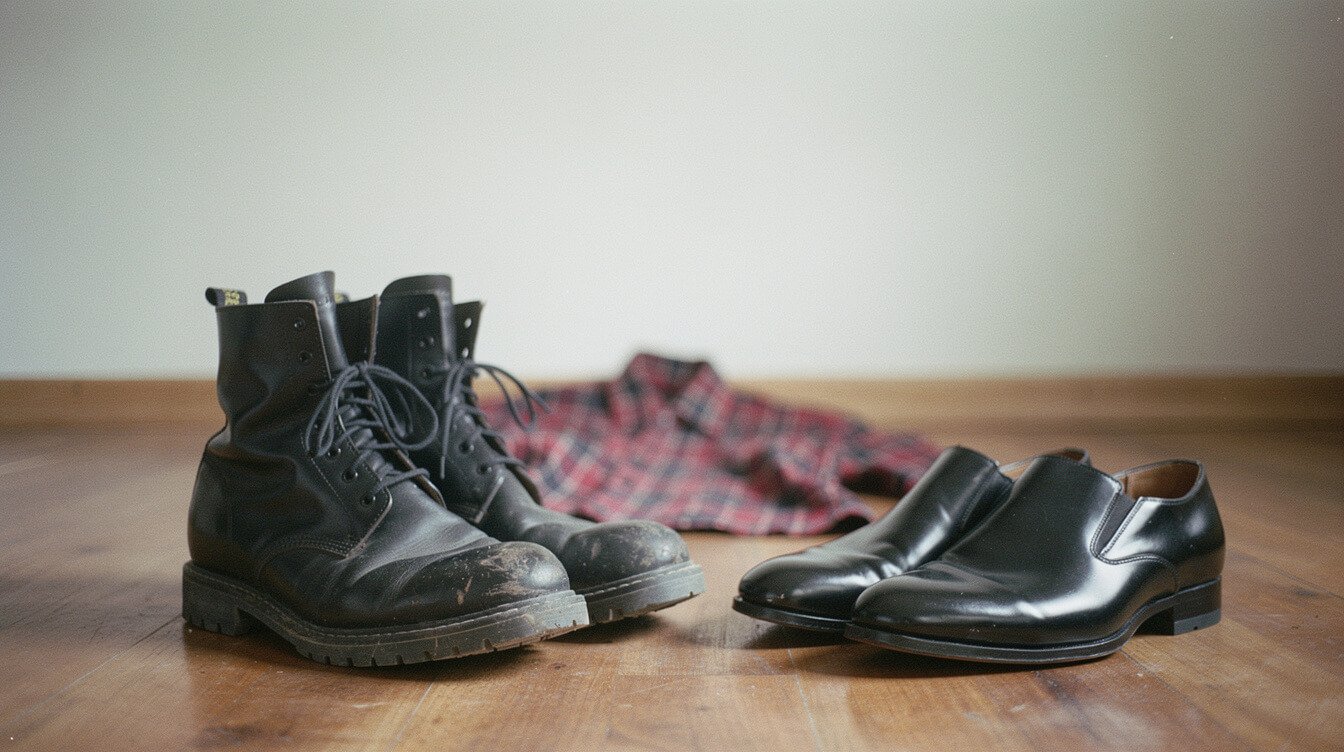
The fashion history timeline from one of the big New York design schools describes the early-90s look precisely: baggy, worn-out jeans, flannel shirts, heavy boots, much of it bought secondhand. Then it adds the line that matters. The style, it says, “was born of a desire to not engage with fashion at all.”
That’s true, and it’s also a job description. Not engaging with fashion is easy when nobody’s paying you. The minute somebody is, fashion engages with you.
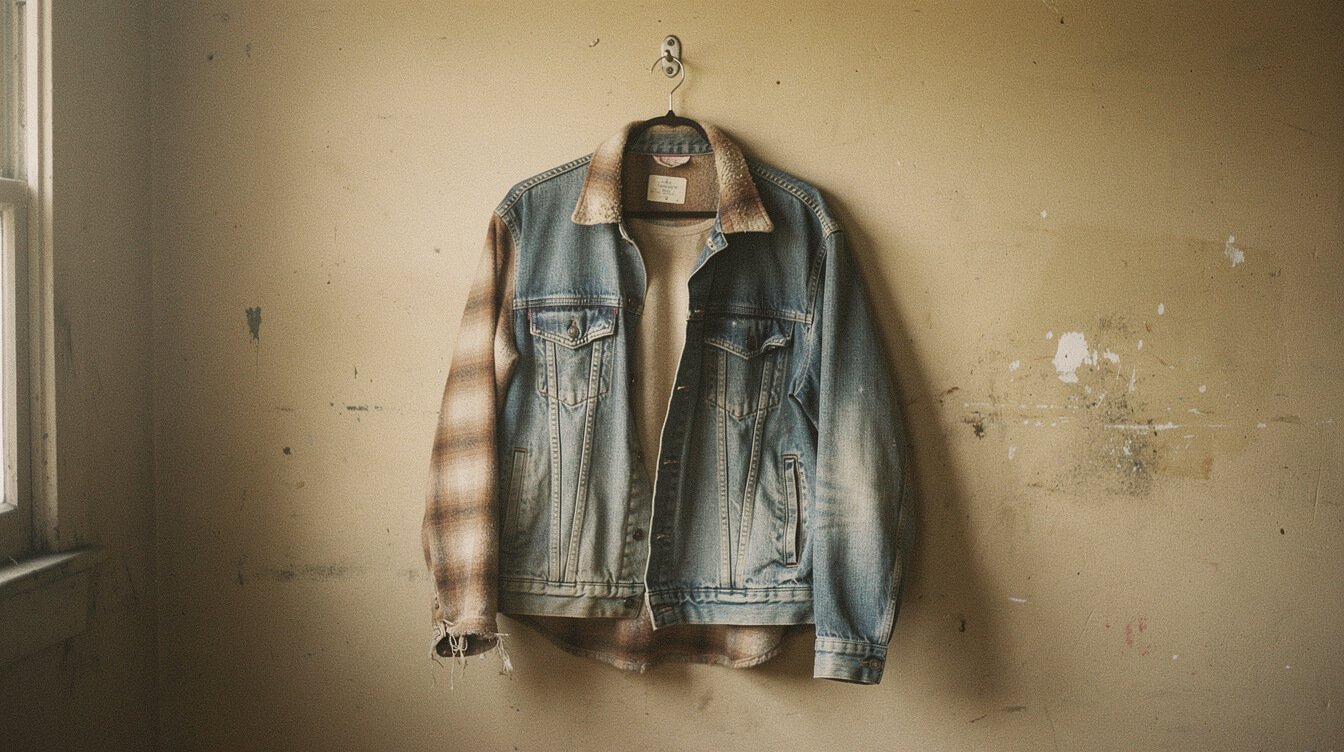
So for a big slice of Gen X, the flannel had a shift schedule. It went on after work, or over the uniform on the walk in, and came off at the employee entrance like a coat at a restaurant. Underneath was whatever the job said. A polo in the company color. A visor. A smock. A name tag with your name spelled the way the manager thought it was spelled. Slacks that had to be “dark,” which turned out to be a word with a lot of range.
If you worked retail, you know the specific feeling of standing at the register in an outfit chosen by a regional office, while customers your own age walked past in exactly the clothes the magazines would later call iconic. They weren’t more stylish than you. They just had the day off.
The boots are the tell. The boots were the one piece that could cross over. Plenty of us wore the same heavy, scuffed pair to the job and to the show, because the dress code said “closed-toe shoes” and nobody had ever specified what kind. The shiny pair was for interviews, and lived in its box the rest of the time.
The look had a short shelf life anyway
Here’s something the comeback guides don’t mention: the look they’re reviving barely lasted. By most fashion-history accounts, grunge crossed into the mainstream in mid-1992, made it onto a luxury runway in 1993, peaked between late 1993 and early 1994, and was already in steep decline by the end of 1994. The defining look of 90s nostalgia fashion had a run of about two years. A decent lease lasts longer.
Which means that for most of the decade, even the people who weren’t at work weren’t dressed like the mood board. They were dressed like whatever came after it, and the guides mostly don’t cover that either. We’ve argued about the gap between a decade’s real wardrobe and its revival before, in vintage 80s apparel. The 80s got a costume. The 90s got a mood board. The difference is smaller than either side would like.
The decade invented casual Friday and never defined it
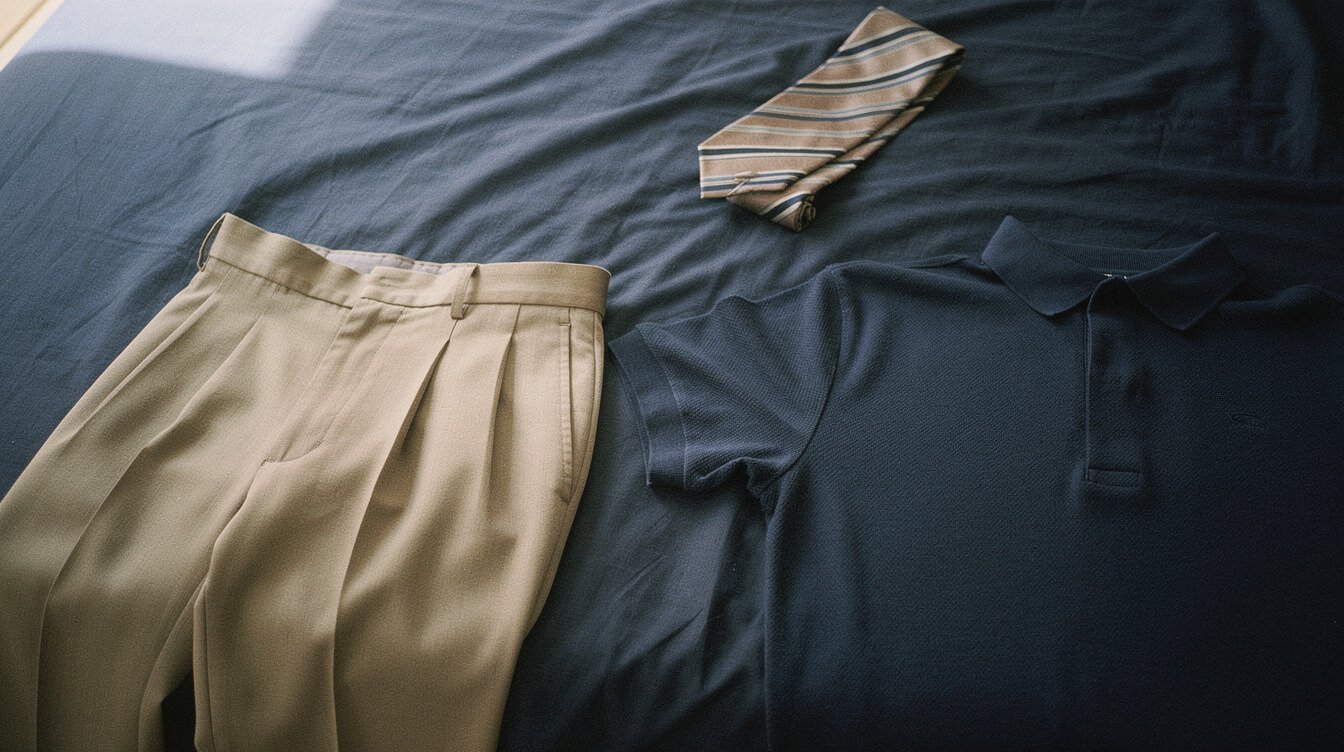
And now for the most 90s garment of all, which no revival has ever touched: the casual Friday outfit.
The idea wasn’t new. It traces back to Hawaii’s midcentury “Aloha Friday” and to a few West Coast tech companies that let engineers dress down at the end of the week. But the 90s are when it went national, fast. In July 1994, a national newspaper reported that 497 of the 1,000 largest companies in the United States now had casual Friday, including some of the biggest names in American industry. That’s the same year grunge peaked. Half the corporate country told its employees they could dress down on Fridays at exactly the moment dressing down was the national look. Nobody in HR saw a connection, and to be fair, there wasn’t one. One was a rebellion and the other was a memo.
A fashion historian of the period called it the most radical change in workplace dress since women won the right to wear trousers to the office. That sounds like an overstatement until you remember how it actually felt. For the first time, a lot of offices asked employees to make a choice about their clothes, and gave them no instructions whatsoever.
What “business casual” meant (nobody knew)
The result was a new category of clothing that existed only to answer a question nobody could answer. What does “business casual” mean? Even today, the standard reference definition opens by calling it “ambiguously defined” and then notes there is “no generally agreed definition.” That’s thirty years of agreement that nobody agrees.
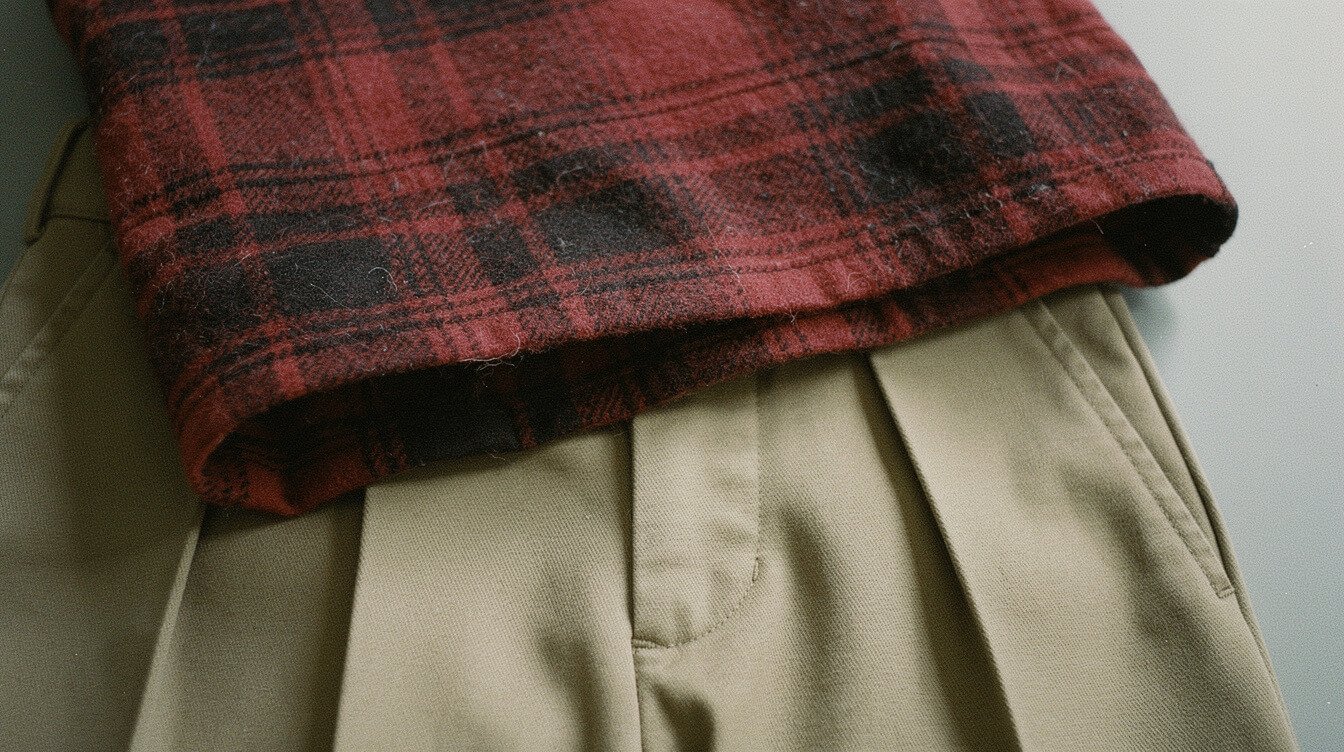
In practice, every office worked it out the same way: by watching. Monday through Thursday you studied the people above you. On Friday you copied the most senior person who’d taken the tie off. The uniform that emerged, more or less everywhere at once, was pleated khakis, a knit polo or a button-down with the top button open, and loafers. It was supposed to look relaxed. It looked like a fleet of dads who’d all been told about the same barbecue.
And every office had the one person who took the memo literally. Jeans with a hole in them, a T-shirt from a concert, sneakers that had clearly seen a concert. There was never a rule against it, exactly. There was just a meeting about it the following Tuesday, and a second memo.
We were the ones reading the memo, and Gen X reads memos the way it reads everything: for the loophole. If the policy said “collared shirt,” somebody found the ugliest collared shirt in the state. If it said “no jeans,” somebody wore black jeans and waited to be asked. Nobody ever asked. That’s what passed for fashion in a lot of 90s offices: finding exactly how far the rule went and stopping one inch short of it.
The one suit
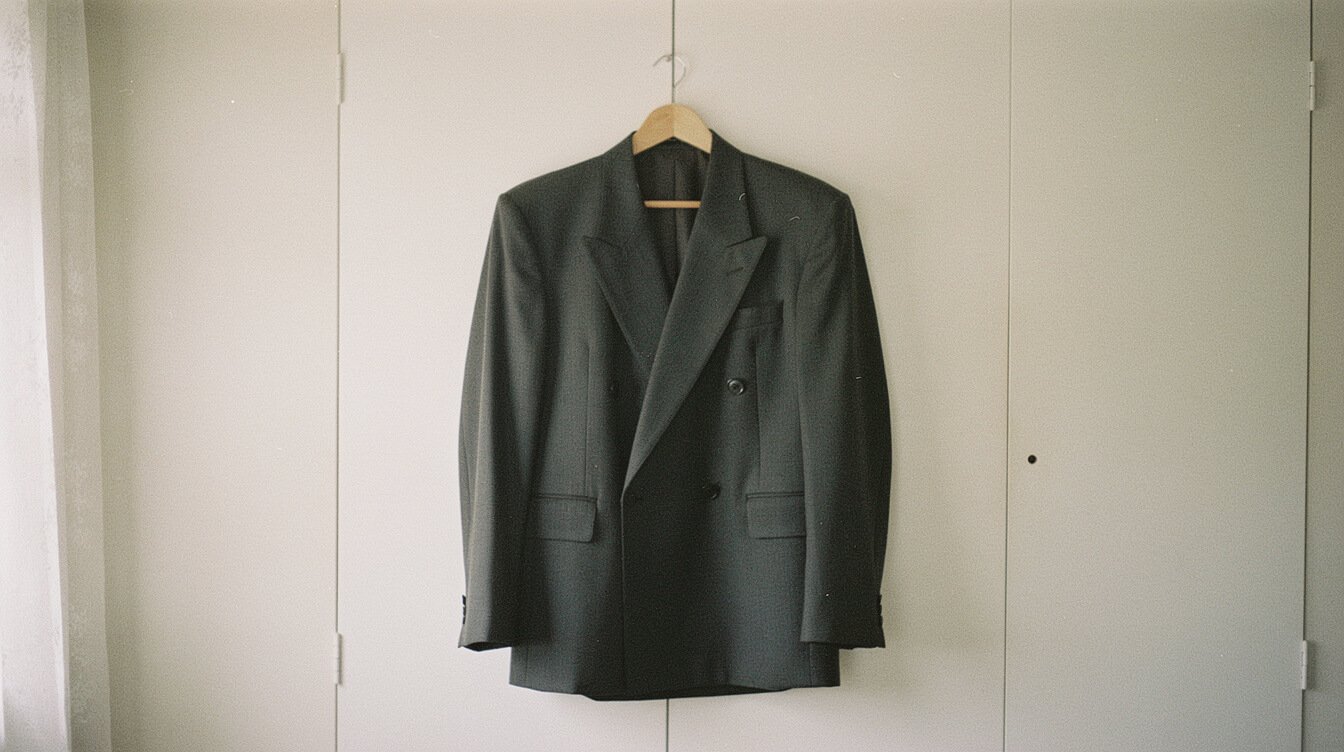
Every Gen-Xer who went near an office in the 90s owned the one suit.
It was bought for a specific interview, usually in a hurry, usually on sale, usually a size up “to grow into,” which nobody ever did. It was charcoal or navy because the salesperson said those went with everything. It had shoulders. The shoulders were left over from the decade before and nobody had told the suit yet. If it was double-breasted, it buttoned over a sort of vertical overhang that made you look like you were concealing a filing cabinet.
The fashion histories note that by the middle of the decade, trouser suits were steadily replacing skirt suits for women at work. That’s a dry sentence covering a lot of real life. It means a lot of Gen-X women showed up to interviews in pants, got the job, and heard about it at Thanksgiving.
The one suit had a long career after the interview. It went to every wedding for five years. It went to funerals. It went to court, if anyone had to go to court. It went back to the dry cleaner exactly as often as it was absolutely necessary, which was less often than it should have. It hung in the closet on a wire hanger between appearances like an understudy, and it was only ever asked to do one thing: make you look like a person who should be trusted with keys.
Nobody photographed it. Why would they? The only pictures of the one suit are in a wedding album, standing third from the left, squinting.
That’s the kind of 90s clothing story we like best: no label, no trend, just a thing that did its job and earned a little contempt along the way. It’s also the general idea behind the GenerationX shop. Shirts for people who already know the reference and don’t need a tag to tell them.
The newsletter
Like a mixtape, but it shows up on its own
One email a week. The good posts, new designs, zero exclamation points. Unsubscribe whenever. We won't take it personally.
Why 90s nostalgia fashion never revives the work clothes
It’s worth asking why 90s nostalgia fashion picks the weekend half of the closet every single time. There are three honest reasons, and none of them is that work clothes were uglier. Some of them were plenty ugly. That never stopped a revival before.
Nobody chose them
The comeback guides are built on choice. Pick your era, pick your subculture, pick your silhouette. Work clothes weren’t chosen. They were assigned, approved, or copied from somebody two levels up. A revival needs a self to express, and the casual Friday outfit was specifically engineered to express no self at all. There’s nothing to bring back because there was nothing in it to begin with, which, honestly, was the point.
Nobody kept them
The weekend clothes survived because they were loved, or at least tolerated, and handed down. The work clothes were worn until the knees went, then quietly given to a donation bin. When the job changed, the wardrobe changed with it, and the old one went out in a garbage bag. There’s a whole resale market for 90s band shirts. Try finding a vintage listing for “pleated khakis, gently worn to a regional sales meeting.” Even the market can tell what wasn’t loved.
They don’t photograph
Revival works from pictures, and the pictures from the 90s are almost all off-duty. Parties, shows, road trips, somebody’s apartment. Nobody took a camera to the break room. The disposable came out on weekends, which means the photographic record of the decade is about four parts Saturday to zero parts Tuesday afternoon. A revival built from that archive will reproduce the archive, and the archive doesn’t know what we wore to work.
We’d add a fourth reason, less provable: the work clothes are still a little too close. A slip dress is a costume now. Pleated khakis are what somebody’s uncle is wearing this weekend. You can’t be nostalgic for something that hasn’t finished leaving.
Not covered by the dress code
No pleats, no memo, no regional office. Wear it Friday and see who asks.
90s nostalgia fashion: the questions that keep coming up
What did Gen X actually wear in the 90s?
Two wardrobes. Off the clock: secondhand flannel, loose jeans, heavy boots, T-shirts from wherever, most of it bought cheap and worn hard. On the clock: whatever the job required, which for a lot of us meant a uniform polo, dark slacks, a name tag, or, in offices, pleated khakis and a button-down. The revival remembers the first wardrobe. Most weekdays happened in the second.
When did casual Friday start?
Its roots go back to Hawaii’s “Aloha Friday” and to a few West Coast companies in the 50s and 60s, but it became a national office habit in the 90s. By July 1994, a national newspaper counted 497 of the 1,000 largest US companies observing it. Nobody has agreed on what “business casual” means since.
How long did grunge fashion actually last?
Not long. It hit the mainstream in mid-1992, reached a luxury runway in 1993, peaked around late 1993 to early 1994, and was fading by the end of 1994. Most of the decade looked like something else, mostly sleeker and more fitted, which the revival tends to file under “late 90s” and move past quickly.
Is 90s nostalgia fashion for Gen X or for younger people?
Mostly younger people, judging by who’s writing the guides. That’s fine. A decade gets revived by whoever finds it photogenic. The only catch is that the version being revived skips the parts Gen X spent the most time in. If you were there, you’re allowed to enjoy the slip dress and still know it wasn’t the whole story.
How do you wear 90s nostalgia fashion if you wore it the first time?
Same way you handled casual Friday: one piece, no announcement. A good flannel over a plain tee doesn’t read as a costume on someone who owned the original, because it isn’t one. What reads as costume is the full matched look. If you were there, you don’t need the whole outfit to prove it. We made the same argument about shirts in 90s throwback shirts: the real thing never needed the label.
Should you tell the kids the khakis had pleats?
No. Let them find out. It’s more fun that way, and they won’t believe you anyway.
From the shop
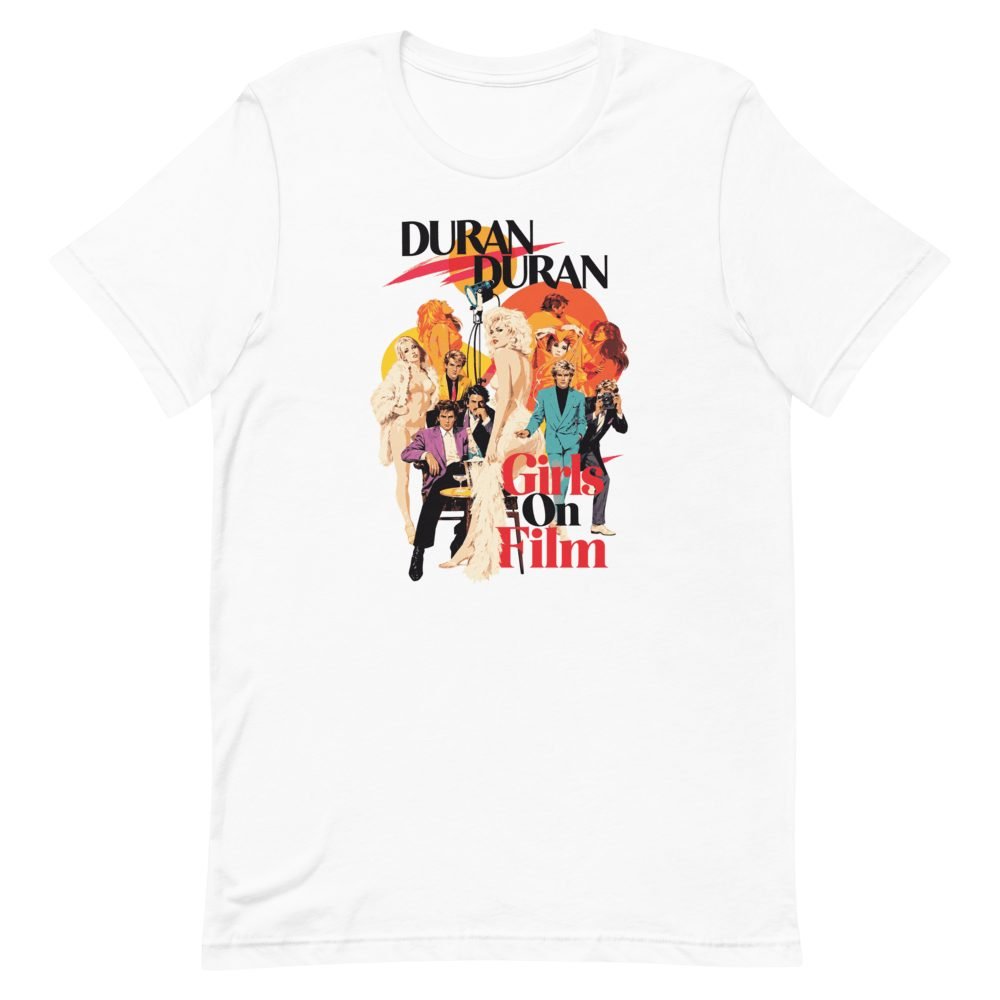
Duran Duran Girls on Film Vintage Art T-Shirt
Price range: $24.99 through $26.99
Shop this designFinal thoughts: the flannel was the off-duty uniform
Here’s what the mood board can’t show, and what anyone who was there already knows: the flannel meant something because of what it was not. It was the thing you put on after you took off the polo with the name tag. It was off duty. The whole “not trying” look of the early 90s makes a lot more sense when you remember how many of the people wearing it were trying very hard, forty hours a week, in clothes somebody else picked out.
That’s why the revival version of 90s nostalgia fashion feels a little weightless to us. It’s the weekend without the week. The slip dress without the trouser suit it was rebelling against. The flannel without the polo underneath. It’s not wrong. It’s just half the closet.
So enjoy the comeback, or ignore it, which is also very much in character. If someone younger shows up in baggy jeans and a borrowed flannel, the correct response is a nod. You don’t have to explain the dress code or the memo. You don’t have to mention the one suit. Some things are better as an inside joke. If you want more on where the decade went and who’s selling it now, start with 90s nostalgia shirts and 80s nostalgia, the decade that taught everyone how to do this.
It’s Friday somewhere. Wear whatever you want. Nobody’s sending a memo.
Before you go
You made it to the end. Respect.
Get the best of these in one short weekly email, plus whatever we just printed. No spam. We were raised better than that. Mostly.