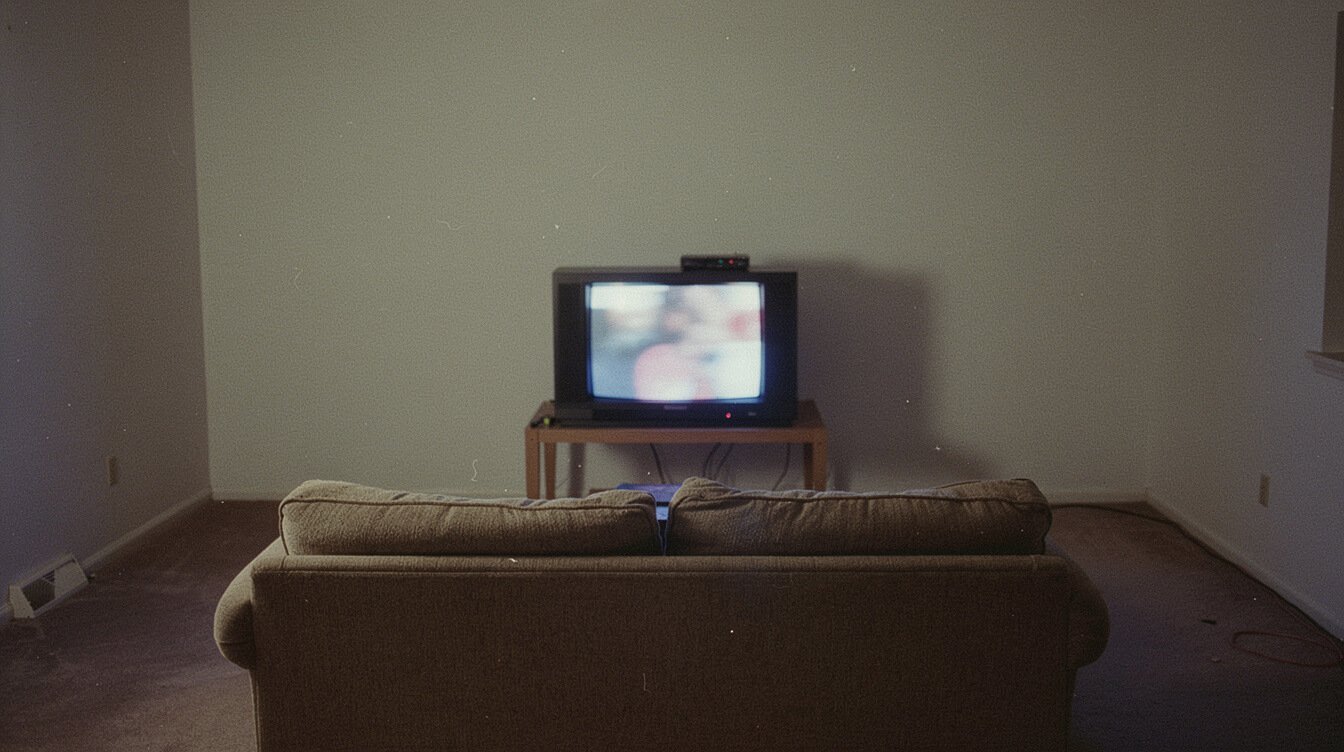
Saturday morning cartoons nostalgia isn’t really about the cartoons. Ask a Gen-Xer to name the actual shows and you’ll get a pause, maybe a wrong answer, definitely a shrug. What nobody forgets is the machinery around it — the volume you kept the TV at so it wouldn’t wake anyone up, the specific squeak of the hallway floor, the sense that you had gotten away with something before 7 a.m. and the day hadn’t even started yet.
It wasn’t appointment television. It was self-appointed television. Nobody made you get up. That was the whole trick, and it’s the part that doesn’t survive the trip into a streaming world. Ask a kid today to explain the appeal of waking up early, alone, for something that wasn’t going to be there later, and you’ll get the same blank look you’d get explaining a busy signal.
Saturday morning cartoons nostalgia: the only appointment Gen X ever kept willingly
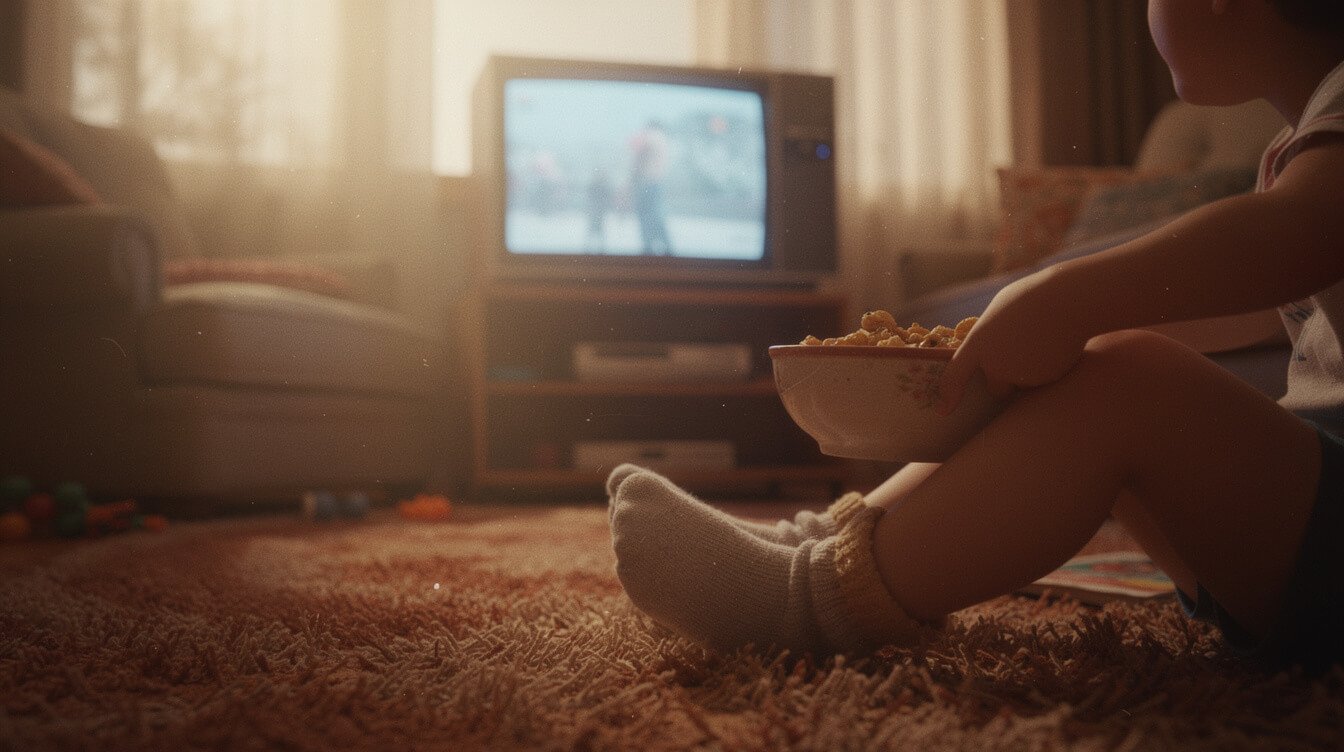
Think about what you were willing to do voluntarily at age nine. Homework: no. Chores: negotiable, at best, and usually under duress. Getting up before the sun on the one day nobody was making you — that, somehow, was non-negotiable. You’d set an internal alarm more reliable than the actual alarm clock, pad down the hallway in socks, and land in front of the television like you’d been shot out of a cannon, all before either parent had so much as rolled over.
Nobody explains that kind of discipline to a kid raised on a phone that never turns off. Streaming doesn’t reward you for showing up on time, because there’s no such thing as on time anymore — everything is always on, sitting there waiting, patient as a filing cabinet. That’s the part that’s hard to translate to somebody who wasn’t there: the whole ritual only worked because the show was not going to wait for you. Miss it, and you missed it. There was no scrubbing back thirty seconds because you got distracted. There was only Tuesday’s rerun schedule, if you were lucky, and a real chance you weren’t.
So you didn’t miss it. That was the deal you made with a television set, alone, at an hour your own body shouldn’t have been awake for. You negotiated with your own exhaustion and won, week after week, for years, for a prize that amounted to twenty-two minutes of animation and a stretch of uninterrupted quiet that belonged entirely to you. Looking back, that’s a genuinely strange contract for a nine-year-old to sign. Nobody made you sign it. You just did, every single week, without anyone asking.
And there was a hierarchy to it, too, one that got sorted out early and never really discussed out loud. You learned which shows were worth the early wake-up and which ones were just filler you tolerated until the good one came on. You built a mental schedule more detailed than anything you kept for actual school, and you never once wrote it down, because you didn’t have to. It lived in your body the way a bus route lives in a commuter’s body after enough years — you just knew.
The cereal was not neutral
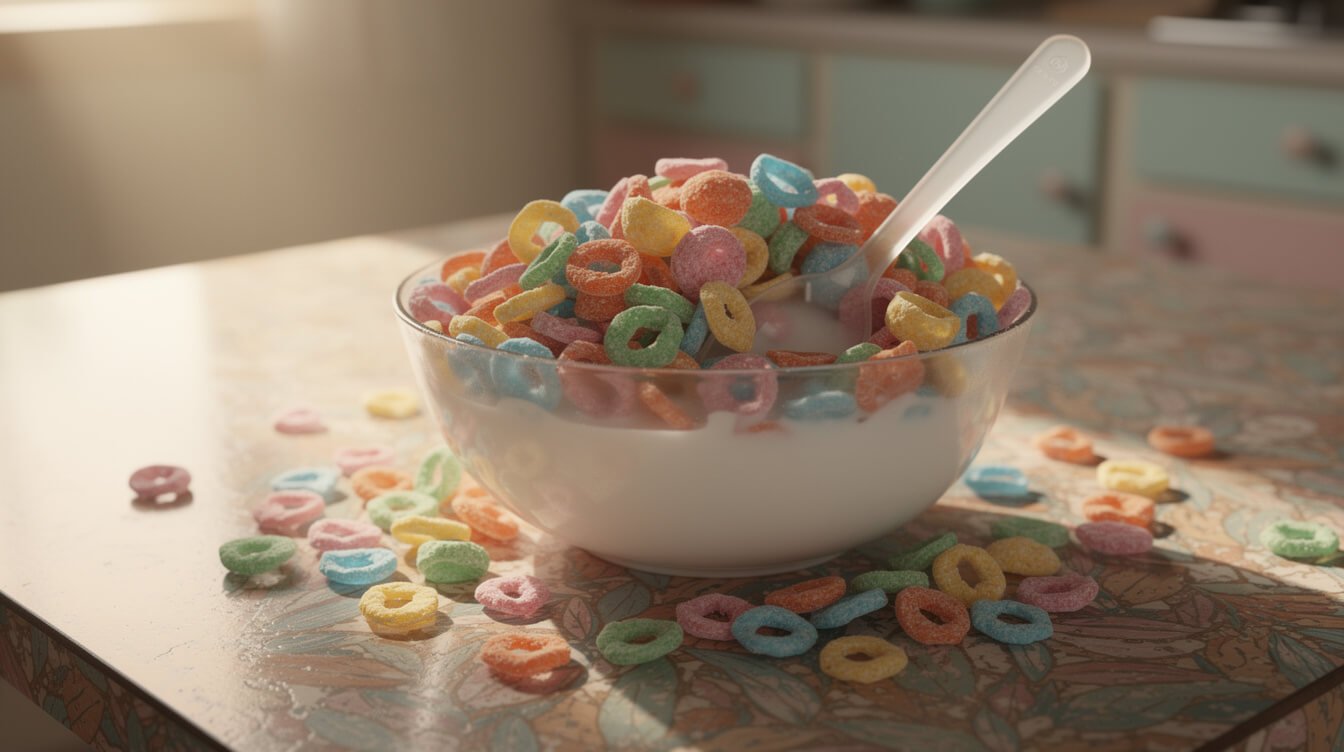
There was school-day cereal and there was Saturday cereal, and the distance between them was a moral argument you’d been having with your parents since roughly age five. School-day cereal had bran in it, or the word “toasted” doing some very heavy lifting. Saturday cereal turned the milk a color that did not occur in nature. You were allowed exactly one bowl of it, sometimes two if the adults in the house were still asleep and the box was left unguarded, which — let’s be honest — was also part of the plan.
You poured it into a bowl that had a cartoon character molded into the bottom, one you could only see once the cereal was gone, which meant the entire bowl became a small treasure hunt with a sugar prize at the end. Nobody designed that as a metaphor. It just was one. You ate the whole thing, milk included, sitting cross-legged three feet from a screen that was, by any modern parenting standard, dangerously close, angled just right so the glare from the window didn’t wash out the picture.
The bowl mattered as much as the spoon, and the spoon mattered as much as the show. There was a specific plastic bowl in every Gen-X kitchen, chipped at the rim, that everyone silently agreed was the Saturday bowl, and using a different one felt like a violation of house law nobody had ever formally passed. You didn’t question it. You just reached for the right one, every time, the same way you knew exactly how many steps it took to get from your bedroom to the living room without turning on a hallway light.
This is also, incidentally, why nobody in this generation trusts a “family size” cereal box that isn’t at least half gone by Sunday night. Old habits. The box didn’t last because it wasn’t supposed to — Saturday cereal was a weekly event, not a pantry staple, and treating it like an event was half the reason it tasted like one.
The commercials were the show
Here’s the thing nobody who grew up with a skip button will ever quite get: the commercials weren’t an interruption to Saturday morning. They were on the syllabus. You watched the toy ads with the same focus you watched the actual program, because that thirty seconds of stop-motion plastic joy was doing real reconnaissance for your upcoming birthday list. You didn’t fast-forward through it. You couldn’t. You just sat there, absorbing it, filing it away for later negotiation with whichever parent seemed more likely to cave first.
There was no algorithm curating what you saw. There was one channel, then another, then a third if your antenna was feeling generous that day, and whatever played, played — sandwiched between ads for toys you’d beg for and cereal you’d already eaten. It was, in hindsight, a pretty efficient little economy: the show got you to sit still, the ads got you to want things, and you got exactly zero say in any of it. You just showed up and took what the schedule gave you, the same way you took whatever was on the video store shelf on a Friday night — whatever was in front of you was the whole selection, and you made it work.
Regulators eventually decided kids’ programming needed a little more spinach mixed in with the sugar, which is how a chunk of that block quietly started carrying short educational segments between the cartoons — tucked in right alongside the toy pitches, easy to half-watch, hard to name a single one of now. Nobody remembers the specific lesson. Everybody remembers the general shape of it: something earnest, something brief, then straight back to the good stuff. That’s a very Gen-X arc in miniature — mild obligation, quickly discharged, no lasting scar.
And the ads themselves became their own genre of memory. Decades later, you can still half-hum a jingle for a toy you never even owned, word for word, while forgetting things you learned in college. That’s not a flaw in your memory. That’s just what happens when something gets repeated at you fifteen times a Saturday for a solid childhood.
Fixing the antenna was a family skill
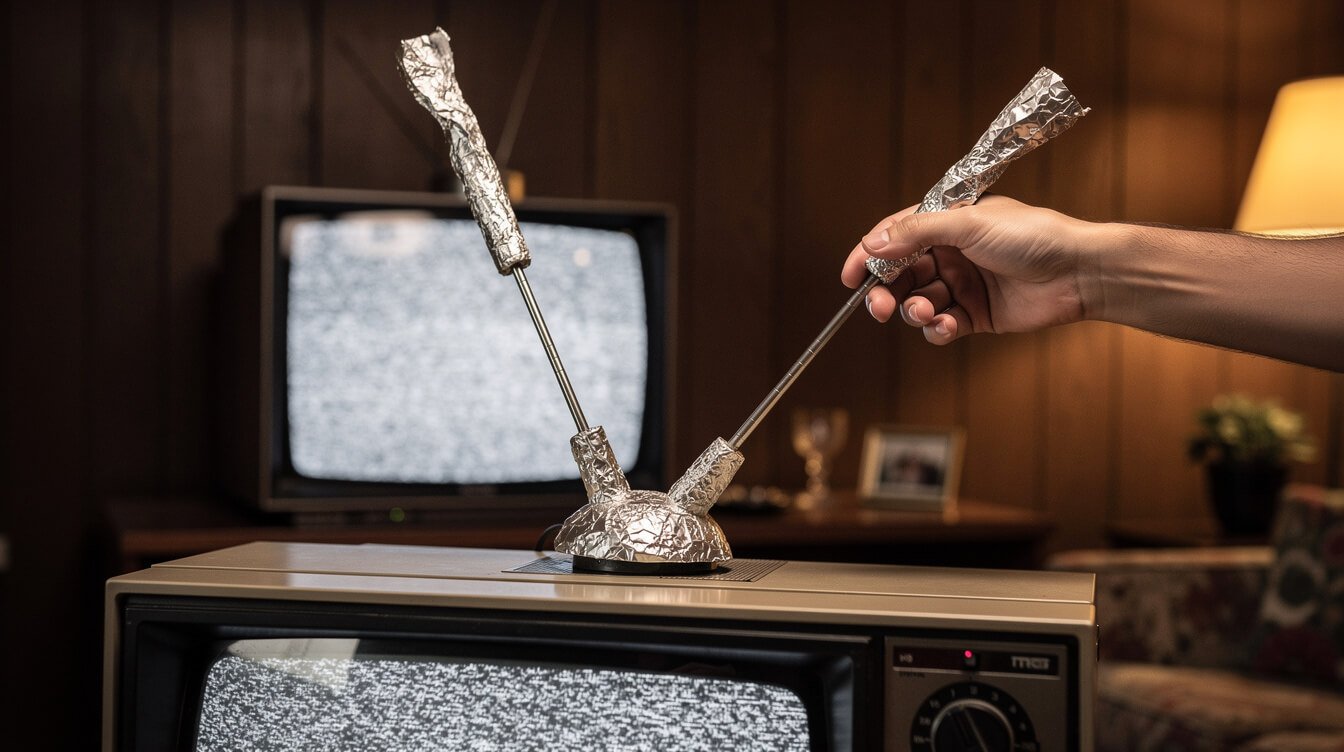
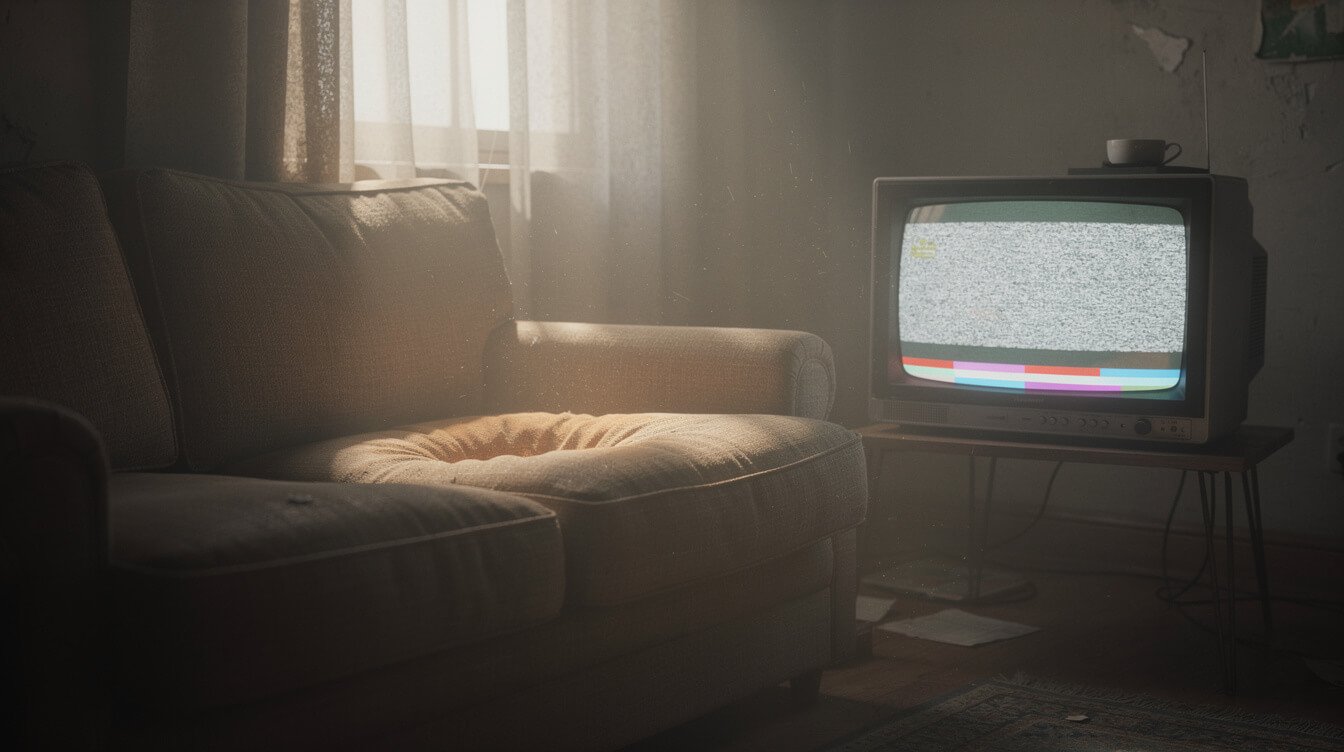
Every household had a designated antenna adjuster, and it was rarely an adult, because adults were asleep and this was, again, entirely self-appointed television. You knew — by feel, by some inherited instinct nobody taught you — exactly which direction to twist the rabbit ears, how much foil to add to the tips, and whether standing with one hand on the antenna and one foot in the air actually improved reception or whether you’d just convinced yourself it did. It didn’t matter. You did it anyway, holding an awkward human-antenna pose through an entire episode because the second you let go, the picture rolled back into static.
That’s the detail that gets lost the most: how much of the ritual was labor. You weren’t just watching. You were maintaining the conditions under which watching was possible, the same way you’d jiggle a stuck cassette door or smack the side of a radio to knock a station back into place. Nobody today has to physically hold still to keep their entertainment from degrading into noise. Back then, that was just Tuesday. Or, more accurately, that was just Saturday, every week, for years, and you never once thought to complain about it, because you didn’t know there was an alternative.
There was a whole unspoken science to it that varied from house to house — the exact number of steps back from the screen that improved the signal, the corner of the room that somehow got better UHF reception than anywhere else, the belief, never proven and never disproven, that touching the antenna with a wet hand made things worse. None of it was written down. All of it was gospel. You inherited it from an older sibling or figured it out through sheer trial and error, and either way, by age ten you were basically a junior broadcast engineer who’d never once thought of the job in those terms.
No shirt in the shop says “I was the family’s antenna guy” out loud, and honestly, it shouldn’t have to. Some jokes are better left as muscle memory than merch.
The newsletter
Like a mixtape, but it shows up on its own
One email a week. The good posts, new designs, zero exclamation points. Unsubscribe whenever. We won't take it personally.
Noon was a verdict
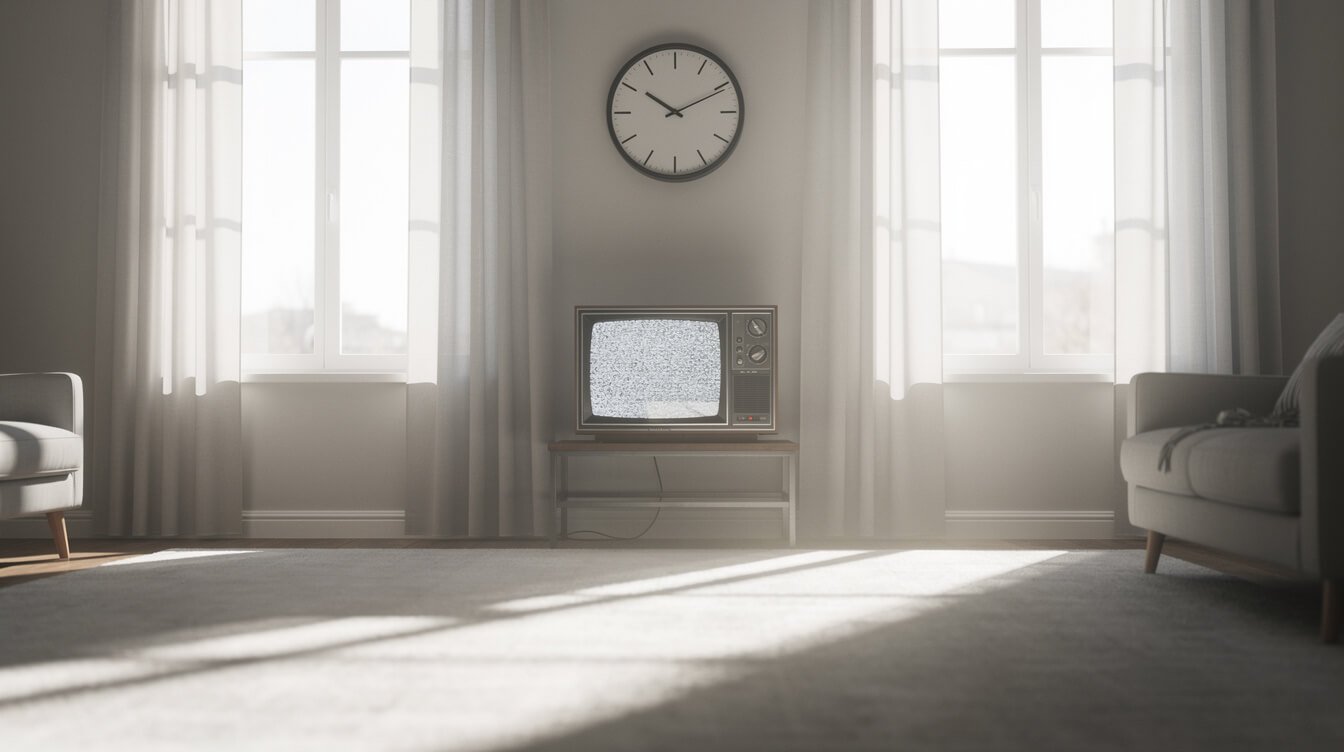
There’s a very specific feeling that arrives right around noon on a Saturday, when the last cartoon ends, the picture cuts to something clearly meant for adults, and the room you’re sitting in suddenly looks different — brighter, later, more accountable. That’s the moment the day actually starts. Everything before it was yours. Everything after it belonged to chores, or boredom, or getting sent outside because you’d “been inside enough,” a phrase every Gen-X kid heard at a volume that implied it wasn’t a suggestion.
It’s a strange kind of nostalgia — missing a deadline you didn’t want in the first place. But there was something honest about a day that had a hard stop built into it. You got your one uninterrupted stretch, and then the television handed the rest of the day back to you, the same unceremonious way a roller rink flicked the lights on at the end of a session — no warning, no negotiation, just: that’s it, you’re done, go be a person now.
What’s interesting, looking back, is how little anyone resented that hard stop. There was no lingering, no asking for five more minutes, because five more minutes genuinely wasn’t on offer — the schedule had moved on to something with grown-ups arguing about zoning laws or a golf tournament, and there was nothing left worth negotiating for. The boundary wasn’t enforced by a parent. It was enforced by the broadcast schedule itself, which is maybe the only authority figure of that entire era nobody ever tried to talk their way around.
You went outside. You found the neighborhood kids who’d also just been cut off at the same time, on the same unspoken clock, and compared notes for approximately four seconds before moving on to whatever the actual day required of you. Nobody today gets handed a clean line like that. The shows just keep going, the next one autoplays before you’ve decided you’re done, and the day never quite announces itself the way noon on a Saturday used to.
Frequently asked questions about Saturday morning cartoons nostalgia
Why does Saturday morning cartoons nostalgia hit Gen X harder than other generations?
Because it was scarce, and scarcity is what makes a memory load-bearing. There was one shot at it a week, no rewind, no on-demand backup, no account to log back into later. If you missed it, you missed it, and that made the version you did catch feel earned rather than just consumed. Later generations grew up with libraries of content available on demand, which is genuinely more convenient and genuinely less memorable — abundance doesn’t stick the way scarcity does.
What made the ritual different from watching cartoons today?
The absence of choice. You didn’t pick from a menu — you took whatever the schedule handed you, in the order it handed it to you, at a volume low enough not to wake the house. The constraint was the whole experience. Today’s version optimizes for exactly what a kid wants to watch, the instant they want it, which solves a real problem and quietly removes the part that made the ritual feel like an accomplishment in the first place.
Why do so many Gen-Xers remember the commercials as clearly as the shows?
Because they were unskippable, which made them memorable in a way that today’s disposable pre-roll ads never manage to be. Repetition plus no exit button equals permanent memory, whether you wanted it or not. A jingle heard fifteen times a Saturday for several consecutive years doesn’t just get remembered — it gets welded in, permanently, somewhere you can’t access on purpose but can absolutely still recall the second the first three notes hit.
Is it just nostalgia, or was Saturday morning actually a bigger deal back then?
Bit of both. The shows themselves were, by any objective measure, mixed quality — built fast, built cheap, built to move plastic off shelves. What was genuinely bigger was the ritual wrapped around them: the self-discipline of getting up for something nobody was making you do, the antenna-wrangling, the specific bowl, the noon deadline that ended it all without warning. That part wasn’t manufactured by a network executive. That part was real, and it’s the part that actually survived.

From the shop
Madonna Let Your Body Move 80s Pop Art T-Shirt
Price range: $24.99 through $26.99
Shop this designFinal thoughts
Nobody’s arguing the shows hold up. Half of them were built to sell toys and it showed, and if you went back and watched a full episode today you’d probably wince more than you’d laugh. What holds up is the shape of the morning around it — the quiet, the volume kept low on purpose, the antenna held at an angle only you could find, the bowl you ate too fast, the noon deadline that arrived like a verdict and never once asked your opinion on the matter.
That’s the part that doesn’t stream, doesn’t rerun, and doesn’t need a single title dropped to prove you were there. It’s not a list of shows. It’s a set of muscle memories: the hallway floor, the foil on the antenna, the specific hush of a house where everyone else was still asleep and you, for one stretch of one morning a week, had the whole place to yourself.
Try explaining any of it to someone who grew up with a queue instead of a schedule and watch their eyes glaze over somewhere around “you had to hold the antenna.” That’s fine. It was never a story that needed an outside audience. It was a private contract between you, a television that owed you nothing, and a Saturday that was going to happen with or without your participation — you just made sure, every single week, that it happened with. If you know, you know. You were the kid on the carpet, three feet from the static, guarding the good cereal like it was the last of its kind.
Before you go
You made it to the end. Respect.
Get the best of these in one short weekly email, plus whatever we just printed. No spam. We were raised better than that. Mostly.