Search for 80s food and you get a shopping list. Snack cakes, neon drinks, the cereal that came with a toy, the freezer meal that burned the roof of your mouth. The lists are accurate and they’re fun, and if you were there you’ll nod at every item. But they all skip the same detail, and it’s the one that actually explains the decade’s kitchen: a surprising amount of 80s food was made by somebody who was nine.
Not as a hobby. As a job. Between the last bell and the first car in the driveway, a lot of us were the only person in the house who could eat, which made us the only person in the house who could cook. Nobody called it that. Nobody called it anything. There was a key, a kitchen, and roughly two and a half hours to fill.
So this isn’t another roll call of things in wrappers. It’s 80s food from the side of the counter where you needed a chair to reach the cabinet: what we made, what we were trusted with, what we were absolutely not trusted with and made anyway, and what the grown-ups were eating while we were busy doing the dishes so nobody would know.
Every 80s food list is a shopping list
Read enough of the lists and a pattern shows up. Every item is something a parent bought. The fruit drink in the pouch, the pudding in the cup, the frozen pizza, the box of cereal with the prize at the bottom. They’re a record of what was in the cart, which is a perfectly reasonable thing to remember, because the cart was where you made your case. You lobbied for it in aisle six and you either won or you didn’t.
But the cart is where 80s food started, not where it happened. What happened was the part after the groceries got put away, when an adult wasn’t around and a kid had to turn ingredients into a meal with whatever tools were legal. Nobody writes that list, because nobody bought it. It was assembled. Badly, then better, then with real skill by about sixth grade.
There’s a reason this lands differently with us than with the people who grew up a decade later. The latchkey kid wasn’t a fringe case. The term went mainstream in the 70s and 80s precisely to describe our cohort, and a 1984 documentary went with the bleaker phrase “day orphans,” which is the kind of thing that sounds dramatic until you remember it was also Tuesday. More parents working, more divorces, almost no after-school care. We’ve covered the key and the phone rules in the latchkey kid post. This one’s about the fridge.
So when someone says “80s food,” a lot of us don’t picture the package. We picture the counter. Specifically, the counter at 3:20 in the afternoon, a plate, crumbs, and a strong sense that whatever happened here needed to be cleaned up before five.
The microwave moved in, and we read the manual
Here’s the number that explains a lot of 80s food. In 1971, about 1 percent of American households owned a microwave oven. By 1986 it was roughly a quarter. By 1997, over 90 percent. The 80s were the decade it showed up, one house at a time, usually on the counter where the bread box used to be, and usually with a thick spiral-bound cookbook nobody’s parents ever opened.
We opened it. Or we didn’t, and learned the hard way. Either way, kids were often the first real operators of the thing, because the kids were the ones home alone with it at four in the afternoon. The adults used it to reheat coffee. We used it for everything, and we developed a body of knowledge that was entirely oral tradition. Fork in the microwave: sparks, a smell, and a decision not to mention it. A hot dog on high for too long: it splits like it’s trying to escape. Anything reheated on a plate: lava at the edges, frozen in the middle, and you ate around the middle.
The popcorn bag was a listening test
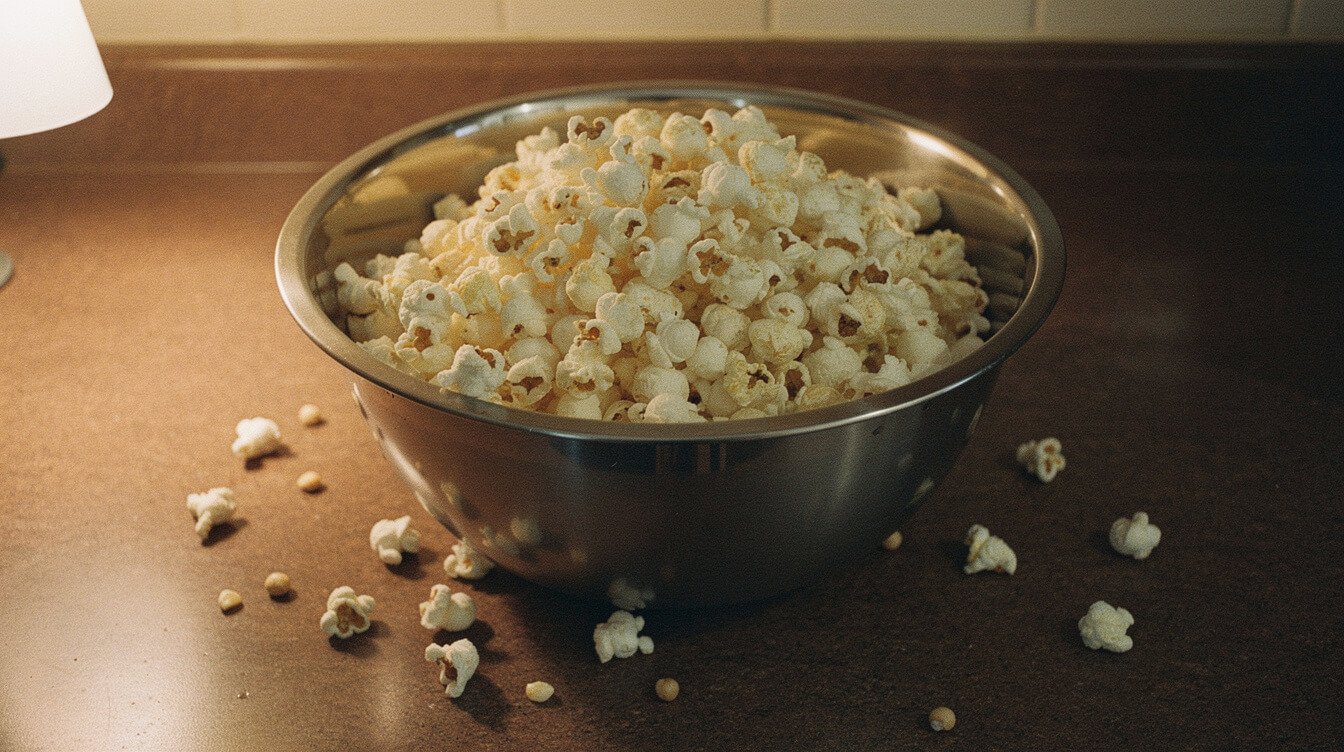
The susceptor bag, the thing that makes microwave popcorn actually pop, got its patent in May 1981. The bag said a number of minutes. The number was a suggestion. Every kid in America learned to stand by the door and listen, because the only real instruction was the gap between pops. When it stretched to two seconds you hit stop, and if you went to the bathroom in the middle you came back to smoke and a smell that would still be in the curtains at dinner. Microwaves that could hear the popping for you didn’t show up at the electronics show until 1988. Until then, that was your job.
The tray changed in 1986
Before the mid-80s, a frozen dinner came in a foil tray, and foil meant the oven. The oven meant preheating, forty minutes, and a lot more supervision than a nine-year-old was supposed to need. Microwave-safe trays for frozen dinners arrived in 1986, and that quietly moved a whole meal into kid jurisdiction. Peel back the film at one corner. Stir the potatoes at the halfway point, which nobody did. Let it stand two minutes, which nobody did either. The brownie in the little corner compartment came out at the temperature of the sun’s surface, and you ate it first anyway.
The after-school snack was engineering
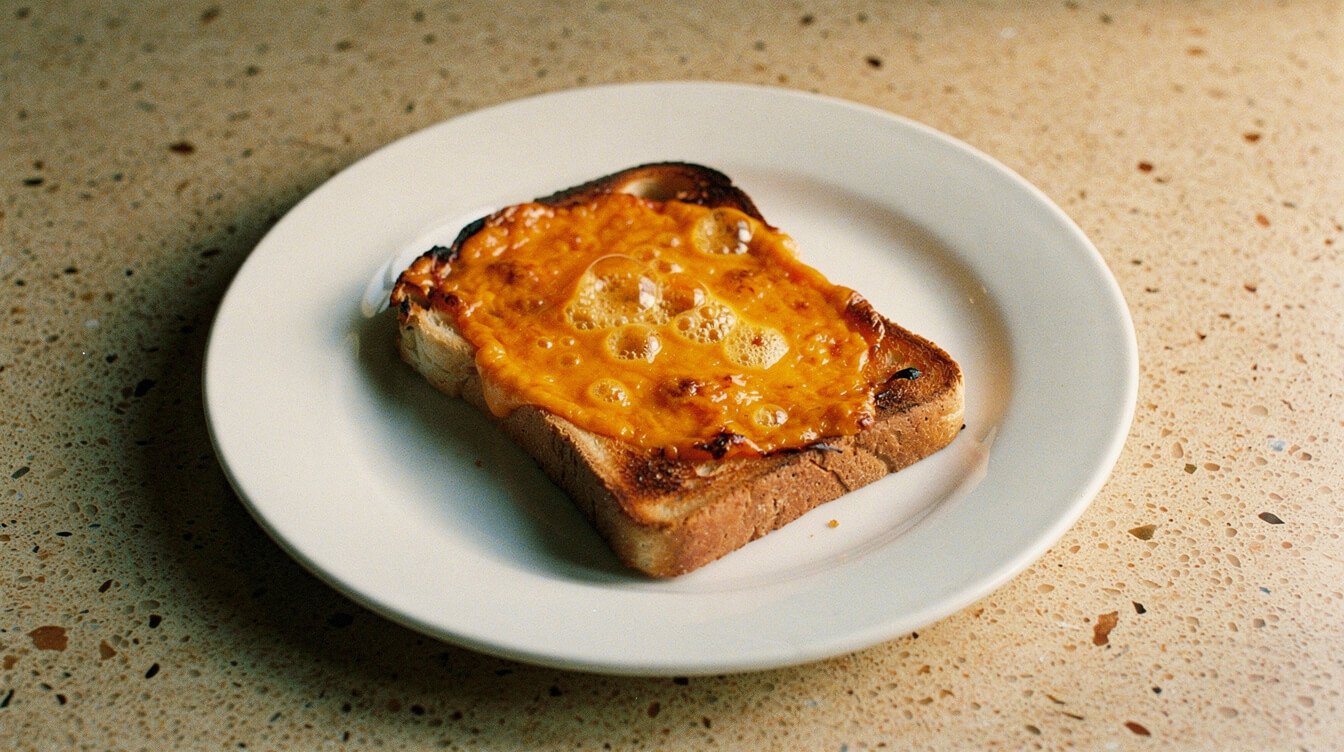
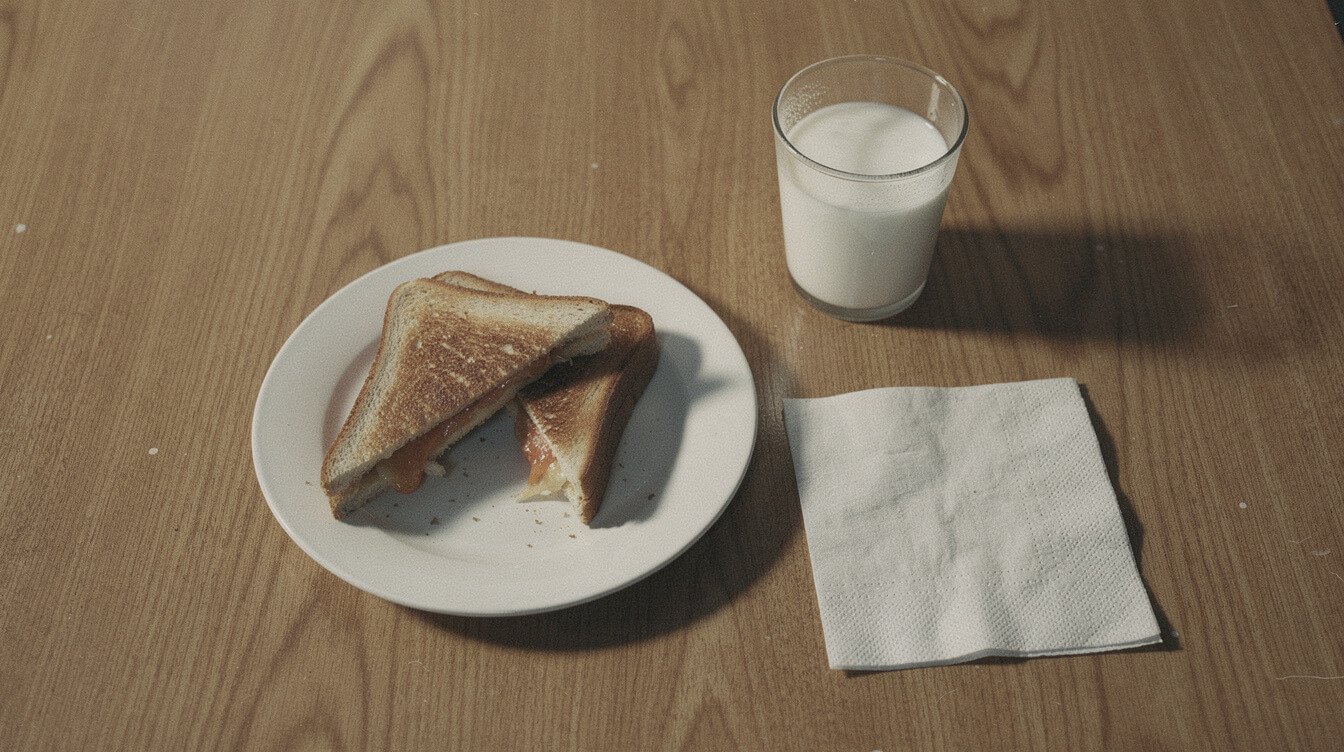
The snack was not a snack. It was a build. You had a fixed set of inputs (bread, a block of orange cheese, peanut butter, whatever fruit was going soft, sugar, cinnamon, and on a good day a sleeve of crackers), a fixed set of tools, and a set of rules you’d been given once and then extended creatively in every direction.
The classic rule set went something like this. No stove. The toaster was fine. The toaster oven was a gray area. The microwave was fine once you’d been shown. Knives were “careful.” Nobody comes over. And the big one, the one every Gen-X kid ran into: don’t eat too close to dinner. Since nobody defined “too close,” every kid defined it for themselves, which in practice meant it was always fine until 4:45.
The canon
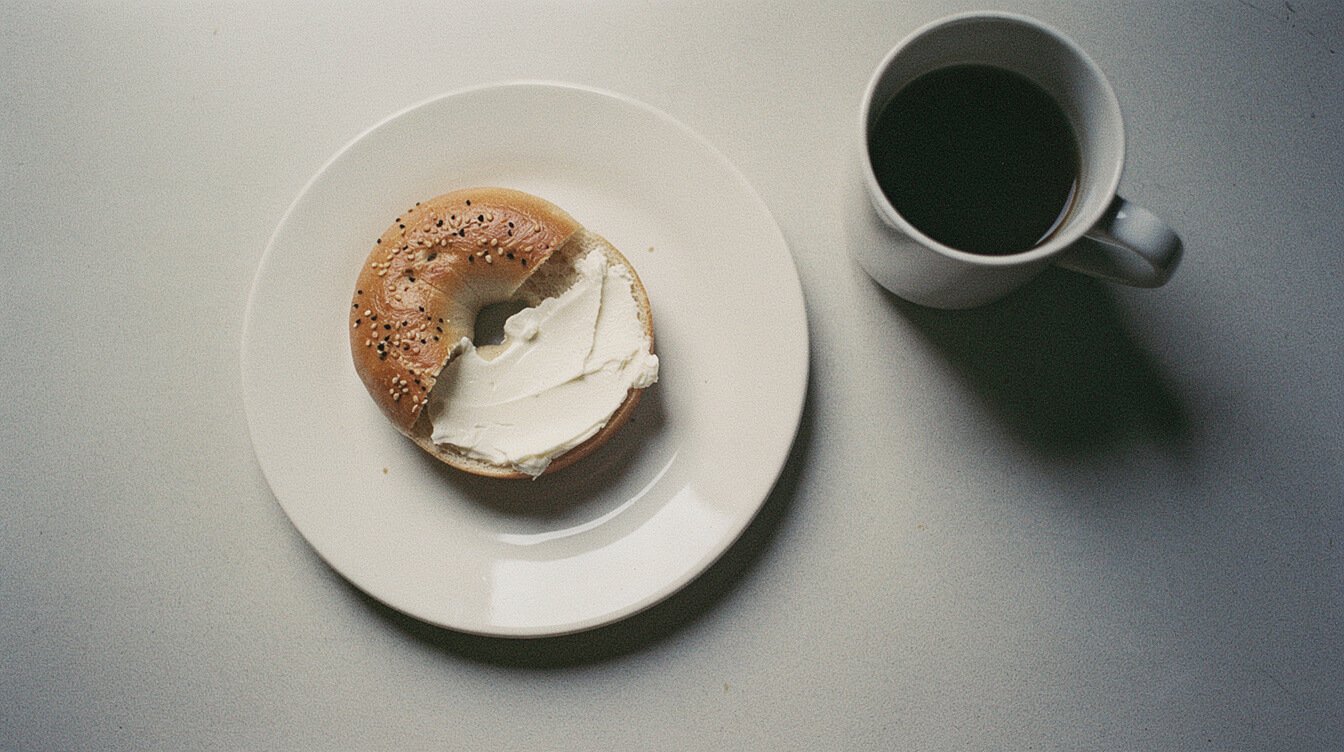
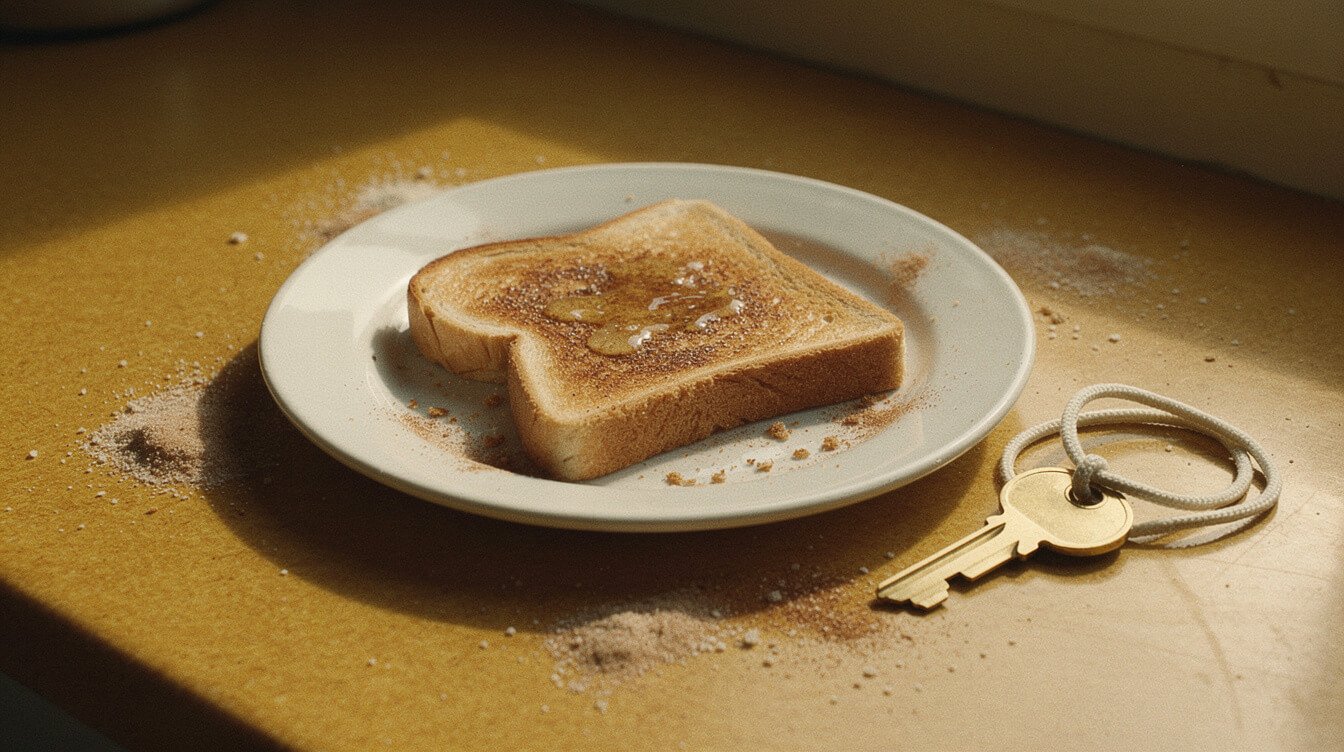
Within those limits, an entire cuisine developed. Cinnamon toast, which is just butter, sugar, and cinnamon on toast, and which tasted better at 3:30 on a school day than anything a restaurant has served you since. Cheese toast under the broiler, if the broiler was permitted, or in the toaster oven if you were willing to clean the cheese off the bottom tray. Peanut butter straight off the spoon, which isn’t a recipe but was eaten with the focus of one. A tortilla folded over cheese and microwaved until it went soft, which a lot of us were making years before we learned it had a name. Instant noodles, broken up in the bag, sometimes eaten dry with the seasoning packet sprinkled on top like a crime. Saltines with butter. Ice cubes of fruit juice frozen in the tray, eaten off a toothpick.
None of it was good for you. All of it was something you made. That’s the part the lists can’t capture: the first food a lot of us were proud of was a piece of toast. We knew exactly how dark it should be. We had opinions about the cinnamon ratio. Some of us still do.
The evidence
The other half of the after-school snack was the cleanup, because a snack that wasn’t technically allowed had to be one nobody could detect. The plate went in the dishwasher, or washed and dried and back in the cabinet if the dishwasher was full and opening it would be noticed. Crumbs swept off the counter into a palm and into the sink. The toaster oven tray wiped. The cheese rewrapped with the cut edge turned in. Kids who couldn’t name the vice president could restore a kitchen to a state of believable innocence in four minutes flat.
Dinner came with instructions on the counter

At some point between third and sixth grade, the job got upgraded. You weren’t just feeding yourself anymore. You were starting dinner for the house.
It arrived as a note. Every Gen-X kid knows the format, because it was the same in every kitchen: a sheet off the pad by the phone, held down by the salt shaker or stuck to the fridge. Casserole in fridge. Oven 350 at 5:00. Foil off at 5:30. Set the table. Love, Mom. Sometimes Dad. Sometimes nothing after the instructions, because the instructions were the love, and everybody understood that.
The 80s food that came out of that system was built for exactly this handoff. A lot of weeknight cooking happened on Sunday, when somebody made one big dish that would survive being reheated by a child. The noodle casserole with the crumb top. The baked spaghetti. The chicken-and-rice dish held together with a can of condensed soup, which was the decade’s great structural adhesive. Sloppy joes, which only required browning a pound of ground beef and dumping in a can. The boxed skillet dinner you added a pound of beef to, which was famous partly because the steps were so short a ten-year-old could do them unsupervised and feel like a chef.
Browning the meat was a rite of passage
If there was a single moment the kitchen became yours, it was the first time you were allowed to brown the ground beef. The stove, finally. The pan that spat grease at your forearm. The wooden spoon. Breaking it up until there was no pink, because pink was the one thing the note always mentioned. Pouring off the fat into an old can kept under the sink for exactly that purpose. Some of us were doing this at nine and have never once since been as careful with a stove.
Then the adult got home, sat down, and ate a meal a child had finished. It wasn’t framed as a big deal, and nobody gave you a sticker. But the whole operation only worked because the parent trusted the kid to get the oven on at five. That trust was a kind of compliment, even if it came on a sticky note. Some Gen-X parents now notice the same deadpan in their own kitchens, which is its own inherited condition.
The newsletter
Like a mixtape, but it shows up on its own
One email a week. The good posts, new designs, zero exclamation points. Unsubscribe whenever. We won't take it personally.
School lunch got cheaper, and we noticed
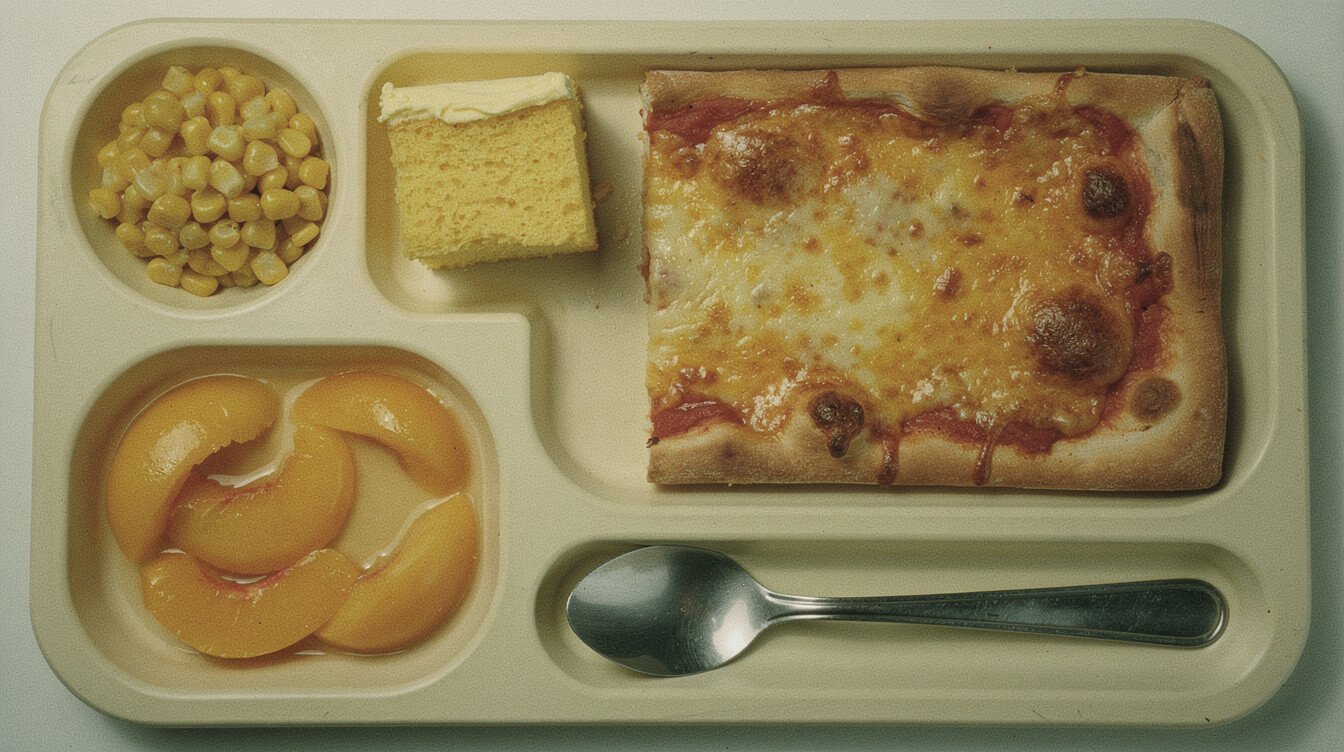
If the home kitchen was a kid-run operation, the cafeteria was the opposite: food that happened to you. And in the early 80s, it got noticeably thinner.
Here’s the short version. Budget acts in 1980 and 1981 cut federal school lunch funding hard, about 8 percent and then another 25 percent for 1982. The agency running the program had to keep meals nutritionally compliant on less money, and on September 3, 1981, it proposed giving local cafeterias more flexibility in what could be credited toward the requirements. The proposal’s own example of something that could count as a vegetable was pickle relish. Ketchup was never named in the rules. It didn’t matter. The press and Congress read the flexibility as ketchup-as-a-vegetable, the phrase stuck, and the administration withdrew the proposal on September 25. Twenty-two days. A revised version came back that November.
We didn’t follow the policy fight. We were eight. But we were eating the result, and an 80s lunch tray remembers it pretty accurately. The rectangle pizza with the crust like a sponge. The scoop of corn. Peaches in syrup sliding into everything else. A square of yellow cake with a thin skin of frosting. The milk carton that you had to open from the correct side or it tore into a soggy mess. Potato puffs on the good days. A mystery-meat patty on the other ones, which is still the only name it has.
The brown bag economy
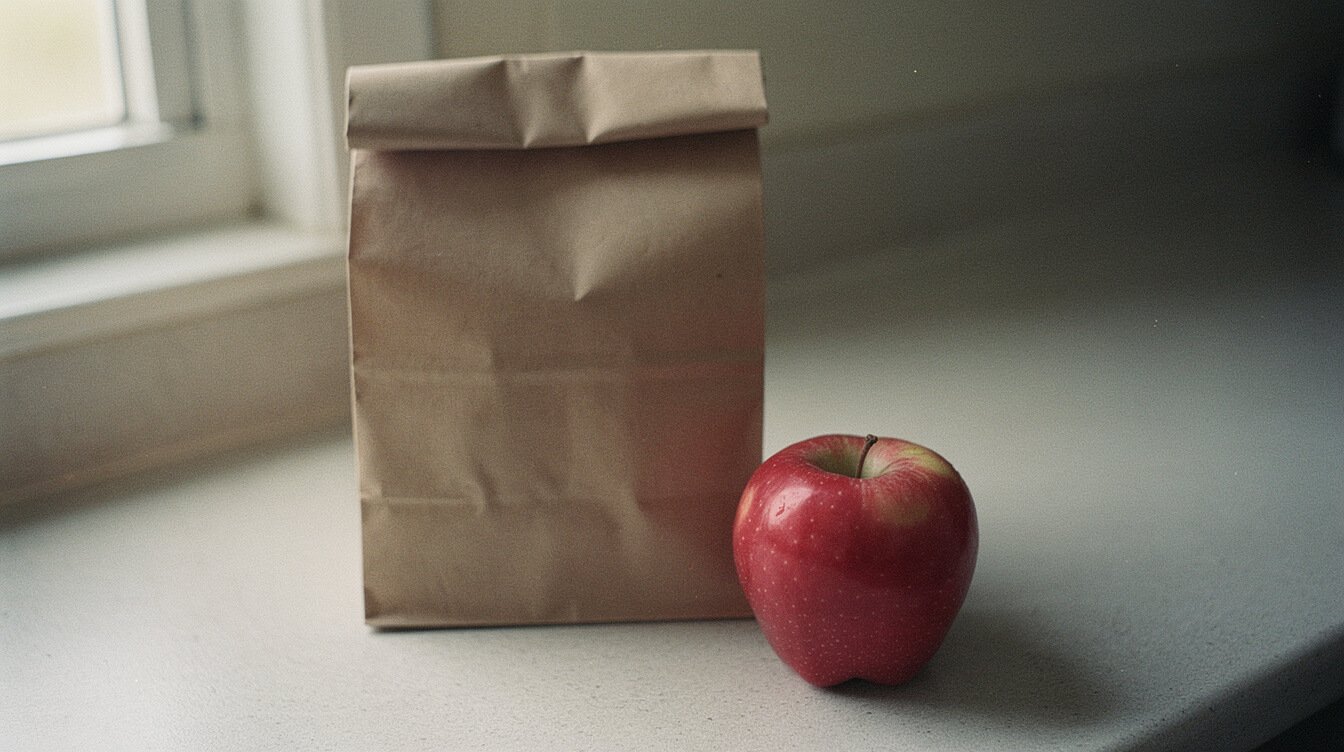
The alternative was the bag. A brown paper lunch sack, your name in marker on the side if your parents were the organized kind, folded over twice at the top. Inside: a sandwich that had been made at 7 a.m. and was a slightly different sandwich by noon, an apple that came home again uneaten more often than anyone admits, and on a good day something in a wrapper. The lunch table ran a full trading market. A homemade cookie was worth roughly two of anything store-bought. A whole fruit was worth nothing. An insulated bottle of hot soup made you either rich or weird, depending on the table.
If any of this is your entire personality now, the shop has designs for people who still know the exact order the compartments of that tray got eaten in. No footnotes required.
Oven on at 5:00. Foil off at 5:30.
For whoever started dinner from a note on the counter and never once got credit for it. Goes with everything, including the casserole.
What the grown-ups ate, from where we were standing
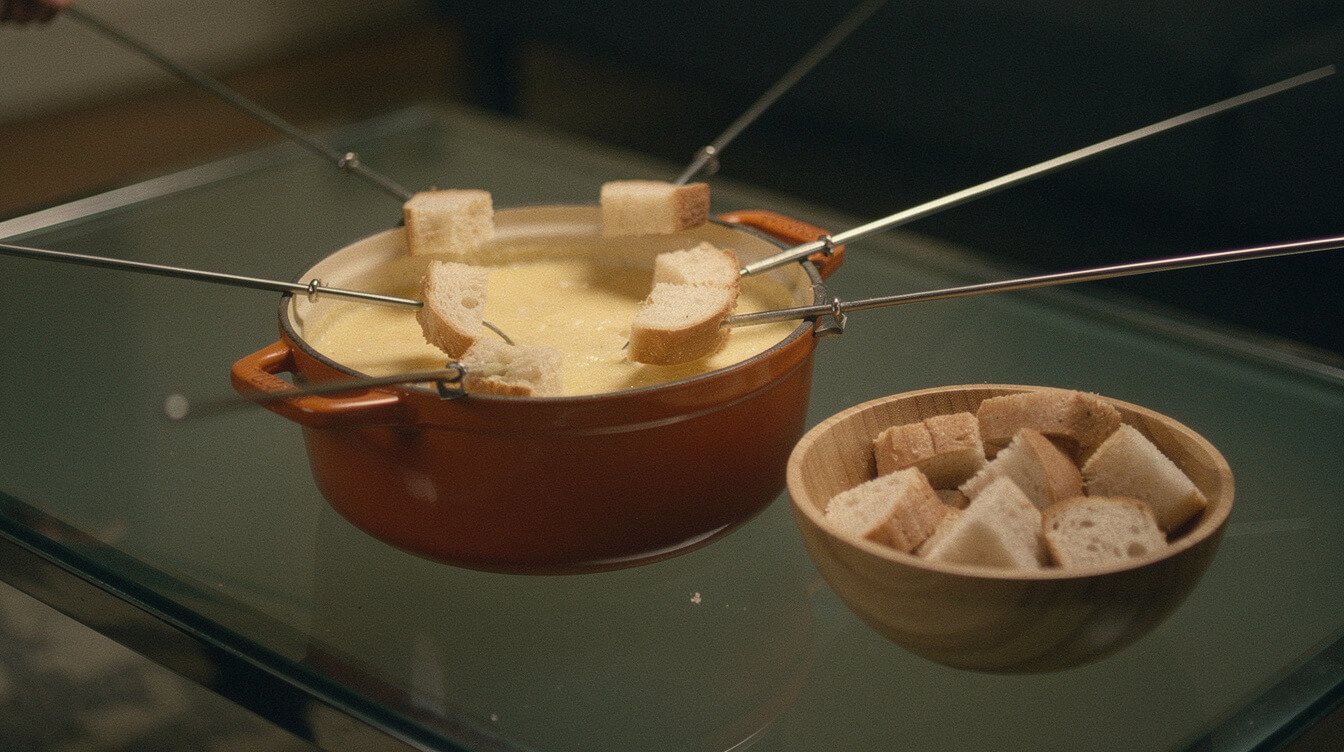
There was a second 80s food culture running in the same house, and we saw it mostly from the stairs.
When the adults had people over, a different kitchen appeared. The fondue pot came down from the top shelf, a wedding present from the 70s getting its one outing of the year. Quiche, which was considered sophisticated right up until the moment it became a punchline. A cheese ball rolled in nuts. A dip served in a hollowed-out loaf of bread, which felt like architecture. Little meatballs in a slow cooker, held together by a sauce whose ingredients nobody wanted to discuss. The whole spread was beige and brown with one bowl of something green so it would count as a balanced meal.
We weren’t invited, exactly. We were allowed to come down, say hello, get a plate, and go back upstairs, and the plate was the point. You’d load it with things you didn’t recognize and eat them in front of the TV with the sound low so you could still hear the party. The next morning you’d come down to the leftovers on the counter with plastic wrap stretched over them, and eat cold cocktail meatballs for breakfast, and nobody stopped you, because everybody was asleep.
Eating out was its own event
Restaurants were less of a habit and more of an occasion. The family-style chain with the salad bar under the sneeze guard, where you made yourself a plate of croutons, bacon bits, and a single cherry tomato for legitimacy. The bar-and-grill where an adult ordered potato skins and you learned that a potato could be an appetizer. The burger place with the play structure and the kids’ meal in a box with handles, where the toy mattered so much more than the food that you’d sometimes forget to eat the food. And the food court at the mall, which we’ve written about before, where you were finally allowed to order for yourself with your own money and found out that you would, in fact, pick a pretzel and a large drink every single time.
The grown-up stuff seemed exotic then. Most of it is now what people put on an 80s party menu, which tells you how short the distance is between “sophisticated” and “retro.” Give it twenty years. Someone will throw a party with a desk-lunch microwave tray as the centerpiece.
80s food FAQ
What were the most popular 80s foods?
The ones that show up on every list are packaged: snack cakes, sugary cereal, fruit drinks in pouches, pudding cups, frozen pizza, and the new wave of microwave meals. At home, the real staples were casseroles bound with condensed soup, sloppy joes, boxed skillet dinners, meatloaf, tacos from a kit, and baked spaghetti. For kids on their own, it was cinnamon toast, cheese toast, instant noodles, and anything that fit in a toaster.
What food would you serve at an 80s party?
Short and beige, honestly. A grocery-store sheet cake, chips with a dip made from a soup packet, a punch bowl, and a cooler of cans. If the crowd was actually there in the 80s, skip the neon and serve what their parents served: a cheese ball, a bread-bowl dip, and little meatballs in a slow cooker. We wrote a whole guide to an 80s theme party for people who were there, and the food section agrees with this answer.
What were some retro snacks from the 80s?
The store-bought ones are well documented: fizzing candy, gum shaped like shredded tobacco, fruit leather rolled up in plastic, cheese puffs in a canister, frozen pudding on a stick, and cereal that was basically candy with a spoon. The homemade ones are less documented and more interesting: cinnamon toast, peanut butter off the spoon, frozen juice ice cubes, buttered saltines, and dry instant noodles with the seasoning sprinkled on top.
What desserts were popular in the 80s?
Mud pie, layered pudding desserts in a glass dish, sheet cake with a can of frosting, gelatin molds that were already starting to look old-fashioned, carrot cake with cream cheese frosting, and cheesecake, which hit its peak as the dessert you ordered to feel like an adult. At home, a box of brownie mix was the most common dessert a kid could make alone, and a lot of us ate half the batter first.
Did ketchup really count as a vegetable in school lunches?
Not officially. A September 1981 proposal gave school cafeterias flexibility to credit foods that weren’t on the list, and used pickle relish as its example. The proposal never named ketchup, but critics read it that way, the phrase stuck, and it was withdrawn within the same month.
When did microwaves become common?
During the 80s. About 1 percent of US households had one in 1971, roughly 25 percent by 1986, and over 90 percent by 1997. If you were a kid in the middle of the decade, there’s a good chance you used the one in your house more than anyone else did.

From the shop
Nirvana Incesticide Chinese Reimagined T-Shirt 涅槃乐队
Price range: $24.99 through $26.99
Shop this designFinal thoughts
The lists of 80s food aren’t wrong. They’re just written from the cart. They remember the decade the way an ad would: as a set of products, each one bright and complete and sold to a kid who wanted it.
But a lot of us remember it from the counter. The toast we got exactly right. The popcorn we learned to listen to. The note that said 350 at 5:00, and the oven that was on at 5:00 because we turned it on. The pan of ground beef browned by somebody who still needed both hands to carry it. Nobody gave us a certificate. We just turned into adults who can make a meal out of whatever is in the house and clean up so well that nobody knows it happened.
The 90s gave everyone a nutrition label to read. We’d already been reading the back of the box for a decade, because nobody else was around to do it. The 80s didn’t teach us to cook. They just left the kitchen unlocked and let us figure it out.
Before you go
You made it to the end. Respect.
Get the best of these in one short weekly email, plus whatever we just printed. No spam. We were raised better than that. Mostly.