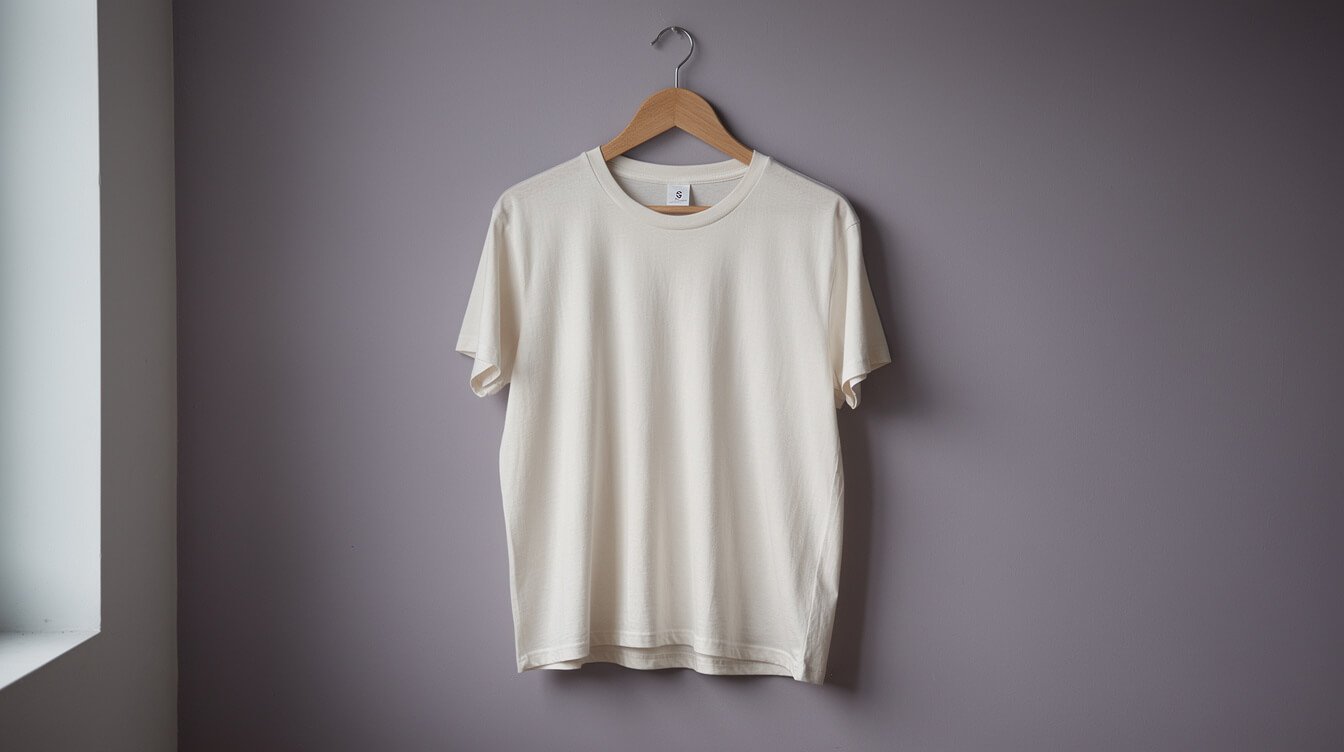
Old school hip hop shirts are having a moment on every t-shirt site in America, and almost none of them are for you. Search the term and you get two flavors: officially licensed merch with a dead rapper’s face on it, or a print-on-demand grid that slapped “old school” on a font from 2019. Neither one remembers the thing correctly. The real old-school era — block parties, boomboxes, cardboard, chains — wasn’t a look you bought. It was a look you assembled, badly, out of whatever your parents’ basement and the mall had lying around, and it worked because everyone in it knew exactly what everyone else was signaling. That’s the whole trick behind a good old school hip hop shirt: it should feel like you were standing there, not like you Googled it this morning.
You didn’t need to live in the South Bronx to absorb the rules, either. By the time it reached the rest of the country — through the radio, through older cousins, through whichever kid on your block had an aunt in New York — the visual language had already traveled faster than any record label could license it. That’s the part the “old school” merchandise industry keeps missing: the culture spread as behavior and style long before it spread as intellectual property, and a shirt honoring that should behave the same way.
What “old school” actually means (and when it stopped)
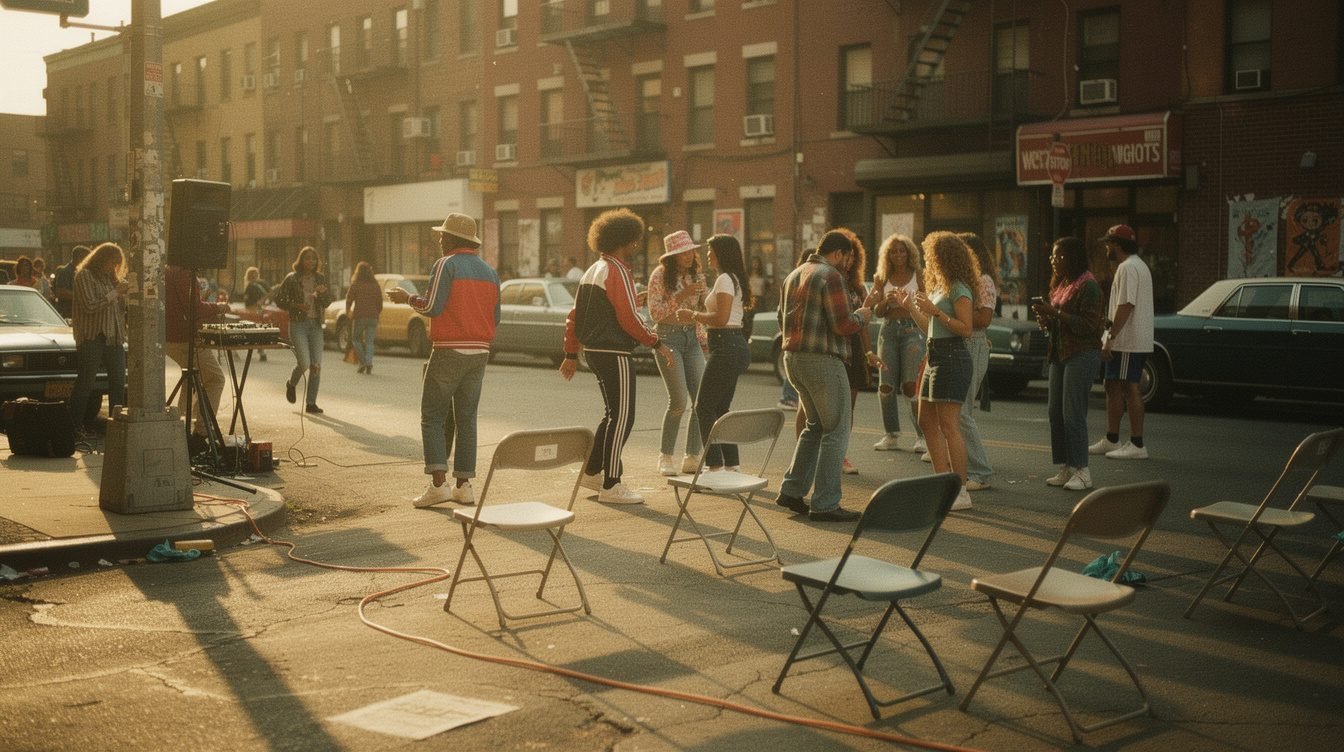
“Old school” gets used as a vague compliment now — anything grainy and pre-internet qualifies. But the actual window is specific: the South Bronx, late 1970s, block parties running off a cable spliced into a streetlamp, before any of it had a business plan. DJs looped the instrumental break of a funk record because that eight bars was the part that made people move, and rapping over it started as a way to keep the crowd’s attention between songs, not the main event. By the early-to-mid 80s it had a name, a radio slot, and eventually a marketing department — which is roughly where “old school” stops meaning anything and starts meaning “before I showed up.”
None of that history needs a name attached to sell a shirt. That’s the first thing most old school hip hop shirts get wrong: they reach for a face or a logo to prove the era happened, like the era needs a witness. It doesn’t. The block party happened whether or not you can name who was DJing it. The objects tell the story fine on their own.
The boombox was the shirt, before there was a shirt
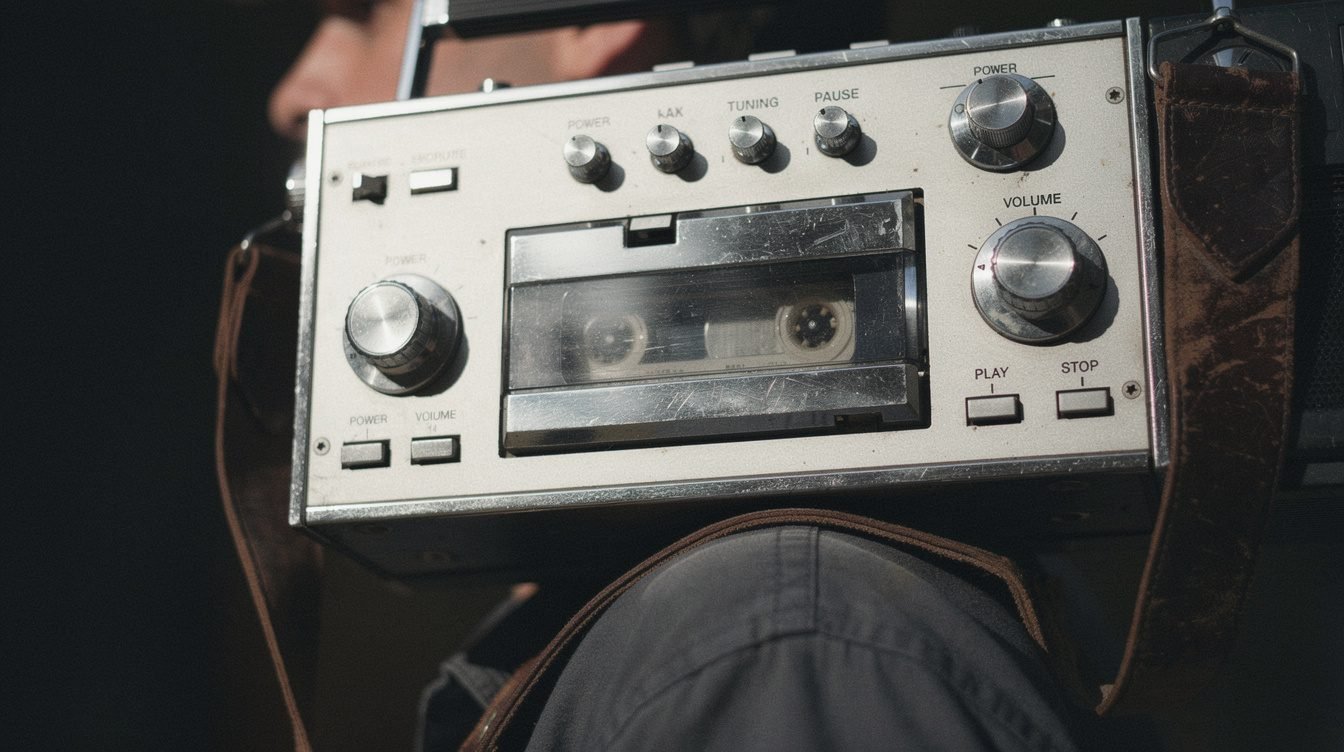
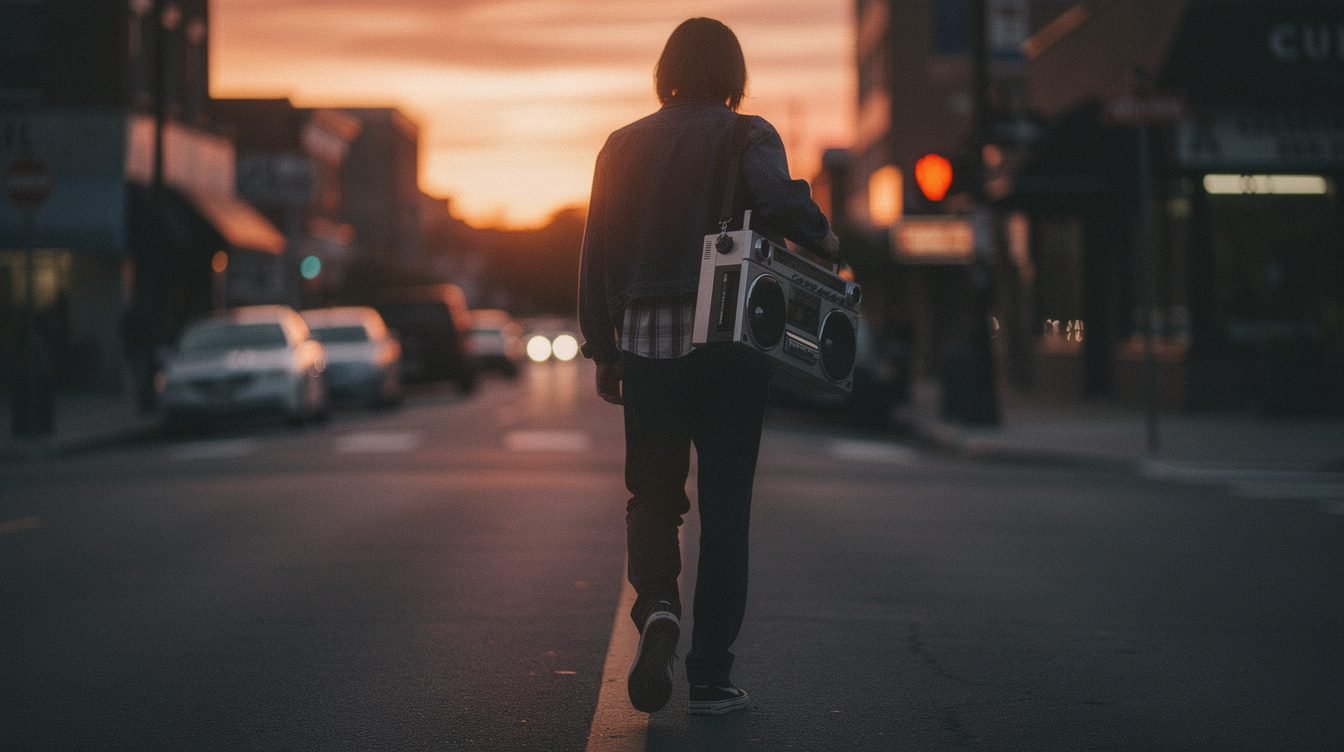
Before there was such a thing as an old school hip hop shirt, there was the boombox on your shoulder, and that was the whole outfit. Carrying one wasn’t a convenience — cassette decks that size didn’t need to be portable, and it definitely didn’t need to be that loud. It was a broadcast. You were choosing, in public, to be the source of the music for however many square feet your speakers could reach, which is a genuinely bold thing to do with a nine-volt-and-six-D-cell appliance. The bigger the box, the bigger the claim. People who carried the truly enormous ones — the ones that needed both arms and a break every four blocks — were making a statement that had nothing to do with sound quality and everything to do with commitment.
We wrote about this exact mechanism in our piece on retro cassette design — the ugly, over-built tech of that decade wasn’t ugly by accident, it was built to be seen using. The boombox is the purest version of that idea. It didn’t need branding because the object itself, mid-shoulder-carry, already told you everything: this person has decided the street needs a soundtrack and has appointed themselves DJ. A shirt that wants to earn a place next to that has to carry the same confidence — not a photo of a boombox, a shirt with the nerve the boombox had.
Cardboard, concrete, and a dress code nobody wrote down
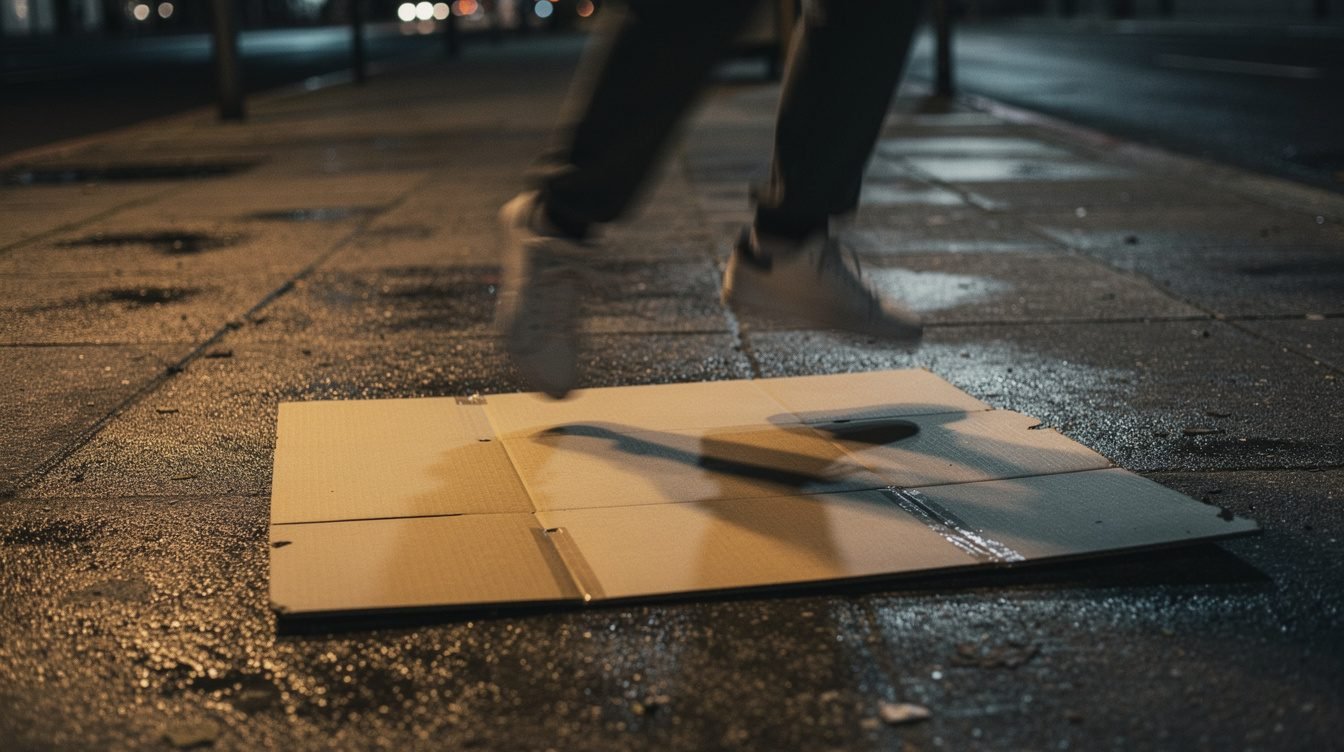
Nobody circulated a memo about what to wear to a cipher, but the dress code enforced itself within about one spin. Tracksuits, because you needed to move without your clothes fighting you. Sneakers laced loose or not laced at all, because a lace coming undone mid-spin was a worse problem than a shoe coming half off. Whatever you wore had to survive concrete, a flattened refrigerator box, and an audience that would absolutely notice if your outfit couldn’t keep up with your body. Fashion, for once, was downstream of physics.
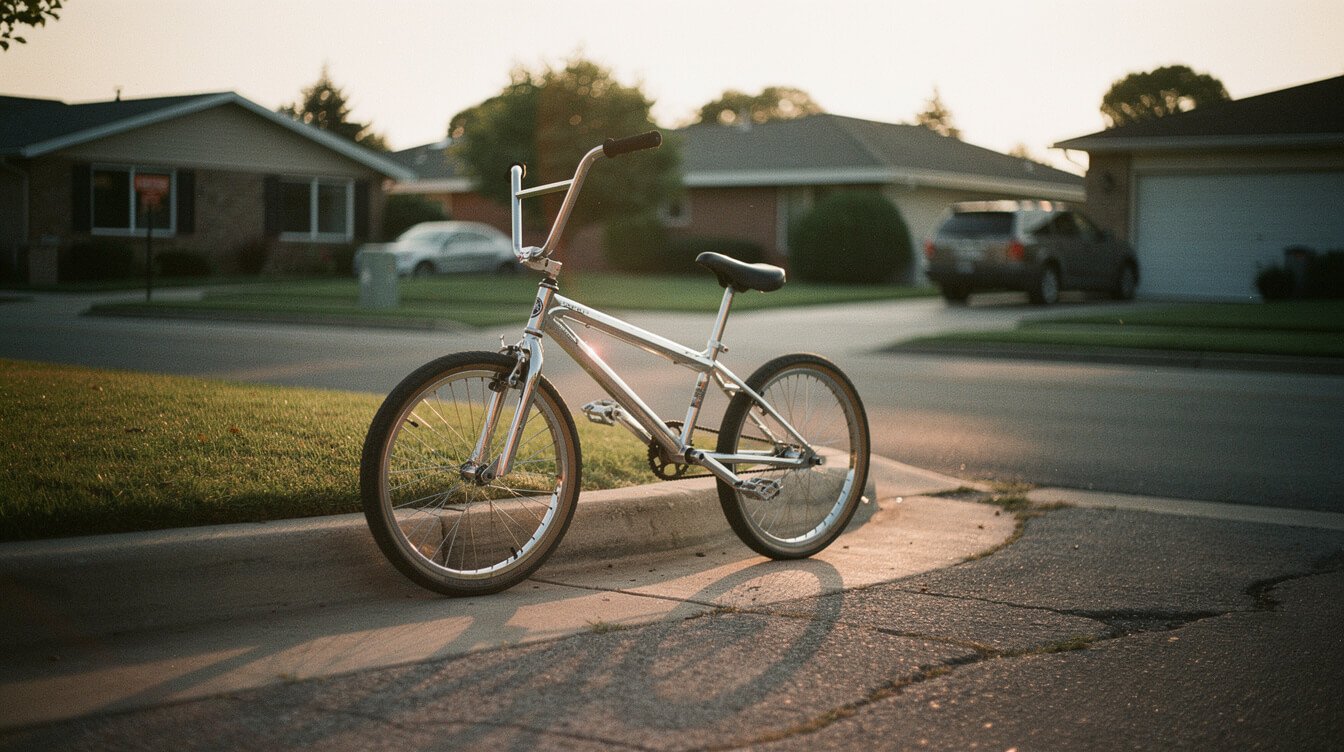
The cardboard itself deserves more credit than it gets. Somebody figured out, correctly, that a flattened box gave you the glide a raw sidewalk never would, and from then on a stack of broken-down boxes by the curb wasn’t trash, it was equipment. That’s a very Gen X kind of ingenuity — nobody bought a purpose-made dance floor, somebody looked at the free thing and understood its second job. It’s the same logic as duct-taping a bike, or turning a milk crate into a stereo stand. If your mixtape was the soundtrack for the block, the cardboard was the stage nobody had to build.
Good old school hip hop shirts should understand that the clothing was functional first, cool second — the coolness was a side effect of things fitting their job, not a costume department’s guess at “urban 1983.”
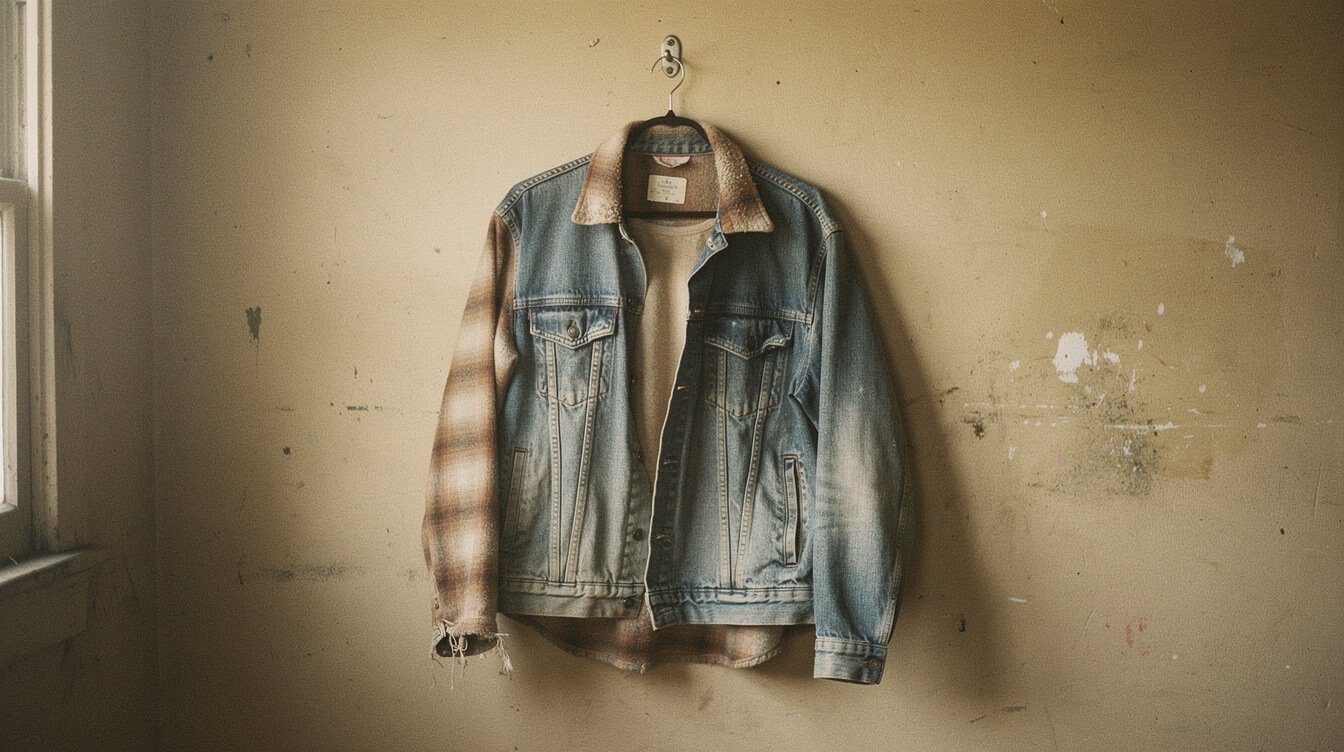
None of this ran on money, either, and that’s worth saying plainly because the licensed-merch version of this era tends to gloss it. Most of the kids at a block party weren’t wearing anything expensive. What separated a sharp outfit from a sloppy one wasn’t the price tag, it was maintenance — sneakers that stayed white because you actually cleaned them, a tracksuit with a crease still in it, laces that matched even if neither pair cost much. Pride went into upkeep because upkeep was free and effort was the one resource everybody actually had. A shirt that wants to reference that era honestly should carry a little of that same “I take care of what I own” energy, not a luxury-brand cosplay of a scene that mostly ran on hand-me-downs and hustle.
Chains, tags, and the economy of being recognized
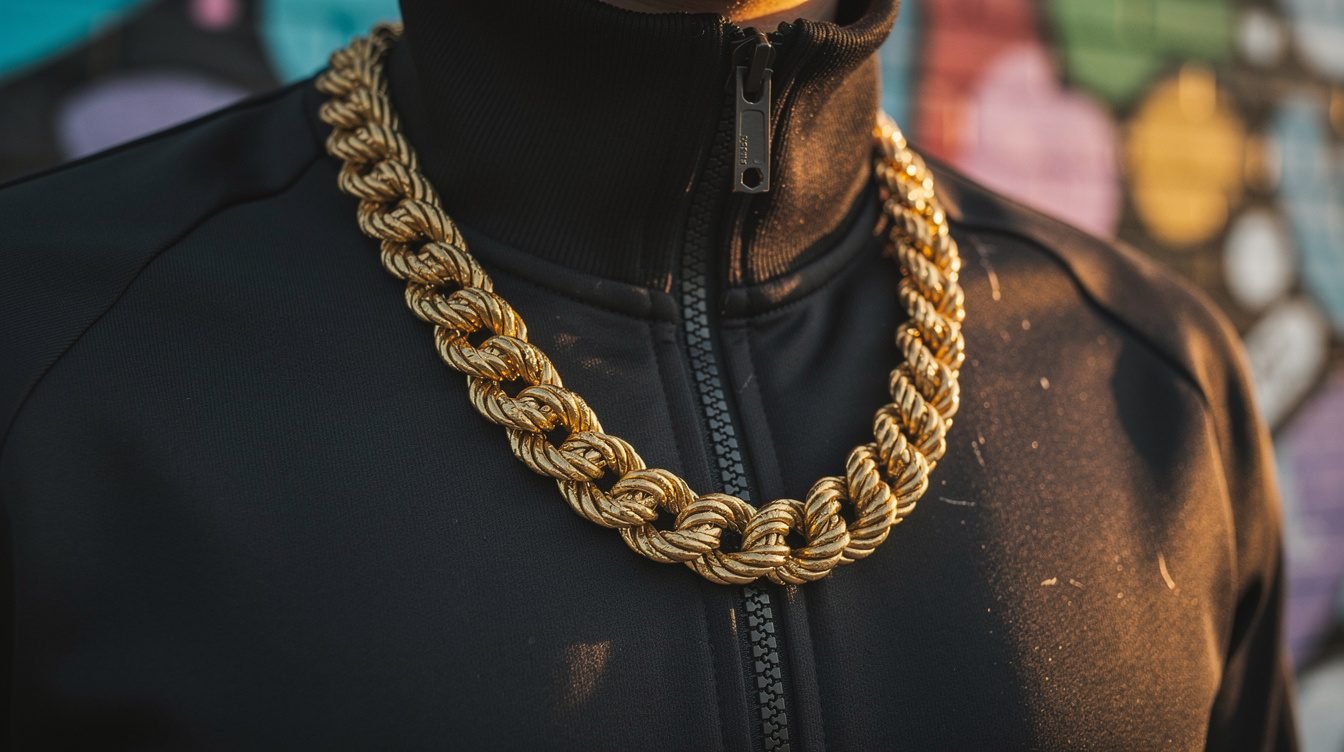
A thick gold rope chain wasn’t subtle and it wasn’t supposed to be. In a scene built entirely on reputation — whose crew, whose block, whose set was actually good — a chain you could see from across the party did some of the talking for you before you opened your mouth. Same logic ran through graffiti, which showed up on trains and walls with its own alphabet, readable at a glance to the people who were supposed to read it and decorative noise to everyone else. That’s the closest thing old-school hip-hop culture had to a company logo, and the joke is that it was the opposite of one: a tag meant something because it was personal and unauthorized, not because a brand had licensed it to you.
This is the part the current crop of old school hip hop shirts fumbles hardest. Slap a stock “graffiti font” across a chest and you’ve made the exact thing the culture was allergic to — mass-produced signage standing in for the real, earned, specific kind. If you’re going to reach for a piece from us that nods at this era, we’d point you at the shop before we’d point you at anything with a stranger’s tag on it. We’re not going to pretend we lived on those blocks. We’re going to be straight with you about a shirt that respects the era instead of impersonating it.
And the recognition economy cut both ways — you didn’t need a chain that loud if your crew already knew who you were. The visible flash was partly for outsiders. Insiders were reading smaller signals: how you stood at a battle, who you nodded to, which corner you were from. A good shirt today should aim for that same insider frequency — the wink that lands with the people who get it, not a billboard for everyone else.
Graffiti had its own internal ranking system, too, and it’s worth understanding before you let a shirt borrow its visual language. A quick tag — just a name, fast, low-effort — was the equivalent of a signature, proof you’d been somewhere. A full “piece,” with color fills, shadow, and hours of planning, was a different order of statement entirely, closer to a gallery show than a scribble, and everybody who looked at a subway car covered in one knew instantly which category they were looking at. The culture had its own quality control built in, no critic required. That’s a much more interesting design principle than “make it look spray-painted” — the real lesson is that effort was legible, and low-effort was too.
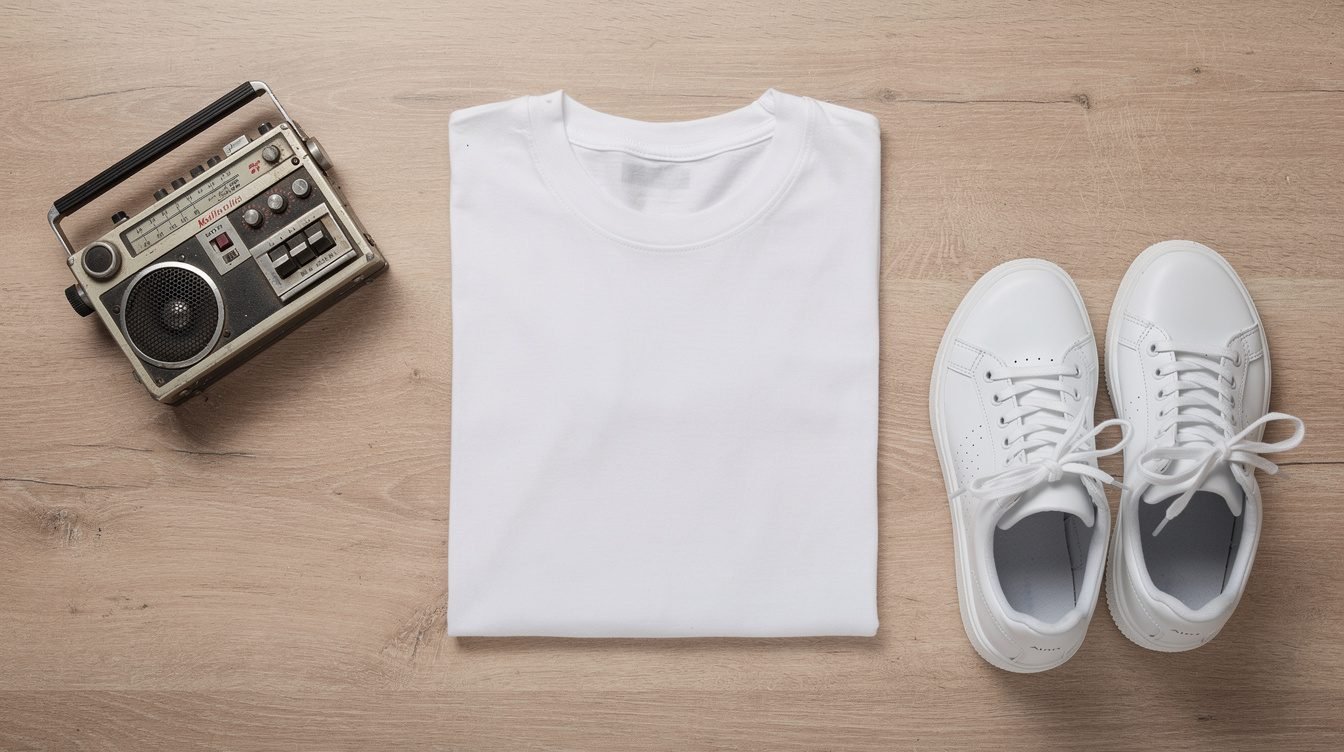
Wear the era, not somebody else’s logo
Original designs, made by people who lived it — no licensed faces, no stock graffiti font, no footnote required.
Radio, request lines, and the tape nobody sold you
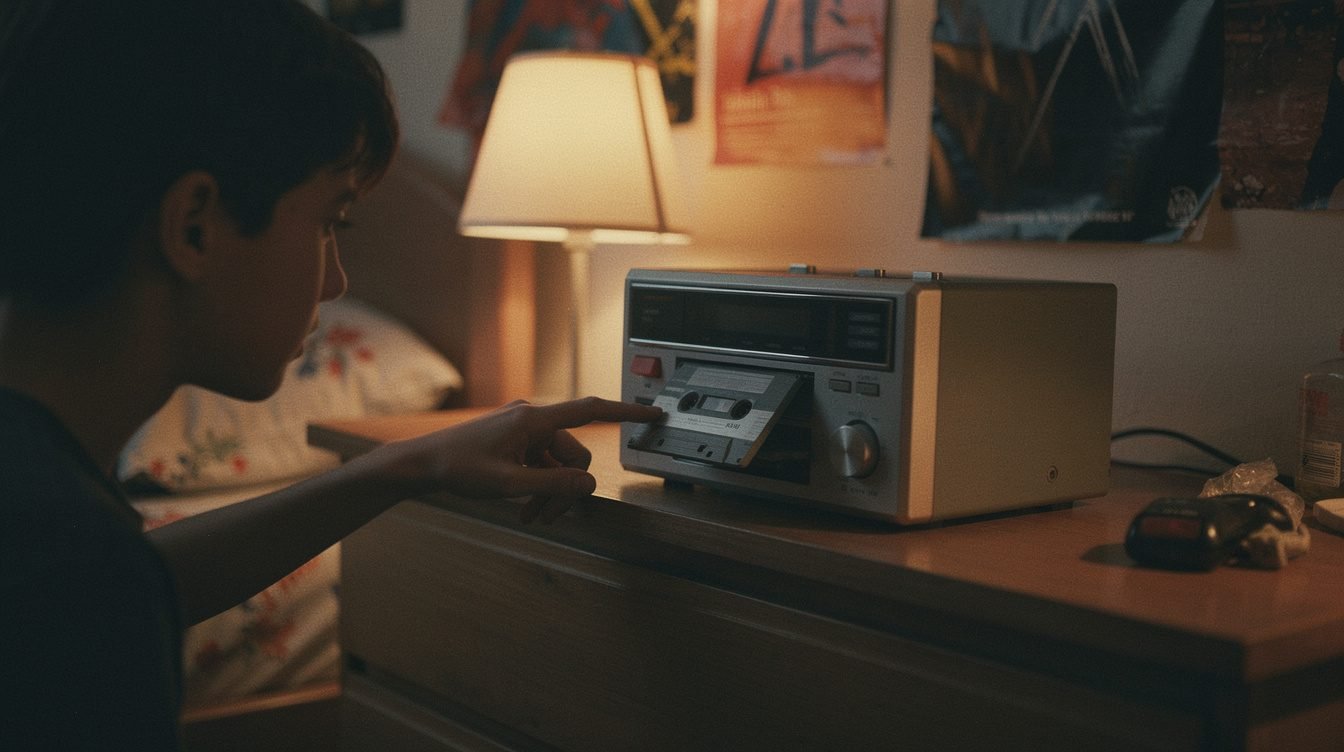
Before any of this was an aisle at the mall, it was a Sunday night radio show and a cassette jammed into the deck with your thumb hovering over record. Local stations ran mix shows where a DJ played an unbroken set, and if you were fast — and you learned to be fast — you caught most of it onto a blank tape with the DJ’s voice-over still cutting into the first few bars. Nobody licensed that tape. Nobody sold it. It existed because a kid with a boombox and decent reflexes decided the set was worth keeping, and then it got copied for a friend, and copied again, the quality dropping a little each generation until the fourth-hand version sounded like it was playing from underwater and everyone still knew every word.
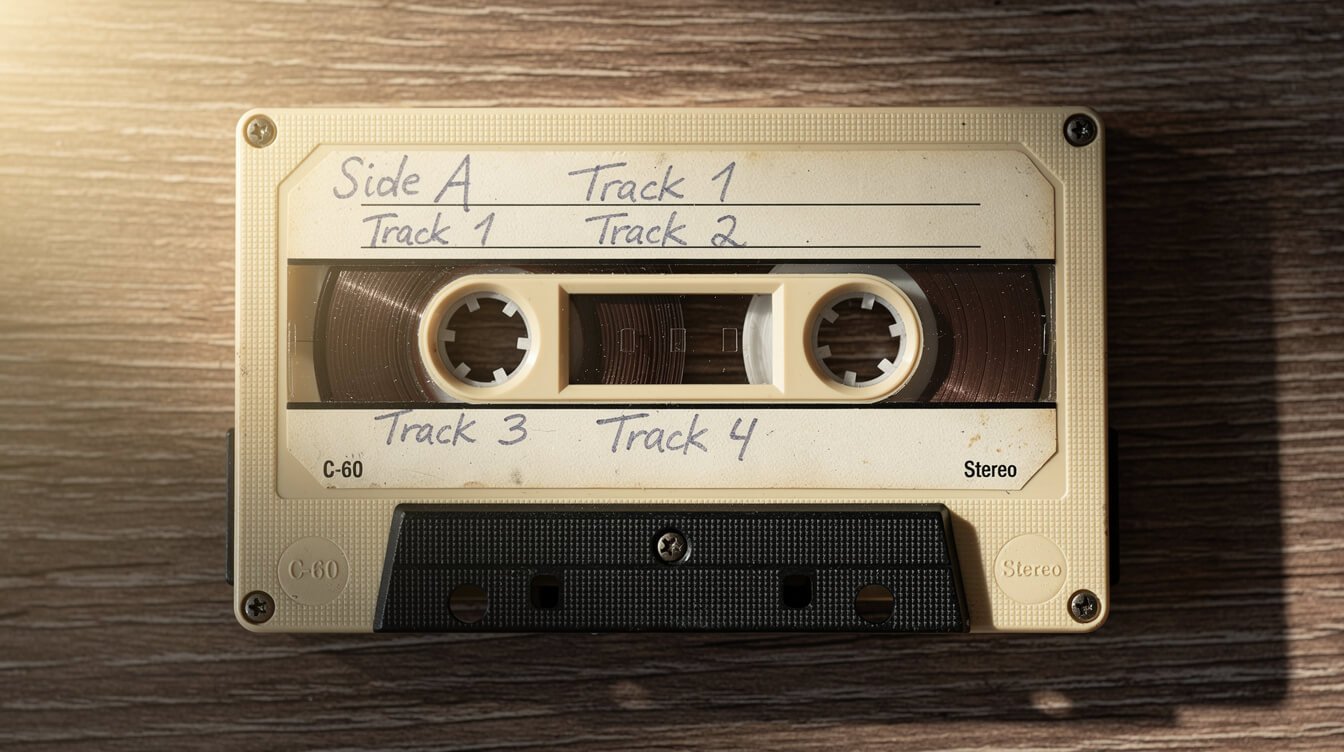
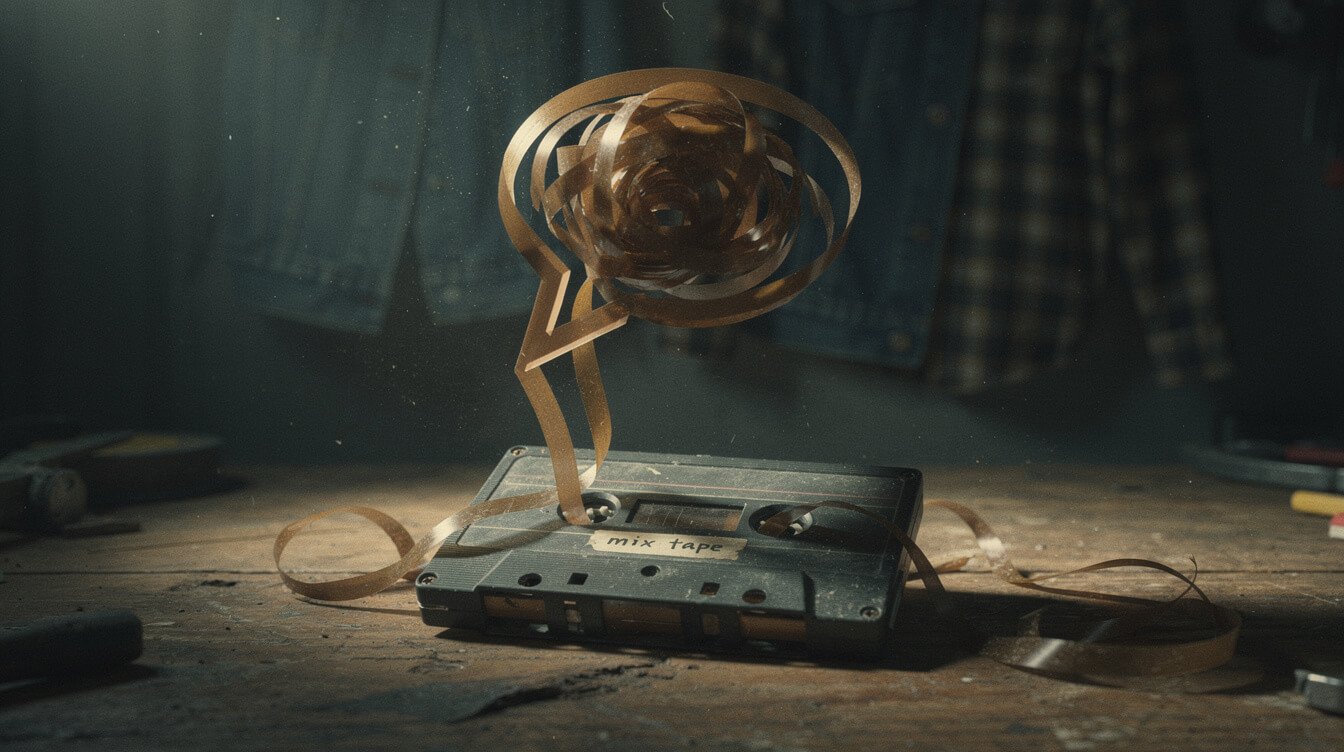
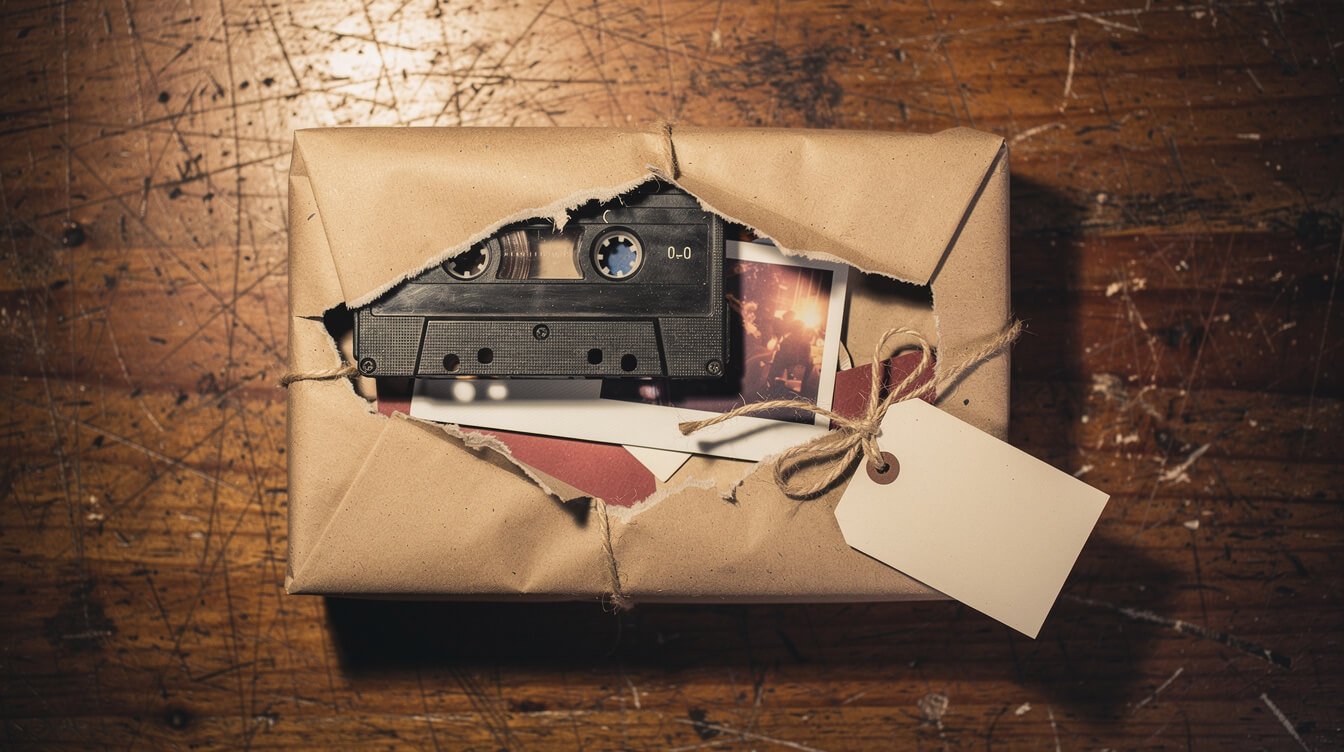
That’s the same impulse behind making a mixtape for anyone else in that decade — you were the editor, the archivist, and the delivery system, and the tape’s value went up, not down, the more hands it passed through. A trip to the record store at the mall might get you the actual single eventually, if it was even stocked, but the radio-dub was faster, free, and — because it had a DJ’s ad-libs baked into the recording — genuinely yours in a way the store-bought copy wasn’t. An old school hip hop shirt that understands this era should understand that the culture ran on that kind of unauthorized generosity. People kept passing things along for free long before anyone thought to put a price tag and a license agreement on the feeling.
Why most old school hip hop shirts get it backwards
Look at what’s actually for sale under “old school hip hop shirts” right now and you’ll find two categories, and only two. Category one is officially licensed merch — a real artist’s real face or name, sold with the full backing of an estate or a label, which is fine if that’s what you want, but it’s fan merchandise, not culture-memory. Category two is print-on-demand filler that slaps “OLD SCHOOL” in a bubble font over a cartoon boombox, aimed at people who weren’t there and don’t especially care that it shows. Neither one is making anything for the person who actually remembers the cardboard on the sidewalk.
The gap between those two categories is exactly where a shirt should live: specific enough to prove somebody paid attention, generic enough that it isn’t pretending to be an artist’s merch table. A shoulder-carried boombox with the volume dial cranked all the way over. A stack of cardboard, flattened and ready. A rope chain resting on a collar, drawn plainly, no face attached. These are the props of the era, not its trademarks, and there’s a real difference between the two — one you’re allowed to draw on a shirt, and one that puts someone else’s name in your shopping cart without their say-so.
If a shirt needs a celebrity’s likeness to prove it’s “old school,” that’s the tell that it isn’t. The real thing never needed the credit line.
There’s also a quieter failure mode worth naming: the shirt that gets the props right but flattens them into decoration — a boombox rendered like a cute sticker, cardboard drawn like a birthday-party prop, a chain reduced to a squiggle. The objects mattered because of what they cost someone to get and use, not because they photographed well. A design that respects that keeps a little of the weight in — the boombox looks heavy, the cardboard looks used, the chain looks like something you actually saved for. Cute is the opposite of what this era was going for. It was trying to be undeniable, not adorable.
Quick answers about old school hip hop shirts
What years count as “old school” hip hop?
Most people who were actually around for it put the line somewhere between the late 1970s and the mid-1980s — before the genre had a radio format, a video channel slot, or a predictable sales chart. After that it’s still great, it’s just not “old school” anymore. It’s just hip hop.
Do old school hip hop shirts need an artist’s name on them to be authentic?
No — and a lot of the ones that lean hardest on a name are covering for a design that doesn’t know what else to say. The strongest old-school signals are the objects and rituals: the boombox, the cardboard, the chain, the block party itself. A shirt that nails those doesn’t need a credit line to prove it belongs.
What made a boombox “good” back then?
Volume and presence, mostly — the ability to fill a block, not a room. Cassette decks (sometimes two, for dubbing), a strap or handle built for a shoulder rather than a desk, and dials big enough to work with gloves on in the cold. Sound fidelity was a distant fourth priority.
Why does cardboard show up so often in old-school imagery?
Because it worked, and it was free. Flattened boxes gave dancers a smoother, faster surface than raw pavement, and every corner store threw out a fresh supply nightly. It’s a textbook case of the culture repurposing whatever was on hand instead of waiting for someone to sell it the right equipment.
Is it disrespectful for a brand with no connection to the culture to sell old school hip hop shirts?
It’s disrespectful to fake a connection you don’t have — borrowing a specific artist’s name or likeness without permission, or pretending lived experience you don’t own. It’s a different, more honest thing to design around the shared objects and rituals of an era — the same way any Gen-X-adjacent brand can reference a mixtape or a boombox without claiming it invented the mixtape. The line is claiming credit versus paying attention.
What should I look for in a well-made old school hip hop shirt?
Specificity over slogans. A shirt that references a real object — the boombox, the cardboard, the chain — beats one that just prints the words “OLD SCHOOL” in a big font. If the design would still make sense to someone who knows the era, even with no text at all, it’s doing its job.
Final thoughts
We didn’t grow up on those specific blocks, and we’re not going to write you a shirt that pretends we did. What we grew up on — cassette decks, cardboard forts, chains you saved allowance for, a stereo you were entirely too proud of — runs on the same engine: objects that meant something because you understood the code, not because someone explained it to you. That’s the whole GenerationX approach to old school hip hop shirts, or any era we touch. We draw the boombox, not the face on the poster. If you know why that distinction matters, the shirt’s probably going to fit you fine.
The best compliment this era ever paid itself was that it never had to explain the reference twice. You either knew what the cardboard was for, or you asked and got a look, not an answer. We’re aiming for that same silence — a shirt that says nothing out loud and everything to the right person.
Reply and tell me your era
One good email a week — no forced nostalgia, no hashtag salad, just the stuff we’d actually send a friend.