Look up childhood movies 80s kids grew up on and the internet hands you the same twenty titles in a slightly different order. A movie database has a top ten. A parenting site has a list for family night. A countdown video does it in three parts. Somewhere in a Facebook group, a dad asks for something cool to show his eight-year-old and adds, with real feeling, “no famous-director stuff and no space saga, we already watched them.” Forty people answer him anyway with the famous-director stuff.
Fine. You don’t need the list. You could recite it. What none of them say is the thing that’s obvious the second you rewatch one: these weren’t fantasy movies. Strip out the alien, the pirate ship, the book that eats you, and what’s left is a pretty accurate picture of a Tuesday afternoon in 1985. A handful of kids, a few bikes, a plan, and no adult within shouting distance.
That’s why they stuck. We weren’t escaping into them. We were checking our work.
Childhood movies 80s kids loved all start on a bike
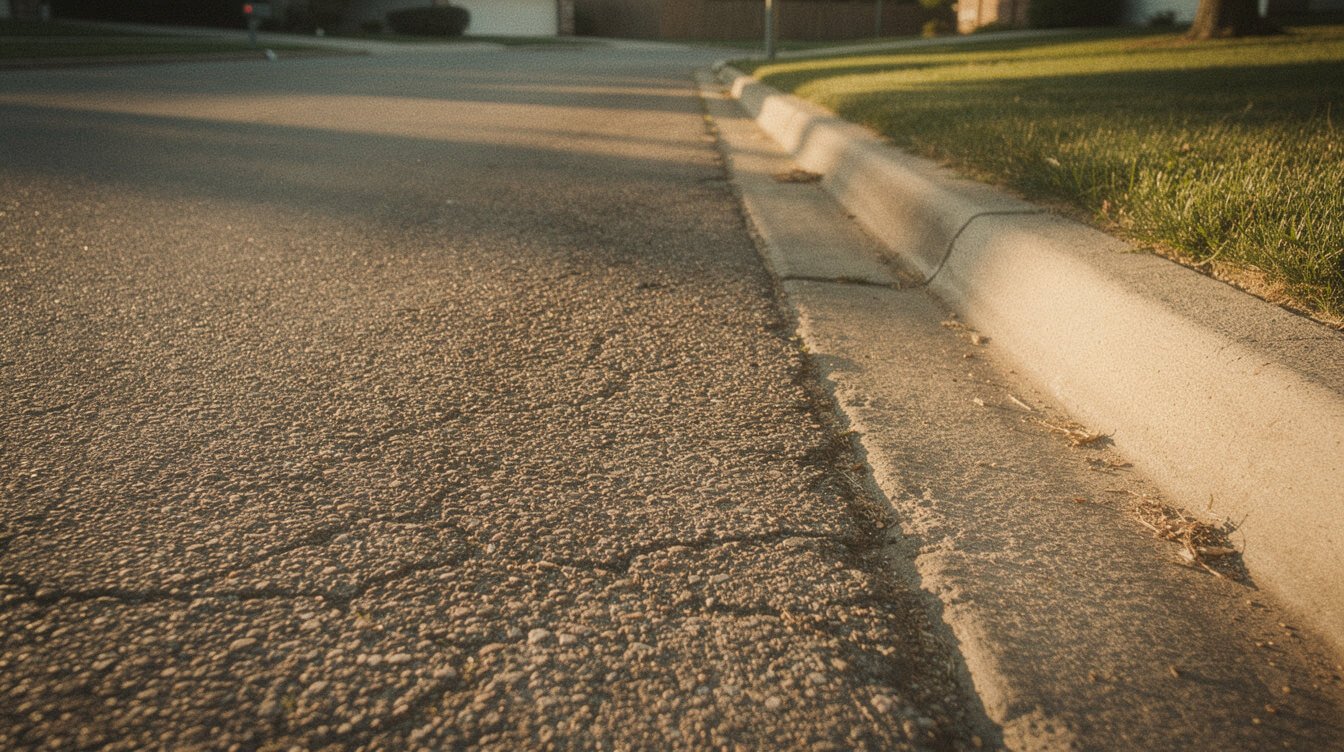
Think about how they open. Not with a prophecy or a montage of the hero’s childhood. With a kid on a bike, usually going somewhere he isn’t supposed to, usually late. Within ten minutes there are four or five bikes, and the bikes are the cast. Someone pulls up at a curb, someone skids in from the side, and the whole movie is now going to happen at roughly twelve miles an hour.
That wasn’t a style choice. It was a documentary detail. The bike was how a kid got a life of his own in the 80s. Dirt-track racing on stripped-down kids’ bikes had started in Southern California in the early 70s and was a full phenomenon by the middle of the decade; by the time we were old enough to want one, the small, tough, knobby-tired bike was just what a bike was. Around 1985 the look changed from chrome with colored parts to one loud color for everything, wheels included. You know which side of that line you rode on.
What the bike gave you was a radius. Every kid knew theirs to the block: the edge of the subdivision, the creek, the gas station by the highway you weren’t allowed to cross, the far side of the school field. And every one of those movies is, underneath everything, a story about a group of kids riding past the edge of their radius. The treasure is past it. The crash site is past it. The thing in the woods is past it. Childhood movies 80s kids watched on repeat were maps of exactly how far you could get before dinner, plus one more mile.
Nobody drove us to the plot
Watch one with someone born after 2005 and the first question isn’t about the special effects. It’s logistics. “How did they get there?” They rode. “Who drove them home?” Nobody. The plot couldn’t have started any other way, because a plot that needs a parent to drive it to the next location has a parent in the car, and a parent in the car ends the movie in about four minutes.
We never asked that question, because the answer was obvious. You rode. Then you rode home, in the dark, with no light on the front, and you told nobody what happened. Most of us did a version of that at least once a summer. Most of us didn’t find a spaceship. It still felt like the same activity.
Every crew had the same five kids
Once the bikes are assembled, check the roster. It’s the same roster almost every time, and you knew it on sight because it was also the roster of every kid gang on every street in the country.
- The one with the plan. Not the strongest or the smartest. Just the one who said “okay, here’s what we do” first and loudest, and then had to live with it.
- The mouth. Talks the entire time. Insults everyone. Is, in the final act, quietly the bravest person there, which nobody mentions because he’d never let them hear the end of it.
- The worrier. Carries something medical. Lists the ways this could go wrong, and is right about all of them, and comes anyway.
- The little brother. Had to be brought. Was not consulted. Somehow ends up being the one who actually finds the thing.
- The girl who was better at all of it. Usually showed up a few scenes late, usually rolled her eyes at the plan, usually fixed it.
Sometimes there was a sixth: the big kid, the older brother or the hulking new guy, who started the movie as a threat and ended it as muscle. Everyone else was a variation.
Here’s what’s funny about that roster. Every kid watching knew exactly which one they were, and almost nobody was the one with the plan. We were the mouth. We were the worrier. Statistically, a lot of us were the little brother. The movies were generous that way: everybody on the roster got a moment, and the moment usually came from whatever made them annoying in the first act. The worrier’s list turns out to be the thing that saves them. The mouth’s mouth gets them out of a jam. That’s not a bad lesson to get at nine, and nobody had to sit you down to deliver it.
The treehouse had bylaws
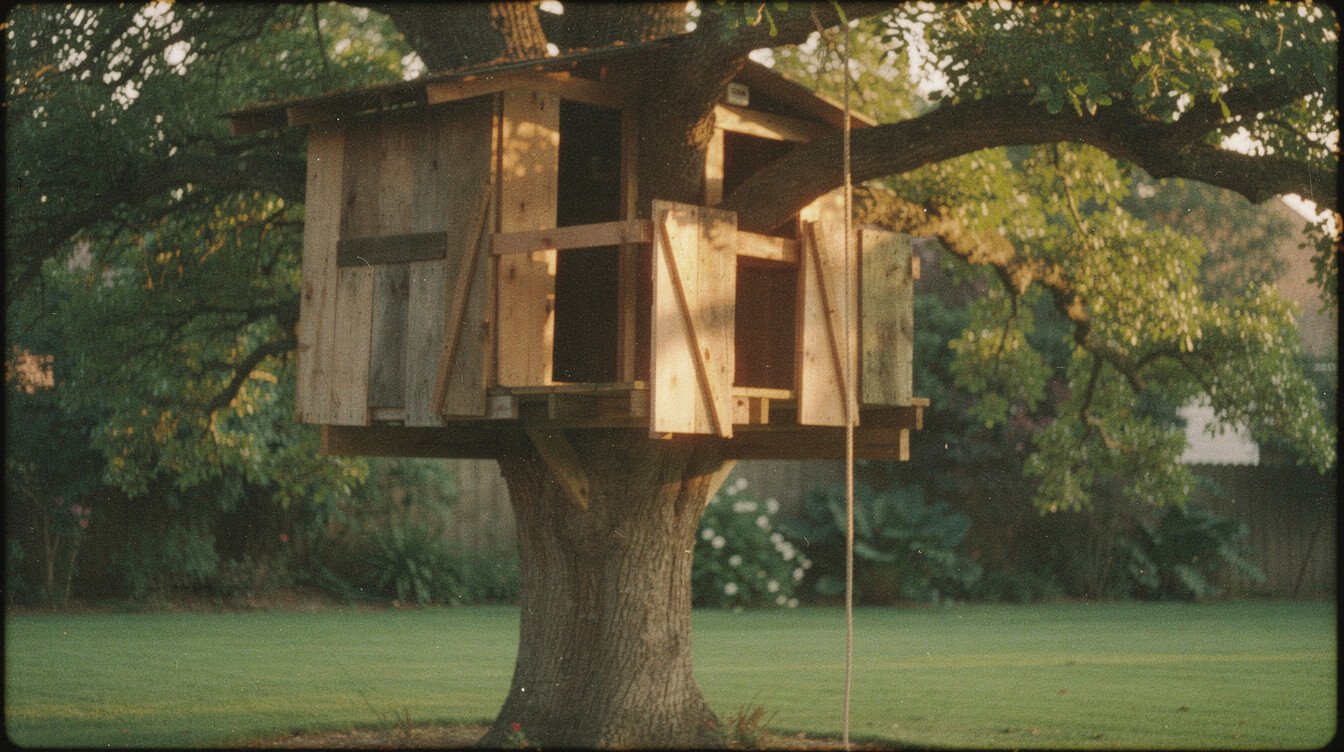
The crew also had a headquarters, and the headquarters had rules. A password. A no-girls sign that got taken down by the second act. A ladder you could pull up. In real life the treehouse was four boards and a piece of plywood somebody’s dad nailed into an oak and then refused to discuss further, and the rules were written in marker on the inside wall and amended constantly. It still counted. Every kid crew in America had a constitution, and every one of them was mostly about who was allowed in. The movies didn’t invent that. They just gave it a better set.
The grown-ups were somewhere else
Now look for the parents. They’re there, technically. A mom in the kitchen with her back to the camera. A dad on the phone, or on a business trip, or recently and pointedly gone. An older sister who has been left in charge and is on the phone too. They appear at the start to establish that there is a household, and they appear at the end to be relieved, and in between they’re doing whatever adults did all day, which, as far as we could tell, was mostly being elsewhere.
We’ve written about the decade’s holiday movies, where the grown-ups were openly the villains. The kids’ adventure movies were quieter about it. The adults weren’t bad. They just weren’t in the room. And when one finally did walk into the plot, he usually didn’t believe a word the kids said, which meant the kids had to handle it themselves. That’s the whole engine of the genre. Remove the adult, or make the adult useless, and suddenly a twelve-year-old has a job.
To a lot of us that wasn’t a premise. It was a description of the house after three o’clock. Both parents worked, or one parent worked and the other was gone, and there was a key on a shoelace and a list on the fridge. You let yourself in. You handled it. The movie just made “handling it” look more cinematic than making toast and calling your mom at the office to say you were home.
The porch light was the only clock
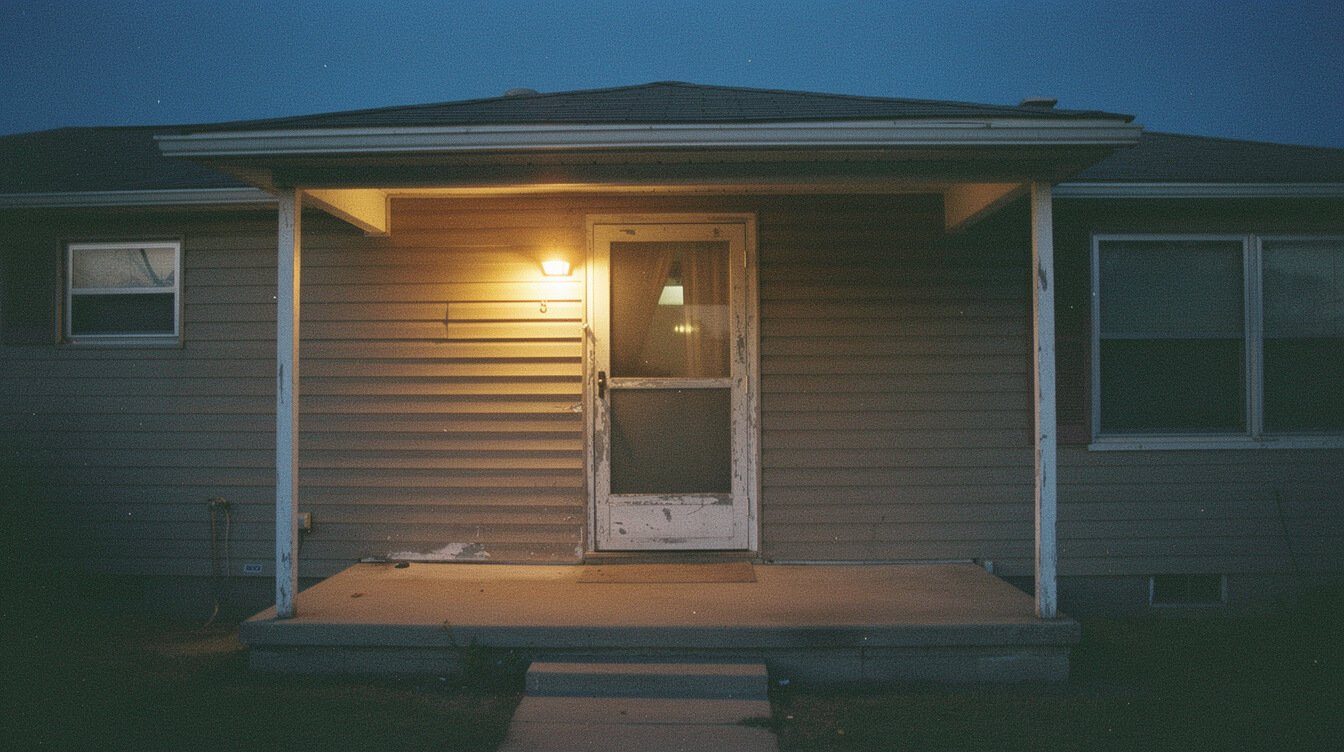
The adults did keep one piece of authority, and it was the porch light. In the movies, there’s always that shot: the kid creeping back across the lawn, the light on, a silhouette in the door. Off screen, it was the same. The light meant come home. The light meant somebody had noticed. A lot of us measured whole summers in how long we could stay out after it came on before it became a conversation. Once you hit that point, nobody was believing the bit about the treasure map either.
Meanwhile, on the milk carton

There’s a second half to this, and it isn’t funny, so we won’t try to make it funny.
The same years the movies were sending kids out past the edge of the map, the rest of the culture was sending a very different message to the same kids, sometimes at the same breakfast table. In 1983, May 25 was designated National Missing Children’s Day. In June 1984, the National Center for Missing & Exploited Children was opened at a White House ceremony, with a toll-free hotline. Later that year, a dairy in Des Moines started printing the photographs of two missing local paperboys on its milk cartons, and the idea spread. Within a couple of years, a lot of American kids were eating cereal across from a stranger’s school picture.
So we got both messages at once. On Saturday afternoon, the movie said: get on your bike, go past the edge, trust your crew, the adults won’t understand. On Monday morning, the carton said: be careful, don’t talk to strangers, somebody’s kid didn’t come home. Assemblies taught “stranger danger.” Parents handed out code words. And then those same parents went to work, because they had to, and the key on the shoelace still went around your neck at three.
What’s remarkable isn’t that kids were scared. Kids were sometimes scared. It’s that most of us held both messages without much trouble. You could know about the carton and still ride to the creek. You took the code word seriously and you still went past the edge of the radius, just with a little more attention to who was around. Nobody explained how to square those two things. We squared them ourselves, which was more or less how everything got squared in those years.
That tension never really left. It’s in how a lot of us parent now: wanting our kids to have the freedom we had while knowing exactly why we can’t quite give it to them. The movies were about the freedom. The carton was about the cost. We grew up with one in each hand, and we’re still holding them.
The movies handed us the gear
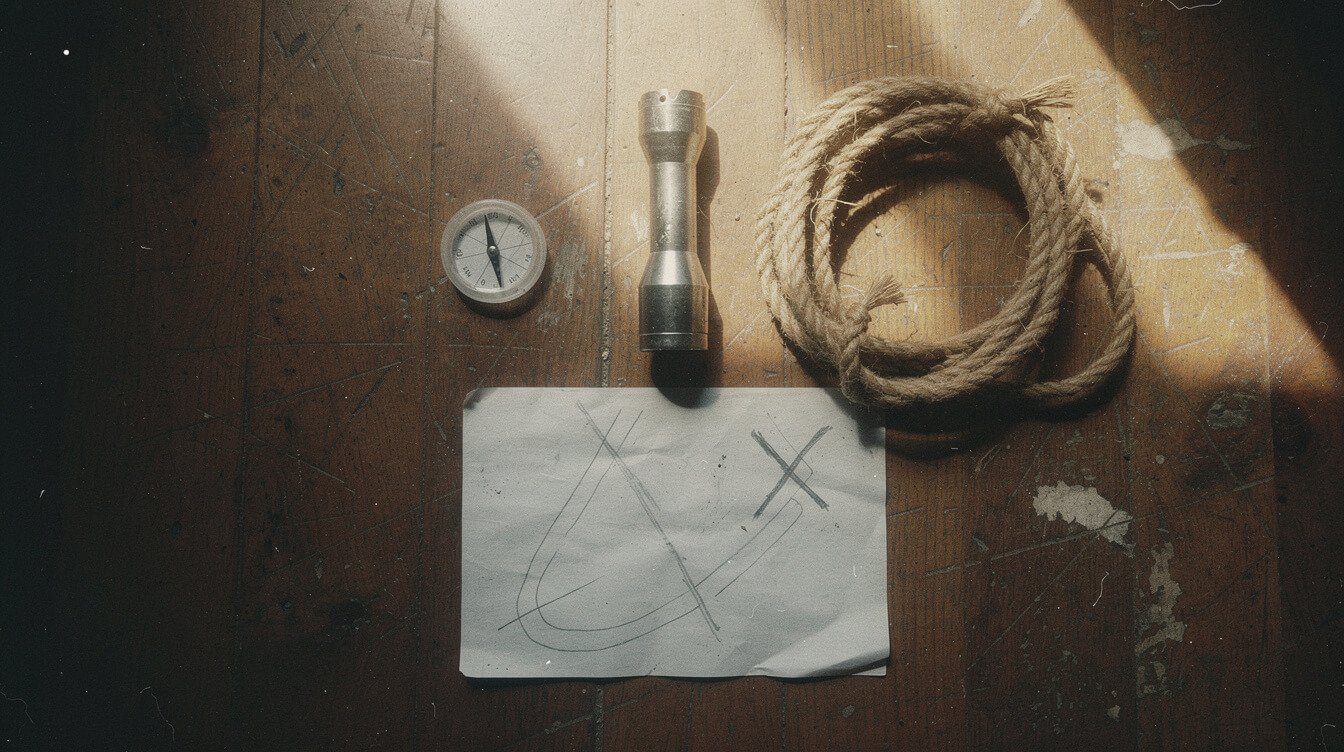
The other thing these movies did, without ever saying so, was hand out equipment lists. Every crew had the same kit: a flashlight, a length of rope, a map drawn by someone with no sense of scale, a compass nobody knew how to read, and walkie-talkies that worked across about one and a half backyards. There was always a backpack. There was always a scene where the contents of the backpack were dumped out on the floor and inventoried.
We took notes. Ask anyone who was ten in 1986 what they’d bring on an expedition and they will give you, almost item for item, the contents of that backpack. Not because anybody was actually going to find a pirate ship. Because the movies made being prepared look like the coolest possible thing a kid could be. Packing the flashlight was a personality.
And the kits worked, in a way. Kids who grew up on these movies can tie a decent knot, read a rough map, rig something with rope and a bucket, and talk their way past an adult who isn’t paying attention. It’s not a curriculum. It’s what you got from watching the same five kids rig their way out of a cave forty times on cable. (We’ve covered how the cable grid made those rewatches involuntary, which is why you know the cave scene better than the opening.)
If you were the kid who always packed the flashlight, the GenerationX shop is basically for you: one inside joke per shirt, no instructions. You’ll figure out which one’s yours.
The competence was the fantasy
Here’s the part that’s easy to miss. The aliens and the treasure weren’t the wish fulfillment. The competence was. In every one of the childhood movies 80s kids wore out on tape, a group of kids who’d been told all year to sit down and wait their turn turned out to be the only people in town who could actually get something done. They were right, the adults were wrong, and the kids proved it with a flashlight and a bad map. For a generation that spent a lot of afternoons quietly in charge of itself, that was the most satisfying ending a movie could have. Not the kiss. The moment when the grown-ups finally have to admit the kids were telling the truth.
The newsletter
Like a mixtape, but it shows up on its own
One email a week. The good posts, new designs, zero exclamation points. Unsubscribe whenever. We won't take it personally.
Rewatching childhood movies 80s style, with your own kids

Sooner or later every Gen-X parent tries it. You’ve hyped it for years. You get the popcorn. You put on the one you had memorized, and you sit there waiting for your kid to love it as much as you did.
Some of it lands. The jokes mostly hold up. The friendships hold up completely; a kid in 2026 recognizes the mouth and the worrier and the little brother instantly, because those kids still exist, just in group chats. The practical effects, weirdly, often hold up better than the CGI from ten years later.
What doesn’t land is the premise, and that’s the part you didn’t see coming. One of the questions on forums, every year, is some version of “which 80s movies are okay to watch with my twelve-year-old?” The worry is usually the language, or the scary parts. But what actually stops the modern kid isn’t a swear or a jump scare. It’s the freedom. “Wait, where are their parents?” “How does nobody know where they are?” “Why don’t they just call someone?” To a kid with a phone and a location-sharing app, a pack of eleven-year-olds disappearing into the woods for an entire day reads like science fiction. It is the least believable thing in a movie that also has an alien in it.
Documentary, with a better soundtrack
That’s the gap. For them, these are fantasy films about a world that couldn’t exist. For us, they were documentaries with a better soundtrack. The kid on your couch is watching a story about magic. You’re watching a slightly exaggerated home movie.
Don’t take it personally when they get bored in the middle. You probably got bored in the middle too; you just didn’t have anything else to do. And if the one you put on scared them a little more than you expected, there’s a reason for that, which we went into when we wrote about how the rating system had a hole in it right where we were.
For whoever packed the flashlight
Shirts for the crew that rode past the edge of the map and came home after the porch light. No footnotes, no backpack inventory.
Childhood movies 80s: quick answers
What are the most iconic childhood movies from the 80s?
You already know them, and you don’t need a list. There’s the one with the treasure map and the attic and the ship at the end. The one with the visitor hiding in the closet among the stuffed animals. The one with the book that reads you back. The one where the boy goes missing for eight years and comes back the same age. The orphaned little dinosaur. The one with the goblin king. If you nodded at four of those, you were there. Those are the movies most lists start with, and they deserve it.
Why were so many 80s kids movies about kids on their own?
Partly because it was true. The share of households where both parents worked kept climbing through the decade, and a lot of kids spent afternoons on their own. Partly because it’s just better storytelling: an adventure needs a problem only the hero can solve, and that’s easier to write when the adults are out of the room. Filmmakers who’d grown up in the 50s and 60s were also writing about the freedom they remembered, which happened to match the freedom we were living.
Why do 80s kids movies feel darker than modern ones?
Some of them were. Kids got hurt, pets died, villains were genuinely menacing, and the movie didn’t stop to check on you afterward. Part of that is a ratings story, and part is that the films treated kids as able to handle sad and scary things without a debrief. That’s something parents bring up a lot, usually after pausing one halfway through.
Are 80s childhood movies good for kids today?
Many are, especially for eight and up, with a parent nearby. Expect some language that wouldn’t make the cut now, a few jokes that have aged badly, and at least one scene that’s scarier than you remember. Watch the first twenty minutes yourself if you’re unsure. And be ready for the question about where the parents are. You’ll want a better answer than “at work, probably.”

From the shop
Duran Duran Girls on Film Vintage Art T-Shirt
Price range: $24.99 through $26.99
Shop this designFinal thoughts: we were the crew
The lists will keep coming, and they’ll keep getting the titles right. That’s fine. The titles were never the point. What the childhood movies 80s kids loved actually got right was the shape of the afternoon: a few kids, a few bikes, a bad map, a radius you were always about to ride past, and no grown-up in sight until the porch light came on.
We didn’t watch those movies to escape our lives. We watched them to see our lives with better lighting and a bigger budget. The treasure was fake. The crew was real. Most of us are still in touch with at least one member of it, and if you text them the words “the backpack,” they’ll know exactly what you mean.
Go ahead. Text them.
Before you go
You made it to the end. Respect.
Get the best of these in one short weekly email, plus whatever we just printed. No spam. We were raised better than that. Mostly.