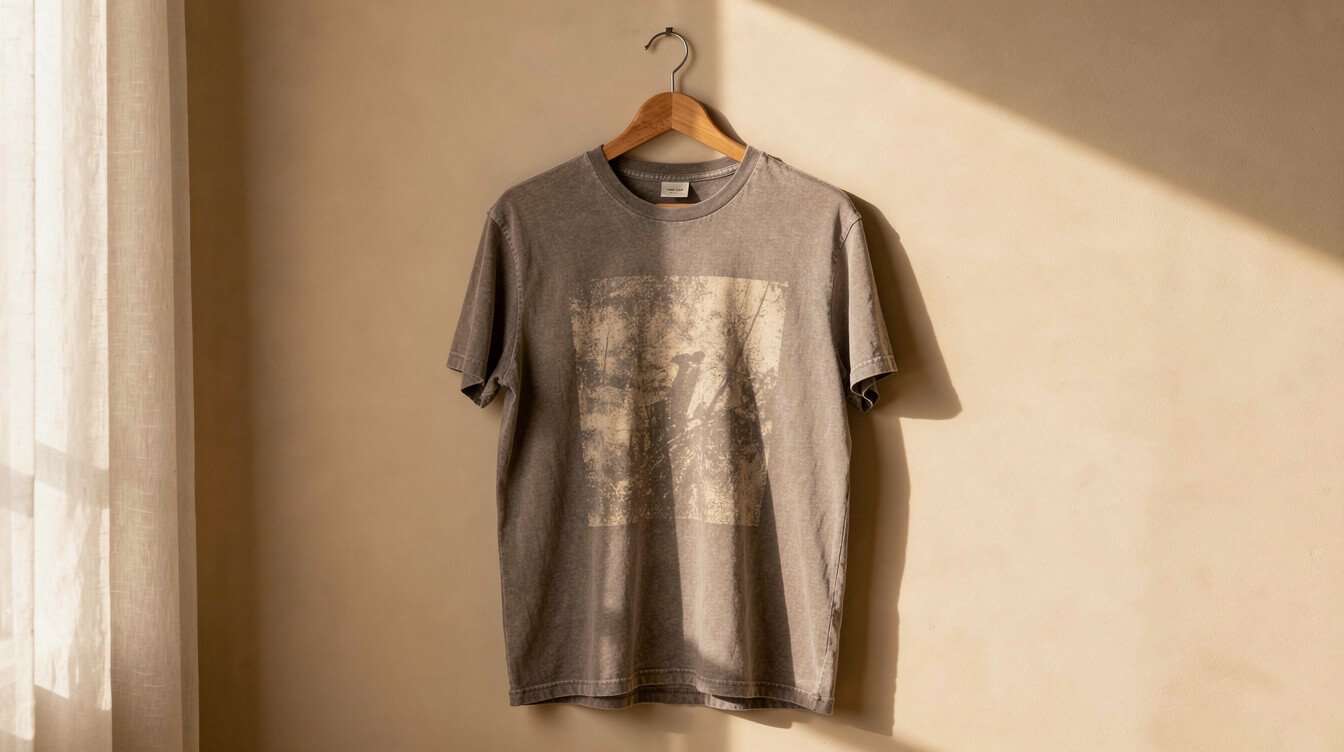
Somebody is standing in an aisle right now typing “90s nostalgia gift for him” into a search bar, and the internet is about to hand them the same six objects it hands everyone: a Trapper Keeper-print notebook, a game-console-controller mug, a “he’s just a 90s kid” candle, a poster of a movie he’s seen forty times. Every one of those objects will get opened. Every one of them will get a real, genuine laugh. And in about six weeks, most of them will be in a drawer, because they were never actually about him — they were about the decade in general, and he already owns the decade in general. He lived it.
This is the part the listicles skip: a 90s nostalgia gift for him doesn’t work the way a normal gift works. A normal gift says “I thought of you.” A nostalgia gift has to say “I know exactly which parts of the 90s were yours” — and those are two very different bars to clear.
It’s a strange category to shop in, because it feels like it should be easy. He was there. The decade already happened to him, so surely any object stamped with the right year will do the work automatically. That’s the trap. The decade doing the work for you is exactly how you end up buying the same six objects everyone else buys, and he’s already seen all six, possibly at his own desk, possibly more than once.
The default 90s gift for him, and why it doesn’t land
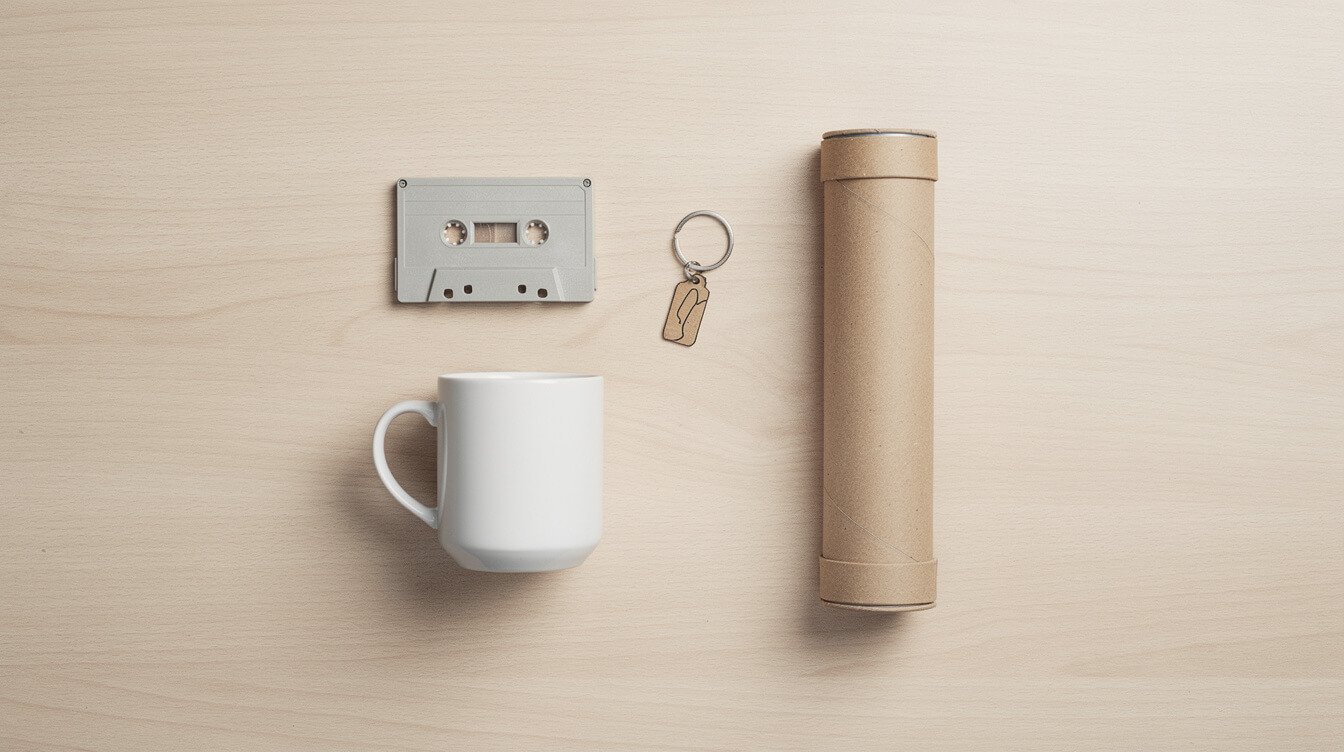
Walk through any gift guide built around this exact phrase and you’ll notice they’re not actually guides to a person — they’re guides to a decade. Cassette-shaped keychains. A boombox phone case. Something with “1994” printed on it in a font that’s trying very hard. None of these objects require the buyer to know anything about the man receiving them beyond his approximate age. That’s the whole design brief: broad enough to sell to anyone born within a fifteen-year window.
Which is exactly why it reads as generic the second he opens it. He’s not insulted — he’s just not surprised. A gift that could have gone to any Gen-X guy in America doesn’t feel like it was picked. It feels like it was sorted, the way an algorithm sorts a browsing history into a category and shows you the category’s best-seller. And he can tell the difference between “someone picked this for me” and “someone picked this for my demographic,” even if he couldn’t explain how he knows. He just knows.
The fix isn’t a better object in the same category. It’s a completely different question. Instead of “what says 90s,” the question that actually produces a good 90s nostalgia gift for him is “what says his 90s” — and those two searches return almost nothing in common.
The difference between his 90s and everyone’s 90s
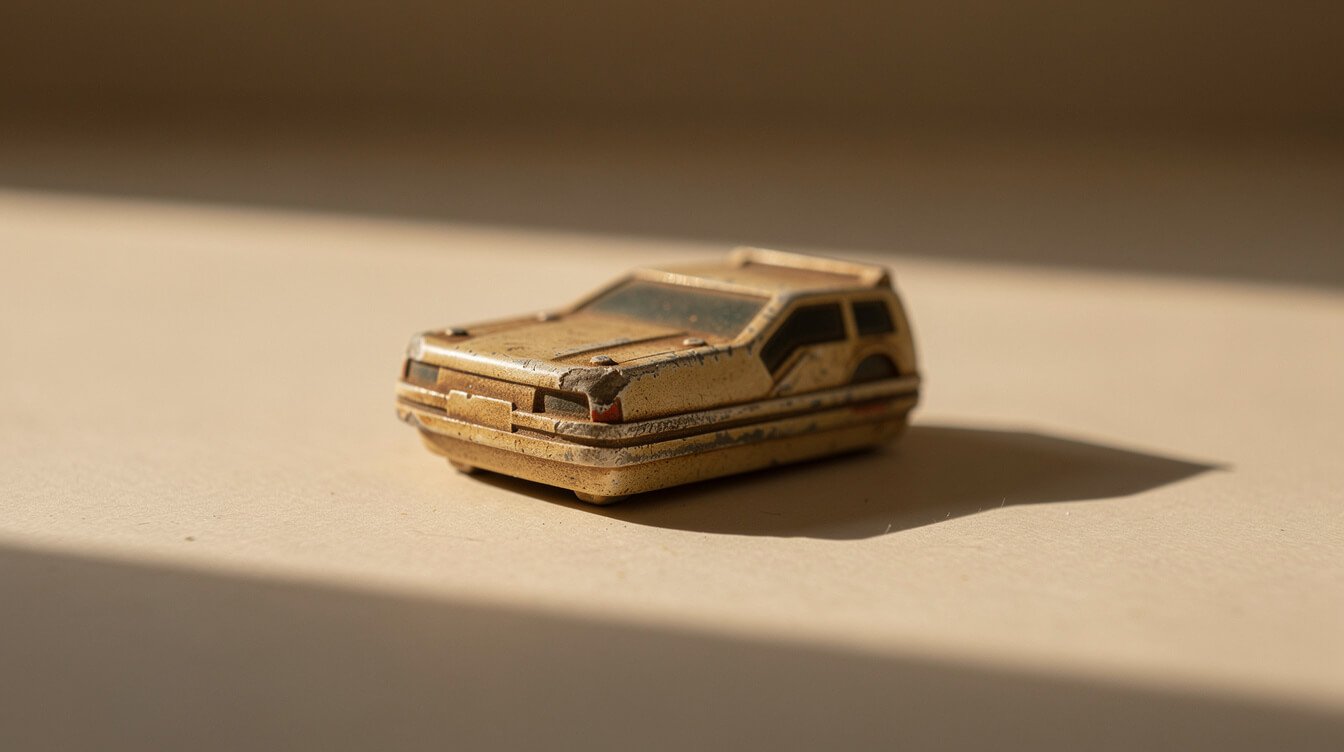
Everyone who was a kid or a young adult in the 90s shares a handful of universal signifiers — dial-up, a certain console, a certain channel that used to play music videos. Those are real. They’re also useless as a gift strategy, because they’re shared by roughly forty million people. A gift built entirely out of shared signifiers is a gift for the decade, cc’d to him.
What he doesn’t share with forty million people is the specific version he actually lived. Maybe it’s a team that broke his heart in a way no other team ever has. Maybe it’s a very particular commute, a very particular summer job, a very particular friend group’s inside joke that nobody outside that group would recognize as a reference to anything. That’s not decade-trivia. That’s autobiography, and autobiography is the only category of nostalgia that can’t be mass-produced, which is exactly why it’s the only category worth building a gift out of.
Here’s a test that separates the two, and it takes about ten seconds: could this object be given to any man his age with only the year changed on the packaging? If yes, it’s a decade gift. If the object only makes sense once you know something specific about him — his team, his console, his commute, the show he still quotes without noticing he’s doing it — it’s a him gift. Decade gifts are fine as a stocking stuffer. Him gifts are the ones that end up on a shelf he actually looks at.
This is the same trap that makes a gen x birthday gift so hard to get right in the first place — the broad version is always easier to find than the true one. It’s worth saying plainly that decade gifts aren’t a scam and nobody’s being lazy on purpose. The entire retail apparatus around this phrase is built to answer “90s nostalgia gift for him” at scale, which means it has to optimize for the version of the 90s that’s true of the most people at once. That’s a reasonable thing for a store to do. It’s just a different job than the one you actually have, which is buying for one specific guy, not the aggregate.
Four things people reach for, and why they all read as generic
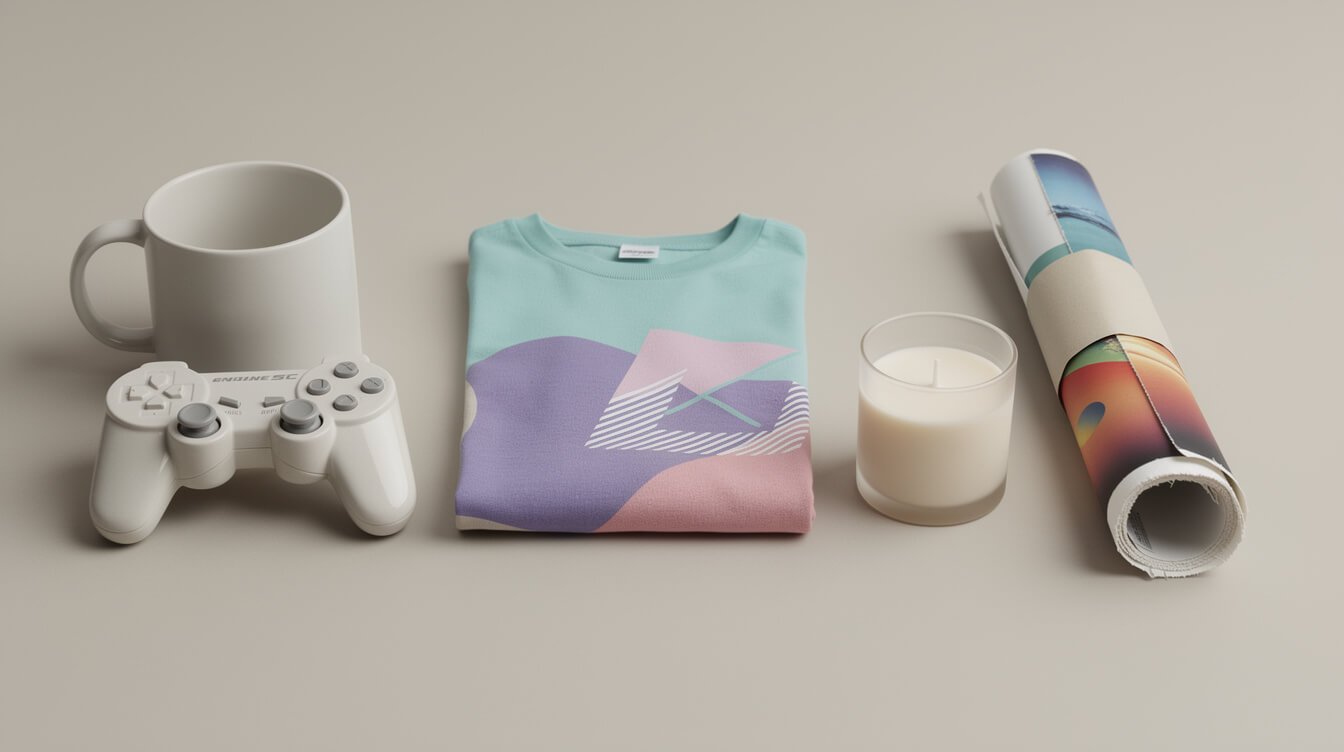
Some categories get reached for so often they’ve stopped registering as a choice at all. Worth naming them, because once you can see the pattern you stop falling for it by accident — and once you can name the pattern, you also start noticing it everywhere, in every “gifts for him” list, not just the nostalgia-flavored ones. It’s not that these categories are wrong to exist. It’s that they’re the default, and defaults are, definitionally, what everyone else is already buying.
The console callback
A controller-shaped anything — mug, keychain, phone case — signals “video games existed in the 90s,” which is true of roughly every man his age. It doesn’t signal which game, which level he never beat, which friend’s basement he was sitting in when he beat it. The shape does the work the memory should be doing.
The “I survived” novelty
Shirts and mugs that just list 90s nouns — dial-up, the video store, the egg-shaped keychain pet — read like a decade’s greatest-hits compilation rather than a gift. They’re built to be recognized by a stranger across a room, which is the opposite of what a good gift is built for.
The movie poster
A poster of a movie he’s quoted a thousand times is a safe bet precisely because it’s so widely loved it’s basically public property at this point. Safe bets are fine. They’re just not the thing that gets talked about later.
The candle
“Smells like the 90s” is a genuinely funny label on a candle and a genuinely bad gift strategy, because it outsources all the specificity to a scent nobody can actually verify is accurate. It’s a joke wearing the costume of a gift.
None of these four are bad, exactly. They’re just interchangeable, and interchangeable is the one quality a nostalgia gift can’t afford to have.
Where to actually find the detail, if you don’t already know it
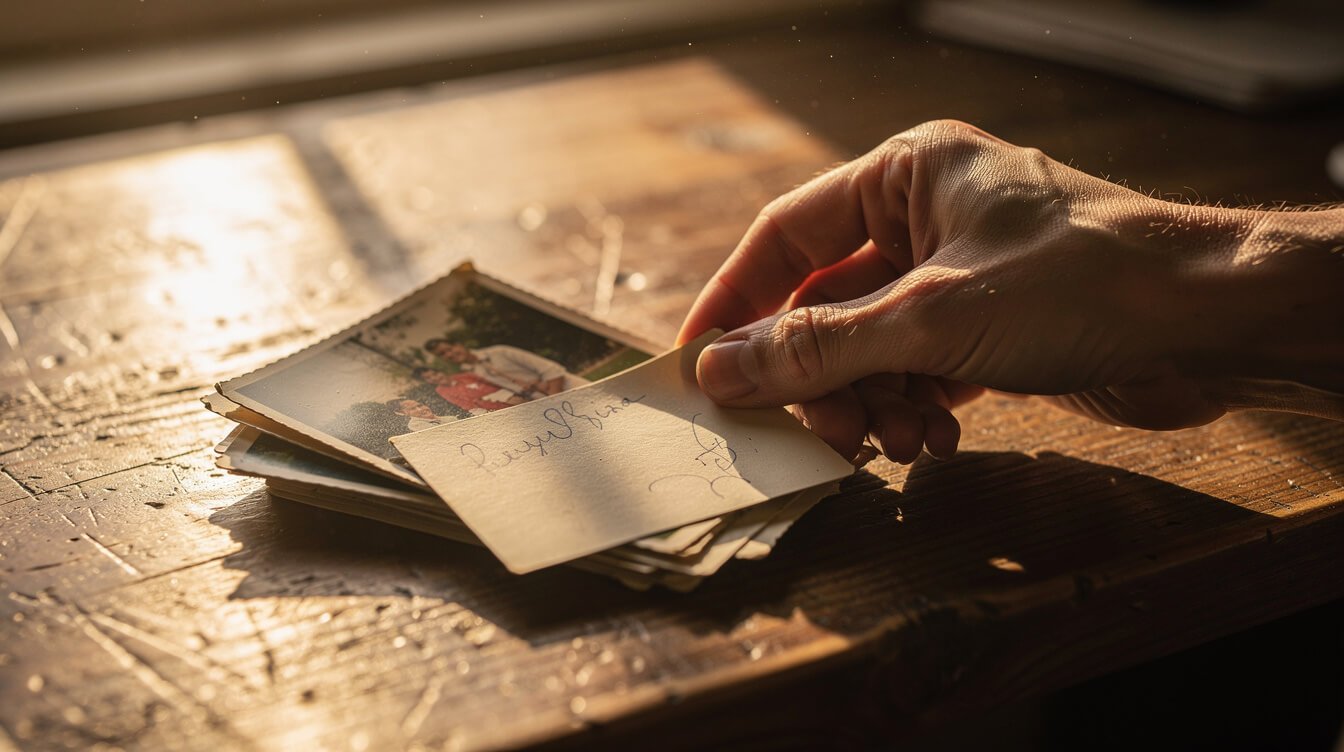
The obvious answer is “ask him,” and the obvious answer is also wrong, because asking directly usually gets you a shrug and a “I don’t know, whatever’s fine” — which is true and also completely unhelpful, because most people don’t have their own nostalgia indexed and ready to hand over on request. The specific detail is in there. It’s just not sitting at the front of his memory waiting for the question.
The better source is a third party who watched his 90s from the outside — a sister who remembers exactly which cartoon made him late for school every morning, a college roommate who remembers the one CD that never left the car, a parent who still has a photo of the bedroom wall covered in one specific team’s posters. Ask them for a story, not a fact. Facts get summarized into generic categories the same way gift guides do. Stories keep the specific detail attached, because the detail is what makes the story worth telling in the first place.
Old photographs work for the same reason — not because they document objects, but because they document a room, and a room has fifteen specific things in it, most of which never made it onto any decade’s official highlight reel. The lava lamp nobody else had. The exact poster, not “a poster.” The busted stereo held together with a specific kind of tape. None of that shows up in a “90s nostalgia gift for him” search, and all of it is worth more than anything that does.
If none of that is available, the fallback isn’t to default to the generic version — it’s to narrow the decade signifier as far as it’ll go. Not “90s music” but the one genre he actually cared about. Not “video games” but the one console, ideally the one game on that console he talks about more than the others. Narrower is always closer to specific, even when it can’t get all the way there. It’s the same instinct behind why most nostalgia gifts end up decorating a shelf instead of getting used — the object was chosen for the decade, not the person, and it shows.
The newsletter
Like a mixtape, but it shows up on its own
One email a week. The good posts, new designs, zero exclamation points. Unsubscribe whenever. We won't take it personally.
A ten-second test before you buy anything

Before you check out, ask one question: would he need to explain this gift to someone else, or would it explain itself to him instantly? If it needs a caption — “this is from the 90s, get it?” — it’s a decade gift, and decade gifts require the giver to do the emotional work the object should be doing on its own. A gift built around something he actually lived doesn’t need the caption. He’ll get there in under a second, because he was there the first time too.
A second, faster version of the same test: if you swapped “him” for “any man his age,” does the gift still make sense? If yes, put it back. The whole value of a nostalgia gift is that it couldn’t have gone to anyone else — that’s the entire mechanism by which it lands. Take that away and you’re left with a themed object, which is a different, much smaller thing than a gift.
This is harder than reading a gift guide. It requires actually knowing something about him — not his birth year, something real. A team. A show he still does the voice from. The exact console he had and the one his friend down the street had that he was jealous of. That’s not a shortcut you can buy your way around, and that’s precisely why it works when the shortcuts don’t.
What actually earns the reaction the generic version doesn’t

There’s a specific sound a good nostalgia gift gets that a generic one never does — not the polite “oh nice,” but the pause first. The half-second where he’s doing the math on how you’d have known that. That pause is the whole product. It’s not sold anywhere, and no gift guide can hand it to you pre-packaged, because it’s not actually coming from the object. It’s coming from the fact that someone paid enough attention to notice a detail that wasn’t advertised.
That’s also why a smaller, more specific gift consistently beats a bigger, more generic one in this category. Size and price are decade-gift instincts — the idea that you can out-spend specificity. You can’t. A five-dollar object tied to the actual right memory will out-perform a fifty-dollar object tied to the right decade every time, because he’s not grading on cost. He’s grading on whether you were paying attention.
There’s also a longer payoff most people don’t factor in: the specific gift gets a story attached to it, and the story is what actually gets retold later — at the next holiday, to a friend, years from now. Nobody tells the story of the console mug. Plenty of people tell the story of the year someone tracked down the exact shirt from the one concert, or the exact cereal-box toy, or the one VHS nobody else remembered existed. That’s the version of “worth it” that doesn’t show up on a price tag.
None of this means you need an elaborate plan. It means the research is the gift — twenty minutes actually thinking about his 90s instead of the 90s does more than any amount of browsing a gift guide, including this one. Guides are useful for narrowing a category. They can’t do the one step that actually matters, which is knowing the guy.
Frequently asked questions about a 90s nostalgia gift for him
What if I don’t know enough specific details about his 90s?
Ask someone who does — a sibling, an old friend, a parent. One specific fact from a third party beats an entire catalog of generic decade signifiers. You’re not looking for a biography, just one true detail the gift-wrap version of the 90s doesn’t have. Even a single overheard story at a holiday dinner is usually enough to work with.
Is it still a good gift if it’s funny instead of sentimental?
Funny is often the correct register — Gen X doesn’t really trust a gift that tries to make it cry. A specific joke lands harder than a generic sentiment. The rule is the same either way: specific beats broad.
What if the “generic” gift is genuinely something he loves?
Then it’s not actually generic to him — the test isn’t about the object’s popularity, it’s about whether the choice required knowing him. If he’s had the same console poster on his wishlist for a decade, that’s specific, not generic. Context is what changes the category, not the object itself.
Does the gift have to be expensive to feel personal?
No — if anything, an expensive generic object makes the gap more obvious, not less. The specificity is doing all the work here. Price is a decade-gift instinct.
What’s the single biggest sign a gift idea is too generic?
If you can picture the exact same object doing fine as a gift for three or four other guys you know who are roughly his age, that’s the sign. A gift with his actual name attached to the reasoning, not just his birth decade, is the one that clears the bar.
From the shop
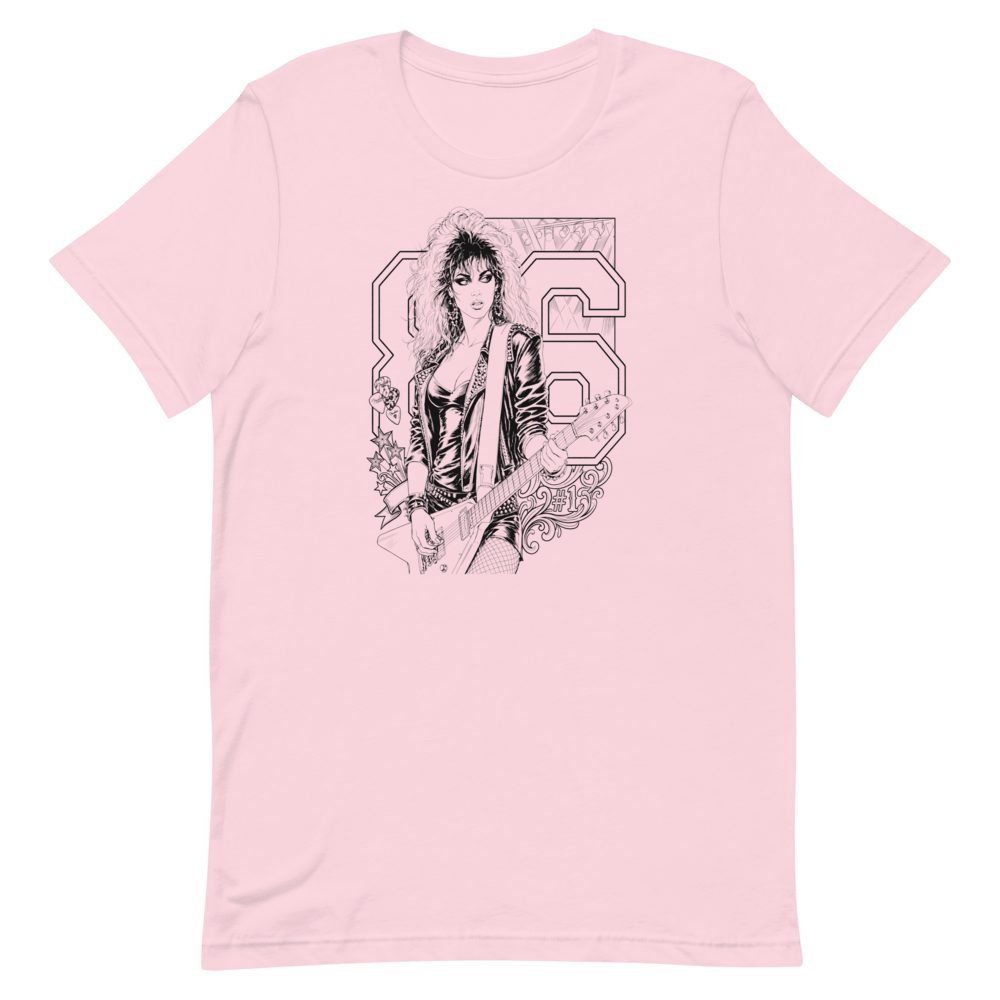
Susanna Hoffs Bedroom Eyes Fan Art T-Shirt | 1986 Tribute
Price range: $24.99 through $26.99
Shop this designFinal thoughts
A 90s nostalgia gift for him fails for a boring, fixable reason: it’s usually a gift for the decade, forwarded to him because he happened to be alive for it. The fix isn’t a bigger budget or a better-curated list. It’s one specific, unadvertised detail about the actual person, deployed on purpose instead of a shelf-tag signifier deployed at scale. He’ll know the difference in about half a second. That half-second is the entire point of giving a gift like this in the first place.
It also isn’t a one-time trick you use once and retire. The same test — could this go to any guy his age, or only to him — works on every gift after this one too, nostalgia-themed or not. Most gifts that land do it for the same underlying reason: someone paid attention to a detail that wasn’t on any list. The 90s just happens to be the decade where the detail is easiest to find, if you’re willing to look past the shelf tag.
Reply and tell me your era
No hashtag salad, no fake urgency. Just the next one of these, straight to your inbox, whenever there’s a next one worth sending.