Search for the 90s mall and you get the stores. A list of twenty that closed. A gallery of forty-four photos. A thrift guide to which labels are worth digging for now. And a few thousand comments from people who were eleven at the time, who would like everyone to know they still miss the pretzel place. All fair. Those people were customers.
A lot of us weren’t. In the 80s the mall was where we got dropped off. By the 90s mall we had a badge, a schedule taped to the stockroom door, and a key to a hallway most shoppers never knew was there. Same building. Same fountain. Different door.
So this is the 90s mall from that side: who was in the building before ten, what the stores actually were once you’d worked in one, how the food court really ran, what December did to people, and the Friday night a mall in Minnesota decided it had seen enough of the kids we used to be.
The 90s mall from the back hallway

Every mall has two floor plans. One is on the directory, with the red dot. The other is behind it.
Behind every row of storefronts runs a service corridor: painted cinder block, a concrete floor stained by years of hand trucks, fluorescent tubes, and a plain steel door into the back of every store. Freight came in that way and trash went out. It’s where the fire exits actually led. A customer might see it once, by accident, hunting for a restroom down a hallway they weren’t sure they were allowed in. We used it twice a shift and on every break.
It changed what the building was. From the concourse, a mall is a continuous illusion: one long, bright, seventy-degree street with no loading docks and no dumpsters. From the corridor, it’s a row of boxes with the backs left open. Every box had the same flattened cardboard leaning against the same wall, and the same assistant manager taking a smoke break by the same door. Once you’d seen it you couldn’t entirely unsee it. The fountain still worked on you. Just less.
Then there was the morning. The 90s mall before ten o’clock was a different building, and the only other people in it were walking laps. Malls opened their doors early for the mall walkers, mostly retirees in matching warm-up suits doing measured circuits past stores that hadn’t raised their gates yet. They had routes. They had paces. Some of them had been at it long enough to know which store always opened late, and they were right about all of them. You waved at them the way you’d wave at a neighbor, because by then that’s more or less what they were. They were the only people in the building who never bought anything and whom nobody minded.
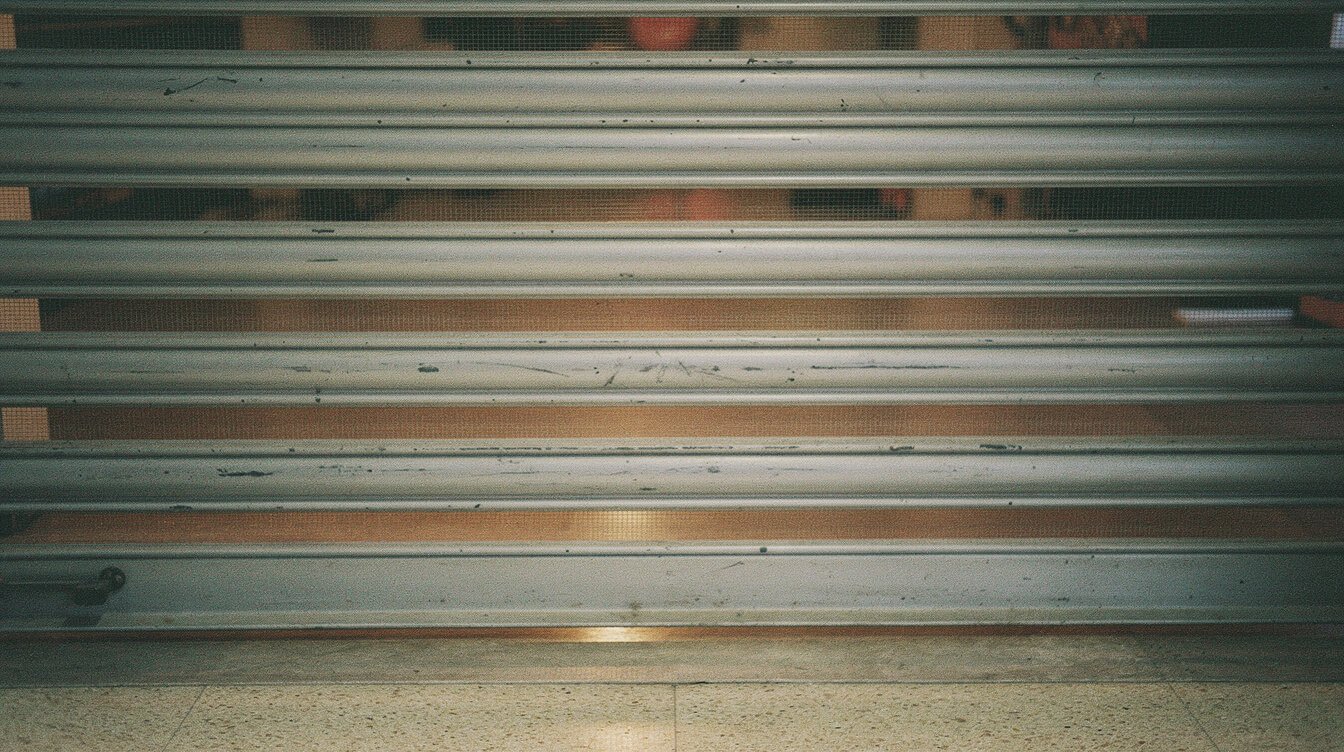
Raising the gate was its own small ceremony. A key in a slot near the floor, a switch or a hand crank, and twenty feet of rattling metal slats rolling up into the ceiling with a noise you could hear three stores down. By 9:58 the whole concourse sounded like a freight yard. At ten the music came on overhead, and the building pretended nobody had been in it all night.
Here’s the number that explains the decade. By 1990, according to surveys the Richmond Fed later summarized, the average American’s time inside a mall had dropped from about twelve hours a month in 1980 to four. Customers had stopped lingering. Shopping had turned into an errand. The people still logging serious hours at the mall were, increasingly, the people on the payroll. We did twelve hours by Wednesday.
The stores, for people who don’t need the names

Every list on page one is a list of names. We’ll skip those. You don’t need them, and the names were always the least interesting thing about the stores anyway. Here’s what they were from behind the register.
The music store
The CD came in a cardboard longbox about a foot tall. That was partly so it would fit in the old record bins, and partly so it was hard to slip into a jacket. If you worked the music store you tore open hundreds of them a week and carried the cardboard down the back hallway in armloads. The longbox was phased out on April 1, 1993. The shoplifting problem didn’t go anywhere. It moved from the packaging to you: plastic keepers, magnetic tags, and a door alarm that went off for every third customer, none of whom had taken anything. You learned the apologetic wave. You used it daily.
The poster cart
For about two years, the most crowded spot in the 90s mall was a cart selling posters that looked like static: a dense field of repeating color that turned into a dolphin or a space shuttle if you let your eyes go slack. At the peak they went for around twenty-five dollars at the kiosks. Whoever worked the cart spent eight hours a day watching grown adults stand eighteen inches from a poster, back up very slowly, and either gasp or lie. Somebody always insisted it was a sailboat. By 1995 the same kind of poster was under five dollars at a department store, and the cart had moved on to selling something else.
The cart itself
The cart had a proper name, and it wasn’t “cart.” The industry called it an RMU, a retail merchandising unit. The wheels weren’t there so it could move. They kept it on the right side of leases that banned fixed “kiosks” and of fire codes that wanted more space between permanent units. Nobody ever moved one. Over the decade, the carts did airbrushed shirts with your name over a sunset, your name on a grain of rice, hair clips by the hundred, sunglasses, and pagers, and then, a few years later, phones.
The studio with the feather boas
One opened in Oklahoma City in 1988 and took off when it got to Dallas. By the mid-90s the chain had roughly 380 locations and about six thousand employees, one of whom was probably your friend’s older sister. Around thirty dollars bought hair, makeup, a rack of sequined wraps and off-the-shoulder tops, and a soft-focus portrait with your chin resting on your fist. The customer walked out looking like a photo of someone else. The staff knew exactly how much hairspray that took, and they went home smelling of it.
The rest of the directory
The gadget store, where the massage chair and the plasma globe did all the selling and the staff did all the wiping of fingerprints. The candle store, where the employees lost their sense of smell sometime in the second week. The bookstore chain with the bargain table up front. The calendar store that didn’t exist in October and was gone again by February. The shoe store with the little stool. You know which ones. That’s the point.
The employee economy ran on the food court
Every 90s mall had two economies. One was on the receipts. The other ran on discounts, and it was the one we actually lived in.
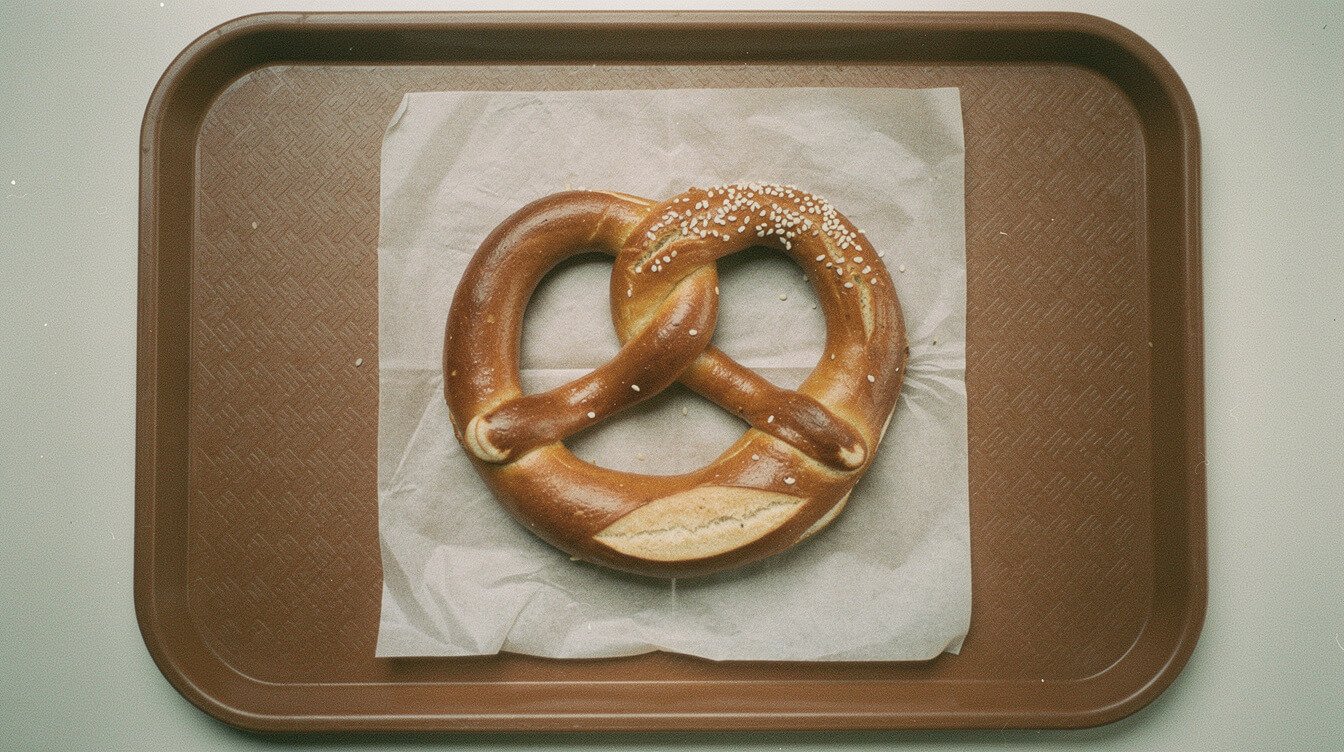
Every store gave its staff a cut on its own merchandise. The trick was converting that cut into things you actually wanted, which meant trading across the concourse. The pretzel stand gave the music store a free drink. The music store took a little extra off for the pretzel stand. The shoe store got fries. Nobody wrote any of it down, most of it was against at least one corporate handbook, and all of it ran anyway, because everyone at the mall under twenty-five was doing it and the managers had done it themselves three years earlier.
The food court at shift change was the real break room. You could tell which store anyone worked for from across the tables, by the shirt alone, which is a whole separate subject we’ve covered in 90s nostalgia fashion. A fifteen-minute break was exactly long enough to walk from the far wing to the food court and back if you didn’t stop to talk to anyone. You always stopped to talk to someone.
The 90s mall was, functionally, one big office with a hundred and fifty employers and no HR department. Gossip moved faster than the overhead pages. One clothing chain even printed its staff a glossary of the customers’ slang, which we dug into in 90s slang. Who was quitting, who was hiring, who’d been caught doing what in the stockroom: all of it crossed the building by lunch. That was also how you changed jobs. The application was a single sheet, the interview took eight minutes, and you could give notice at the music store at noon and be folding sweaters across the concourse by the following week. Plenty of people worked four stores in four years without ever changing their parking spot.
The security guard got a promotion too, in a sense. In 1986 he’d told you to move along. In 1994 he was a guy you knew by first name who walked you to your car at 9:30 while you carried the night deposit bag, and he still didn’t have any real authority, and neither of you brought it up.
Then there was the bag check. At close, the manager stood at the gate and looked through your bag before you left. Your own bag. The one you’d brought from home, containing a paperback, a hairbrush, and a cassette you’d bought somewhere else with your own money. Everyone submitted to it. Nobody took it personally. It was simply the toll for walking out the front instead of the back, and a lot of us walked out the back.
If this is starting to sound less like nostalgia and more like a job, that’s correct. It was a job. It was also, for a few years, the best social life a lot of us ever had: same people, same hours, no one over thirty in sight after six, and the whole building to ourselves once the gates came down.
December at the 90s mall was a tour of duty

The schedule for the last week of November went up in October, and it had one word written across the top in marker. You know the word. From Thanksgiving to New Year’s, nobody got a day off, nobody got a weekend, and nobody’s grandmother was allowed to be sick.
The Friday after Thanksgiving opened before sunrise. You parked in the employee lot, which was always the far one, in the dark, and walked past a line of shoppers who had been there longer than you had and were in much worse moods. By the second week of December the 90s mall ran extended hours, and you could tell the time by which song was on overhead. The store’s holiday tape ran about forty minutes. By December 10th everyone on staff knew it by heart and could tell you exactly how far it was until the one they hated.
Every store hired seasonal help in November. Five new people in matching shirts, trained in an afternoon, gone by January 10th. You learned their names around the 18th, which was efficient, since that’s when you needed them most and right before they disappeared. Nobody got attached. Some of them came back the next year anyway, and you were genuinely glad to see them, which surprised everyone involved.
Then there was the gift wrap. Some stores wrapped for free in December, which sounds generous until you’re the one doing it. You learned to wrap a shirt box in under a minute, with tape already stuck to the back of your fingers. You learned exactly how much paper a box needs, and you learned it because the roll was running out. You learned the curled-ribbon move with the scissors blade, and you did it so many times that you still do it today, automatically, on other people’s presents, while they watch you like you’re performing surgery.
And the twenty-sixth was worse than the twenty-fourth. Everyone who had panic-bought on Christmas Eve came back with the receipt, or without it, and the return line ran into the next store. You processed sweaters in sizes nobody wore and gifts that had clearly been opened, used, and regretted, and you smiled through all of it, because the alternative was a conversation with the manager. That run of days is the part of the job we still think about every time somebody asks us to “just pop it back to the store.” It’s also roughly why everything in our shop is meant for wearing on your day off, the kind December never had.
If you ever ran a register in December you already know how a lot of the decade’s holiday movies look from the side where the mall is a job, which we got into in 90s christmas movies. The fantasy holds up better from the couch.
The newsletter
Like a mixtape, but it shows up on its own
One email a week. The good posts, new designs, zero exclamation points. Unsubscribe whenever. We won't take it personally.
Six o’clock, Friday: the 90s mall rule written for the kids we’d been
In August 1992 the biggest mall in the country opened in a Minneapolis suburb, on the site of an old ballpark. Four levels, more than four hundred shops at opening, and an amusement park in the middle. The architects behind that generation of megamalls had argued that extra levels gave teenagers somewhere to gather, tucked away from the people who’d come to shop. That was the theory.
Four years later, the same building was counting two to three thousand teenagers on Friday and Saturday evenings. On October 4, 1996, it posted guards at all twenty-three entrances. After 6 p.m. on Fridays and Saturdays, nobody under sixteen got in without an adult twenty-one or older, and one adult could escort up to ten. Security swept the halls after six asking for ID from kids who’d come in before the cutoff. The policy was modeled on one at a mall in Asheville, North Carolina. Civil liberties lawyers objected loudly, and it became the first mall curfew the whole country heard about. Other malls followed. Some of them issued badges to working minors so the guards could tell the staff from the problem.
Now read that from where we were standing.
Ten years earlier, we had been the problem these rules were invented for: the unsupervised kids who treated a leased commercial building as a town square, which is the whole story of the 80s mall. By 1996 a lot of us were on the other side of the counter, twenty-four years old, watching a fifteen-year-old get turned around at the entrance by a guard. Meanwhile the fifteen-year-old who worked the cookie counter wore a badge so nobody would mistake them for a customer.
We had no strong feelings about it. That’s not true. We had exactly the feelings you’d expect: some sympathy, a lot of déjà vu, and a quiet, private relief that it was no longer our problem. The store got noticeably calmer after six. The manager said the numbers were down. Somebody pointed out that the kids hadn’t been buying anything anyway, which was also true in 1986, and nobody back then had thought it needed fixing.
The rule was really written for us, just a decade late. By the time the building got around to posting guards, the kids it was aimed at were already inside, on the clock, and holding the keys.
Off the clock.
For whoever pulled the gate at nine and was out the back hallway by 9:12. Nothing to ring up, nothing to fold, no bag check at the door.
90s mall questions, answered from behind the counter
What were malls like in the 90s?
Bigger, louder, and busier with staff than with shoppers. The 90s mall was the enclosed mall at its peak count, with a food court, a multiplex at one end, a ring of carts down the middle of every concourse, and two or three department stores holding the corners. Customers were spending far less time there than in the 80s, about four hours a month by 1990 compared with twelve in 1980. The teenagers who’d made the 80s mall feel alive had grown up, and a lot of them were now working the registers.
What stores were in a 90s mall?
A music store selling CDs and cassettes, a bookstore chain, a shoe store or three, teen clothing chains, a department store at each end, a gadget store with massage chairs, a candle store, a glamour portrait studio, a seasonal calendar store, a video game store, and a food court with pretzels, cinnamon rolls, and orange chicken on toothpicks. Then the carts: airbrushed shirts, sunglasses, hair accessories, 3D posters, pagers, and later phones.
When did malls start banning teenagers?
Some malls had curfews in the 80s, but the first one the whole country heard about was a parental escort policy that took effect on October 4, 1996, at the largest mall in the US, in Minnesota. After 6 p.m. on Fridays and Saturdays, anyone under sixteen needed an adult twenty-one or older. Many malls copied it in the years that followed.
What happened to CD longboxes?
The tall cardboard boxes CDs came in were phased out as of April 1, 1993. They’d existed so stores could use their old record bins and so the discs were harder to shoplift. Environmental complaints about the wasted cardboard finished them off, and stores switched to bins sized for the plastic case.
What is a mall cart called?
In the industry, an RMU, short for retail merchandising unit. The wheels were mainly there to satisfy leases that banned fixed kiosks and fire codes that wanted room between permanent fixtures, not because anyone planned to move it.
Why did so many 90s malls close?
The same math that built them stopped working. We traced how that started, all the way back to a tax change in 1954, in our piece on the 80s mall. The short version: the enclosed mall peaked in the early 90s, and it’s been closing ever since.

From the shop
Huey Lewis I Wanna New Drug Fan Art T-Shirt
Price range: $24.99 through $26.99
Shop this designFinal thoughts: somebody had to pull the gate
At nine o’clock the overhead music cut out mid-song, which is the most 90s mall sound there is, and the building took a breath. There was always one last customer at 8:58 who needed to try something on. Then you pulled the gate down most of the way, so it said “closed” without saying “go away,” and counted the drawer. Then you counted it again, because it was off by a dollar, and then it wasn’t.
Then the walk out. Down the back hallway, past the same cardboard leaning against the same wall, and out through a steel door into the far lot, where the car was cold and the radio came on mid-song too.
The stores on the lists are mostly gone, and the lists do a fine job remembering them. What they leave out is the part only we saw: the mall at 9:40 a.m. with the walkers doing laps, the trade at the pretzel counter, the forty-minute holiday tape, and the 1996 rule that finally arrived for the kids we’d already stopped being. We were the last generation to know the building from both sides, the fountain at fourteen and the gate at twenty-two.
Nobody had to drop us off anymore. We drove ourselves. We just parked in the far lot.
Before you go
You made it to the end. Respect.
Get the best of these in one short weekly email, plus whatever we just printed. No spam. We were raised better than that. Mostly.