Nobody handed you a manual. You got a key on a shoestring, a Post-it on the counter, and a house that made a sound at 4pm you’d recognize blindfolded thirty years later. That’s the whole latchkey kid shirt pitch, and somehow every shirt selling it gets that part wrong.
Go look. The current crop — the marketplace grids, the big listings, the printed-word-on-a-blank approach — all did the same thing. They printed the word “latchkey.” Some of them even printed the definition, like a vocabulary quiz you didn’t ask for. That’s not a design. That’s a label on a box nobody opened.
We opened the box.
This isn’t a nostalgia piece in the misty, string-quartet sense. Nobody’s asking for a moment of silence. This is closer to a field report — the specific mechanics of a childhood that ran on a level of self-sufficiency nobody currently markets to, filed by people who lived it, for people who’ll recognize every detail without needing the caption underneath.
Three shirts, one mistake: they all say the word
Here’s the thing about a good inside joke: the word is the least important part. Say “latchkey kid” to someone who was one, and you don’t get a definition — you get a very specific look. A half-smile, maybe a small exhale through the nose. That look is the entire product. The word is just how you find the person who has it.
So it’s a little baffling that the entire first page of search results for this exact phrase is just — the word. Printed bigger. Printed with a skull and crossed keys. Printed in a slightly different font so it can be a “different” listing. One popular listing actually spells out the term in its own product description, like a museum placard next to a childhood. That’s the cardinal sin. If you have to caption the joke, you’ve already lost the room you were trying to talk to.
We’re not going to do that here. If you already know, you know. This is just us describing the thing you know, out loud, so you can see we know it too.
It’s worth saying why this keeps happening, because it’s not a one-off. Whoever’s designing these shirts is working backward from the search term instead of forward from the memory. They typed “latchkey kid” into a query box, got a hit, and slapped the query directly onto a blank. That’s keyword stuffing with a heat press. It’ll rank. It won’t land. There’s a difference between a shirt that shows up when you search for the phrase and a shirt that makes the person who already lived it stop scrolling — and every result on that first page picked the former.
The key on the shoestring, and where you kept it at recess

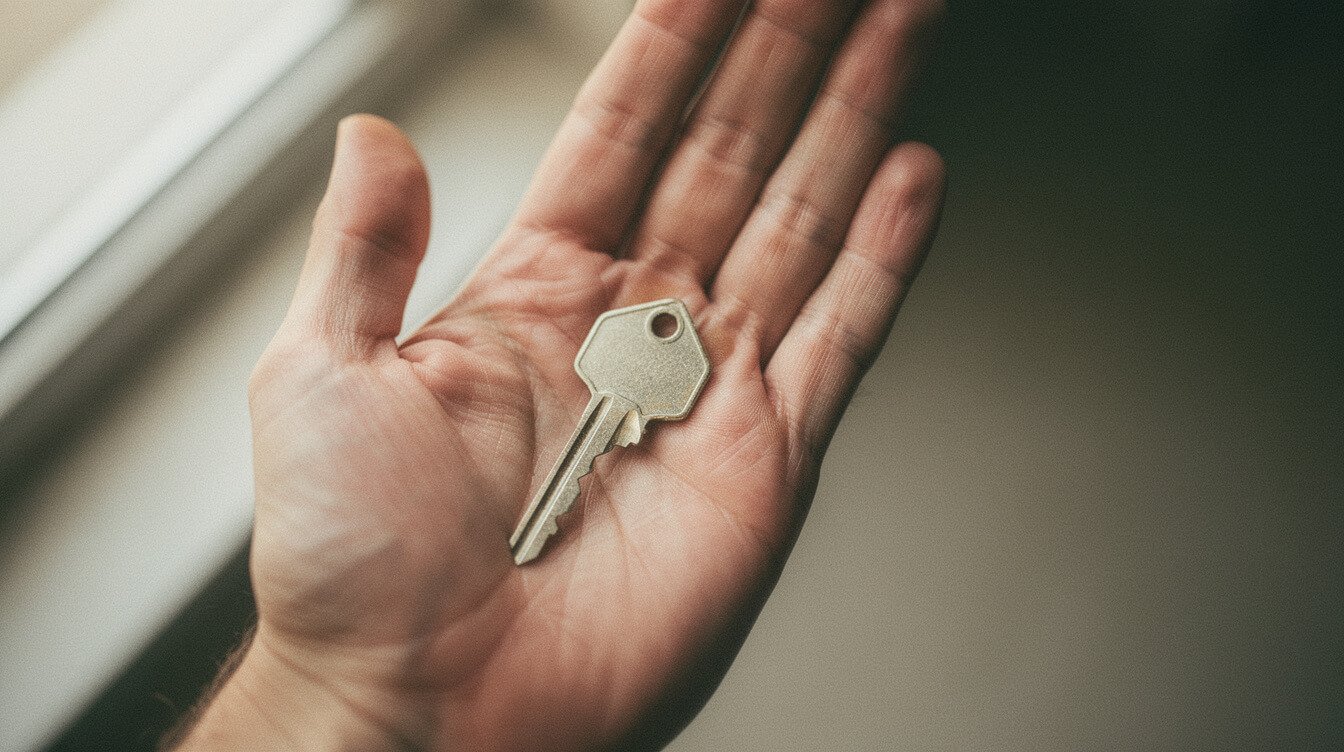
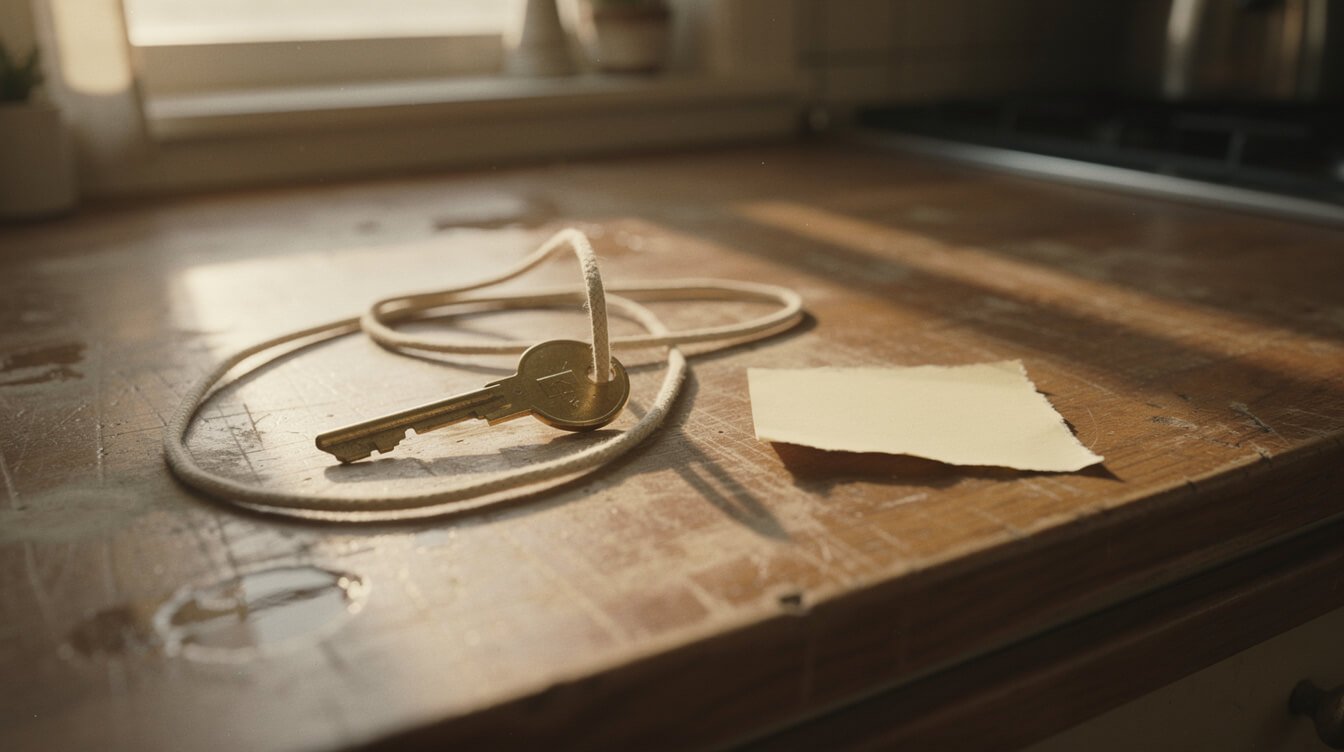
The key itself was a whole logistics problem nobody warned you about. Shoestring around the neck, tucked under the collar so it didn’t clink when you ran. Or looped through a belt loop. Or — for the truly disorganized — loose in the bottom of a backpack, rattling around with a calculator and a single, ancient stick of gum.
The real crisis was recess. You couldn’t wear the key out in the open — that was basically a sign reading “unsupervised, please advise,” and even at nine you understood the optics were bad. So it came off. Tucked into a sneaker. Buried under a jacket at the coat hooks, memorized by exact peg location. Handed, on the honor system, to whichever friend had a mom who picked her up and could drop it back at the fence before the bell. The amount of operational planning a nine-year-old put into hiding a house key rivals a mid-level heist, and nobody ever gave us credit for it.
You lost it exactly once. You remember the day. You remember exactly where you were standing when you realized, and the specific flavor of dread that has never fully left your body since — the math you did in your head about the spare under the mat that hadn’t been there since the one time a neighbor mentioned that everybody knows about the spare under the mat, and the slow walk to a friend’s house to wait it out, rehearsing the explanation the entire way.
Some kids had a backup plan. A neighbor with a standing key, a grandmother two blocks over, a garage code you weren’t supposed to give out but did, once, to someone you shouldn’t have. Most kids didn’t have a backup plan, which is its own kind of character-building nobody put on a pamphlet. You just got extremely careful, extremely fast, in the specific way an entire generation got extremely careful about a specific set of small, private catastrophes that never once made it into a permission slip home.
3:15 to 6:00, and what the house sounded like
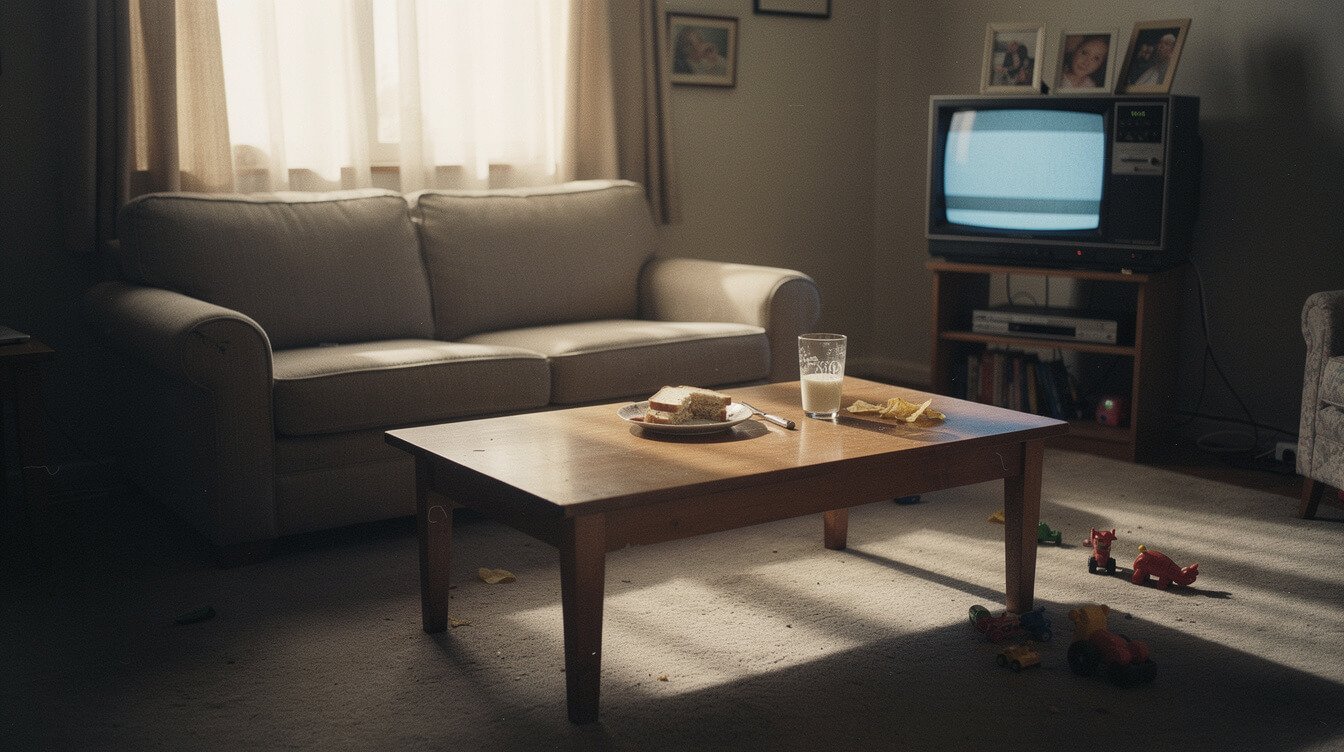
The bus dropped you at 3:15. The nearest adult clocked out somewhere between 5:30 and 6:00. In between was a window of time that, depending on the day, was either the best two hours of your life or a slow-motion horror movie you narrated to yourself, out loud, just to hear a voice.
An empty house has a sound. Not silence — silence would’ve been easier. It’s the refrigerator kicking on like it’s clearing its throat. The specific creak that is definitely just the house settling, ninety-eight percent of the time. The furnace or the AC cycling with a thunk that meant nothing until the one time, years later, you heard the exact same thunk in someone else’s house and your whole nervous system briefly relocated to 1987.
You developed a routine, because routine was armor. TV on immediately, not for the show, just for the noise of other humans existing. Snack assembled with the focus of a line cook — the components had to be exactly right, because there was no one to ask if this counted as “too close to dinner.” Homework maybe happened around 5:00, in a burst of guilt-driven productivity timed to whichever parent got home first. The nightly negotiation with yourself over whether tonight was a night you’d actually admit you were a little bit nervous, or a night you’d just say it was fine. It was, for the record, usually fine. You were extremely competent at fine.
You also developed a sixth sense for the difference between “the house is fine” sounds and “go check” sounds, and you were right more often than any nine-year-old had a reasonable claim to be. The garbage truck at the wrong time of day. A car idling a beat too long outside. The dog two doors down losing its mind at nothing, or at something — you never really knew which, and you checked the lock anyway, quietly, without making it a whole production, because making it a production would’ve meant admitting there was something to be a production about. You handled it. That was the job. Nobody clapped, and you didn’t need them to.
The rules: don’t answer the door, don’t tell anyone you’re home alone
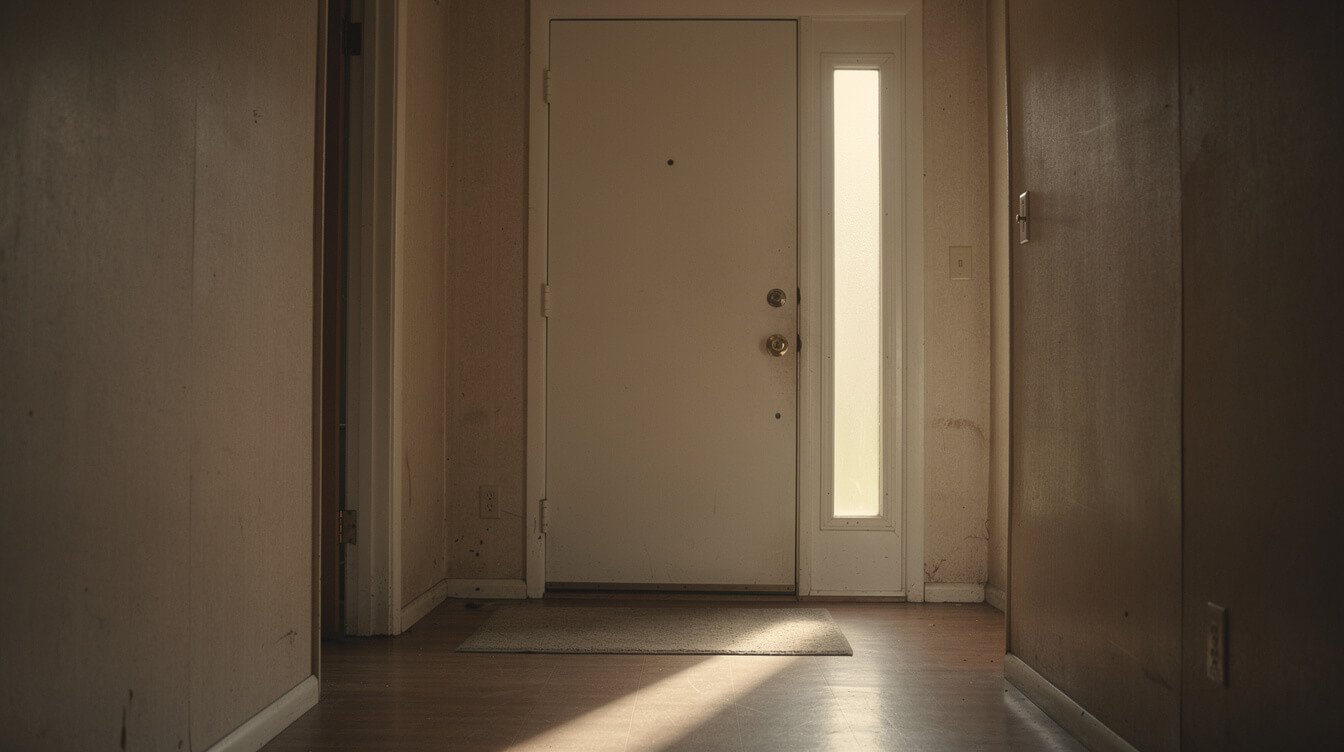
Every latchkey kid operated under the same unwritten legal code, passed down with zero formal training and total compliance. Don’t answer the door. If someone calls and asks for a parent, say they’re “in the shower” — a lie so universally deployed it should’ve been retired by international treaty. Do not, under any circumstances, tell a stranger, a classmate, or god forbid a teacher that you were home by yourself, because that information had consequences you understood instinctively even if nobody spelled them out.
You became fluent in a kind of low-grade espionage before you were tall enough for the top shelf. You knew which excuses held up and which ones invited follow-up questions. You knew how to sound like there was an adult two rooms away without technically lying, in the specific way that only a kid raising themselves learns to talk. It wasn’t fear, exactly — it was a job, and you were good at it, and nobody was ever going to give you a performance review, so you gave yourself one silently, every single day, and mostly you passed.
The doorbell was its own genre of dread. UPS trucks were fine — you could see the brown through the sidelight glass and just let it sit on the porch, no drama. It was the unmarked knock that got you: too rhythmic to be a package, too patient to be a kid selling something for a school fundraiser. You’d go still, actually still, the way you’d been taught to freeze when a teacher scanned the room for who wasn’t paying attention, and you’d wait it out until you heard footsteps leave the porch. You never once considered this dramatic. It was Tuesday.
There’s a specific shopping mall a few towns over from wherever you grew up that started looking a lot better around hour one of that window — read our breakdown of what the 80s mall actually was to a kid with nowhere else to be if you want the sequel to this story, because eventually the empty house lost its charm and the food court had air conditioning.
Ring twice, hang up, call back
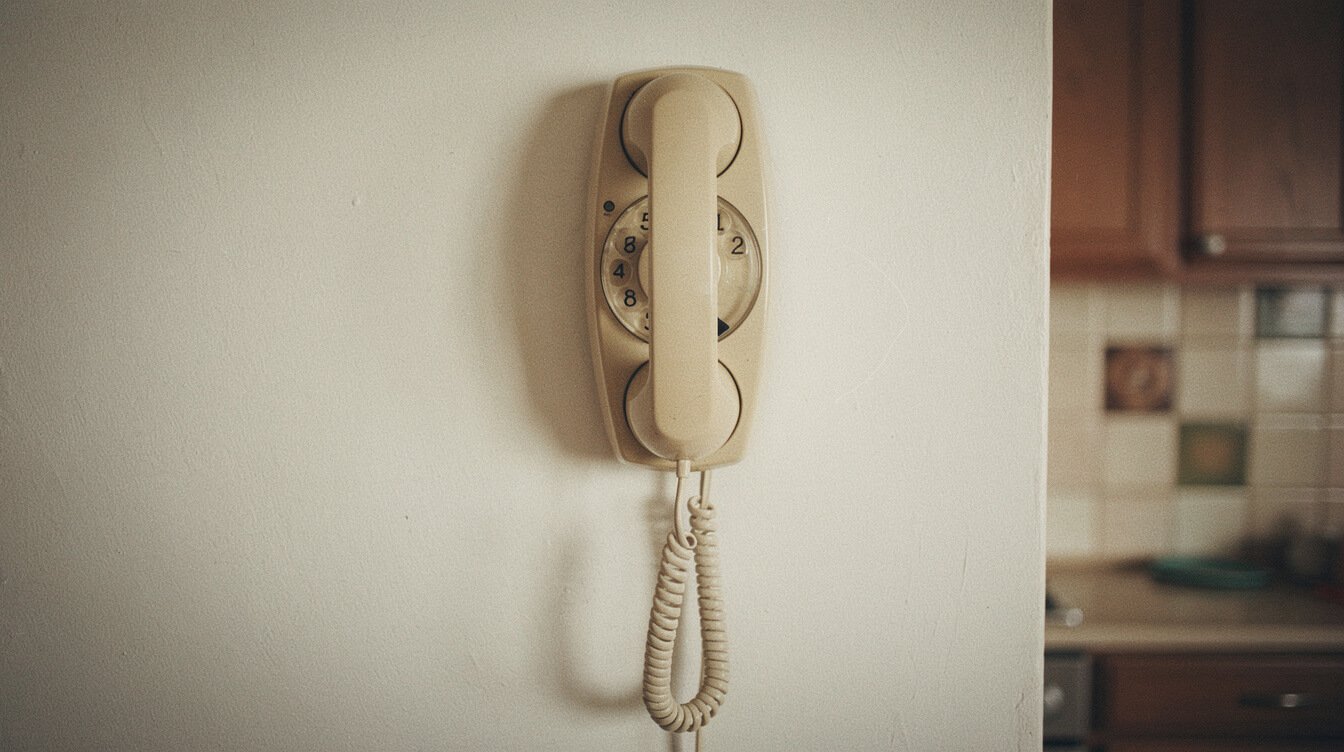
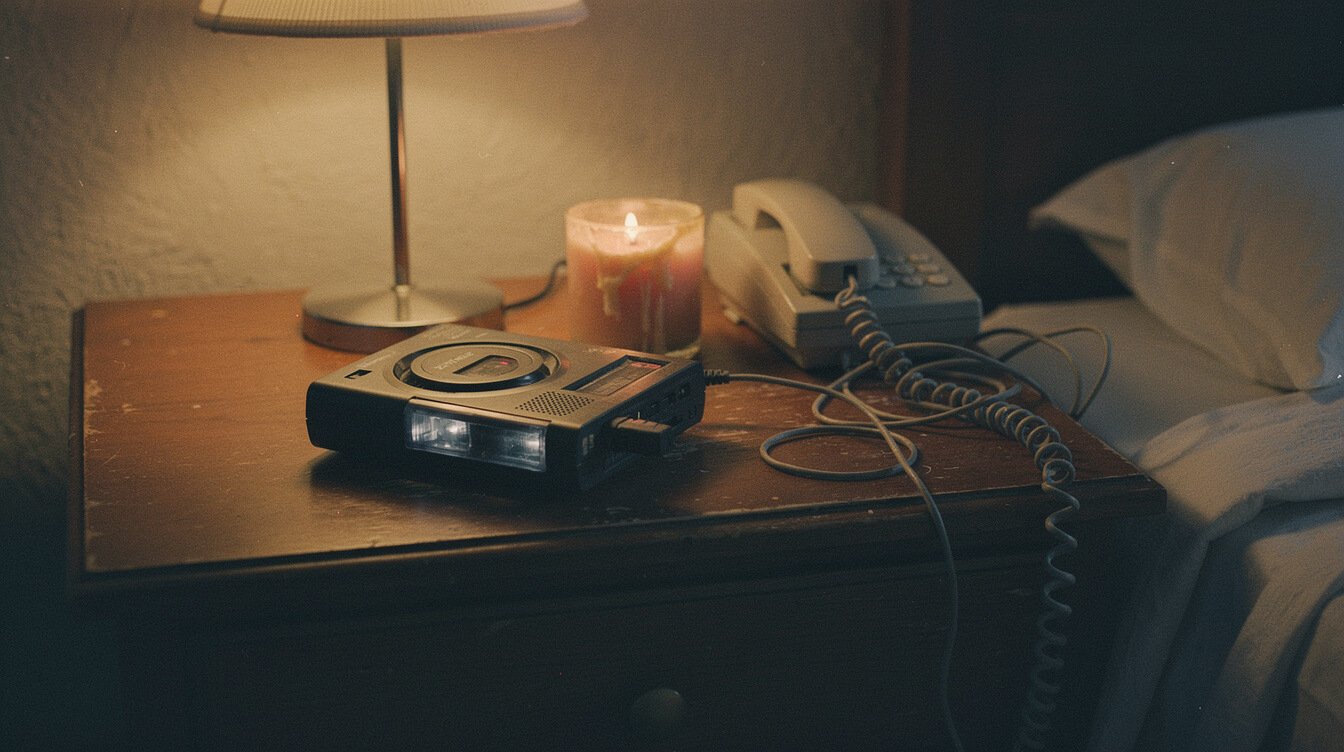
The phone protocol deserves its own paragraph because it was, genuinely, an encryption system built entirely out of trust and a rotary dial. Ring twice, hang up, call back — that was the signal. That’s how you knew it was safe to pick up, that it was Mom checking in from the break room phone or Dad calling collect from a payphone off the highway, and not some stranger who’d figured out the number.
You learned to let the phone ring itself out if the code wasn’t followed. You learned to recite the “we can’t come to the phone right now” line with the flat confidence of someone who had zero authority to be answering a phone in the first place. And when the right call finally came through — two rings, silence, and the phone ringing again — there was a specific relief in that sound that nothing about smartphones has ever managed to replicate. A landline ringing in an empty house is one of maybe three sounds from that decade that still means something the second you hear it.
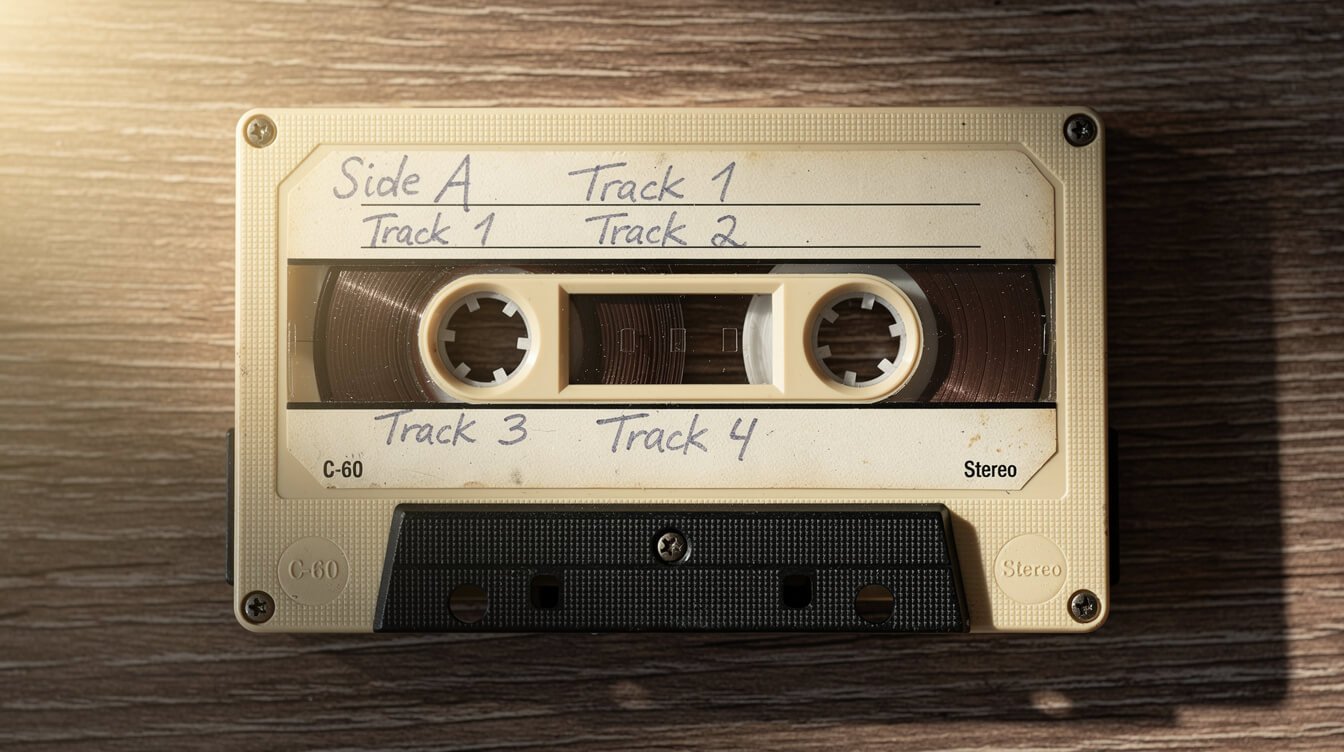
The cord mattered too, if you’re being precise about it — long enough to stretch from the kitchen wall into the hallway, so you could talk and pace at the same time, twisting the coil around one finger until it stopped uncoiling on its own and just stayed there, permanently kinked, the way a spring toy looks after a kid drags it down one too many staircases. You did homework with the receiver wedged between your shoulder and your ear, which is a posture your neck still remembers on a cellular level whenever you’re on hold for customer service now. There was no caller ID. There was no way to screen. There was only the code, and your own nerve. If you want a second sound from that same decade, we’ve got a whole piece on what the radio and a blank cassette were actually for during those hours, because eventually you stopped waiting by the phone and started making something instead.
Why the good version never introduces itself
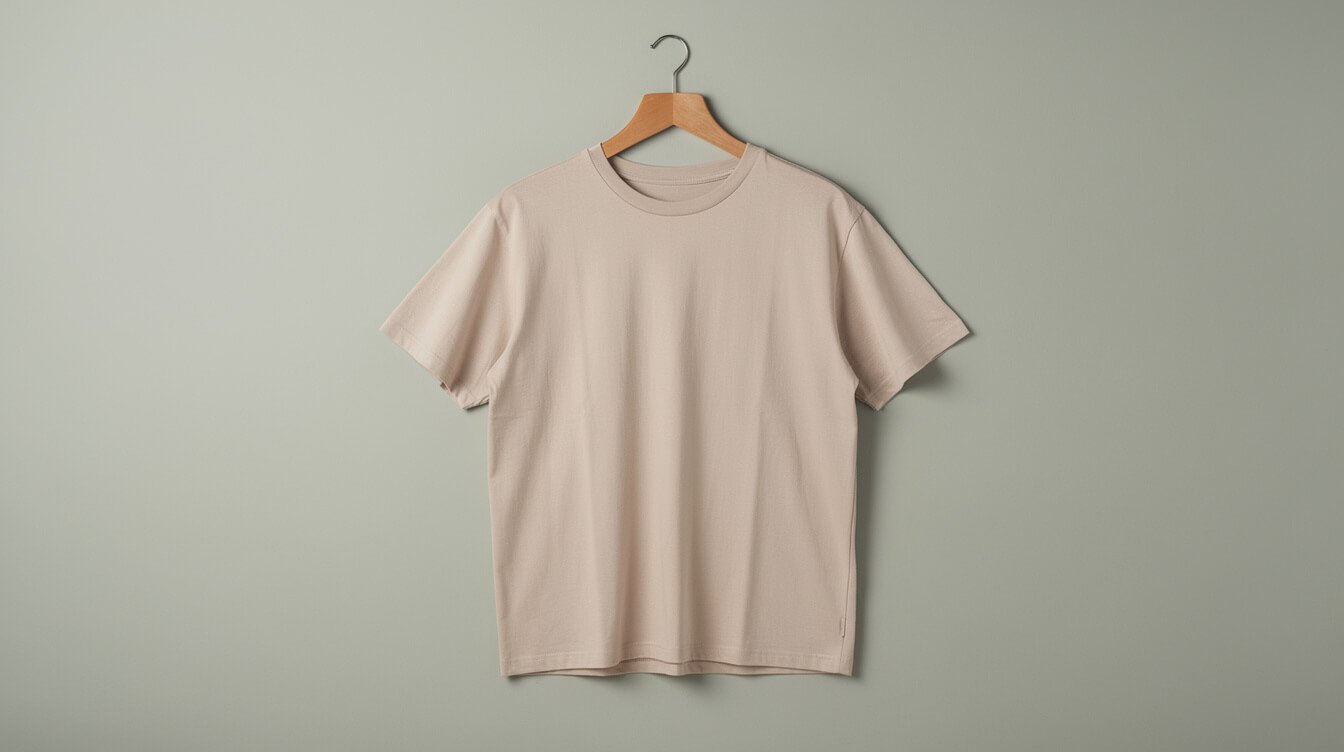
This is the part where we tell you why we built the shirt we built, and we’ll keep it short because we also hate a brand that explains itself for four paragraphs.
A design that says “latchkey kid” on it, in plain type, is a museum label. It’s fine. It’s also nothing — it’s a term paper cover page. The version that actually works never says the word at all. It’s a key on a shoestring. It’s a phone with two rings and a pause. It’s a porch light left on by a kid who set the timer himself because nobody else was going to. If you were one of us, you clocked it in under two seconds, and you didn’t need a caption to get there. That two-second recognition is the entire transaction — the shirt isn’t explaining the joke to you, it’s confirming you already had it.
That’s the whole design philosophy, honestly, not just for this shirt. If a piece needs a footnote to land, we scrap it and start over. We’d rather make the version that ninety percent of people walk past and the right ten percent stop cold for.
It’s the same instinct that keeps us from ever printing a price-tag joke, a “limited drop” countdown, or any of the other tricks that turn a real memory into a marketing funnel. The recognition has to do all the work on its own, in the two seconds it gets. If it needs a hashtag or an asterisk to close the sale, it’s not a design — it’s a pitch wearing a design’s clothes, and Gen X was the first generation raised specifically to spot the difference between the two before we could legally drive.
Shop the related design in the shop — no explanation printed on it, on purpose.
Shop the related design
No explanation printed on it. If you know, you know — the rest is just a blank until you do.
Not neglected. Unsupervised. There’s a difference.
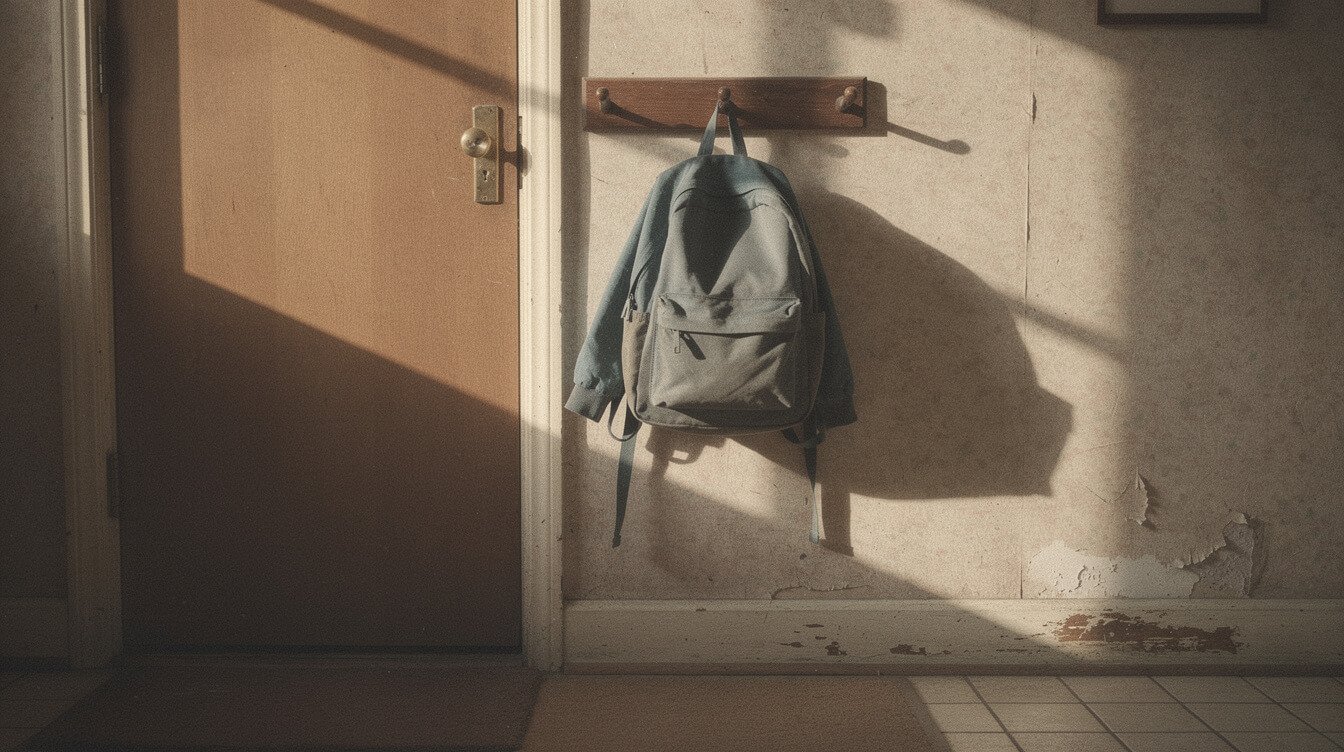
Here’s where a certain kind of article turns mournful, and we’re not going to do that either. Yes, it was a different time. Yes, a lot of us were genuinely alone for stretches of the day that would trigger a wellness check now. And also — most of us turned out fine, unreasonably competent at making a snack, working a phone, and reading a room, and not particularly interested in anyone’s pity about it.
Unsupervised isn’t the same word as neglected, and conflating them is its own small disrespect to a generation that figured out how to be alone in a house and came out the other side able to handle a lot more than the current discourse gives us credit for. We’re not asking anyone to feel bad for the kid with the key on the shoestring. That kid was fine. That kid is, statistically, reading this right now, mildly annoyed that anyone thought this needed explaining, and about to buy the shirt anyway because it’s the first one that didn’t.
Ask most of us and you’ll get some version of the same answer: it made you competent early, and competent early sticks. You can still walk into an empty house — your own house, decades later, key in an actual lock instead of on a shoestring — and clock in half a second whether something’s off. You still instinctively lower the volume on a phone call when no one else is home, out of a habit with no remaining function. None of that reads as trauma to the person who has it. It reads as a skill set, quietly earned on a schedule nobody asked you to keep, and it’s the reason the recognition lands the way it does — not pity, just a nod between people who know exactly what the other one is carrying, and don’t need it spelled out.
Quick answers
What makes a latchkey kid shirt actually good, instead of just a shirt with the word on it?
Restraint. The label isn’t the design — the detail is. A key on a shoestring, a porch light on a timer, two rings and a pause. If it needs the word printed in large type to work, it doesn’t work.
Is “latchkey kid” only an 80s thing?
The peak of it lines up with Gen X childhoods specifically — dual-income households becoming standard, before cell phones, before “unsupervised” became a word that triggered a phone call to someone official. It’s a very particular window, which is exactly why the people who lived it recognize each other so fast.
Why doesn’t this shirt just say “latchkey kid” on it?
Because you already know what it means. Printing it out would be explaining a joke to the one person in the room who already got it a paragraph ago.
Is this shirt making fun of kids who were left alone a lot?
No — it’s making fun of the shirts that got it wrong, and quietly saluting the kids who got very good, very fast, at fine.
What’s the difference between a “latchkey kid” shirt and a plain 80s nostalgia shirt?
A generic 80s shirt sells the decade in general — the colors, the logos, the vibe. A latchkey design sells one very specific afternoon, repeated for years, that only a subset of that decade’s kids actually lived. It’s a narrower joke on purpose, which is exactly why it hits harder for the people it’s actually for.
Read another / subscribe
One good link, no throwback clip-art. Reply and tell us your era.