Here is a number that should bother you slightly more than it does. The 1980s lasted ten years. 80s nostalgia has lasted at least thirty-three, and nobody involved has given any sign of wrapping it up. By the early 90s, trend researchers were already reporting a revival of a decade that had barely finished. A Washington paper ran a story in the summer of 1994 calling it “that bygone decade.” Bygone. It had been gone for four and a half years. Some of us still had the same sneakers.
So this isn’t another list of things you’ll remember. You remember them. This is about the stranger thing: how a decade gets remembered for three times longer than it ran, what happens to it each time somebody new picks it up, and why the version of the 80s currently for sale sounds a little like a cassette that’s been copied one too many times. If you ever made a dub of a dub, you already know where this is going.
80s nostalgia has now outlasted the 80s
Start with the timeline, because it’s funnier than it has any right to be. In September of 1993, a newspaper in Georgia ran a piece under the headline “Nostalgia’s sinister acceleration.” The complaint was simple: the usual rule said you waited about twenty years before getting misty about a decade, and here were people getting misty about one that had ended in 1989. Less than a year later, a reporter walked into a dance club in Washington, D.C., on a Thursday night and found two hundred people in skinny ties and spiked hair, singing along to mid-decade hits under black lights. The reporter’s own description of the room: a snapshot straight out of a 1984 annual. Except it was 1994.
That’s the first strange fact about 80s nostalgia. It didn’t wait. The second strange fact is that it didn’t stop. Writers kept predicting the end of it on schedule. If the twenty-year cycle held, the revival should have wound down around 2010, when the 2000s finished spending an entire decade dressing up as the 1980s. A music critic wrote a whole column that year asking whether the endless 80s revival had finally run its course. It hadn’t. By 2016, the people who track this stuff were saying, more or less, “never mind, the cycle doesn’t apply.” On the last day of 2025, a headline put it flatly: the obsession with 80s nostalgia never will end.
Do the math on your own life and it gets personal. If you were born in 1970, you spent roughly ten years living in the 80s, mostly from about four feet off the ground. You have now spent more than three decades living next to 80s nostalgia: in movies, on radio stations, at the mall, and eventually in your own feed. The remembering has run longer than the original by a factor of three. At this point the decade is less a period of time than a permanent fixture, like the drop ceiling in your parents’ basement. Nobody installed it on purpose, and nobody’s taking it down.
That alone would be a decent bar fact. But the duration isn’t really the interesting part. The interesting part is what happens to a decade when it gets remembered that many times, by that many people, over that many years. Because each of those people isn’t copying the 80s. They’re copying the last person who remembered them.
The 80s were already nostalgic for somebody else

Before getting smug about it, an admission. The 80s were not innocent here. The decade we keep reviving spent a good part of itself reviving somebody else.
A music critic once laid out the pattern in one line: every decade seems to have its retro twin. The 70s revived the 50s. The 80s were obsessed with the 60s. The 90s did the 70s, and the 2000s did us. It’s a relay race where every runner is facing backward. If you grew up in the 80s, you grew up surrounded by somebody else’s yesterday. A sitcom set in the 1950s ran on network television from 1974 right up to 1984, which means a lot of us met the Eisenhower years as a laugh track before we ever met them in a history book. Oldies stations played your parents’ high school dances in the car. Diners went chrome and checkerboard, as if the jukebox era were something worth going back to.
And then there’s the movie. You know the one. The biggest film of 1985 sent a teenager thirty years back to 1955, and four years later the sequel sent him thirty years forward, into a future where a café themed entirely on the 1980s waited for him, complete with video-screen waiters. That sequel came out in November 1989, which means the 80s had written the script for their own nostalgia before the decade was technically over. They even predicted the gap, thirty years. They were just early. The real 80s café showed up in about four.
There’s a lesson in that, and it isn’t “everything is a cycle.” It’s that the 80s we remember were already layered. The decade was wearing a 50s jacket over a 60s shirt while it was happening. So when someone in 1994 put on skinny ties to “do the 80s,” they weren’t copying a pure original. They were copying a decade that was itself mostly a remix. That’s where the tape trouble starts.
A dub of a dub: how every 80s nostalgia revival copies the last one
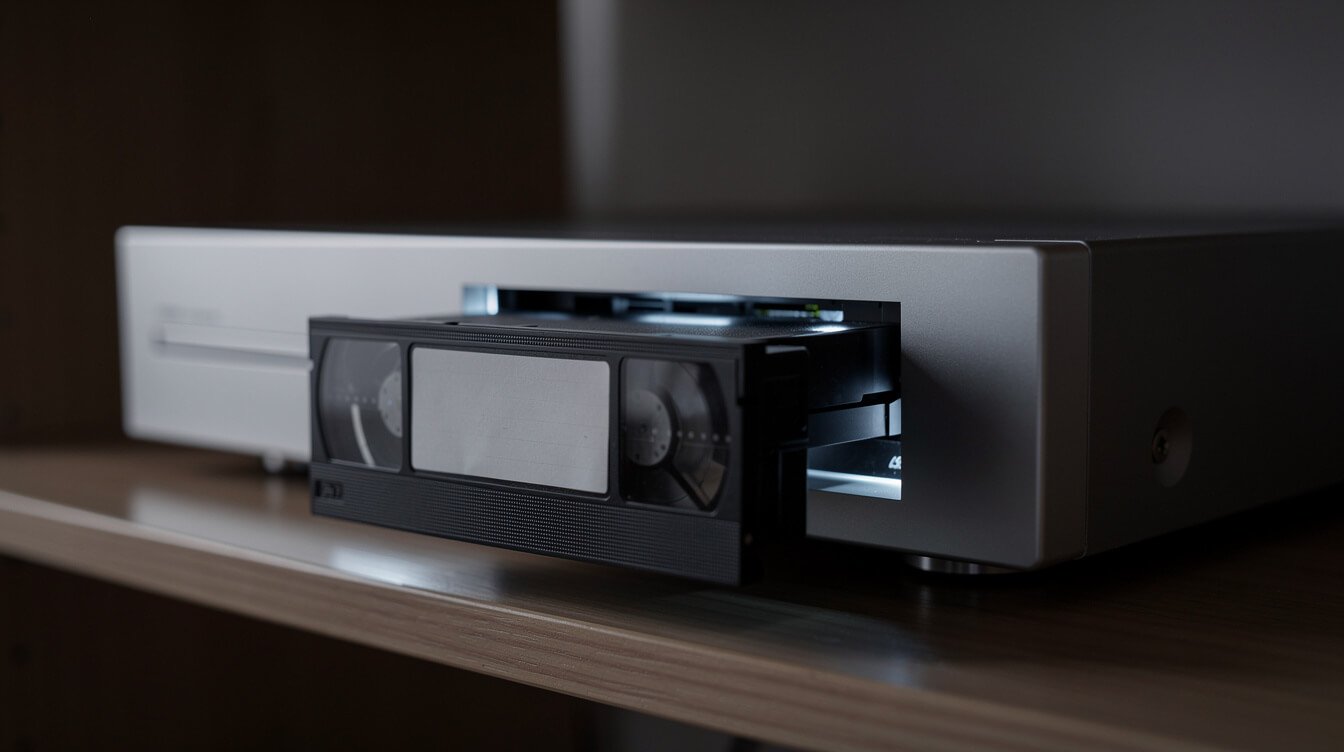
If you ever owned a dual-cassette deck, you understand generational loss without needing anyone to explain it. You’d copy a tape for a friend. They’d copy it for someone else. By the third or fourth trip through somebody’s deck, the high end was gone, the hiss had moved in and put its feet up, and the song had become a sort of muffled rumor of itself. You could still tell what it was. You just couldn’t hear the cymbals anymore. Everyone in America knew someone who owned a fourth-generation copy of an album and didn’t know it was supposed to sound better than that.
80s nostalgia works exactly the same way, and you can trace the generations if you squint.
First generation: the early 90s
The people in that 1994 dance club were mostly copying from memory. Some of them still owned the original ties. This is the closest copy to the master: a little exaggerated, but recognizably the same recording, made by people who’d been in the room.
Second generation: the late 90s and early 2000s
By 1997 and 1998, Hollywood was making movies about the 80s, starting with a comedy about a ten-year reunion for the class of ’87 and another about a wedding singer marooned in 1985. Here, the copy started treating the decade as a joke. Big hair as a punchline, the synth as a sight gag. Then came the cable countdown shows of 2002, where a rotating panel of comedians reminisced about your childhood in one-liners. A tape made from that copy picked up a new kind of hiss: irony.
Third generation: the mid-2000s
This one gets forgotten. In 2005, a major newspaper ran a piece headlined, in full, “We Hate the 80’s.” For a stretch, the decade was officially embarrassing. That matters, because the next copy got made by people who had to rescue the 80s from embarrassment, and rescuers always overcorrect.
Fourth generation: the 2010s
By 2016, the same newspaper was calling it “the formerly irredeemable ’80s.” A wave of shows and films set in 1983, 1984, and 1986 arrived, made with real love and enormous budgets by people who were children at the time, or not born yet, working from movies that were themselves the second- and third-generation copies. Music genres that never existed in the 80s, built entirely out of the idea of the 80s, picked up names and fan bases. The decade came back glossier than it left.
Fifth generation: now
In 2022, a streaming service announced that Gen Z was more nostalgic for the 1980s than for any other decade. Gen Z was born after 1996. They’re not doing anything wrong. They’re doing exactly what we did with the 50s: copying from the copy they were handed. The tape they’re dubbing just happens to have been through four decks already.
Run that sequence back and the thing becomes obvious. Nobody making 80s nostalgia today is copying the 80s. They’re copying the 2016 version, which copied the 2002 version, which copied the 1998 version, which copied the guys in the skinny ties. Every pass adds something and drops something. The question is what.
What the copy loses, and what the hiss adds

Tape loses the high end first, the fine, fast detail. Cultural copying loses the same stuff. And the detail it loses first is proportion.
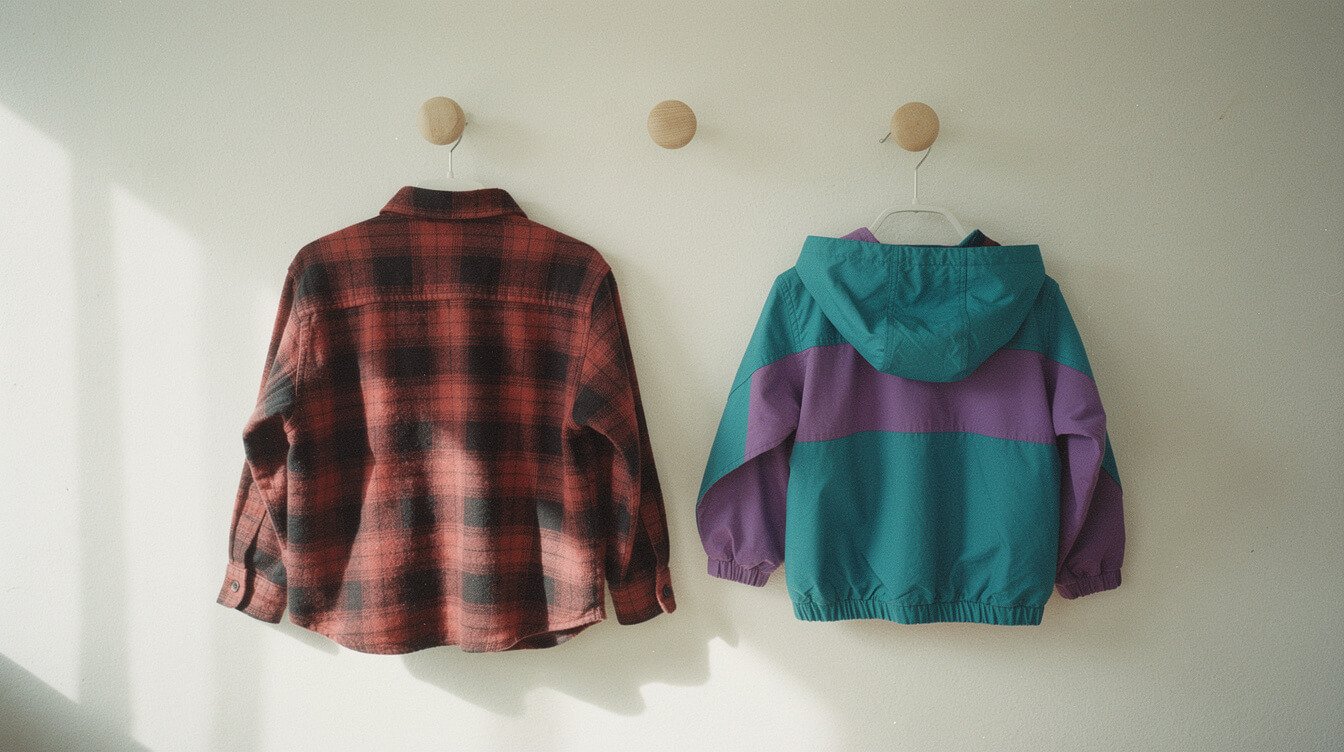
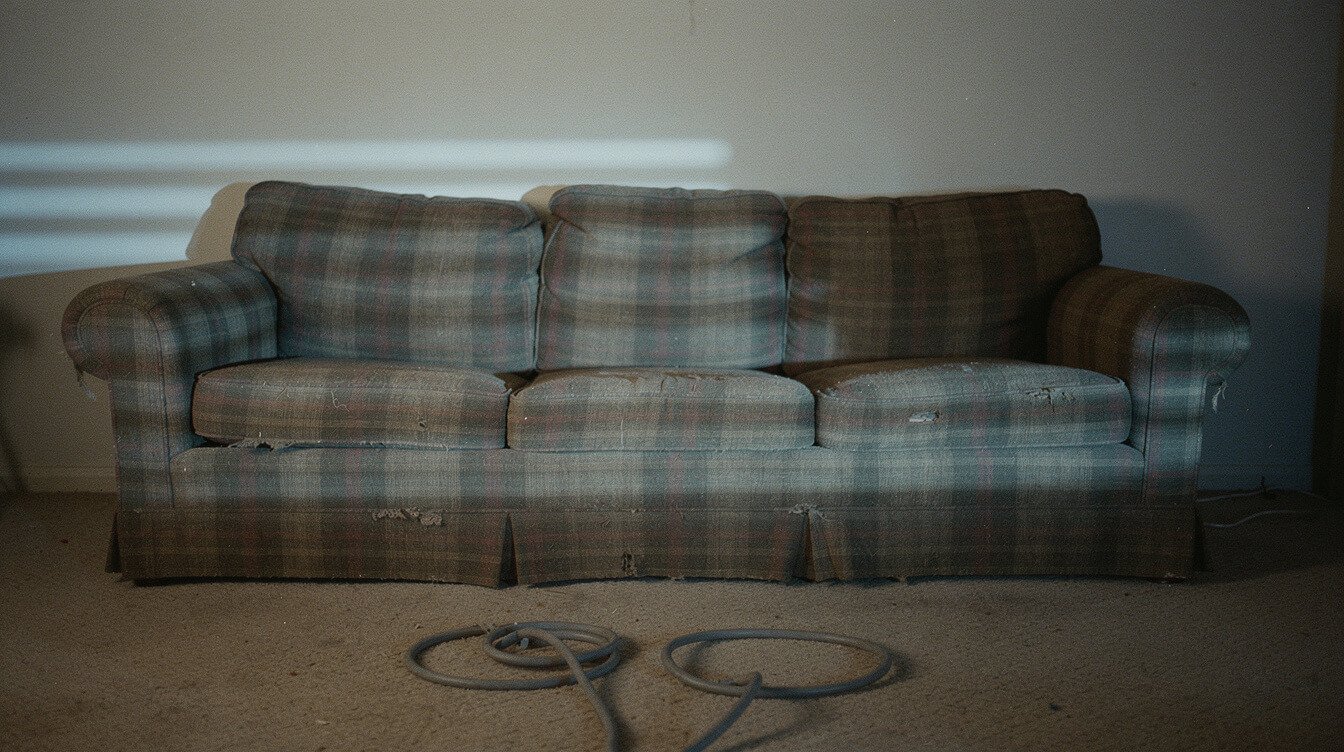
Here’s the thing anybody who was there knows and almost nobody who sells it mentions: most of the 1980s looked like the 1970s. The cars in your driveway were brown. The station wagon had wood on the side that was not wood. Your house had furniture your parents bought in 1976 and saw no reason to replace just because the calendar had changed. Your school ran on equipment older than your teachers. The famous neon and the famous hair and the famous everything existed, but they were a thin layer on top of a great deal of beige. If the real decade were a mix, the loud stuff was maybe one song in ten.
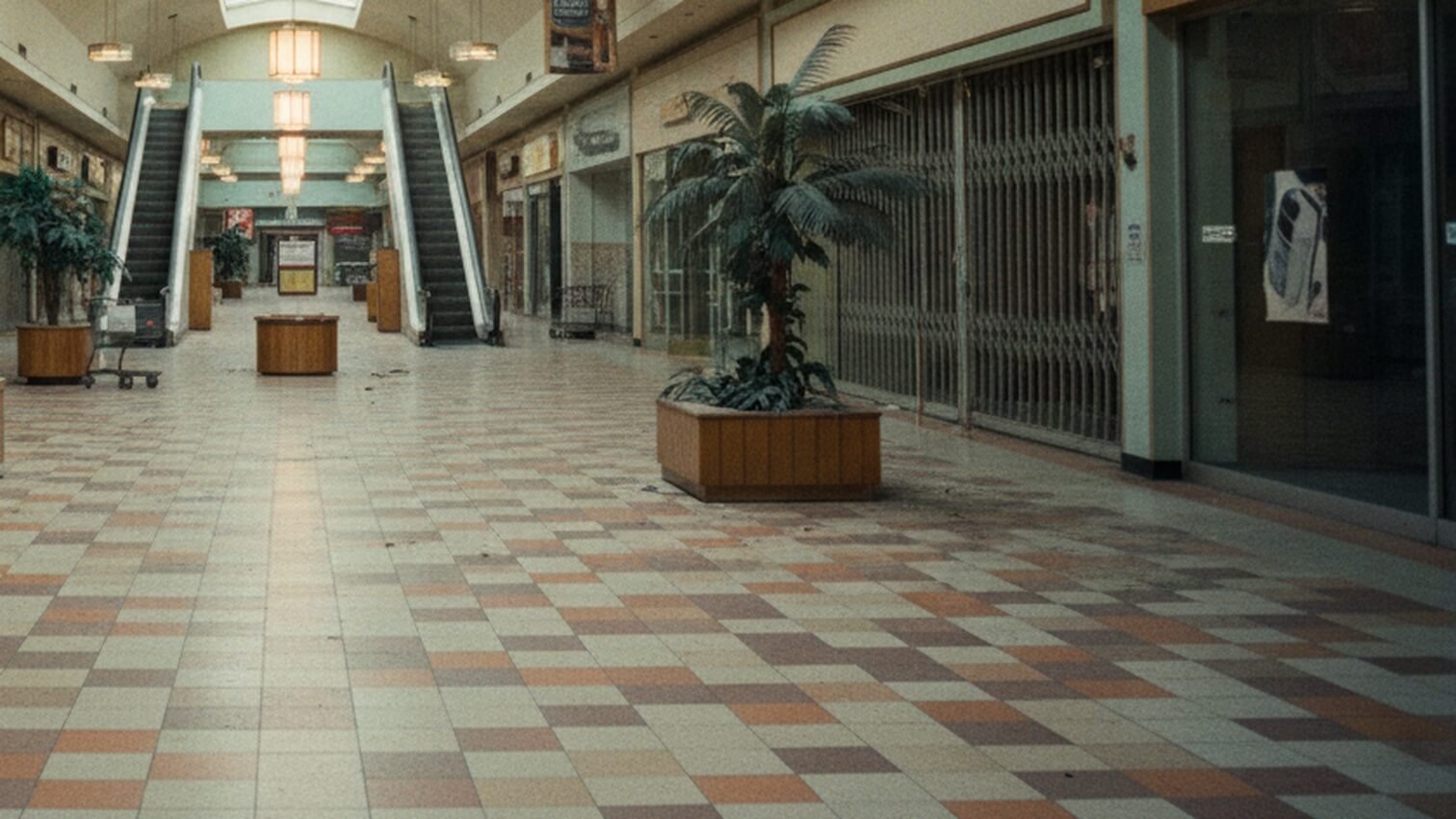
Copy that tape five times and watch what happens. The quiet tracks fade into the hiss first, because they were quiet. The loud one survives every pass. So now the mix is all hits, and each new generation, working from a copy that’s nothing but hits, turns the treble up a little more to make it sound “right.” That’s how you end up with an 80s that’s entirely pink and teal, entirely synth, entirely fun, like a mall without the dentist’s office on the second floor. We talked about the surface version of this with what happens when 90s nostalgia becomes a product; the 80s just got there first and has had a thirty-year head start on the saturation.
And then there’s the hiss, the stuff the copy adds that was never on the master:
- The word “retro.” Nobody in 1985 thought their bedroom was retro. It was just a bedroom. The neon was supposed to look like the future, not the past.
- A unified look. The decade had at least four or five different visual moods running at once. We wrote about how nostalgic 80s decor arrived like weather. But the copy compresses all of them into one aesthetic, because copies don’t do range.
- Cool. This one stings a little. Plenty of it wasn’t cool at the time. Some of it wasn’t cool in 1998, either, and that was the point of the joke. Five generations in, the embarrassment has been fully laundered out, and what’s left is a decade where everybody had great taste. We were there. Not everybody had great taste.
None of this is a crime. A dub of a dub still plays. People dance to it. It’s just worth knowing which tape you’re listening to.
The newsletter
Like a mixtape, but it shows up on its own
One email a week. The good posts, new designs, zero exclamation points. Unsubscribe whenever. We won't take it personally.
Why Gen X can hear the hiss in 80s nostalgia
The obvious claim would be that Gen X owns the master tape, and therefore we’re the only ones qualified to judge. That’s half right, and the wrong half is the fun part.
First, the right half. We are the generation that experienced the 80s as the 80s, from the ground floor. But notice exactly which 80s. A 2023 survey across twelve countries found that younger Boomers, born roughly 1958 to 1963, were actually a hair more likely to feel nostalgic for 80s media than Gen X was: sixty-six percent to sixty-five. Which makes sense the second you think about it. They had the 80s with car keys and a paycheck. We had the 80s with a bike, a curfew, and a dollar in quarters if it was a good week. The decade on the posters belonged to people in their twenties. Ours was the version from the back seat: the long drive, the waiting room, the hallway outside wherever the adults were having the actual 80s.
That’s why the copy sounds wrong to us in a specific way. It’s not that it’s too loud. It’s that it’s from the wrong seat. Most 80s nostalgia is a young-adult nightlife decade, and most of us spent it as kids figuring out the VCR for our parents. We can hear the hiss because we know where the quiet tracks were.
Now the wrong half. Our master tape isn’t clean either. Memory researchers have known for a long time that every time you pull up a memory, you re-record it a little, with whatever you know now mixed in. Which means the version of 1984 you carry around has been played at every reunion since 1997, every family dinner, and every late-night conversation that started with “do you remember.” It’s been dubbed, too. Just by you.
So the honest Gen X position isn’t “we have the original and you don’t.” It’s closer to: we have the oldest surviving copy, it’s got its own hiss, and at least we know it’s there. That’s a better claim anyway. It’s very on brand for a generation that never fully trusted the label on anything.
This is more or less how we think about making things, too. A design that works for us isn’t a fifth-generation copy with the treble cranked. It’s one specific, slightly-off-to-the-side detail that you either catch in half a second or you don’t. That’s the whole idea behind the GenerationX shop: things that sound like the tape you actually had, not the one being sold back to you.
First-generation copies only
Made by people who were in the back seat, for people who were in the back seat. No neon grid. No footnotes.
80s nostalgia questions, answered without a slideshow
When did 80s nostalgia actually start?
Earlier than anyone expected. Trend researchers were reporting it by 1993, a Georgia paper complained about “nostalgia’s sinister acceleration” that September, and a 1994 newspaper feature found full 80s nights running in D.C. clubs. Hollywood followed with 80s-set comedies in 1997 and 1998. The decade had been over for less than five years when people started missing it in public.
Why hasn’t 80s nostalgia ended like the old 20-year cycle says it should?
Short answer: nobody let the tape stop. The usual cycle assumes one generation gets nostalgic, then ages out. With the 80s, each wave handed off to the next before the last one finished: the 90s ironic copy, the 2000s music revival, the 2010s prestige-TV copy, and now a generation that wasn’t born yet finding it on their phones. Older reruns never really left cable, either, so for a lot of people the decade simply never went off the air.
Why is Gen Z nostalgic for a decade they never lived through?
Same reason we were nostalgic for the 50s: it was the past that happened to be playing when they showed up. The difference is that they’re working from a copy that’s been through more decks. There are academic terms for missing a time you never experienced. We’ll skip them. You already did this with the jukebox era, and nobody made you write a paper about it.
Is 80s nostalgia just a Gen X thing?
No, and that’s the surprising bit. Younger Boomers score just as high, or slightly higher, on nostalgia for 80s media, and Gen Z streams it like it’s new. Gen X’s version is just different: it’s the kid’s-eye view, the decade from the back seat, which is the one that rarely shows up in the glossy copies. If you want the long version of why our nostalgia runs dry rather than gooey, we covered that in why Gen X nostalgia isn’t a highlight reel.
What’s the most accurate way to remember the 80s?
Turn the volume down on the famous parts. Remember the brown car, the long afternoons, the aisle-walk at the video store that took longer than the movie, and the boombox that mostly played the radio. The real decade had a lot of quiet tracks. They’re the ones the copies drop first.

From the shop
Huey Lewis I Wanna New Drug Fan Art T-Shirt
Price range: $24.99 through $26.99
Shop this designFinal thoughts: be kind, rewind
There was a sticker on every rental tape in the country, and it turns out to be decent advice for an entire decade. Rewinding didn’t mean making a new copy. It meant going back to the start of the one you had.
That’s about the only useful move left with 80s nostalgia. You’re not going to stop the dubbing. It’s been running since 1993, it’s outlasted three separate predictions of its death, and somewhere right now someone is mastering a sixth-generation copy for a twelve-year-old. Fine. Let them. It still plays.
But you don’t have to take your 80s from the copy. You were there, at least for some of it, from wherever you were sitting. Your tape has hiss on it too, and it’s still the oldest one in the room. Keep it. Play it at a reasonable volume. Let the quiet tracks stay on it. And when somebody hands you the shiny version with the treble all the way up, you can enjoy it for what it is without mistaking it for where you grew up.
The decade lasted ten years. We’ve been remembering it for thirty-three. Might as well remember it right.
Before you go
You made it to the end. Respect.
Get the best of these in one short weekly email, plus whatever we just printed. No spam. We were raised better than that. Mostly.