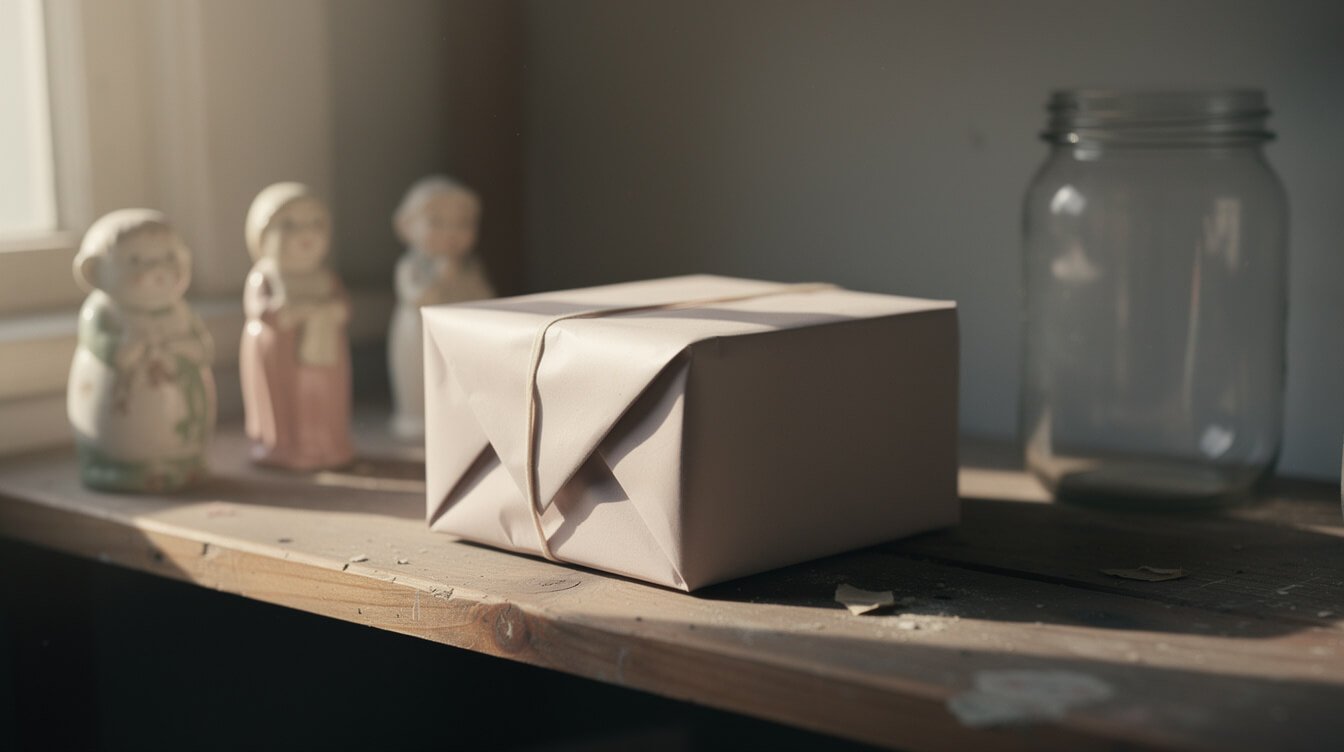
Somewhere in your house there is a shelf, and on that shelf sits an object someone gave you because it reminded them of 1987. You liked it. You genuinely did. You have not looked directly at it in two years. That is the quiet, unspoken problem with nostalgia gifts: they are outstanding for about four seconds and largely unemployed after that.
Every guide to this category is a list of objects. Twenty-one of them, or twenty-five, or thirty, each one ranked and linked. Not one of them mentions the thing that actually decides whether the gift works, which is not what you bought. It is whether the object has anything left to do once the recognition wears off.
So this isn’t a list. This is the part nobody writes down: how the recognition actually works, the four specific ways it fails, and a test you can run in about ten seconds before you spend real money on something with a one-way ticket to the junk drawer.
Why most nostalgia gifts end up on a shelf
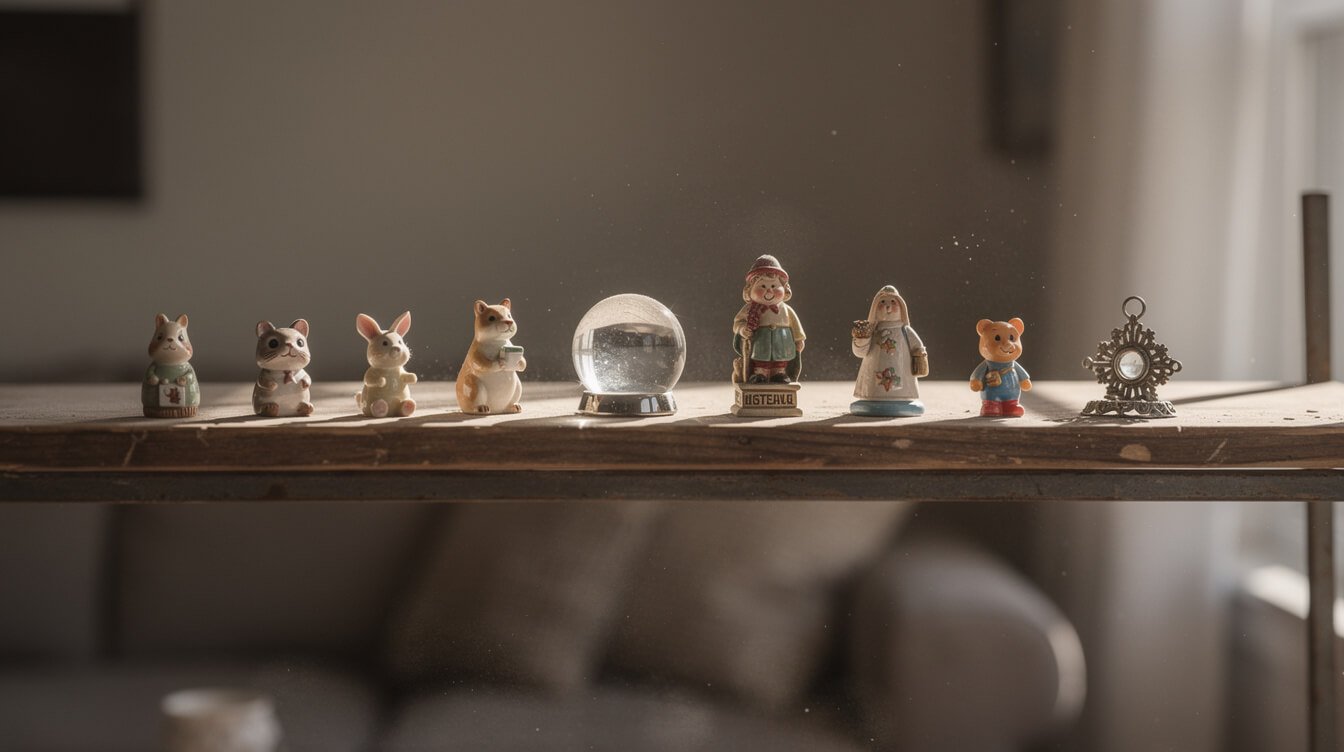
Here is the honest sequence. The gift gets opened. There is a genuine, involuntary noise — the small oh that you cannot fake and cannot manufacture. Everyone in the room enjoys it. The object goes on the mantel. Three weeks later it moves to a lower shelf. Three months later it’s in a drawer with the spare batteries and the cords for devices nobody owns anymore. Eighteen months later it’s in a bag by the door.
This is not because the person disliked it. They liked it a great deal, for four seconds, exactly as intended. The problem is that the object had precisely one job, and it completed that job immediately and permanently. It delivered a memory. Then it stood there.
Recognition doesn’t repeat. That’s the whole mechanic. The oh is a one-time payment, and most nostalgia gifts are built to collect it once and then live out their days as a dust magnet with sentimental immunity — you can’t throw it out, because someone gave it to you and it meant something, so it just quietly accumulates in the house forever.
You can watch this happen in real time at any family gathering. The objects that survive from one decade to the next are almost never the ones that got the biggest reaction on the day. They’re the boring ones that turned out to be useful.
The gift industry has no reason to tell you this. A list of thirty objects is a list of thirty chances at a commission, and “will this still have a purpose in fourteen months” is not a filter that makes a list longer. Every roundup of nostalgia gifts you have ever read was optimized for the moment of purchase, which is the one moment where the buyer and the recipient want completely different things.
There’s a second-order problem too, and it’s the one nobody says out loud: these things are almost impossible to get rid of. A bad practical gift can be quietly returned. A bad nostalgia gift has a feeling welded to it, so it acquires a kind of sentimental immunity — you can’t donate it, because donating it would mean the memory didn’t take. So it stays. Multiply that by a few Decembers and a couple of milestone birthdays and you have a shelf that is functionally a museum of other people’s guesses about you.
The recognition is the gift. The object is only the packaging.
Once you see it this way, nostalgia gifts reorganize themselves entirely. You are not buying a thing. You are buying a delivery mechanism for a very specific feeling, and the thing is just what the feeling arrives in.
Which means the real question is what the feeling actually is. And there are two completely different feelings sold under the same heading, at the same price, usually on the same page — which is why so many people buy the wrong one in perfectly good faith.
The first is I remember that thing. Broad, warm, low-resolution. It’s the feeling of seeing a decade referenced. Anyone born within a seven-year window gets it. It’s pleasant, it’s shallow, and it is completely transferable — the same object would produce the same reaction in four hundred thousand other people, which is precisely why it doesn’t hold.
The second is I remember you, in that thing. Narrow, specific, and aimed at one person. This is the gift that says: I know which one you were. I know you were the one taping songs off the radio with your finger hovering over the pause button, waiting out the DJ. I know your particular version of it.
The first says I know what decade you were alive in. The second says I was paying attention to you. Only one of those is a gift. The other is a form of address to a demographic, and this generation in particular can smell a demographic address from the parking lot. We grew up marinating in advertising. We learned to identify the shape of it before we learned long division.
The gap between those two is the entire skill. And it’s not a matter of trying harder or spending more; you can spend a lot of money on the first kind and it will still land like a card signed by a committee. The second kind is often cheap, because the expensive part already happened years ago when you noticed something and filed it away.
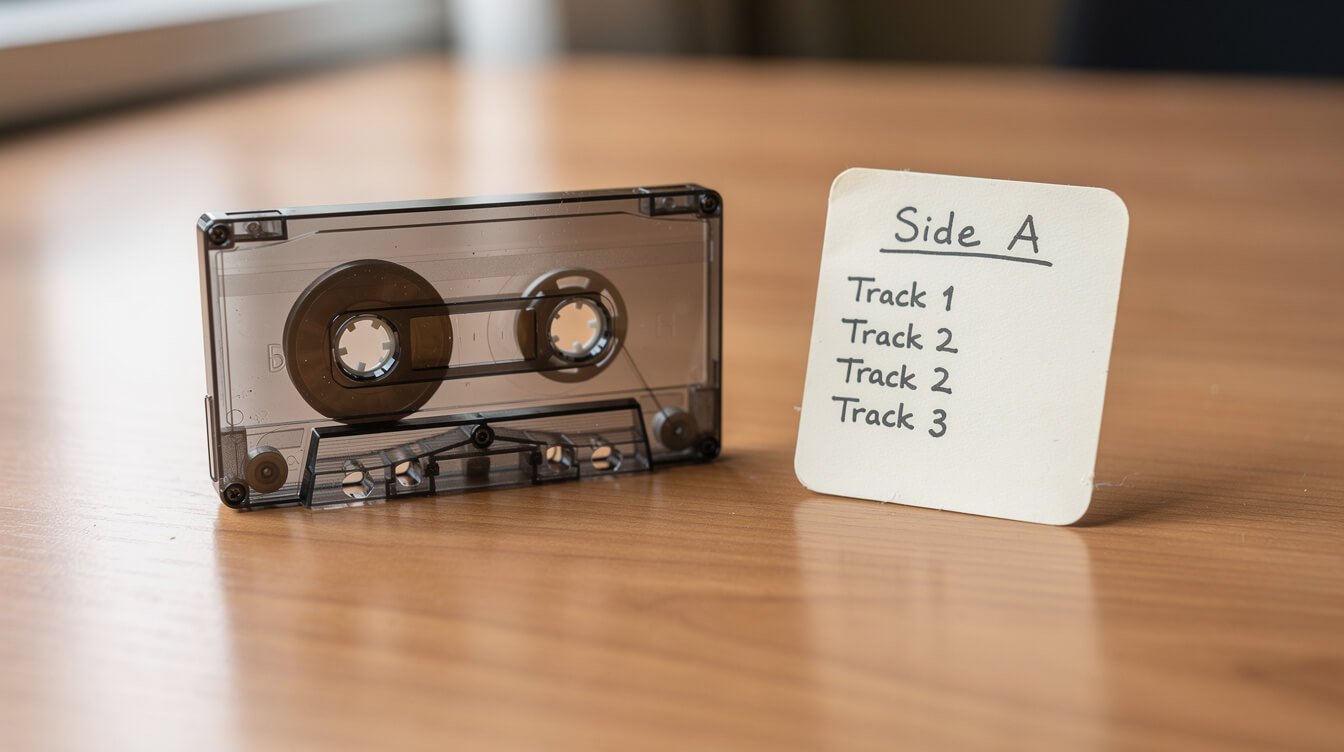
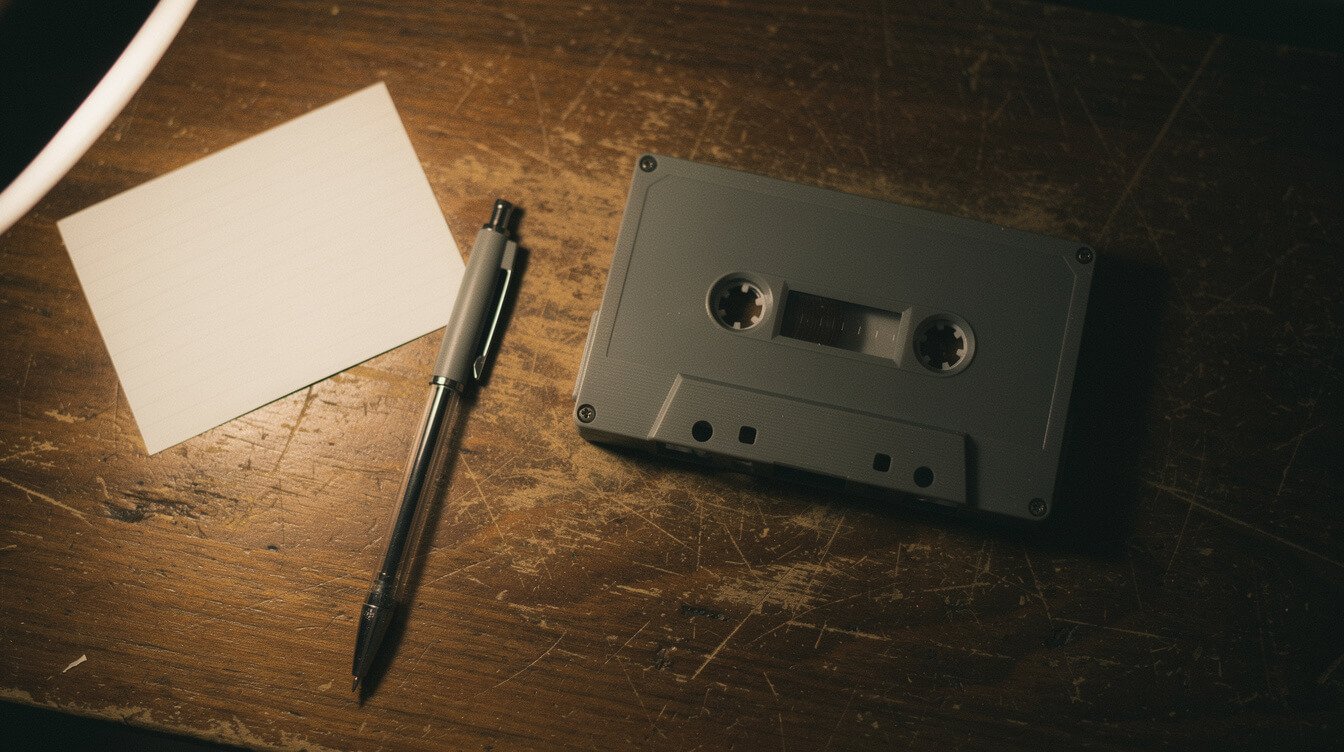
The specificity is where all the value sits. A generic decade reference is a gift for a category of person. A precise one is a gift for a person. If you want the pure form of this, the mixtape was the original version of it — an object whose entire worth came from the fact that one particular person chose every second of it with one particular other person in mind. Nobody kept those for the plastic.
The four ways nostalgia gifts go wrong
Failure in nostalgia gifts is not random. It arrives in four recognizable shapes, and once you can name them you’ll spot all four within about ninety seconds of walking into any gift shop.
1. It explains itself
The single most common failure, and the most fatal. The object states the reference out loud instead of making it. A shirt that says “80s KID” is not a reference to being an eighties kid; it’s a caption confirming that you were one. The joke and the explanation of the joke arrive in the same breath, which means there was never a joke — there was an announcement.
Anything that has to tell you what it is has already lost. If a person has to read the object to understand the object, the recognition never happens, because recognition requires you to arrive at something. Handing someone the answer removes the only pleasurable part.
2. It gets a detail wrong
This one is unforgivable in a way that surprises people who didn’t live it. Wrong year, wrong color, wrong shape, an object that didn’t exist yet placed next to one that had already been discontinued. To someone outside, it’s close enough. To someone inside, it’s the whole thing ruined, because the entire premise of the gift was I was there too — and a botched detail proves conclusively that whoever made it was not.
A near-miss is worse than no attempt. No attempt is neutral. A near-miss is an active claim of membership that fails its own audit in front of everyone.
3. It’s sad instead of funny
There is a whole wing of nostalgia gifts that treats the past as a loss to be mourned. Soft focus, gentle lettering, some line about simpler times and how we’ll never get them back. It is deeply well-meaning, and receiving it feels roughly like being handed a sympathy card for your own childhood.
Wry beats weepy every single time. The correct register is not we lost something beautiful. It’s we survived something ridiculous, and it’s funny now. Nobody wants a gift that implies their best years have already been filed.
4. It’s a licensing deal in a costume
Look closely at any of those thirty-item roundups and count how many entries are just a trademark applied to an object. A logo on a mug. A character on a sock. A show’s name on a sweatshirt. What’s being sold isn’t a memory — it’s a rights clearance, and the memory is what got stapled on afterward to move the unit.
Sometimes that’s exactly right, and someone will be thrilled. But it’s worth knowing which one you’re buying, because a licensed object refers to a property. The good version refers to your life — the sound, the ritual, the specific stupid rule you all agreed on without discussing it. Nobody owns that. It doesn’t need clearing. And it lands harder, because it’s actually yours.
Display objects and objects that get used

Here’s the split that predicts a nostalgia gift’s survival better than anything else, and it has nothing to do with taste, price, or how good the joke is.
Display objects have one job: to be looked at. Framed prints, figurines, signs, ornaments, anything decorative. Their entire value is delivered visually, on day one, and then they need somewhere to live. They cost the recipient shelf space every day for the rest of their lives, and shelf space is the one resource that never gets cheaper. Every display object is a small ongoing tax.
Usable objects have a second job. A shirt gets worn. A mug holds coffee. A bag carries things. The joke rides along on something that was already going to be in the rotation, which means the object keeps earning its place without ever asking for a shelf.
The half-life difference is not subtle. A display object peaks at the moment of unwrapping and declines from there. A usable object gets a small renewed hit every time it comes back around — pulled out of the drawer, spotted by a stranger who gets it, worn to something where exactly one other person in the room clocks it and nods. That’s not the same four seconds repeating. It’s a new four seconds, with a witness.
This is the honest argument for wearables in this category, and it’s the reason we make what we make. A good shirt with the right joke on it isn’t competing for shelf space, because it lives where clothes live. Ours are over in the shop if you want to see what we mean by “right joke” — but the principle holds no matter where you buy it. Ask what the object does on day 400.
There is a third category worth knowing about, and it’s badly underrated: things that get used up. Food, drink, tickets, anything with an expiry date. Consumables score zero on shelf space because they remove themselves from the house on their own schedule, which means they can never become clutter and can never trigger the guilt. They lose the durability argument, obviously — nothing lasts — but as a category they fail more gracefully than anything else on this list. Nobody has ever felt bad about finishing something.
Ranked by how well they hold up, then: worn, used, consumed, displayed. Most guides to nostalgia gifts are almost entirely the last one, and now you know why. Display objects photograph beautifully and a shirt in a drawer does not.
One useful check: if the gift were plain — no reference, no design, nothing — would the person still have a use for it? If yes, you’ve bought something with a floor under it. If the reference is the only reason the object exists, you’ve bought a display object that happens to be shaped like a useful one.
The test to run before you buy nostalgia gifts

Three questions. They take about ten seconds and they will kill roughly eighty percent of what you were considering, which is the point.
One: would they get it in two seconds, with nothing written on it? Cover the words. Cover the caption, the title, the little explanatory line at the bottom. Is it still legible to the right person? If the reference only survives with the text attached, you’re buying a caption. If it survives naked, you have something.
Two: what is its job on day 400? Not day one — day one is easy, day one is free. Fourteen months out, has the object got anything to do? Does it get worn, used, carried, or opened? Or is it in the drawer with the batteries? Be honest, and picture the actual drawer.
Three: is it about them, or about the year? This is the one that separates a good gift from a competent one. Anything aimed at a decade is aimed at a stadium. Something aimed at their specific version — their ritual, the thing they in particular were obsessive about — is aimed at a person. You already know the detail. You’ve heard them tell the story more than once. The gift is just proof that you were listening.
And a fourth, optional, for the hard cases: would they have bought it for themselves? Ideally, no — but only just barely. The sweet spot is something they’d have genuinely wanted and never quite got around to justifying. Something they would have bought is merely a correct purchase. Something they wanted but wouldn’t spend their own money on is a gift.
A note on the gag gift, since it’s where a lot of nostalgia gifts end up: a joke gift is only a gift if the joke survives the room it was opened in. Plenty of them are built to get one big laugh at a party and are then structurally worthless, which makes them a performance the recipient has to store. Fine if that’s the agreed deal. Just don’t confuse the laugh with the gift — the laugh belongs to everyone watching, and the object belongs to one person, who now has to find somewhere to put it.
What all four have in common: none of them are about the object. They’re about the person, which is inconvenient, because the person requires you to have paid attention and the object only requires a search bar.
Nothing here explains itself
We make the ones that pass the cover-the-words test. No captions, no footnotes, nothing that needs a run-up. If you know, you know — and if you don’t, it wasn’t for you.
Frequently asked questions about nostalgia gifts
What do I get someone who insists they don’t want anything?
Take them at their word about things and ignore them about attention. They don’t want more objects — most people over forty-five are actively trying to reduce the object count. They are not opposed to being known. Buy small, buy usable, and make it specific enough that the message is clearly “I remembered this about you” rather than “I bought you a thing.” The size of the gift is not what registers.
Does a nostalgia gift work if I wasn’t there for their era?
Nostalgia gifts can absolutely work across an era gap, with one rule: don’t perform the era. If you didn’t live it, you’ll get the texture slightly wrong, and the wrongness is exactly what a person who was there will notice first. Instead of guessing at the period, aim at the individual. Ask them a question a few weeks out, let them tell the story, and then buy the thing inside the story. Reporting beats research.
How much should I spend?
Less than you think, but not the minimum. There’s a floor below which a joke gift reads as an obligation discharged — a thing bought to have bought something. Above that floor, more money adds surprisingly little; a perfectly chosen small thing outperforms an expensive near-miss every time. The variable that matters is precision, not budget.
Are these a bad idea for someone who isn’t sentimental?
Nostalgia gifts are arguably the best idea for that person, as long as the register is right. Unsentimental people don’t dislike their own past. They dislike being asked to be misty about it. Deliver the same memory flat and funny instead of soft and mournful and it lands perfectly, because you’ve acknowledged the thing without demanding a feeling in return. Dry is not the absence of warmth. It’s how some people prefer to receive it.
Is a gift card just giving up?
Usually, but not always. A gift card to somewhere generic is giving up. A gift card to a place they’d never spend their own money at, with one sentence about why you picked it, is a gift with a note attached — and the note is doing the actual work. If you’re going that route, write the sentence. The sentence is the present.
What actually holds up long-term?
In rough order: things that get worn, things that get used daily, things that get consumed and remembered, and — a distant fourth — things that get displayed. Sort your options into those four buckets before you decide. Most gift guides are almost entirely bucket four, because bucket four photographs well.
The short version
The reason most nostalgia gifts fail isn’t taste, and it isn’t budget. It’s that they’re built to spend everything they have in the first four seconds, and nobody warns you that the four seconds are all you’re getting.
Buy the specific thing, not the decade. Cover the words and see if it still works. Ask what it does on day 400. And skip anything that explains itself, because the explaining is what kills it — the whole pleasure is in the arriving, and you can’t hand someone that.
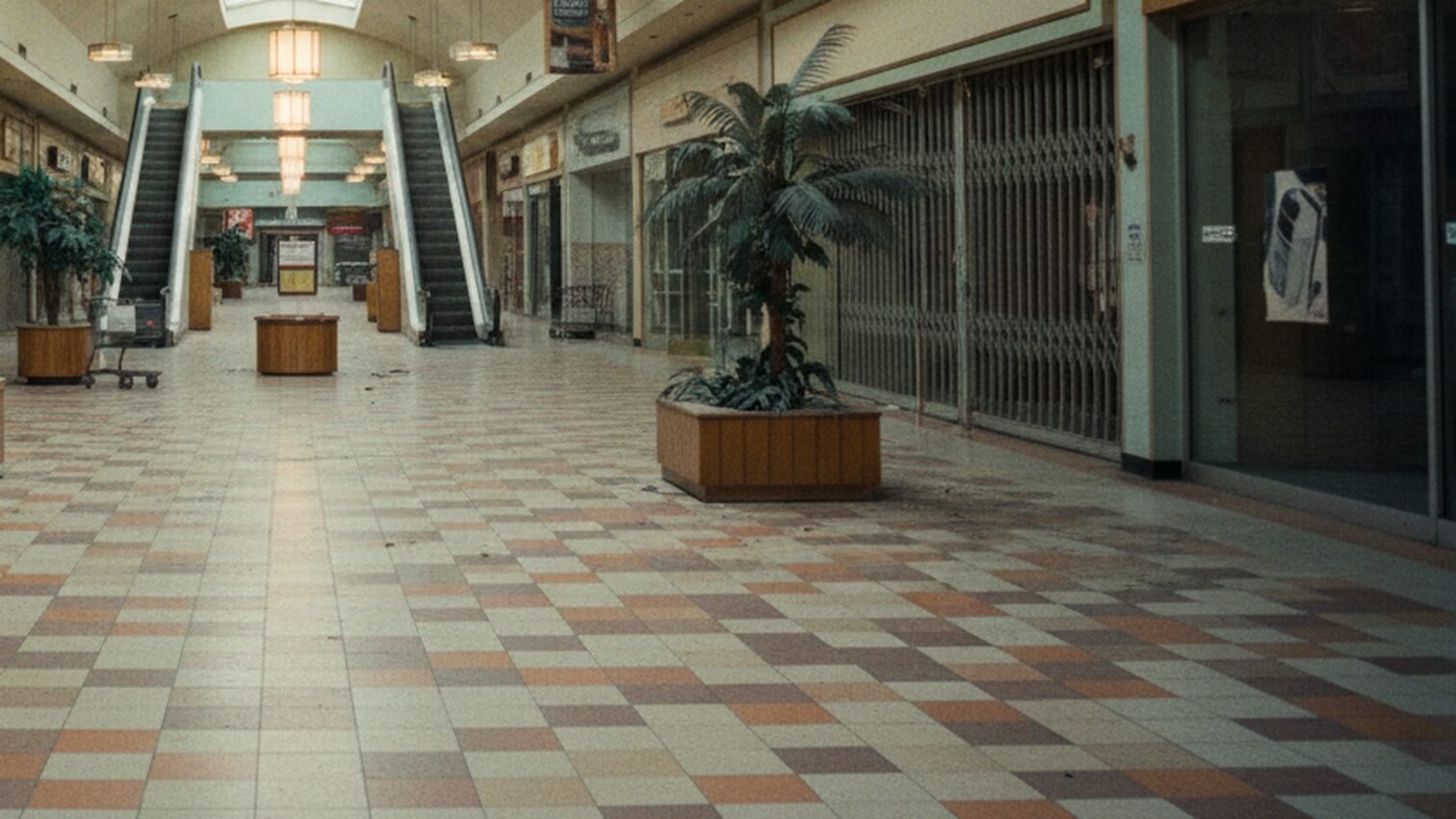
Get it right and you’re not really giving them an object. You’re giving them evidence that somebody was paying attention the entire time, which is a rarer thing than any of the merchandise. If you want more of this sort of thing, we also went long on the mall that sold most of these objects to us in the first place — and on the ninety minutes of tape that started the whole idea.
One email. No confetti.
New designs and the occasional story about the decade that raised us. Unsubscribe whenever — no guilt-trip email, no “we’ll miss you” graphic.